
Deep Process Control Over Coating — Verified GSM and adhesion across every roll of PVC fish pond liner, backed by 100% pre-shipment inspection and in-process QA at every production stage.
Technical Specifications
| Parameter | Value |
|---|---|
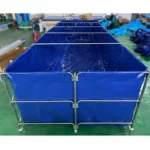
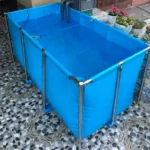
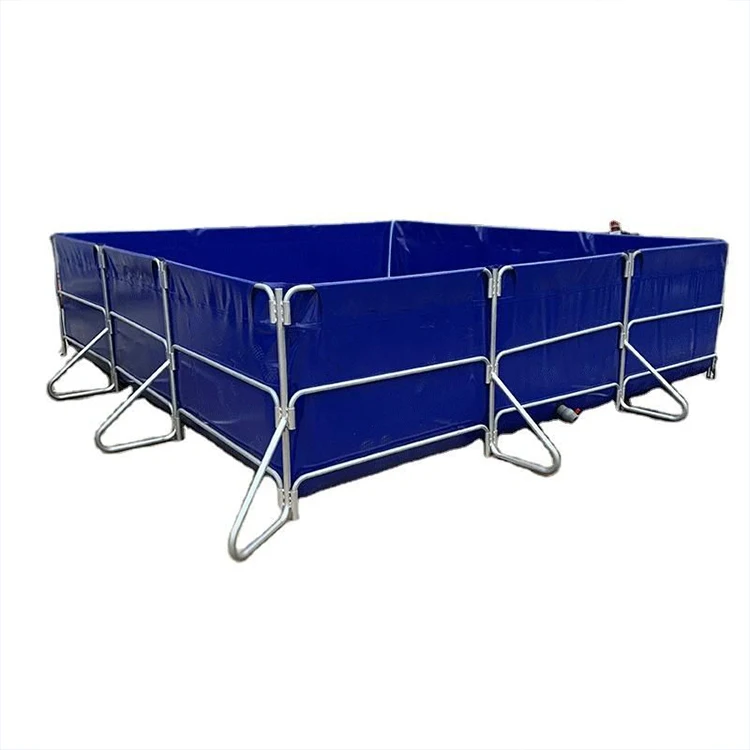
| Product Type | PVC Fish Pond |
| Material | PVC Tarpaulin |
| Shape Options | Circular / Rectangular |
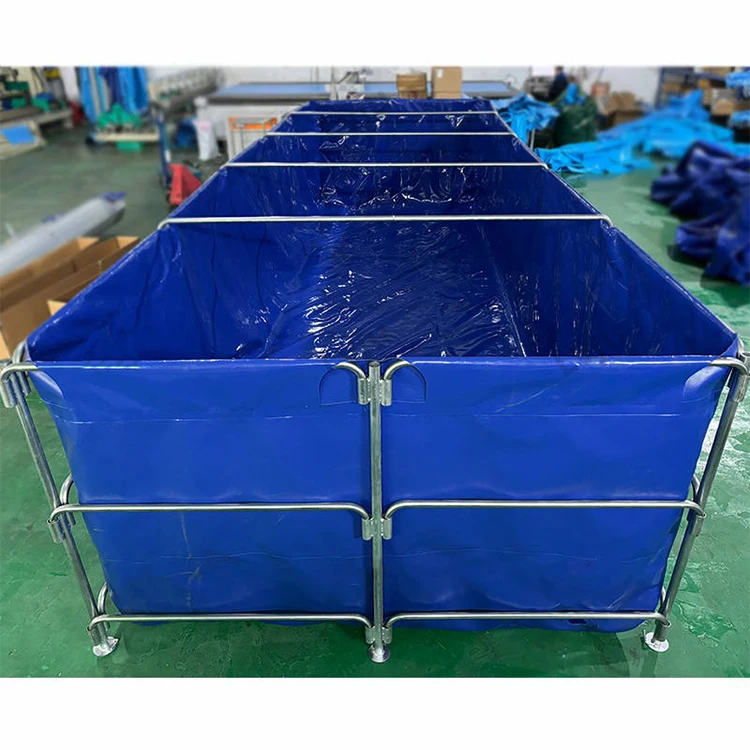
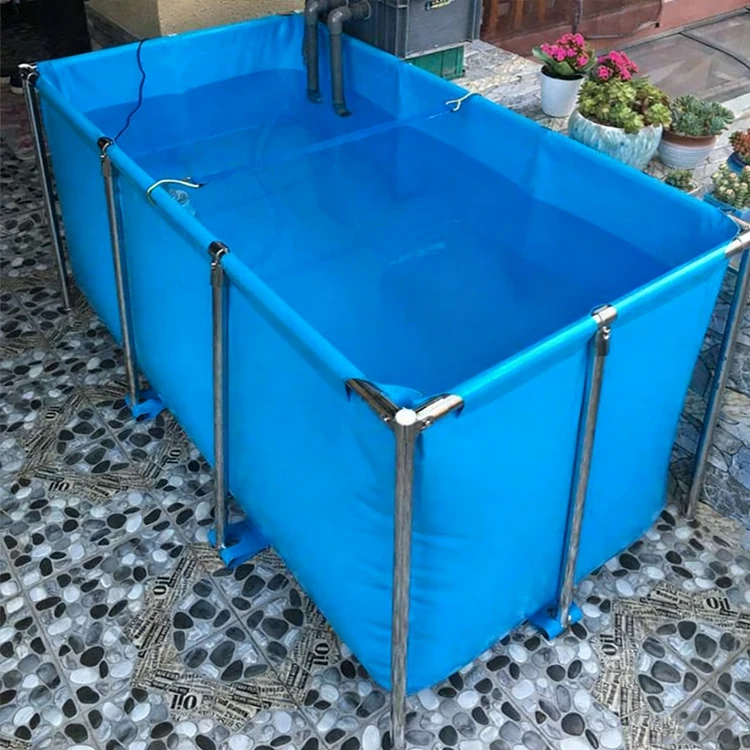
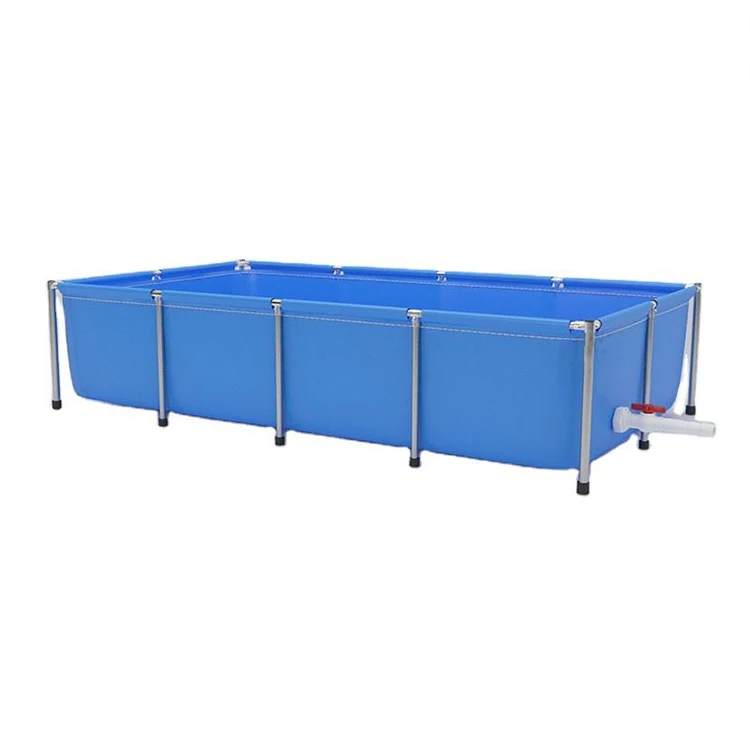
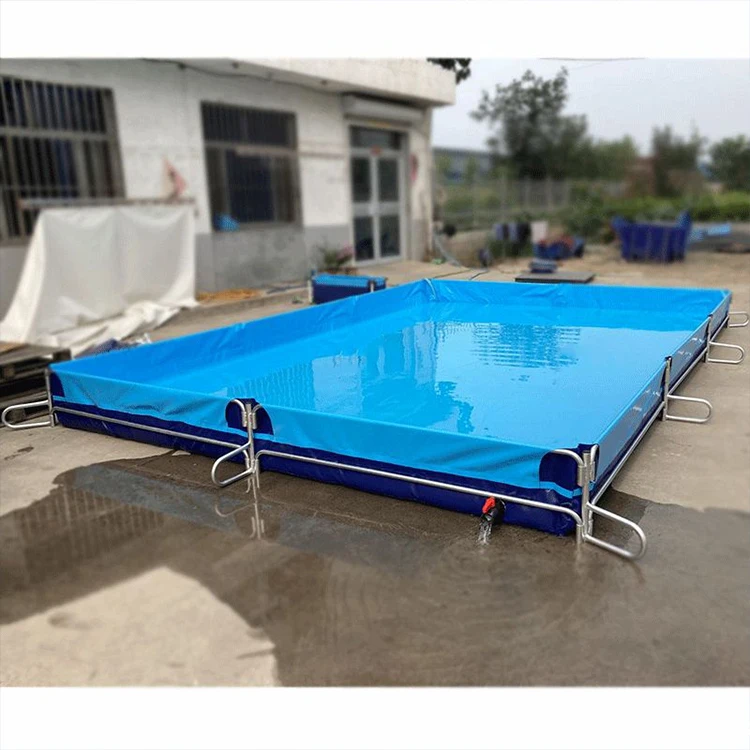
| Design Feature | Foldable for transport and deployment |
| Application | Fish tank / aquaculture pond liner |
| Coating Method | PVC coated (specific method — confirm with supplier) |
| Flame Retardant Grade | Available in flame retardant grades — confirm the grade required for your market |
| UV Treatment | Available with anti-UV treatment — request test report for verification |
| Standards | ISO, CE |
Application Suitability
| Application | Exposure & Requirement |
|---|---|
| Commercial fish farming ponds | Continuous water immersion, biological load, puncture risk from substrate |
| Hatchery and nursery tanks | Controlled water containment, frequent cleaning, chemical exposure from treatments |
| Shrimp and prawn grow-out ponds | Saline water contact, UV exposure in tropical climates, sediment abrasion |
| Ornamental fish tanks | Aesthetic surface finish, long-term water retention, algae and mildew resistance |
| Temporary breeding water storage | Rapid deployment, foldable design for seasonal use, repeated fill-and-drain cycles |
Why Seam Integrity Matters More Than Fabric Weight in Pond Liners
A pond liner fails at the welded seam long before the fabric itself gives way — seam construction is the first specification to verify.
When aquaculture operators report early pond liner failure, the breach almost always traces back to a welded joint under hydrostatic pressure. The fabric panel may hold, but the seam absorbs the flexing load as water levels shift and stock moves through the pond. A PVC fish pond liner rated at a high GSM can still split open at the weld if the heat-sealing parameters were set for a different coating formulation. [NEED_CITE: weld strength testing methods for PVC coated fabrics per ISO standards] I have seen heavy-grade coated rolls fail at the weld line while lighter material with proper seam engineering held through multiple grow-out cycles. The quoting process often centres on weight, but the containment reliability depends on how the seams are executed and tested before the liner leaves the factory.
Coated Fabric Construction for Continuous Water Immersion
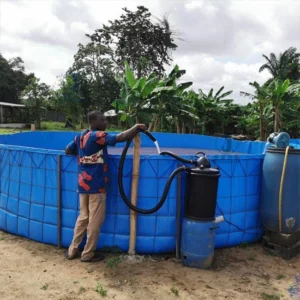
The PVC tarpaulin used in these pond liners is built around a base fabric that is fully encapsulated in a PVC coating layer. This construction prevents water from reaching the yarn structure, which is where biological growth and fibre degradation begin. For aquaculture operators running continuous fill cycles, the coating must maintain adhesion to the base fabric through temperature fluctuations and chemical exposure from water treatments. A PVC fish pond liner that delaminates at the coating-to-fabric interface becomes unserviceable regardless of how intact the outer surface appears.
Foldable Design and On-Site Deployment Logistics
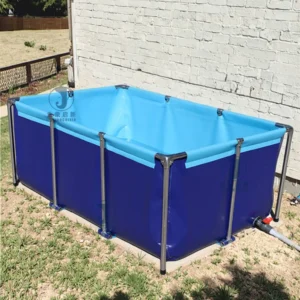
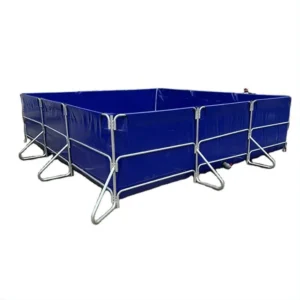
Circular and rectangular pond liners in this range are designed to fold for container shipment and on-site handling. The foldable construction means the liner can be transported to remote farm sites without requiring specialised flatbed equipment. Once on site, the liner unfolds into its designated shape — circular configurations suit above-ground tank frames, while rectangular formats align with excavated pond geometries. The fold points must be managed during installation to avoid creating permanent crease lines that concentrate stress under water load. [NEED_CITE: crease recovery and stress concentration in folded PVC coated fabrics]
Reading Beyond the GSM Number on Your Quotation
GSM tells you the total weight per square metre, but it does not separate base fabric density from coating thickness. Two PVC fish pond liners at the same GSM can have very different tear resistance depending on whether the weight comes from a heavy base cloth or a thick coating layer. The base fabric denier and weave density determine how a puncture propagates — a high-denier yarn in a tight weave stops a tear from spreading, while a lighter base with thicker coating may crack under point load. When evaluating pond liner specifications, request the base fabric specification alongside the total GSM to understand where the weight actually sits. The coating method also affects performance: knife-coated fabric typically achieves higher peel strength than laminated alternatives, which matters when welded seams are subjected to sustained hydrostatic pressure. Surface finish — whether glossy or matte — influences algae adhesion and cleaning effort over successive grow-out cycles.
The Cost of Overlooking Batch Consistency in Pond Liner Orders
When a fish farm orders multiple pond liners for a phased expansion, colour variation between batches creates visible mismatches once the ponds are installed side by side. Beyond aesthetics, inconsistent coating weight across rolls can mean one pond holds water reliably while an adjacent one develops micro-leaks within the same season. GSM shortfalls discovered after delivery force operators into a choice between accepting substandard material or delaying the stocking cycle while replacements are produced and shipped. [NEED_CITE: batch consistency testing protocols for coated fabric production runs] Weld parameter settings calibrated for one batch may not transfer directly to the next if coating formulation varies, making seam reliability a moving target across a multi-roll order. These problems compound when the farm is operating on tight seasonal windows for stocking and harvest.
Why Procurement Teams Source Pond Liners Through This Channel
Three full production lines with 36 sets of professional equipment provide the capacity to fulfil multi-container pond liner orders within a single production window, reducing the risk of batch fragmentation across shipments.
A dedicated 10-person R&D team handles custom shape development, producing circular and rectangular pond liner patterns to match specific pond dimensions and verifying fit before full production begins.
QA inspection runs at every production stage rather than only at final packing, catching coating adhesion issues and seam defects before the PVC fish pond liner reaches the pre-shipment inspection gate.
Material specification sheets are prepared per order, stating GSM, base fabric denier and coating weight so that the receiving team can verify against the quotation without guesswork.
Samples are developed within days for custom pond dimensions, allowing operators to test fold behaviour, seam integrity and fit against their pond frames before committing to a full production run.
Documentation & Verification
- Material specification sheet stating GSM, base fabric denier and coating weight per pond liner order
- UV and anti-mildew test reports supplied where treatment is specified for outdoor pond installations
- Pre-shipment inspection record covering seam integrity and waterproofness for each foldable pond liner
- Roll packing list with dimensions and weight for container loading planning and customs clearance
- Certificate of origin and customs documentation prepared for cross-border aquaculture equipment shipment
Fabrication, Handling & Storage
- Heat-seal welded seams on PVC tarpaulin pond liners using temperature and dwell time settings matched to the specific coating formulation
- Store foldable pond liners flat or loosely rolled in shaded conditions to prevent permanent crease damage to the PVC coating layer
- Avoid dragging PVC fish pond liners across rough substrate during deployment to protect the coated surface from puncture and abrasion
- Inspect welded seam lines on rectangular and circular pond liners before filling, confirming no visible gaps or under-welded sections
- Clean PVC coated pond liner surfaces with non-solvent cleaners to preserve coating adhesion and surface finish over repeated cycles
What to Include in Your Pond Liner Enquiry
Provide the exact pond dimensions — diameter for circular layouts, length and width for rectangular — along with the intended water depth so that material grade and seam reinforcement can be matched to the hydrostatic load. Specify whether the installation is indoor or outdoor, and whether the pond will be exposed to direct sunlight or saline water, so that the appropriate treatment options can be included in the quotation. Confirm whether you need individual finished pond liners or roll stock for on-site fabrication.
Frequently Asked Questions
Q: How is GSM verified on arrival and what is the re-inspection process?
A: Each PVC fish pond liner order ships with a material specification sheet stating the agreed GSM, base fabric denier and coating weight. On arrival, receiving teams can cut a measured sample from the liner edge and weigh it to verify against the stated specification. Any discrepancy should be reported with photographic evidence and sample weight readings for resolution against the pre-shipment inspection record.
Q: What seam welding method is used and how is leak resistance tested?
A: Welded seams on these pond liners are produced using heat-seal welding calibrated to the PVC coating formulation. Seam integrity is checked during pre-shipment inspection, which covers visual examination and waterproofness verification at the weld lines. The welding parameters are documented so that any on-site repair can match the original factory settings.
Q: Can custom pond dimensions and shapes be produced, and what is the minimum order?
A: Circular and rectangular pond liners can be produced to custom dimensions based on your pond layout. The R&D team develops a pattern and sample for approval before full production. Minimum order quantities depend on whether you require finished foldable liners or roll stock — confirm your project volume to receive a specific quotation with lead time.
Q: Is anti-mildew or anti-algae treatment available for long-term water immersion?
A: Anti-mildew and anti-algae treatments are available as options for pond liners that will remain in continuous water contact, particularly in warm and humid environments. Request the relevant test report to confirm the treatment specification matches the biological load conditions at your aquaculture site before placing the production order.
Q: How are pond liners packed and loaded for container shipment to avoid crease damage?
A: Foldable pond liners are packed with fold lines managed to minimise permanent creasing in the PVC coating. The packing list details roll or fold dimensions and weight per unit for container loading planning. On receipt, liners should be unfolded and inspected promptly to identify any transit damage before installation begins.