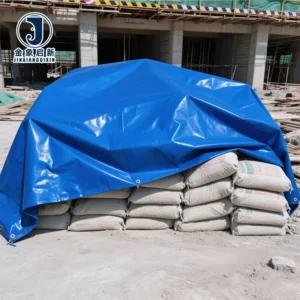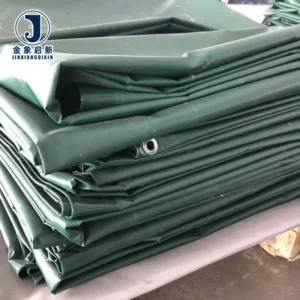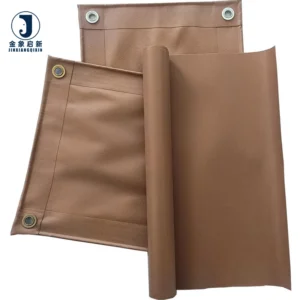
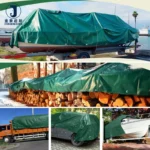
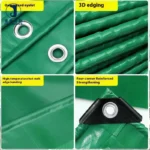
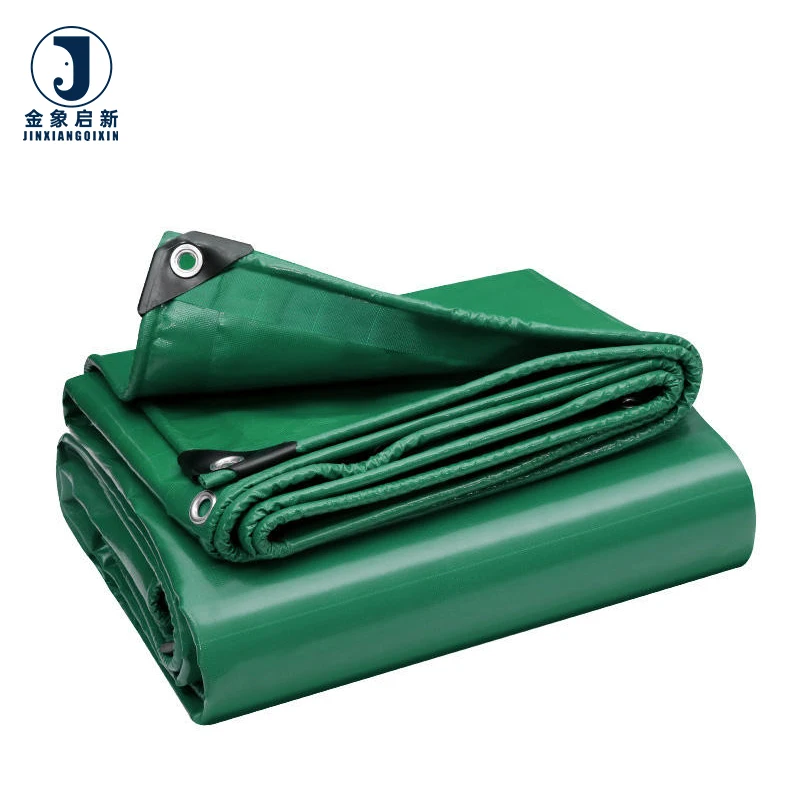
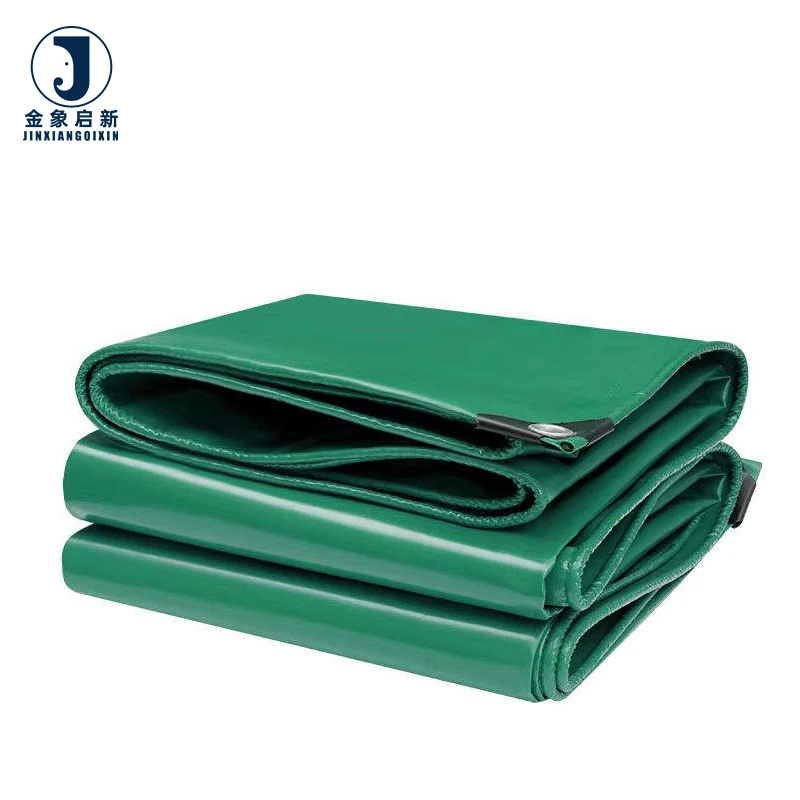
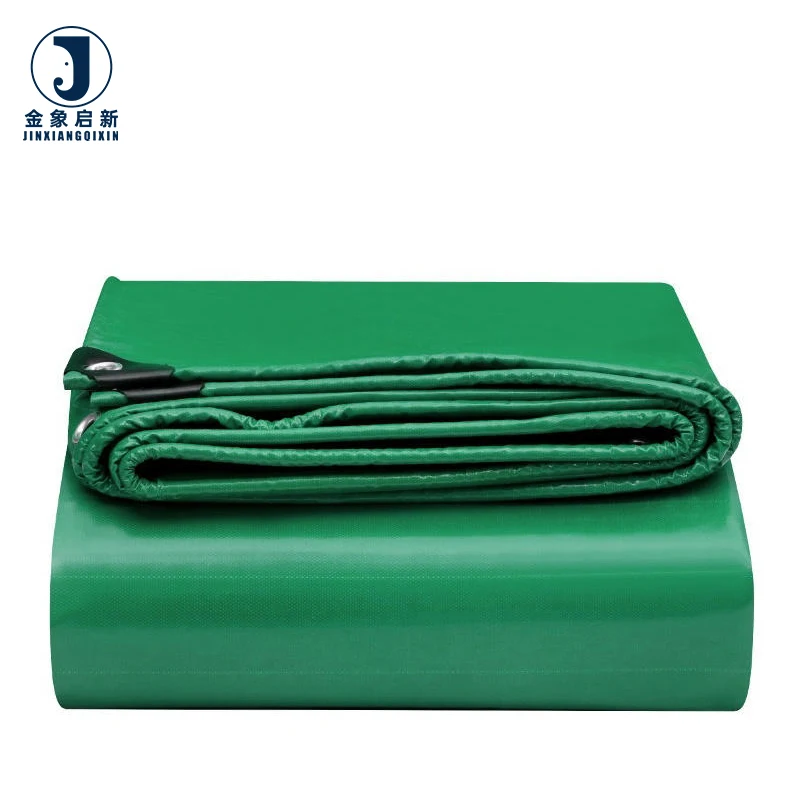
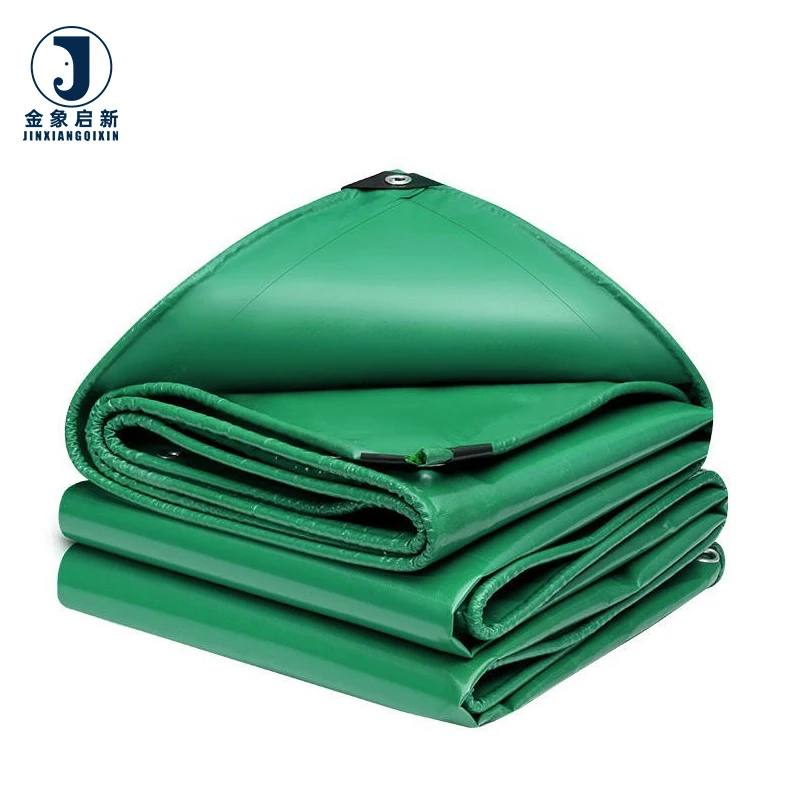
Coated Fabric Process Control — every roll of PVC coated tarpaulin undergoes dedicated QA/QC at each production stage with 100% inspection before shipment, verified against the stated specification.
Technical Specifications
| Parameter | Value |
|---|---|
| Product Type | PVC Coated Tarpaulin |
| Base Fabric Denier | 200DX300D / 500DX500D / 840DX840D / 1000DX1000D |
| Weight (GSM) | 250gsm-1500gsm (confirm the grade required for your application) |
| Surface Finish | Available in glossy or matte |
| Temperature Range | -15°C to 70°C |
| UV Treatment | Available — confirm test basis required for your market |
| Flame Retardant | FR treated — confirm the grade required for your project standard |
| Anti-Fungal | Treated — confirm standard applicable to your environment |
| Waterproof | Fully waterproof coated construction |
| Standards | ISO, CE certified facility |
| OEM / ODM | Accepted |
Application Suitability
| Application | Exposure & Requirement |
|---|---|
| Mining ventilation duct | Continuous airflow flex, underground particulate abrasion, fire-retardant and anti-static compliance |
| Tunnelling temporary ventilation | Confined-space fire safety codes, high humidity, duct diameter matching |
| Aviation ground ventilation | Fuel vapour environment, anti-static discharge prevention, regulatory audit documentation |
| Membrane and inflatable structures | Wind load tension, UV exposure on exposed surfaces, welded seam integrity under inflation pressure |
| Specialist enclosure fabrication | Custom geometry cutting, colour consistency across panels, treatment certification for site handover |
Why Treatment Certification Matters More Than the Label on the Roll
A fabric described as "flame retardant" without a named standard is a liability on any regulated site.
PVC coated tarpaulin for industrial ventilation and technical fabric applications must satisfy project-specific fire and safety codes before it is unrolled underground or hung inside an aviation hangar. Buyers regularly receive material labelled FR without an accompanying test report, leaving the site safety officer unable to close the compliance file. When the auditor asks for the certificate, the fabric has already been fabricated into duct sections and the cost of replacement multiplies [NEED_CITE: fire classification standards for ventilation ductwork in underground mining].
Matching Denier to the Mechanical Demand of Duct and Membrane Use
The base fabric denier — from 200DX300D up to 1000DX1000D — directly governs how the PVC coated tarpaulin behaves under the cyclic flex of a ventilation duct or the biaxial tension of an inflated membrane. Lower denier suits short-run temporary ducting where weight and pack-down size matter; higher denier is specified for permanent or semi-permanent installations where tear propagation resistance is critical.
Treatment Grades Must Be Verified Against Your Project Standard
Fire-retardant and anti-static treatments are formulated to meet different regulatory frameworks across mining jurisdictions and aviation authorities. The PVC coated tarpaulin for industrial ventilation and technical fabric applications is available in treated grades — the specific standard it satisfies must be confirmed and documented before production begins. Requesting the test report matched to your project specification at the quotation stage prevents a mismatch that is expensive to rectify after fabrication [NEED_CITE: anti-static test methods for coated fabrics used in explosive atmospheres].
Reading the Specification Sheet Beyond the Headline GSM
GSM describes the total coated weight, but tensile and tear performance depend on the base fabric denier and weave density working together. Two rolls at the same GSM can show very different tear resistance if one uses a denser, lighter-denier yarn and the other uses a heavier, more open weave. The operating temperature range of -15°C to 70°C indicates the boundary within which the PVC coating maintains adhesion and flexibility — below this range the coating stiffens, and above it the plasticiser migration rate increases, affecting long-term seam performance. Surface finish, whether glossy or matte, influences how field dirt accumulates and how readily printed markings adhere during fabrication. Confirming these parameters on the material specification sheet ensures the grade ordered matches the mechanical and environmental demand of the installation.
What Happens When the Spec Is Wrong for the Site
Selecting a denier below what the duct diameter and airflow pressure require leads to fatigue cracking at welded seams long before the fabric body shows wear. A fire-retardant treatment that does not match the jurisdiction’s test standard results in the ventilation system failing the site safety audit, forcing removal and replacement. Colour variation between rolls in a multi-panel membrane structure becomes visible once panels are hung side by side, triggering a rejection that delays handover [NEED_CITE: coated fabric colour consistency measurement standards].
Procurement Advantages Built Into the Production Process
Deep process control over coating weight and adhesion is maintained across three full production lines and 36 sets of professional equipment, supporting consistent PVC coated tarpaulin output at volume. A 10-person R&D team handles material selection and sample development for custom duct diameters and membrane geometries, with samples developed within days. Dedicated QA/QC at every production stage with 100% pre-shipment inspection means GSM and treatment grade are verified roll by roll before dispatch. Custom width and length are supported without prohibitive minimums, and documentation — including test reports for applicable treatments — accompanies every shipment.
Documentation & Verification
- Material specification sheet stating base fabric denier, coating weight and treatment grade per roll
- Fire-retardant and anti-static test report matched to the project standard where applicable
- Pre-shipment inspection record confirming GSM against the quoted value
- Certificate of origin and customs documentation for international shipments
- Roll packing list with individual roll identification for site traceability
Fabrication, Handling & Storage
- Hot-air weld temperature and speed must be calibrated to the coating thickness of the selected GSM grade
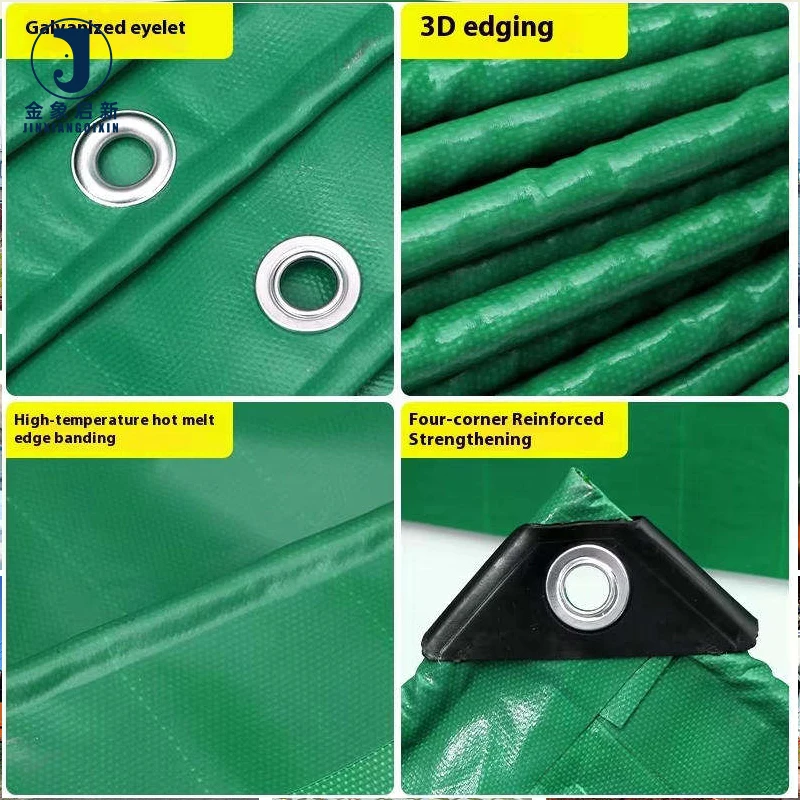
- Reinforce eyelet and tie-down points with additional PVC patches at high-stress duct flange connections
- Store rolls horizontally on pallets to prevent permanent creasing in the base fabric
- Allow material to acclimatise to above 10°C before unrolling and welding in cold-site conditions
- Use only PVC-compatible cleaners to avoid plasticiser extraction from the glossy or matte surface
- Cut panels with seam allowance that accounts for overlap width and the selected denier’s flexibility
Before You Request a Quote
Provide the duct diameter or structure geometry, the fire-retardant or anti-static standard your site requires, and the total linear metre quantity. Specify whether you need finished fabricated sections or roll stock for your own workshop, and indicate if a pre-production sample is required for weld testing and compliance submission.
Frequently Asked Questions
Q: What fire-retardant or anti-static standard does the fabric meet, and is a test report supplied?
A: Treatment grades are available for various standards, but the specific grade must be confirmed against your project requirement before order confirmation. A test report matching the agreed standard is supplied with the shipment documentation, enabling your site safety officer to close the compliance file without delay.
Q: How is GSM verified on finished tarpaulin to prevent underweight delivery?
A: Every roll undergoes 100% pre-shipment inspection where actual coating weight is measured and compared against the material specification sheet. The inspection record accompanies the shipment so you can cross-reference the stated GSM against the quoted value before the material enters your fabrication workshop.
Q: Can the tarpaulin be fabricated into ventilation duct sections with welded seams rated for airflow flex?
A: Yes. Custom duct diameters and section lengths are fabricated using hot-air welding, with seam parameters calibrated to the selected GSM grade and denier. Welded seams are evaluated at the flex zones where cyclic airflow pressure concentrates, ensuring the seam outlasts the fabric body.
Q: What base fabric denier is recommended for mining duct versus membrane structure use?
A: Mining ventilation ducts subject to continuous airflow flex and particulate abrasion typically require higher denier such as 840DX840D or 1000DX1000D. Membrane structures under biaxial tension may use 500DX500D or higher depending on the span and wind-load calculation. Confirm the grade with your engineering specification.
Q: What documentation accompanies shipment for site compliance audits?
A: Each shipment includes the material specification sheet, applicable treatment test reports, pre-shipment inspection record, roll packing list, certificate of origin and ISO/CE facility certificates. This package is structured to satisfy the documentation requirements of mining, aviation and construction site audits.