

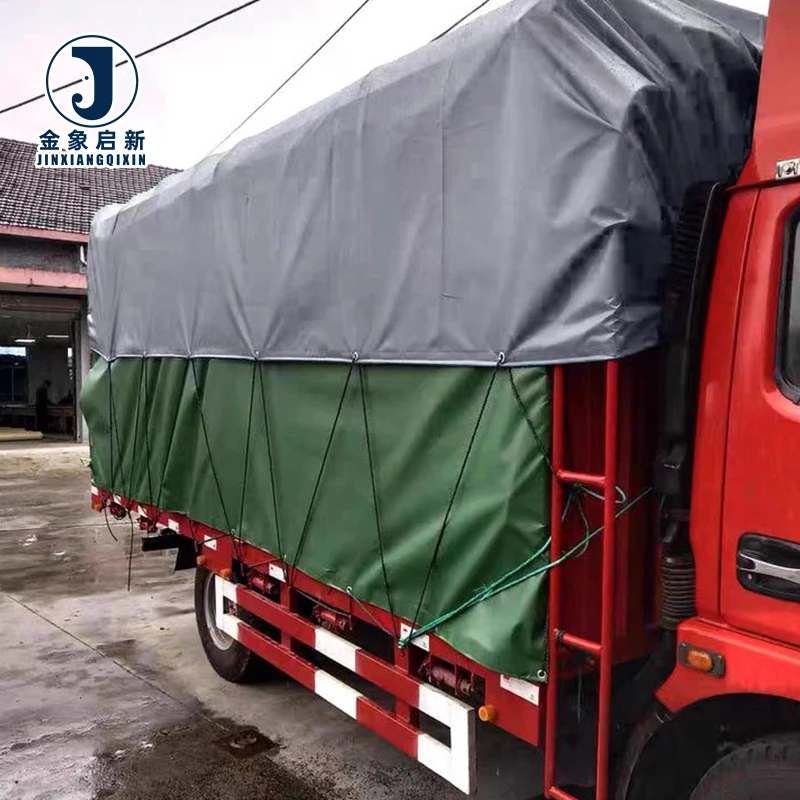
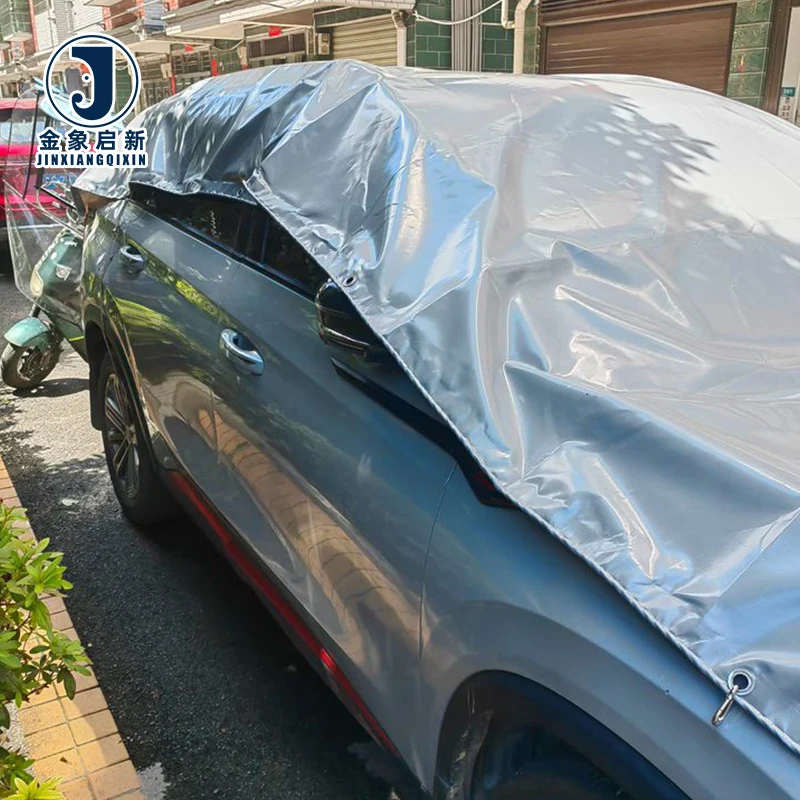
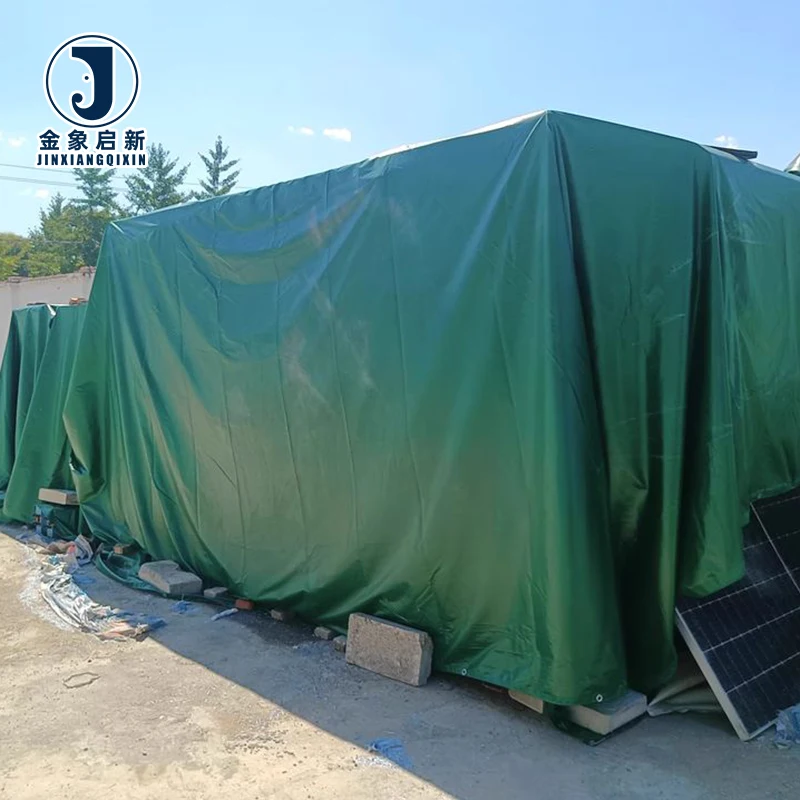
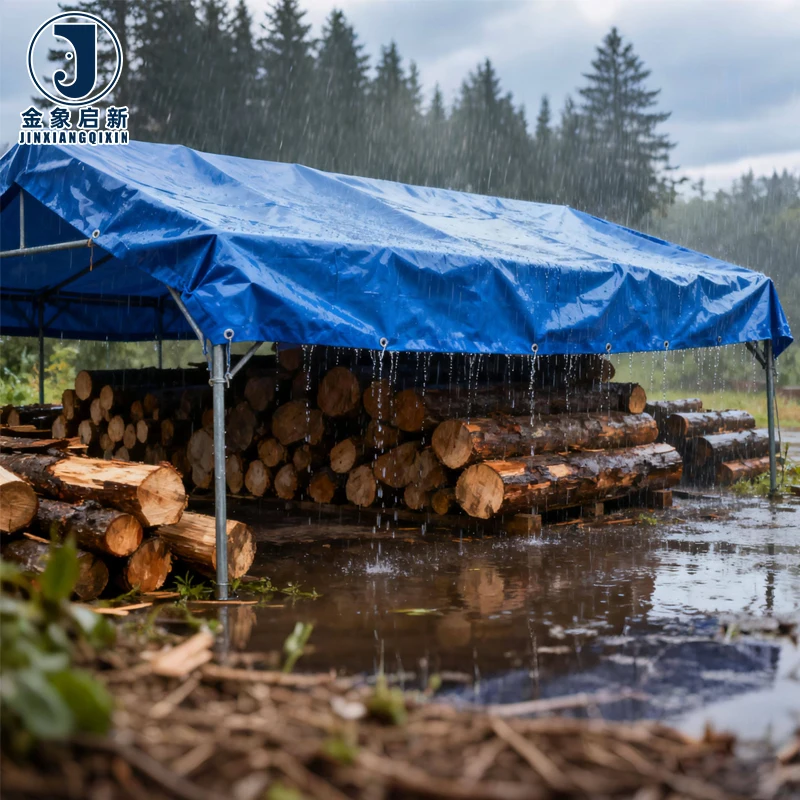
Deep Process Control Over Coating Weight — Every roll of PVC Tarpaulin Roll 950 gsm is verified against the specified coating weight at each production stage, ensuring the material arriving at your facility matches the technical data sheet.
Technical Specifications
| Parameter | Value |
|---|---|
| Product Type | PVC Coated Tarpaulin Roll |
| Weight (GSM) | 950 (range covers product family — confirm the grade for this item) |
| Base Fabric Denier | 1000D (heavy-duty); 500D (medium-sized); 500D-2000D (super heavy) |
| Coating Technology | Lamination technology and hot melt coating technology |
| Total Thickness | 0.70-1.0 mm (heavy-duty); 1.2-1.5 mm (super heavy) |
| Tensile Strength (Warp/Weft) | 2000-2500 / 1800-2200 N/5cm (heavy-duty); 2500-3000 / 2200-2800 N/5cm (super heavy) |
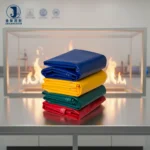
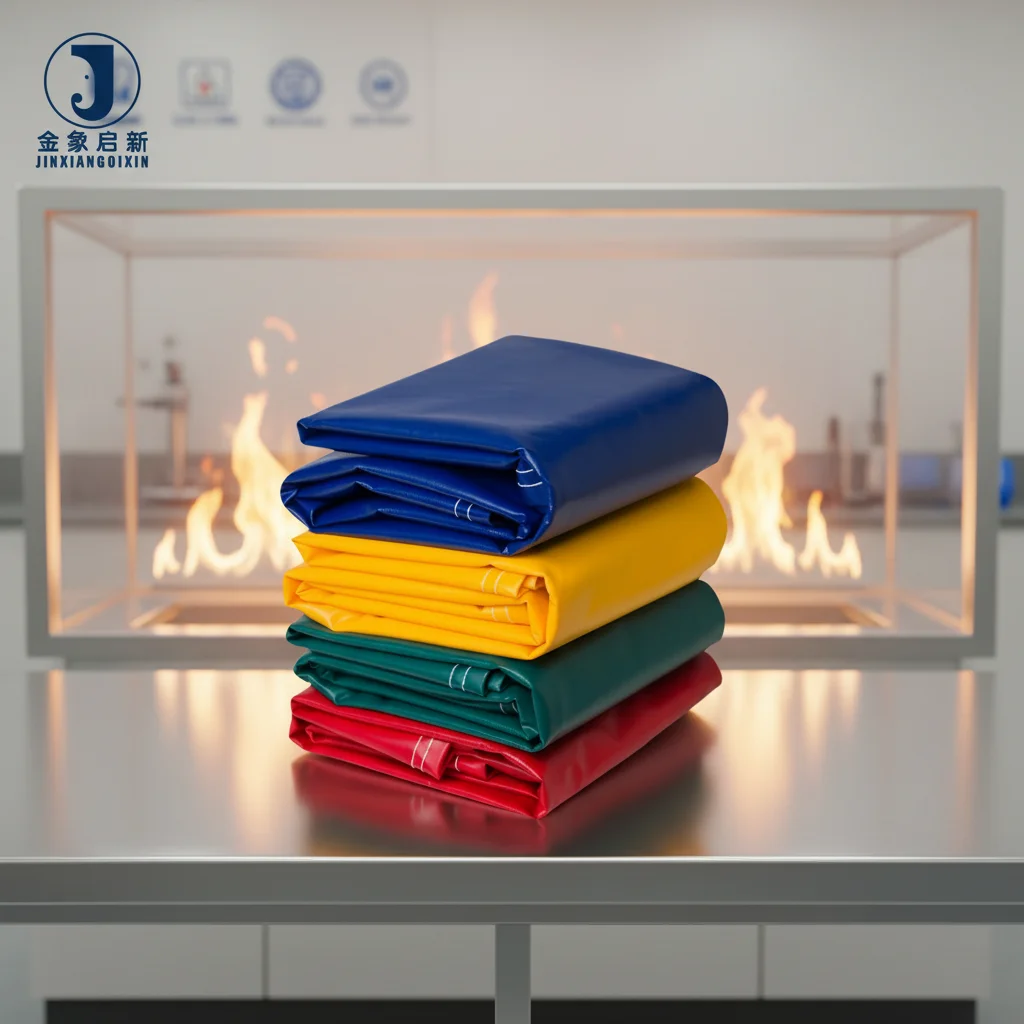
| Color Options | Blue, Blue/Orange, Green, Grey, Black, Clear, Grey/Green, Orange, or custom |
| Treatment Options | Flame retardant, anti-static, anti-UV, mold proof, cold resistant cracking (grades and test basis not stated in source — confirm required standards) |
| Waterproof | Fully waterproof coated construction |
| Standards | ISO, CE |
Application Suitability
| Application | Exposure & Requirement |
|---|---|
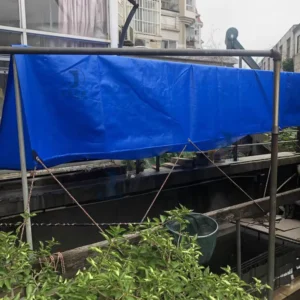
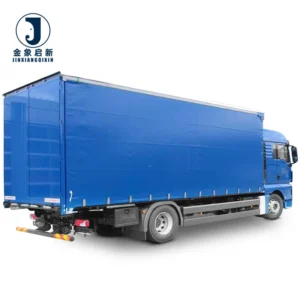
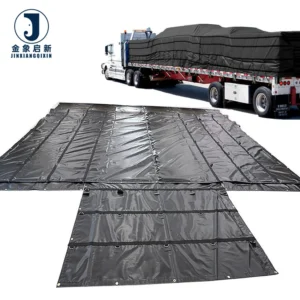
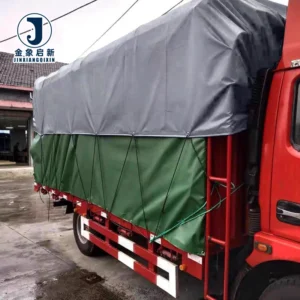
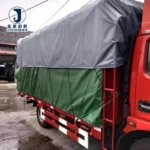
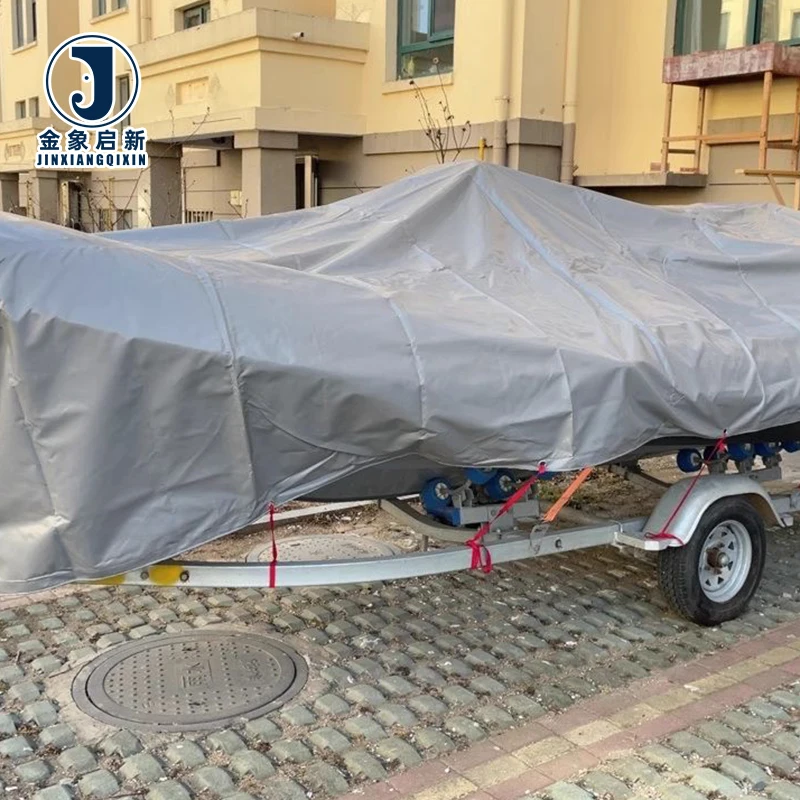
| Heavy truck and trailer tarpaulin covers | Road vibration, weather exposure, load flex at seams and tie-down points |
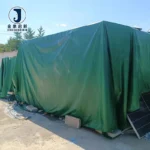
| Industrial pipe canopy and tensioned structures | Permanent outdoor UV exposure, wind load, structural tension stress |
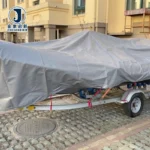
| Engineering protective cloth for machinery | Moisture, dust, UV degradation, physical abrasion from site handling |
| Aviation and mining ventilation ducts | Fire safety compliance, anti-static requirements, airflow pressure |
| Membrane and inflatable structure fabric | Tensile stress, weld integrity, long-term weathering |
Why Specified GSM Does Not Guarantee Fabric Integrity on Arrival
Coating weight must be verified at the roll, not just on the quotation.
A common failure in coated fabric procurement is receiving material that is lighter than the agreed specification. When the PVC Tarpaulin Roll 950 gsm arrives underweight, the shortfall is rarely distributed evenly — it appears as thin spots in the coating layer, which become the first points of failure under UV exposure or mechanical stress. The base fabric denier and the coating adhesion method matter as much as the stated GSM, yet these are often left unverified until the fabric is already in production [NEED_CITE: coating weight verification methods for PVC coated fabrics].
Hot Melt Coating Adhesion and Base Fabric Integration
The structural integrity of any PVC coated tarpaulin depends on how thoroughly the coating penetrates and bonds with the base fabric. Hot melt coating technology forces the PVC compound into the weave of the high-toughness polyester yarn, creating a mechanical bond that resists delamination even when the material is flexed repeatedly at welded seams. This is critical for truck covers and ventilation ducts where the fabric undergoes constant mechanical stress. Lamination technology, by contrast, applies the coating as a pre-formed film bonded to the fabric surface, which can be more cost-effective but requires careful control of the adhesive layer to prevent peeling under tension.
Fire Safety and Anti-Static Compliance for Specialist Environments
For mining, tunnelling and aviation ventilation applications, the fire classification and anti-static performance of the fabric are not optional — they are contractually mandated by site safety regulations. Available in flame retardant grades, but the specific classification must be confirmed against your target market’s requirements before production begins. A fabric described as flame retardant without a stated test standard cannot be submitted for site compliance approval [NEED_CITE: fire retardant classification standards for ventilation duct fabrics in mining]. Similarly, anti-static treatment must be specified with a measurable surface resistance value if the installation environment requires it.
Decoding the Specification Sheet for Procurement Decisions
The weight in GSM and the base fabric denier together determine how the material behaves under load. A 1000D base fabric with a 950 gsm total weight will distribute tensile force differently than a 2000D base at the same coating weight — the heavier yarn carries more load per thread, while the denser weave of a 1000D fabric resists tear propagation across a wider area. The coating method also affects fabrication: hot melt coated fabric typically allows stronger thermal welds because the PVC compound is integrated into the yarn structure, while laminated fabric requires precise temperature control to avoid compromising the adhesive layer during welding. Thickness values ranging from 0.70 mm to 1.5 mm indicate the total build of the coating, which directly influences cold resistance and handling flexibility on site.
The Cost of Specification Mismatch in Specialist Applications
When a ventilation duct is installed underground without the required fire-retardant certification, the entire installation may be rejected at the compliance inspection — not because the fabric failed, but because the paperwork does not match the site mandate. Colour variation between rolls in the same order becomes visible once membrane structures are installed side by side, forcing selective replacement. Welded seams that fail before the fabric body are almost always traced back to incorrect heat settings for the specific coating method, or to material that arrived below the specified coating weight and lacked the compound depth needed for a strong thermal bond [NEED_CITE: weld failure analysis in PVC coated technical fabrics].
Production Capability Aligned to Technical Fabric Requirements
Three full production lines and 36 sets of professional equipment support consistent output of coated fabric across the specification range. The 10-person R&D team handles material selection and sample development for specific application requirements, including custom width, treatment combinations and colour matching. Dedicated quality assurance at every production stage means coating weight, adhesion strength and colour consistency are checked in-process rather than only at final inspection. Samples are developed within days for custom requirements, allowing you to verify weld behaviour, colour and hand feel before committing to bulk production [NEED_CITE: in-process quality control standards for coated fabric manufacturing].
Documentation & Verification
- Material specification sheet stating GSM, base fabric denier, coating method and colour reference for the exact roll batch
- Test report for flame retardant and anti-static grades where applicable, matched to the standard required by your site
- Pre-shipment inspection record confirming coating weight verification per roll before dispatch
- Roll packing list with batch identification enabling traceability from production line to installation site
- ISO and CE certificates supporting compliance documentation for regulated environments
Fabrication, Handling & Storage
- Hot welding temperature must be calibrated to the hot melt coating layer to achieve full seam penetration without burning
- Store rolls vertically on pallets to prevent compression marks across the 950 gsm coating surface
- Allow cold-stored rolls to reach ambient temperature before unrolling to avoid cracking the cold resistant coating
- Use compatible PVC-based repair patches and solvent cement matching the lamination coating chemistry
- Plan cut patterns across the roll width to minimise waste and reduce the number of welded seams in the finished product
- Clean with mild detergent only — aggressive solvents can degrade the surface treatment and affect colour fastness
Request a Technical Proposal
To provide an accurate specification and lead time, we need your application environment, the fire safety or anti-static standard required by your site authority, the roll width and length configuration that suits your fabrication setup, and whether you require finished panels or stock rolls. If colour consistency across multiple rolls is critical for your installation, request a pre-production sample for approval before bulk manufacturing begins.
Frequently Asked Questions
Q: How is the coating weight verified before my rolls are dispatched?
A: Each roll is weighed and measured during pre-shipment inspection to confirm the GSM matches the stated specification. The inspection record is included with your shipping documentation, so you can cross-reference the batch on arrival.
Q: Can you supply a test report for the flame retardant grade I need?
A: Flame retardant treatment is available in multiple grades. Provide the standard required by your site or market authority, and the corresponding test report will be prepared and submitted with the material specification sheet.
Q: What welding parameters work best for this PVC coated fabric?
A: Welding temperature and dwell time depend on the coating method — hot melt coated fabric typically requires different settings than laminated fabric. We recommend testing on a sample piece before production to confirm seam strength.
Q: How do you ensure colour consistency across multiple rolls in one order?
A: Rolls within a single production run are matched against the approved colour reference. For large orders spanning multiple runs, a pre-production sample is recommended to confirm batch-to-batch colour alignment before full production.