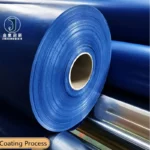

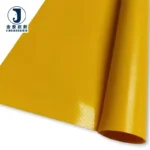
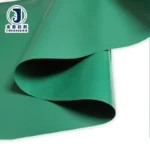
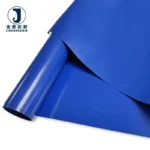
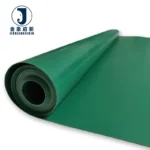
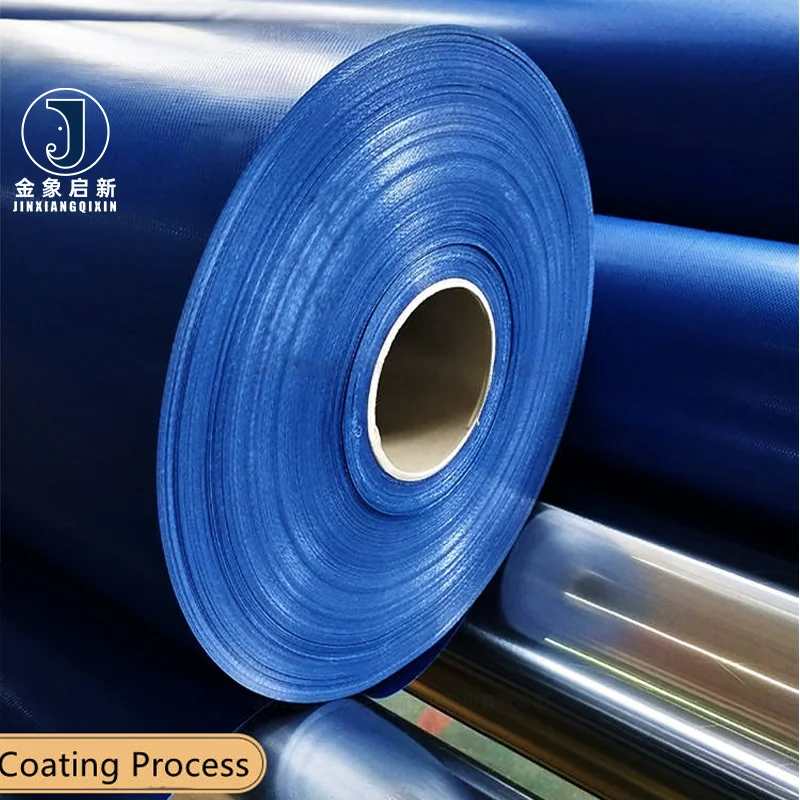
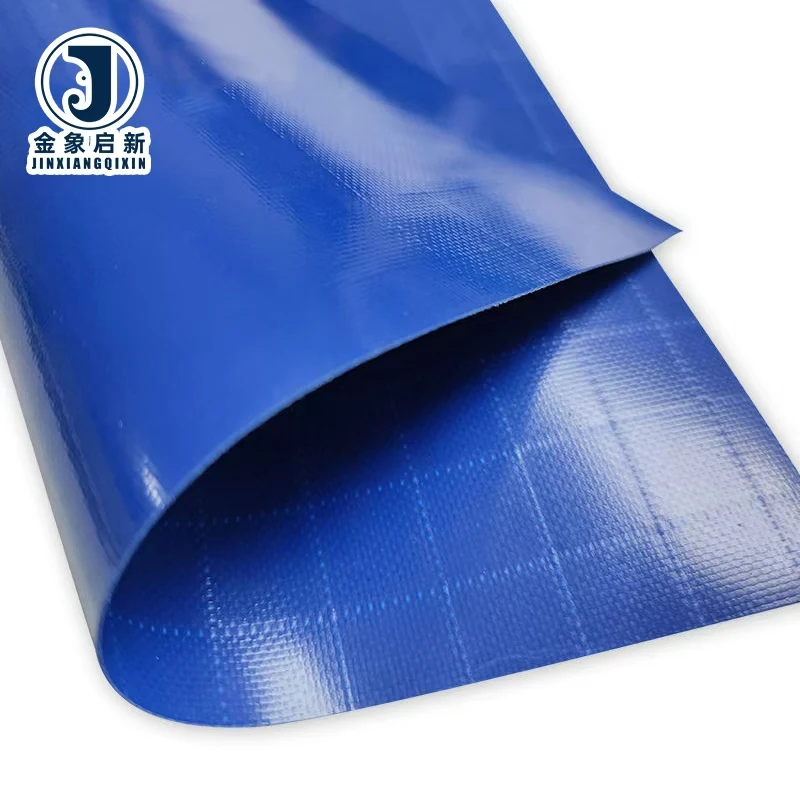
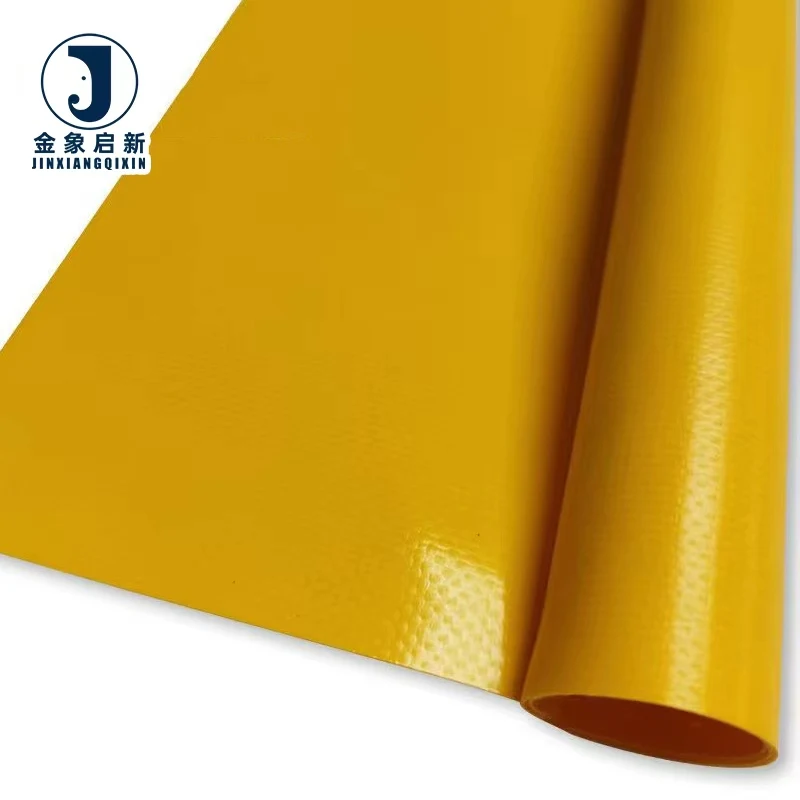
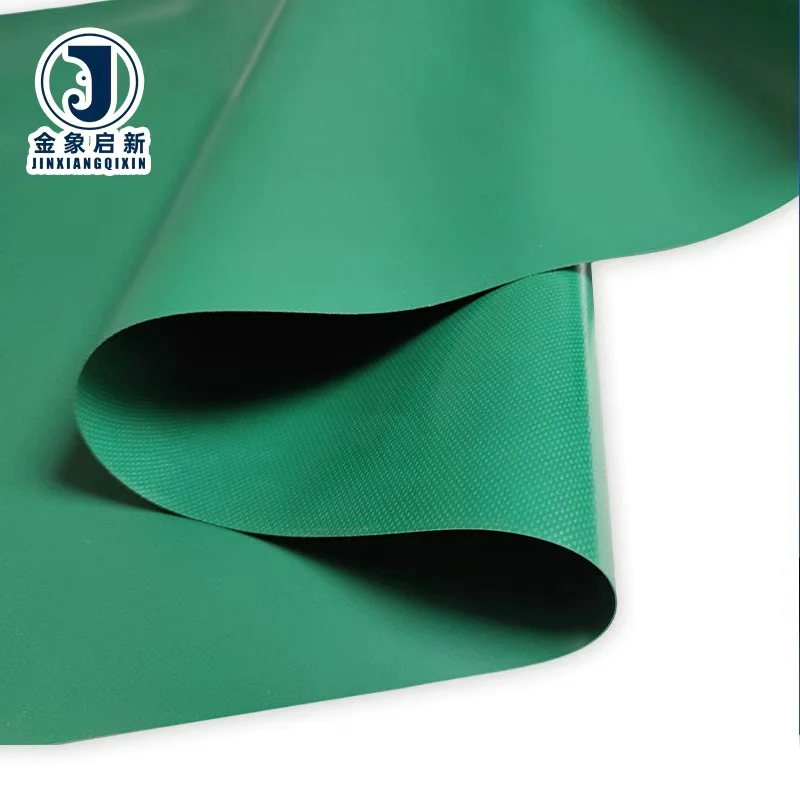
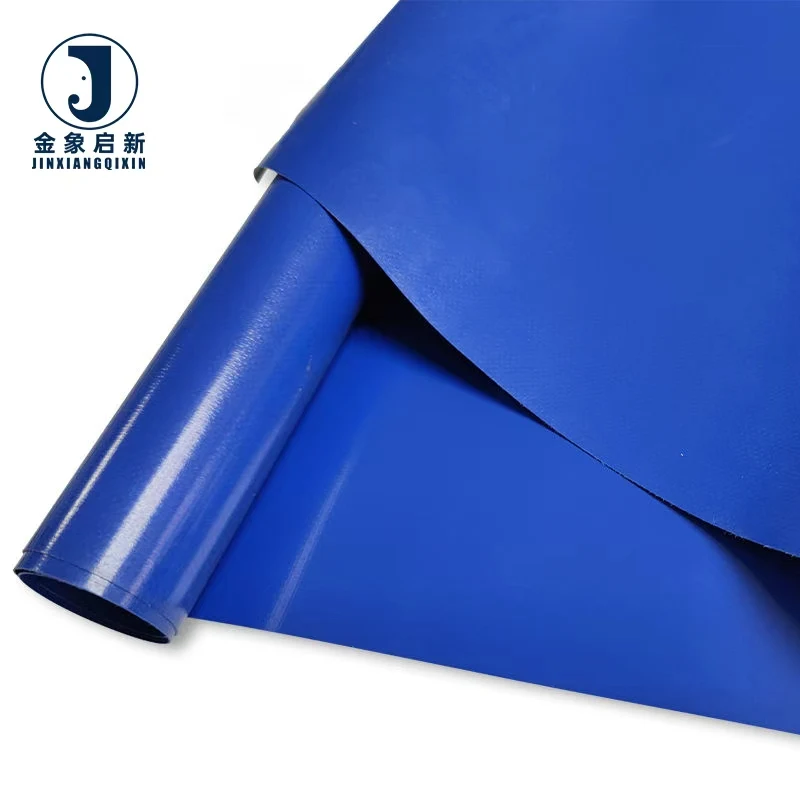
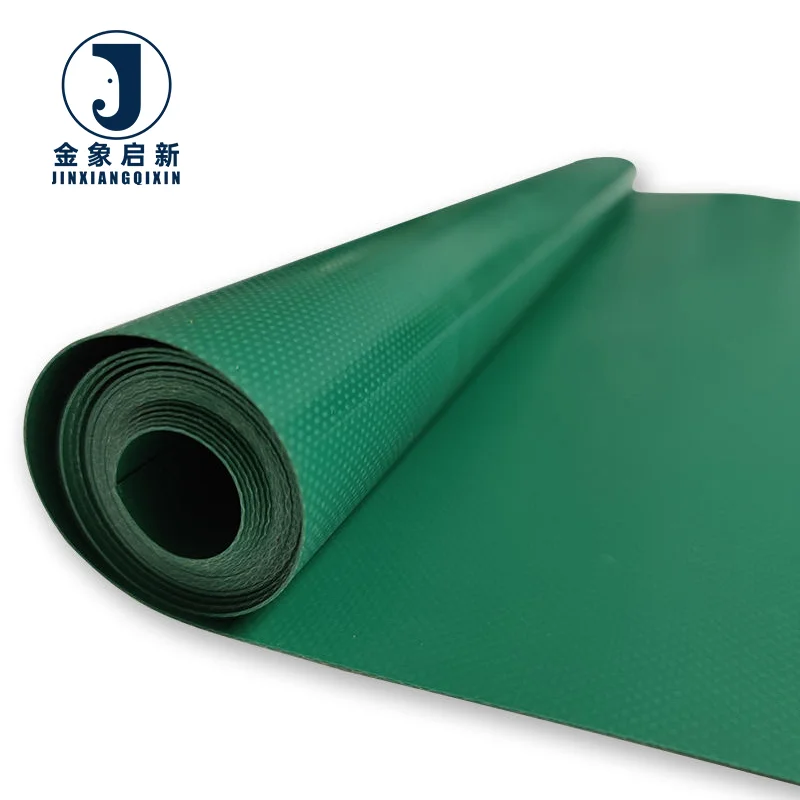
Coating Adhesion Control — verified PVC coating weight on a 1000D×1300D polyester base ensures predictable hot-air weld behaviour and consistent seam strength across every roll.
Technical Specifications
| Parameter | Value |
|---|---|
| Specification | 650gsm 1000D×1300D 20*20 |
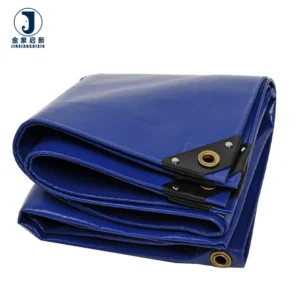
| Product Type | PVC Coated Tarpaulin Roll |
| Base Fabric | 1000D×1300D Polyester, 20×20 Mesh |
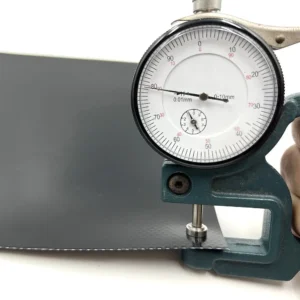
| Total Thickness | 0.46 mm |
| Coating | Double-Sided PVC |
| Warp Tensile Strength | 2550 N (standard not stated in source) |
| Pick Tensile Strength | 2250 N (standard not stated in source) |
| Surface Finish | Smooth, leather-like texture |
| Flame Retardant | Available in flame retardant grades — confirm the grade required for your market |
| UV Treatment | Anti-UV (test basis not stated in source) |
| Waterproofing | Fully waterproof coated construction |
Application Suitability
| Application | Exposure & Requirement |
|---|---|
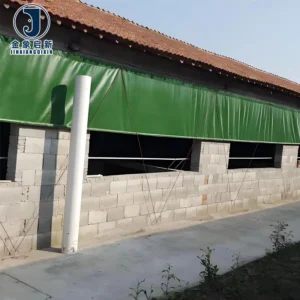
| Membrane & Inflatable Structures | Continuous tension, wind load, UV exposure, heat-welded seam integrity |
| Industrial Ventilation Duct Housings | Airflow pressure, flex fatigue, fire-retardant compliance on site |
| Custom Fabricated Equipment Covers | Abrasion at contact points, weather exposure, field repairability |
| Awning & Tent Panels | UV degradation, water ingress at seams, colour consistency across panels |
Why Coating Weight Matters More Than GSM on the Data Sheet
GSM alone tells a technical buyer almost nothing about how the fabric will behave at the weld line or under sustained flex. A 650 gsm PVC coated tarpaulin roll can fail at the seam while the base fabric remains intact if the coating adhesion is inconsistent.
When a roll arrives lighter than the quotation stated, fabricators face rework costs and delayed project timelines. The PVC coating weight and its bond to the 1000D×1300D polyester base govern whether a hot-air weld holds or peels under load [NEED_CITE: tensile and tear test methods for coated fabrics per ISO 1421]. Technical specifiers need verified coating data — not just a headline GSM figure — to set weld parameters with confidence.
Coating Adhesion and Weld Predictability
The double-sided PVC coating on this PVC coated tarpaulin 650 gsm material specification provides a smooth surface that responds consistently to hot-air and high-frequency welding. Fabricators setting temperature and dwell time need the coating thickness to remain uniform roll-to-roll so that weld parameters established on the first roll apply to the last. Inconsistent coating weight forces operators to adjust settings mid-run, increasing reject rates at the seam.
Base Fabric Denier and Tensile Behaviour
The 1000D×1300D yarn construction with 20×20 mesh density provides warp tensile strength of 2550 N and pick strength of 2250 N. This asymmetric denier arrangement — heavier in the fill direction — suits applications where the fabric spans a frame and carries load primarily across the width. Membrane panels and duct sections that experience biaxial stress benefit from this construction because neither direction becomes the weak link prematurely [NEED_CITE: relationship between base yarn denier and tear propagation in coated fabrics].
Reading the Thickness and Mesh Count Together
Total thickness of 0.46 mm results from the PVC coating weight layered onto the 20×20 woven base. A tighter mesh count would restrict coating penetration and reduce interlayer adhesion, while a looser weave could allow coating strike-through that affects surface smoothness. This grade balances coating mass with weave openness to support reliable heat-weld parameter windows. Fabricators working with high-frequency welders will find the 0.46 mm thickness compatible with standard electrode settings used for medium-weight coated polyester.
The Hidden Cost of Specifying on GSM Alone
When procurement teams treat GSM as the sole material benchmark, coating adhesion and base fabric construction remain unverified until the roll reaches the fabrication floor. Welds that fail before the fabric does — typically at the point the load flexes most — trace back to insufficient coating bond strength rather than low tensile values. Colour variation between rolls in the same order becomes visible only after panels are installed side by side, triggering costly replacement [NEED_CITE: common causes of coated fabric seam failure in field installations]. These failures are preventable when the specification includes verified coating weight, base denier, and mesh count rather than a single GSM number.
Procurement Verification at Every Production Stage
Deep process control over coating weight means each roll is checked against the stated 650 gsm specification during production, not only at final inspection. The three full production lines and 36 sets of equipment support batch consistency across large orders where roll-to-roll colour and thickness variation would otherwise cause fabrication rejects. A dedicated QA/QC process inspects every roll before shipment, reducing the chance that an out-of-spec roll reaches the customer’s cutting table.
The 10-person R&D team develops samples within days when a fabricator needs to confirm weld parameters or evaluate colour matching before committing to a production run. Samples carry the same coating formulation as bulk supply, so test results translate directly to the order.
Documentation & Verification
- Material specification sheet stating exact GSM, 1000D×1300D base fabric, and coating type
- Test report for flame retardant grades citing the standard and classification achieved
- Pre-shipment inspection record with roll-by-roll weight verification against 650 gsm
- ISO and CE certificates linked to batch traceability through the roll packing list
- Certificate of origin included for international dispatch and customs clearance
Fabrication, Handling & Storage
- Hot-air weld temperature windows depend on the 0.46 mm total thickness — calibrate on a sample swatch before production runs
- The smooth PVC surface accepts high-frequency welding; verify electrode pressure settings for consistent seam peel strength
- Store rolls upright on end caps to prevent flat-spot deformation on the 1000D×1300D base fabric
- Avoid dragging rolls across unsealed concrete to protect the double-sided PVC coating from abrasion
- Field repairs use compatible PVC weld tape matched to the 650 gsm coating weight for reliable adhesion
- Plan cutting layouts to minimise off-cut waste given the roll width supplied
Requesting a Technical Quote
Provide your target weld method — hot air, high frequency, or wedge — along with the seam strength requirement for your end use. Specify any flame-retardant classification your local building or mining code demands so the correct grade is selected. Confirm whether you need full rolls or pre-cut panels, and indicate the annual volume to align production scheduling.
Frequently Asked Questions
Q: How is GSM verified on each roll before dispatch?
A: Each roll is weighed and measured during production to confirm the 650 gsm specification is met. The pre-shipment inspection record documents roll-by-roll weight data. Buyers can cross-check on arrival using a calibrated scale and a known-area sample cut from the roll edge.
Q: Which flame-retardant standards are available for this material?
A: Flame-retardant treatment is available in multiple grades. The specific classification — such as DIN 4102 B1, NFPA 701, or M2 — must be confirmed against your local compliance requirements before production. A test report citing the achieved grade accompanies the shipment.
Q: What weld methods work with the 0.46 mm thickness?
A: Hot-air welding and high-frequency welding both suit this double-sided PVC coated fabric. The smooth surface and consistent coating weight allow stable parameter settings. We recommend running a test swatch to establish temperature, speed, and pressure before full production.
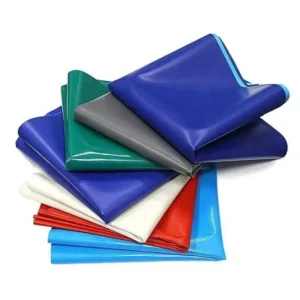
Q: How is colour consistency maintained across rolls in one order?
A: Pigment formulation is locked at the coating stage, and production runs use a single batch where possible. The pre-shipment inspection includes a visual check for roll-to-roll colour variation. Buyers specifying colour-critical installations can request a reference swatch before bulk dispatch.