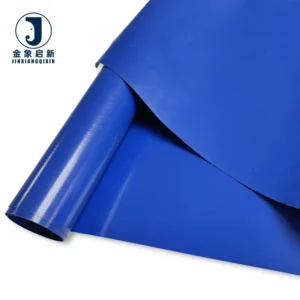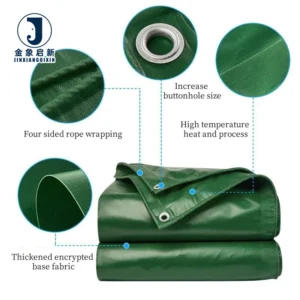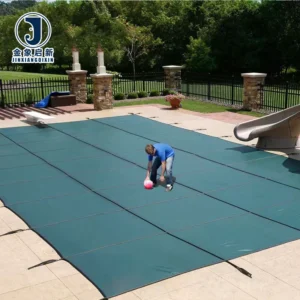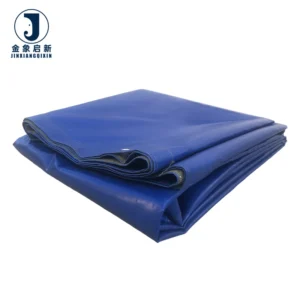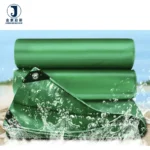

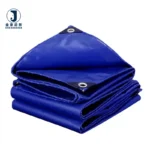


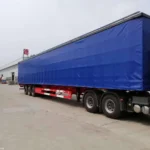
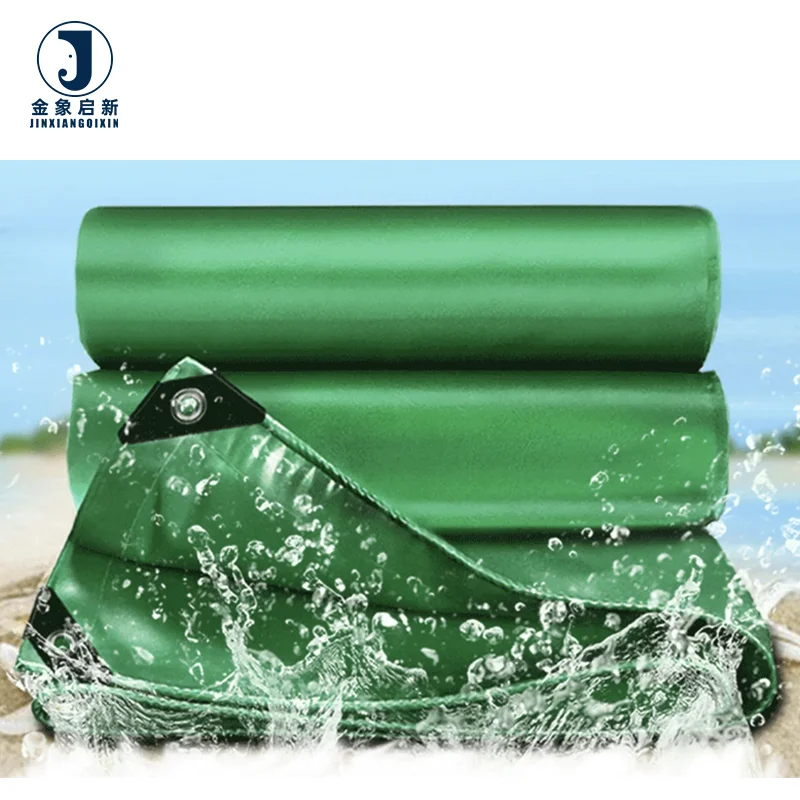
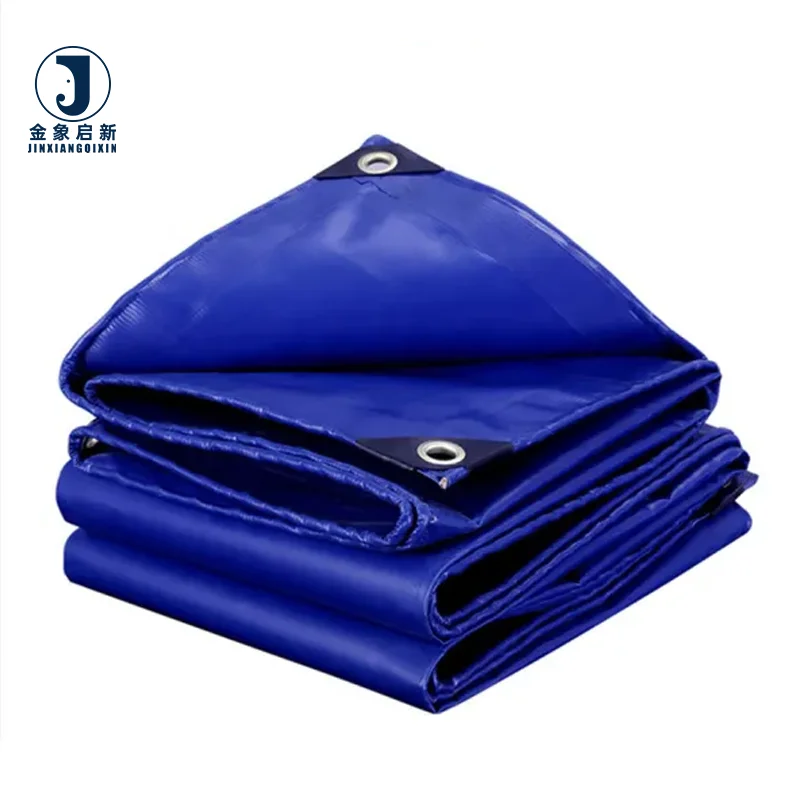

Coating Process Control — Laminated and hot-melt coating technologies are managed across three full production lines to deliver consistent adhesion and peel strength on every PVC tarpaulin roll leaving the facility.
Technical Specifications
| Parameter | Value |
|---|---|
| Product Type | PVC Coated Tarpaulin |
| Material Composition | PVC coating on high-strength polyester mesh fabric |
| Coating Technology | Laminated technology & Hot-melt Coating technology |
| Base Fabric Denier Range | 500D×500D up to 2000D×2000D |
| Mesh Count Examples | 15×15 / 18×18 / 18×25 / 20×20 / 23×24 / 30×17 / 30×30 |
| Weight Range Available | 250 GSM to 1000 GSM (multiple discrete grades) |
| Total Thickness Range | 0.32 mm to 0.65 mm |
| Roll Width Options | 2.0 m / 2.1 m |
| Roll Length Options | 50 m / 75 m |
| Color Options | Blue / Red / Yellow / Light Blue / Grey (customized colors available) |
| Key Features | Waterproof, cold crack resistance, anti-mildew, anti-static treatment available, outstanding tearing strength for welding |
| Flame Retardant | Available in flame retardant grades — confirm the grade required for your market |
| UV Treatment | UV treatment available — test basis to be confirmed per order |
| Standards | ISO, CE |
Application Suitability
| Application | Exposure & Requirement |
|---|---|
| Mining ventilation duct | Continuous airflow pressure, particulate abrasion, mandatory fire and anti-static compliance underground |
| Tunnelling flexible ducting | High humidity, rock dust, compression from equipment movement, regulatory safety audit |
| Inflatable membrane structure | Sustained internal air pressure, wind load, UV exposure on outer surface, welded seam integrity |
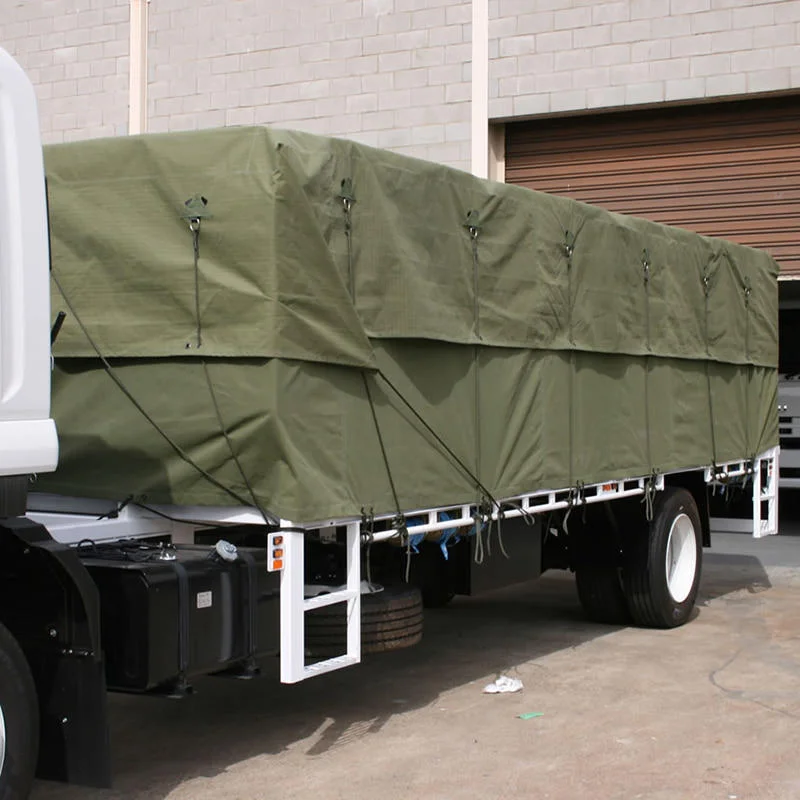
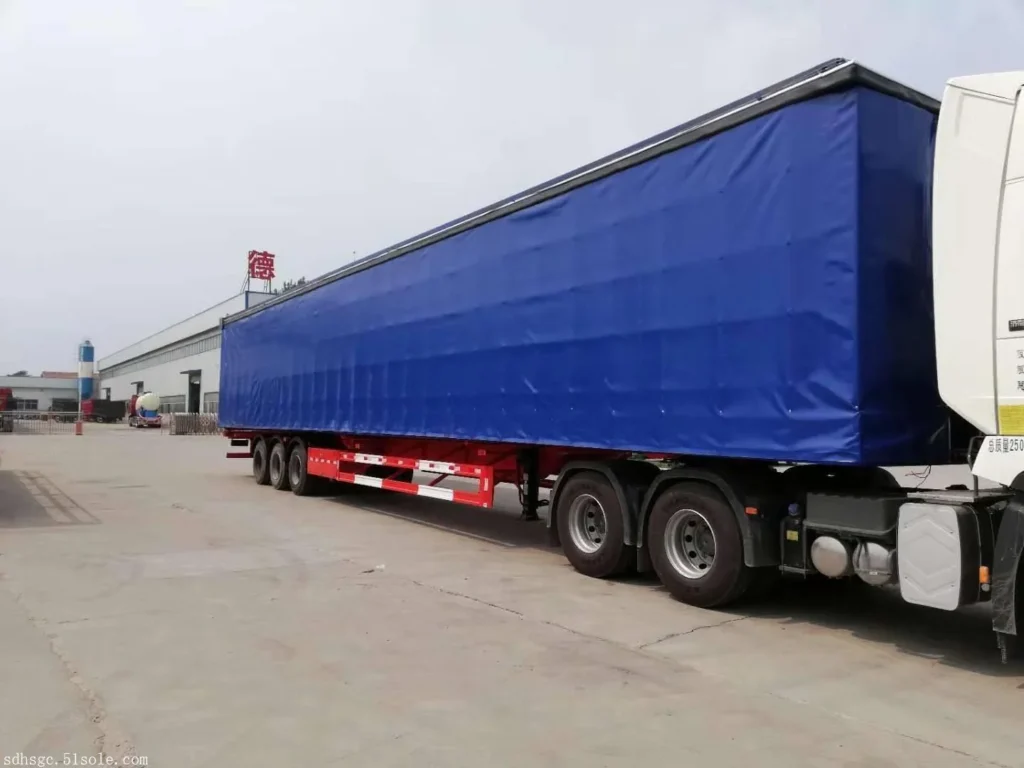
| Heavy-duty truck side curtain | Constant flexing at hinges, road debris impact, weather cycling, daily roll-up tension |
| Cargo ship deck cover | Saltwater exposure, sustained UV, wind-driven rain, cargo abrasion during voyage |
| Temporary warehouse enclosure | Wind load on large surface area, thermal cycling, long-term UV degradation |
What Happens When Coated Fabric Fails at the Weld Line
Weld failure before fabric failure is almost always a specification mismatch, not a workmanship problem.
I have reviewed field reports where coated fabric performed well in tensile testing yet split open along the heat-welded seam within months of installation. The root cause is rarely the welding equipment. More often, the base fabric denier and mesh density were chosen for cost rather than for the flex-cycle demands of the application. When a ventilation duct expands and contracts under airflow pulsation, or a truck curtain folds thousands of times at the hinge point, the seam endures concentrated stress that a lighter base fabric cannot distribute. [NEED_CITE: tensile and tear test methods for coated fabrics per ISO 1421] Selecting a PVC coated tarpaulin roll with the correct denier-to-weight ratio for the specific stress profile is the single most impactful decision a technical buyer makes.
How Base Fabric Architecture Determines Real-World Performance
The denier of the polyester yarn and the mesh count together define the mechanical skeleton inside every PVC tarpaulin roll. A 500D×500D base with a 20×20 mesh delivers a balanced weave suited to moderate-duty covers, while a 1000D×1000D base at 23×24 mesh concentrates more yarn mass into the same area, raising both tensile and tear resistance substantially. For applications like mining ventilation ducts or inflatable structures where internal pressure and flex cycling are constant, specifying a higher denier with a tighter mesh count provides the structural reserve that prevents crack propagation at stress points.
Coating Technology and Its Effect on Adhesion
The choice between laminated technology and hot-melt coating technology directly influences peel strength and long-term coating integrity. Hot-melt coating drives PVC into the interstices of the polyester mesh under heat and pressure, creating a mechanical lock that resists delamination even after repeated flexing. Laminated technology bonds pre-formed PVC film layers to the base fabric, offering a smooth surface finish that is well-suited to applications requiring easy cleaning or printed identification. For technical and industrial applications where the fabric will be heat-welded into ducts, tanks or structural membranes, confirming the coating method ensures that welding parameters and seam strength expectations are aligned with the material delivered. [NEED_CITE: peel strength test methods for PVC coated fabrics per ISO 2411]
Reading the Specification Sheet Beyond GSM
Weight in grams per square metre is the most commonly quoted figure, yet it tells an incomplete story without the supporting denier and mesh data. Two rolls can share the same GSM but differ markedly in tear resistance if one uses a finer denier with higher coating load while the other uses a heavier denier with less coating. The 1000D×1000D at 20×20 mesh, for example, allocates more of its weight to structural yarn and less to coating fill compared to a 500D×500D at the same GSM, resulting in different behaviour under puncture and tear loading. Thickness values from 0.32 mm to 0.65 mm correlate with overall mass but should always be read alongside the base fabric specification to understand whether that thickness comes from yarn substance or from coating build-up. Cold crack resistance and anti-mildew treatment extend functional life in low-temperature or high-humidity environments, but these treatments must be confirmed on the specification sheet rather than assumed.
The Hidden Cost of Underspecifying for Technical Applications
When a ventilation duct is fabricated from a lighter grade than the airflow pulsation demands, the consequence is not immediate failure but accelerated fatigue at every welded joint. Mining and tunnelling sites operate under safety audits where fire-retardant and anti-static compliance is verified on arrival — a roll delivered without documented certification halts installation and triggers contractual penalties. Batch-to-batch colour variation across rolls in the same shipment becomes visible once panels are welded side by side on a membrane structure, forcing selective replacement and project delays. [NEED_CITE: fire safety classification standards for flexible duct materials in underground mining] Each of these outcomes traces back to specification decisions made at the inquiry stage, not to manufacturing defects.
Why This PVC Coated Tarpaulin Roll Range Fits Technical Procurement
Three full production lines and 36 sets of professional equipment support volume orders without sacrificing coating consistency from the first roll to the last in a container load. The 10-person R&D team handles material selection against specific compliance requirements, developing samples within days so that flame retardant grade and anti-static surface resistance can be validated before production commitment. Dedicated QA/QC runs at every production stage with 100% pre-shipment inspection, ensuring that GSM, colour and coating adhesion are verified against the purchase order rather than left to chance. [NEED_CITE: ISO 9001 quality management system requirements for coated fabric manufacturing] Nearly 30 years of focused experience in coated fabric translates to process control that holds coating weight and yarn tension within specification across long production runs.
Documentation & Verification
- Material specification sheet listing exact GSM, base denier, mesh count and coating method for each roll
- Flame retardant test report matched to the grade specified on the purchase order
- Anti-static surface resistance measurement record for mining and tunnelling applications
- Pre-shipment inspection record confirming GSM and colour consistency across all rolls
- ISO and CE certificates supplied as part of the shipping documentation package
Fabrication, Handling & Storage
- Hot-weld temperature and dwell time must be set according to the coating technology — laminated and hot-melt grades respond differently to heat input
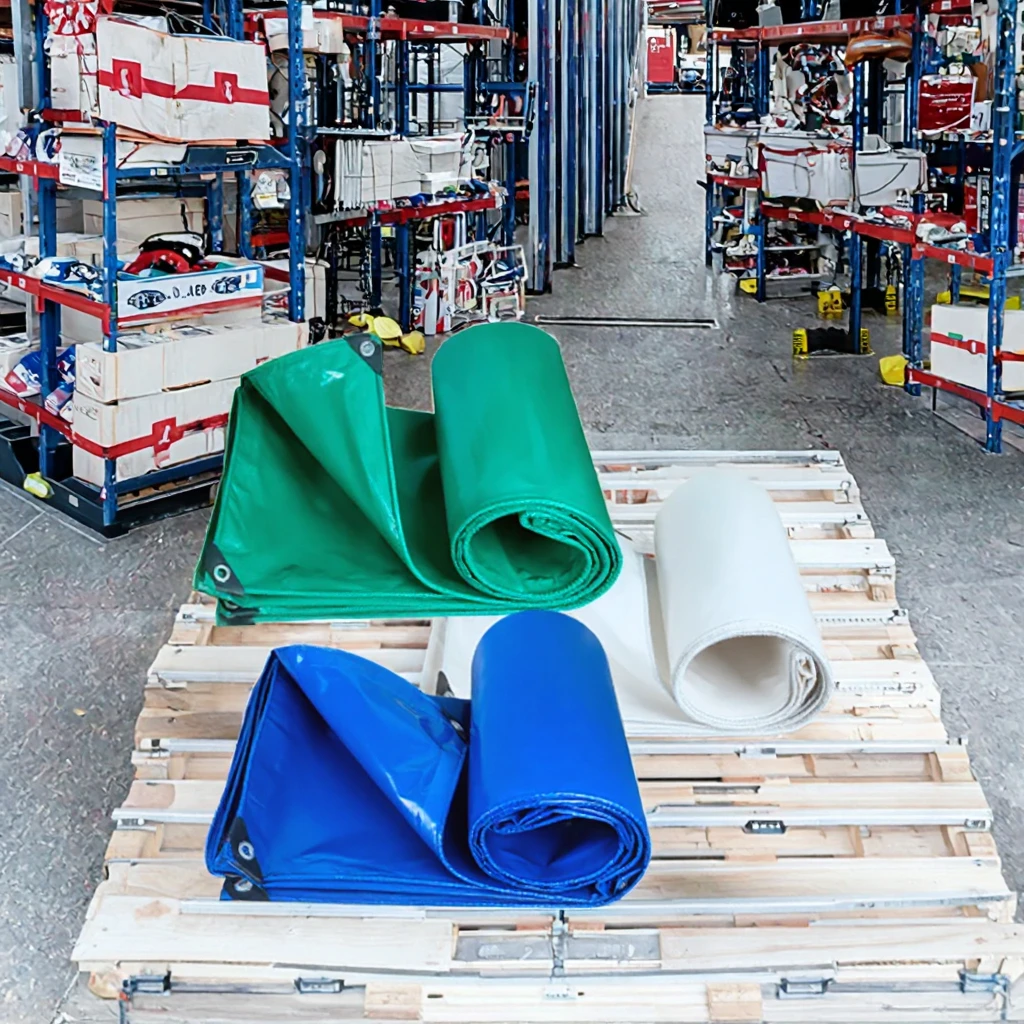
- Store rolls upright on pallets to prevent flat-spot deformation that affects unrolling and welding alignment
- Allow cold-stored rolls to reach ambient temperature before unrolling to avoid coating micro-cracking on lower GSM grades
- Reinforce tie-down eyelet zones with additional PVC patches when fabricating truck curtains from lighter denier options
- Cut panels with sealed edges where possible to prevent moisture ingress into the polyester base yarn at raw edges
Before You Request a Quotation
Provide the end-use application and the specific regulatory standards your market requires, including any fire-retardant grade or anti-static surface resistance threshold. Confirm the roll width and length that suit your fabrication layout, along with the annual volume so that production scheduling can be aligned. If colour matching or custom printing is needed, share a reference sample or Pantone code at the inquiry stage to allow accurate sample development.
Frequently Asked Questions
Q: How do I confirm the flame retardant grade matches my local fire code?
A: Flame retardant treatment is available in multiple grades. Share your target market standard such as DIN 4102 B1, NFPA 701 or M2 at the inquiry stage. A test report from an accredited laboratory will be supplied against the specific grade produced, so compliance can be verified before fabrication begins.
Q: What anti-static specification is available for underground mining duct?
A: Anti-static treatment can be applied to the PVC surface to reduce static charge accumulation in ventilated environments. The specific surface resistance value required by your mining regulation should be stated in the purchase order so that the treatment formulation and test documentation match the compliance threshold your site audit demands.
Q: How should I verify GSM on arrival against the quoted specification?
A: Each roll is inspected for weight before dispatch. On receipt, cut a measured sample from the roll end and weigh it on a calibrated scale to confirm the GSM matches the specification sheet. Any discrepancy beyond normal tolerance should be reported with the roll number for immediate resolution.
Q: Can welded seams achieve the same strength as the base fabric?
A: Welded seam strength depends on the coating technology and base fabric denier. Hot-melt coated grades with higher denier yarns generally deliver seam efficiency that approaches the fabric body strength. Request a welded sample panel to test peel and shear strength on your own welding equipment before committing to full production.
Q: What roll width and length should I choose for container loading?
A: Standard roll widths of 2.0 m and 2.1 m in 50 m or 75 m lengths are designed for efficient container loading. The optimal combination depends on your fabrication panel dimensions and the number of transverse welds you want to minimise. Share your cut list so that roll size can be matched to reduce offcut waste.