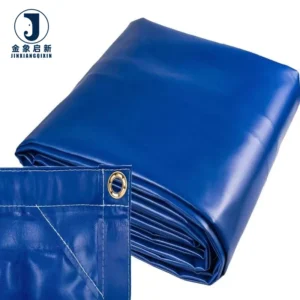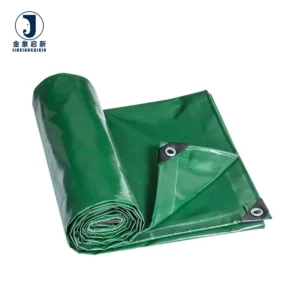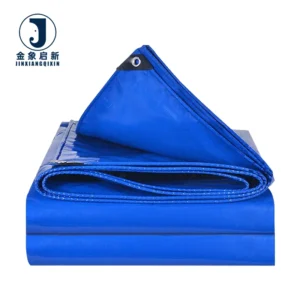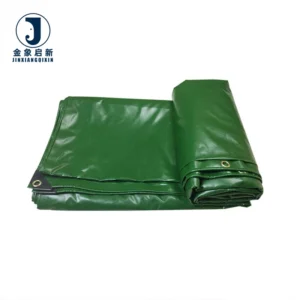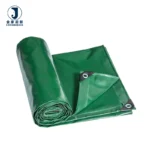
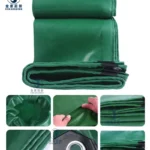

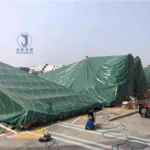
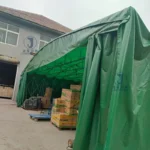
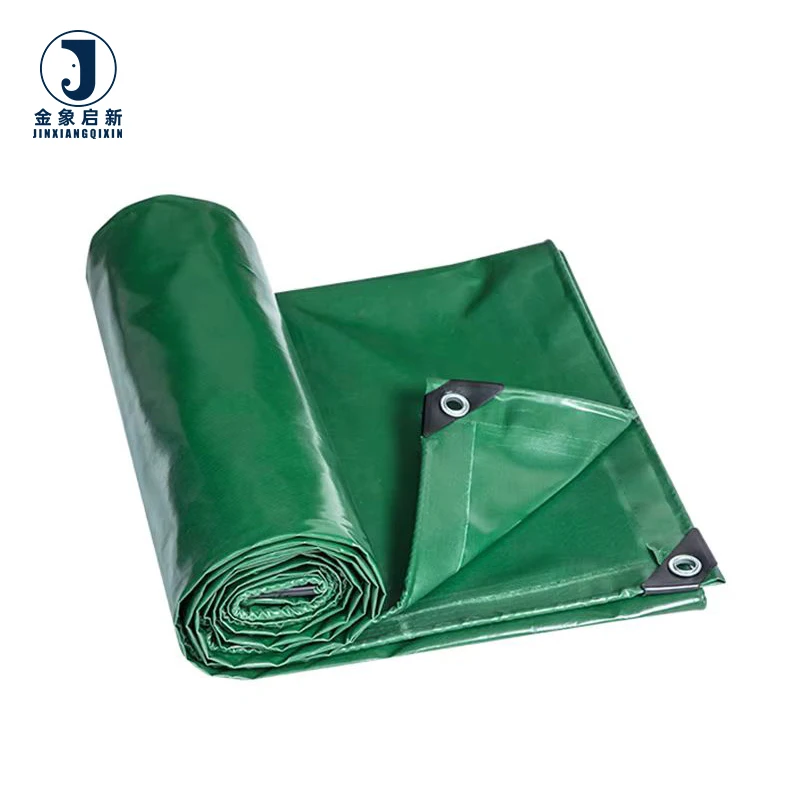
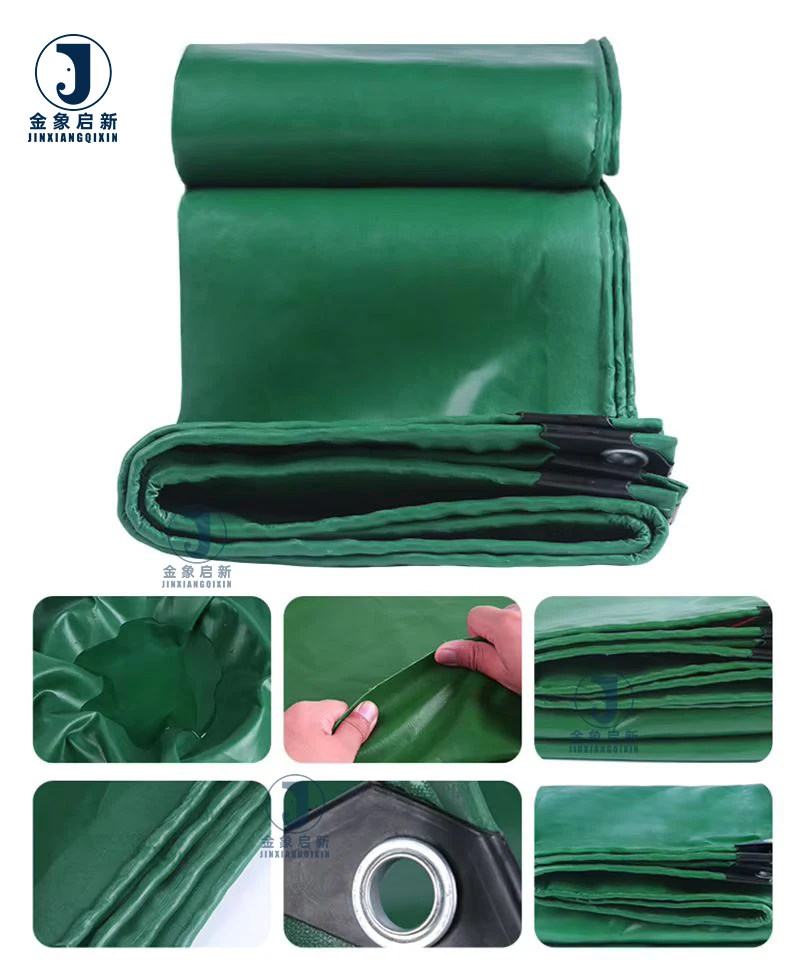
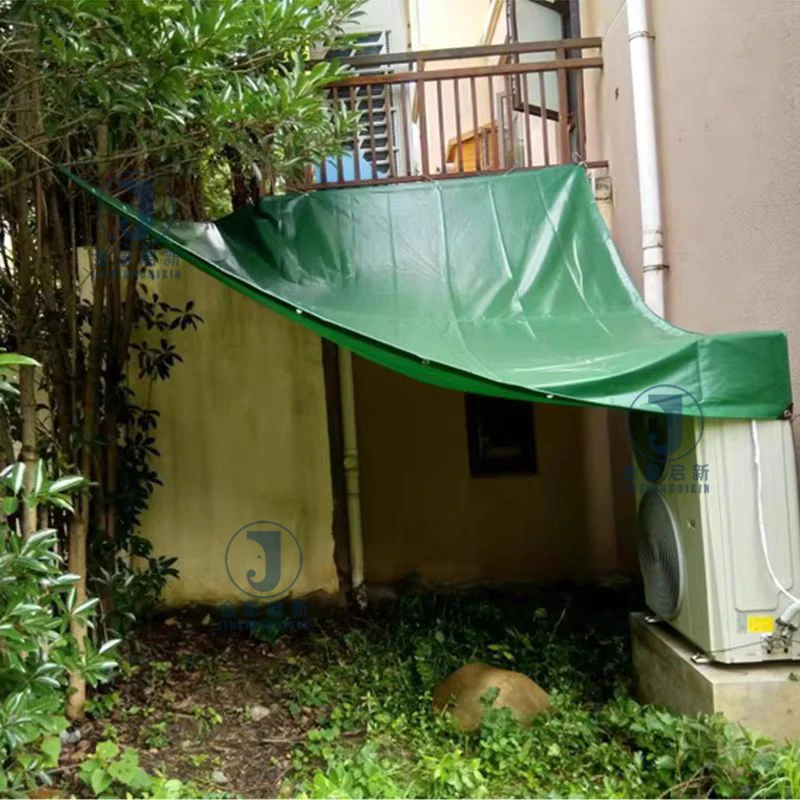
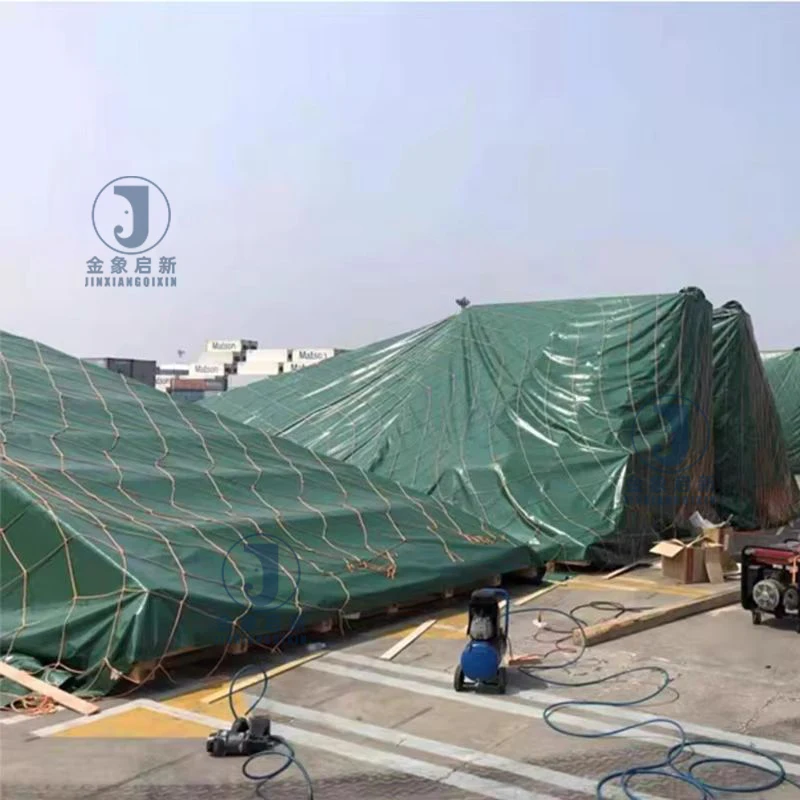

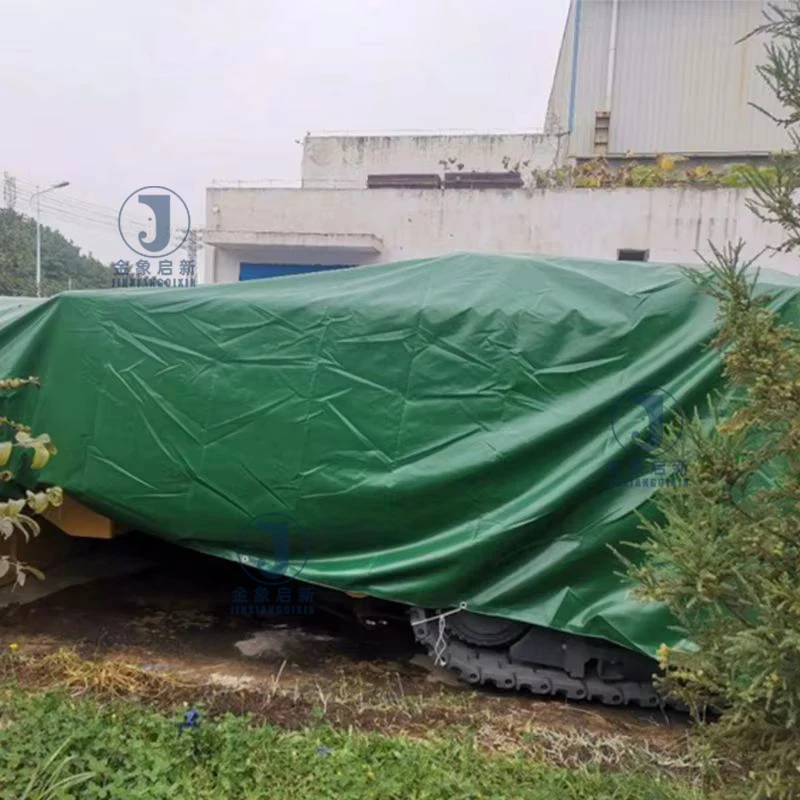
Proven Coating Process Control — Nearly 30 years of PVC coated fabric production ensures consistent coating weight, adhesion, and compliance documentation for every roll dispatched to regulated industrial sites.
Technical Specifications
| Parameter | Value |
|---|---|
| Product Type | PVC Coated Tarpaulin |
| Coating Material | PVC |
| Base Fabric | Woven Fabric |
| Weight (GSM) | At least 450 grams |
| Waterproof | Yes |
| Flame Retardant | Available in flame retardant grades — confirm the grade required for your market |
| UV Treatment | Available with UV treatment — test basis to be confirmed per project specification |
| Surface Finish | Glossy or matte finish available |
| Colour Options | Single or double side colour available on request |
Application Suitability
| Application | Exposure & Requirement |
|---|---|
| Mine and tunnelling ventilation ducts | Continuous airflow, rock dust abrasion, mandatory fire-retardant and anti-static certification |
| Aviation ground support structures | Fuel vapour proximity, UV exposure, membrane tension loading |
| Industrial equipment covers outdoors | Sustained rain, snow, temperature cycling, mechanical handling stress |
| Membrane and inflatable structures | Biaxial tension, wind loading, long-term UV and weather exposure |
Why Compliance Documentation Matters More Than the Label "Fire Retardant"
A PVC coated fabric without a traceable test certificate is a liability waiting to surface at your next site audit.
Ventilation duct fabric arrives on a mining or tunnelling project with no fire-retardant grade or anti-static test report attached. The site safety officer rejects the shipment. Work stops. Replacing the duct material mid-project costs far more than specifying certified PVC Coated Tarpaulin fire retardant fabric from the outset [NEED_CITE: fire safety compliance requirements for underground ventilation ductwork]. Procurement teams that treat flame retardancy as a checkbox rather than a documented specification routinely face project delays and re-inspection costs that dwarf the original material savings.
Ventilation Duct Construction and Airflow Demands
Industrial ventilation ducts in mining, tunnelling, and aviation ground support operate under constant internal pressure and external abrasion. The woven base fabric of this PVC Coated Tarpaulin fire retardant material provides tear resistance at flex points where the duct bends around tunnel contours or support structures. PVC coating delivers a continuous waterproof barrier that prevents moisture ingress into the airstream, which is critical in underground environments where humidity accelerates corrosion of surrounding steelwork.
Anti-Static Requirements in Regulated Environments
Underground mining and certain aviation fuel-handling zones mandate anti-static surface resistance to prevent spark ignition in dust-laden or vapour-rich atmospheres. This PVC coated fabric is compatible with anti-static treatment pathways that bring surface resistivity within the thresholds required by site safety codes [NEED_CITE: anti-static surface resistance standards for mining ventilation materials]. Specifying anti-static treatment at the inquiry stage ensures the coating formulation is adjusted during production rather than applied as an afterthought, which can compromise adhesion and long-term performance.
Weight, Weave, and Coating Method Explained
A minimum 450 grams weight class places this fabric in the medium-duty range, balancing handling flexibility with structural durability for duct fabrication and industrial covers. Weight alone, however, does not determine strength — the woven base fabric denier and thread count per centimetre govern tensile and tear resistance, while the PVC coating weight on each face determines abrasion life and waterproof integrity. Knife-over-roll coating produces a thicker, more uniform PVC layer suited to heat welding, whereas laminated coatings bond a pre-formed film to the base cloth and may show lower peel strength at welded seams. Specifying the correct coating method at inquiry stage directly affects how well fabricated duct joints and cover seams hold under sustained flexing and pressure cycling [NEED_CITE: coating method influence on peel strength in PVC coated woven fabrics per ISO 1421].
The Cost of Undocumented Specifications
When flame-retardant grade is assumed but not documented, the duct passes initial installation but fails the compliance audit weeks later, forcing a full strip-out and replacement under time pressure. Similarly, anti-static treatment that was never tested against the specific resistivity threshold required on site leaves the contractor exposed to regulatory shutdown [NEED_CITE: consequences of non-compliant ventilation duct materials in underground mining operations]. Colour inconsistency between rolls in the same order becomes visible once multiple duct sections are installed side by side, prompting client complaints on aesthetic grounds even where structural performance is unaffected. Welded seams that fail before the fabric itself are almost always traced to incorrect heat-welding parameters or a coating formulation not optimised for thermal bonding, rather than a defect in the base cloth.
Why Source This Fabric Here
Three full production lines and 36 sets of professional equipment support bulk roll output with consistent coating weight across the entire order. A 10-person R&D team handles material selection, custom width, and sample development so that trial rolls arrive within days rather than weeks. Dedicated QA/QC runs at every production stage — coating weight checks, adhesion tests, and visual inspection — culminating in 100 percent pre-shipment inspection before any roll leaves the facility. Custom widths, flame-retardant grades, and anti-static formulations are produced on the same lines as standard stock, meaning specialist requirements receive identical process control without inflated minimums or extended lead times.
Documentation & Verification
- Material specification sheet stating GSM, base fabric denier, coating method, and colour reference
- Test report for flame-retardant grade citing the applicable standard and classification achieved
- Anti-static surface resistivity test report where site regulations require documented compliance
- ISO and CE certificates covering the production management system
- Pre-shipment inspection record with roll-by-roll weight verification and packing list
Fabrication, Handling & Storage
- Heat-weld at temperatures suited to PVC coated fabric of at least 450 grams to ensure full coating fusion at seam overlap
- Store rolls upright on pallets to prevent permanent creasing of the woven base fabric and PVC coating layers
- Allow cold-stored rolls to acclimatise before unrolling to avoid cracking the PVC coating at low temperatures
- Use compatible PVC-based repair patches and solvent cement for field repairs on duct seams and cover surfaces
- Plan cutting layout to minimise offcuts and reduce the number of welded seams in high-stress duct sections
Request a Project-Specific Quotation
To receive an accurate specification and lead time, share the ventilation duct diameter or cover dimensions, the fire-retardant or anti-static standard your site mandates, and the total linear metres or roll count required. Indicate whether you need the fabric supplied in stock widths or custom slit to reduce waste during fabrication. Colour references, surface finish preference, and whether finished panels or raw rolls are needed will help the R&D team prepare samples that match your production requirements.
Frequently Asked Questions
Q: How do I confirm the fire-retardant grade matches my local fire safety code?
A: Provide the standard reference required on your project — such as a national mining regulation or building code classification — at the inquiry stage. The technical team will match the PVC coating formulation to that standard and supply a test report documenting the grade achieved. If your market accepts multiple equivalent standards, the team can advise which classification aligns with your documentation requirements.
Q: What surface resistivity level is needed for anti-static compliance in mining ventilation?
A: Mining regulations vary by jurisdiction, but most require surface resistivity below a defined threshold measured under controlled humidity conditions. State the regulation or resistivity limit at inquiry so the anti-static treatment can be integrated into the PVC coating during production. A test report confirming the measured value ships with the order.
Q: How is GSM weight verified before shipment?
A: Every roll undergoes a weight check during pre-shipment inspection. The measured GSM is recorded against the specification stated on the material sheet. This inspection record is included in the dispatch documentation, allowing you to cross-reference arrival weight against the agreed specification without relying solely on supplier claims.
Q: Can this PVC coated fabric be heat welded for duct fabrication?
A: Yes. The PVC coating on this woven fabric is compatible with hot-air and wedge welding methods used in duct and cover fabrication. Welding temperature, speed, and overlap width should be trialled on a sample piece to optimise seam strength. The R&D team can supply welding parameter guidance based on the specific coating weight and formulation ordered.
Q: What is the minimum order for custom widths or specialist treatments?
A: Minimum quantities depend on the custom width, colour, and treatment combination requested. Standard widths typically carry lower minimums, while custom slit widths or specific flame-retardant grades may require a production run threshold. Submit your required dimensions and treatment specification to receive a confirmed minimum and lead time.