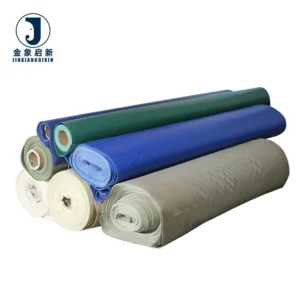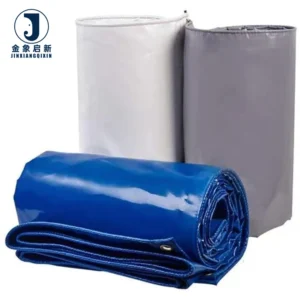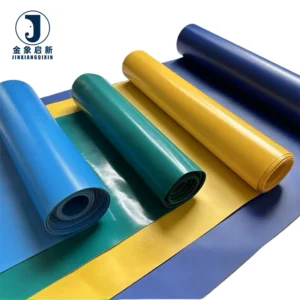
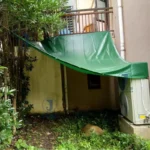
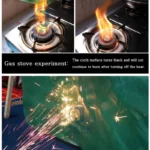

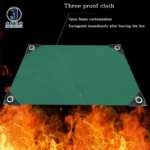
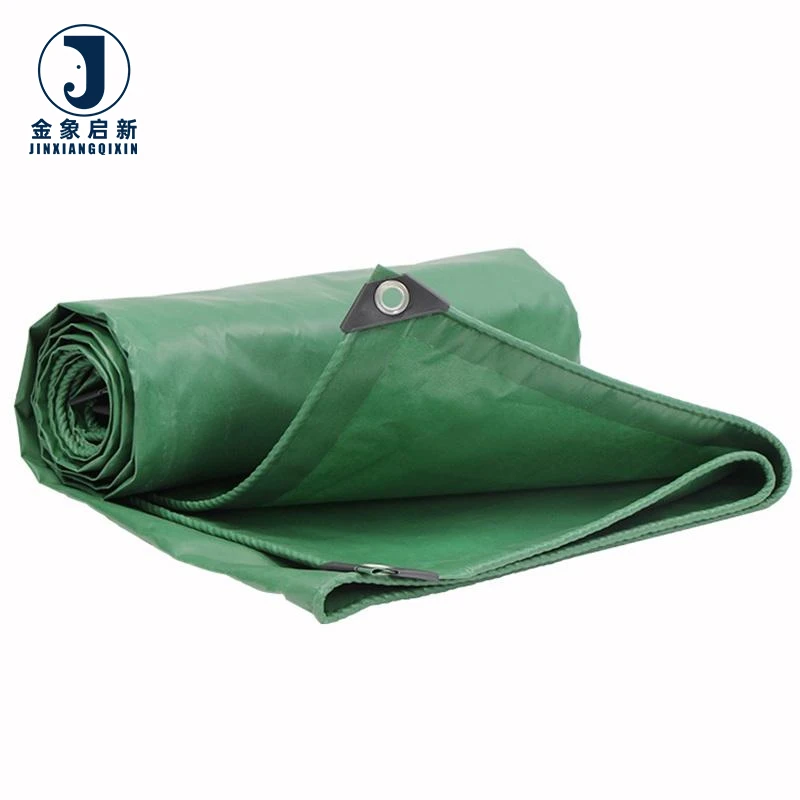
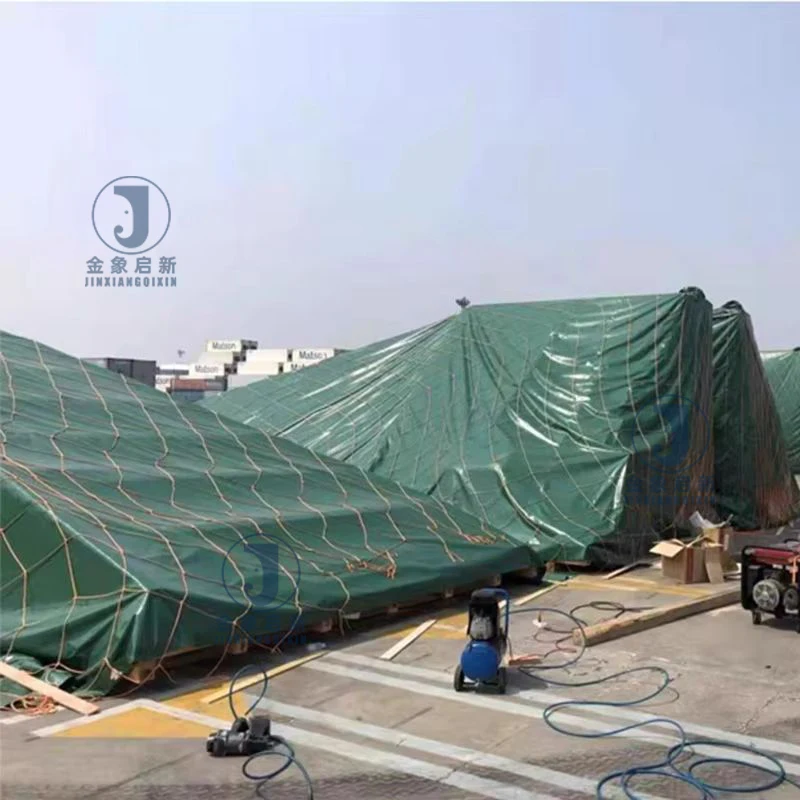
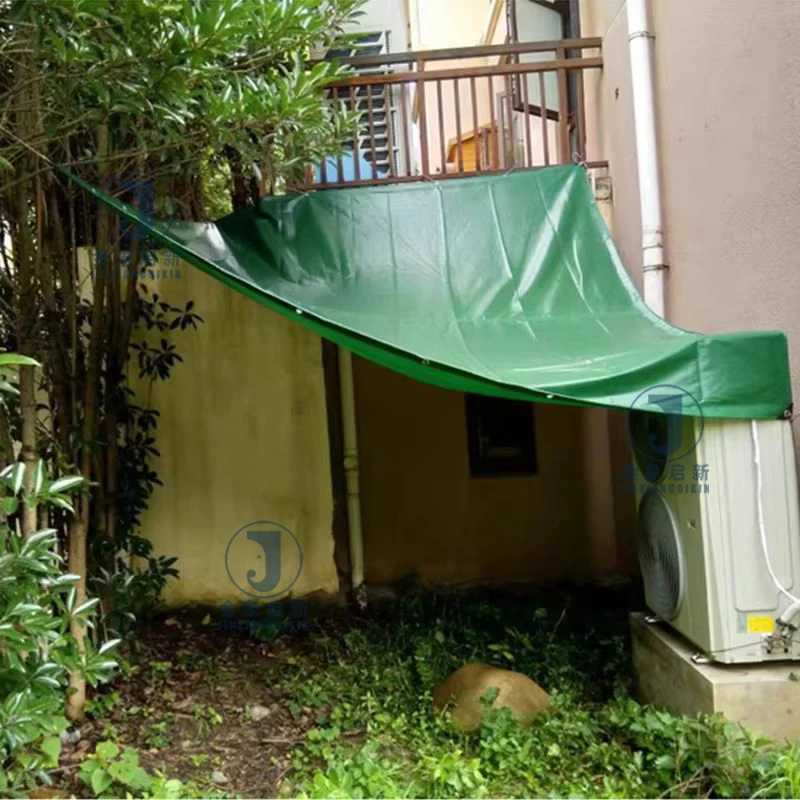
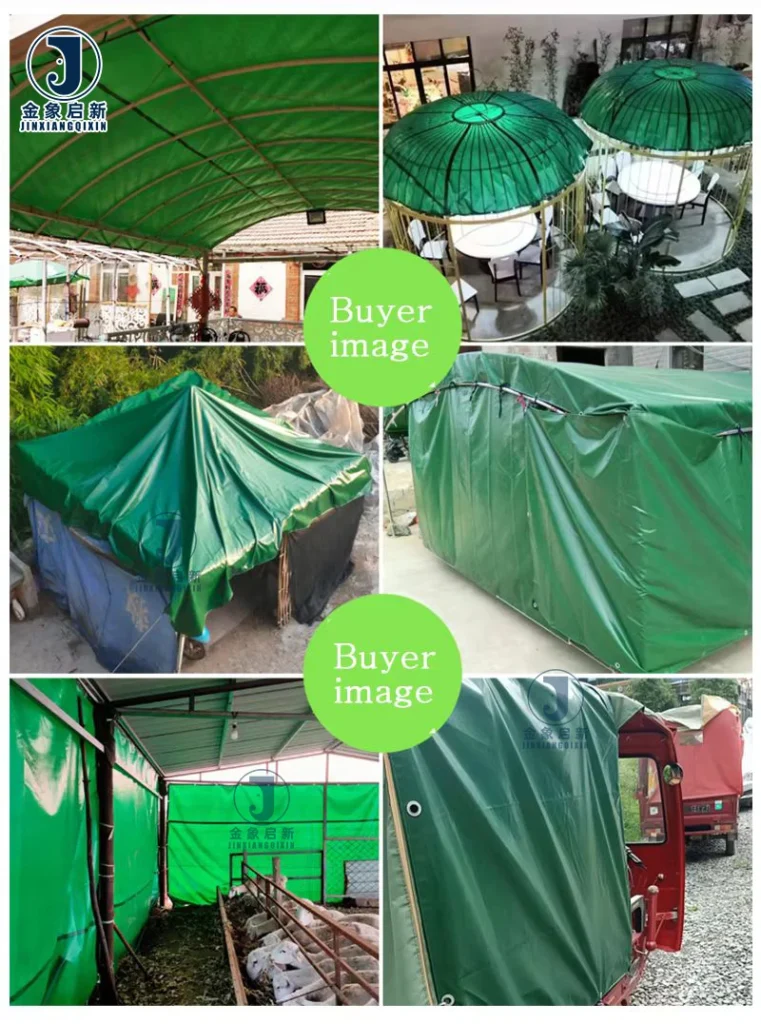
Consistent Coating Weight — Every roll ships with verified GSM data and base fabric specification, matching the quoted grade for technical structure fabrication.
Technical Specifications
| Parameter | Value |
|---|---|
| Product Type | PVC Coated Tarpaulin Roll |
| Material | PVC + High-strength polyester mesh fabric |
| Coating Method | Laminated technology & Hot-melt Coating technology |
| Weight (GSM) | 350gsm, 420g, 500gsm, 550gsm, 600gsm, 750gsm |
| Total Thickness | 0.32mm, 0.35mm, 0.4mm, 0.45mm, 0.5mm, 0.65mm |
| Roll Size | 2m width 75m length / 2.1m width 50m length |
| Surface Finish | Glossy Surface or Matt Surface |
| Waterproof | Double-sided 100% Waterproof |
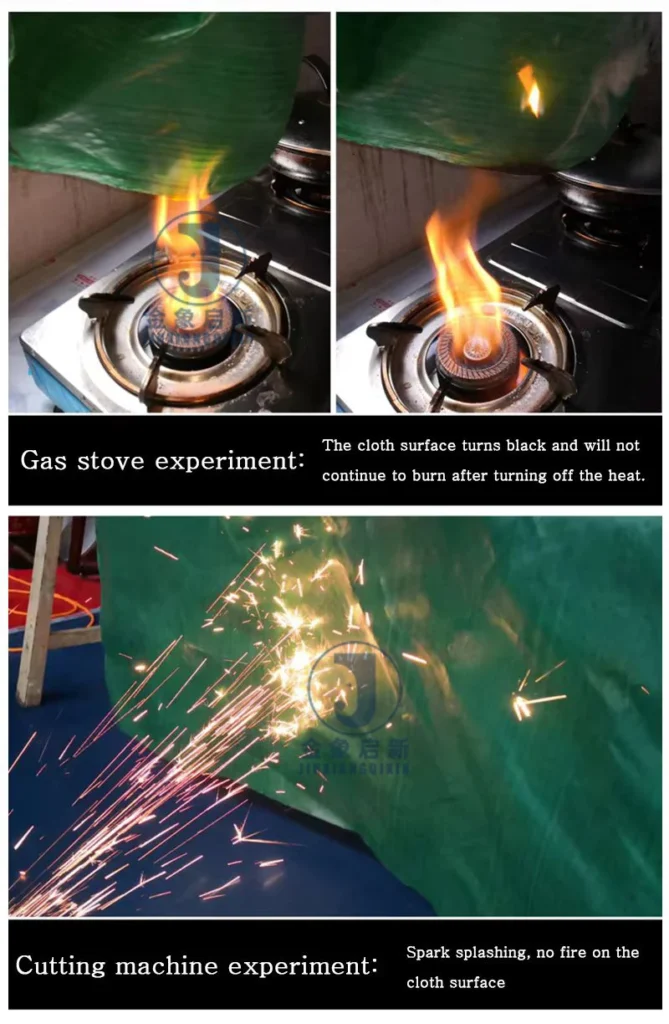
| Flame Retardant Grade | Available in flame retardant grades — confirm the grade required for your market |
| UV Treatment | Available with UV treatment — confirm the test basis required for your market |
| Anti-Static | Anti-Static treatment (surface resistance or standard to be confirmed) |
| Anti-Mildew | Yes |
| Cold Crack Resistance | Yes |
| Tensile Strength | High tension strength (test standard not stated in source) |
| Tear Strength | High tear strength (test standard not stated in source) |
| Adhesion Strength | Good adhesion strength (test standard not stated in source) |
| Service Life | 3-7 years under normal circumstances |
| Standards | ISO, CE |
Application Suitability
| Application | Exposure & Requirement |
|---|---|
| Membrane structures | Continuous tension loading, solar radiation, wind flutter — demands high adhesion and dimensional stability |
| Inflatable structures | Repeated inflation cycles, internal pressure stress, flex fatigue at seam lines |
| Mining ventilation ducts | Sub-surface humidity, particulate abrasion, mandatory fire-retardant and anti-static compliance |
| Tunnelling ventilation | Confined environment, high moisture, chemical exposure from blasting residues |
| Aviation ground covers | Fuel and hydraulic fluid contact, outdoor UV exposure, rapid deployment and fold storage |
| Tent and awning fabrication | Batch colour consistency across production runs, weld seam integrity under tension |
Why Coating Adhesion Determines Weld Performance in Technical Fabric
A welded seam fails before the fabric when coating adhesion is insufficient for the thermal cycle used during fabrication.
Technical buyers specifying PVC coated tarpaulin roll stock for membrane or inflatable structures often focus on base fabric denier and tensile values. Yet the most common field failure occurs at the heat-welded joint, where the PVC coating must bond to itself under temperature and pressure. If the coating separates from the polyester mesh at the weld margin, the joint becomes the weakest point regardless of how strong the base fabric is. Hot-melt coating technology generally delivers higher peel strength between the PVC layer and the polyester substrate compared to simple lamination, because the molten PVC penetrates the mesh interstices rather than sitting on the surface. [NEED_CITE: peel strength test methods for coated fabrics per ISO 1421]
For fabricators running high-frequency or hot-air welding equipment, specifying the coating method alongside GSM ensures the thermal profile matches the material behaviour. A laminated PVC coated tarpaulin roll may require different dwell time and pressure settings than a hot-melt coated equivalent at the same weight grade.
Coating Technology and Adhesion Integrity
The distinction between laminated and hot-melt coating directly affects how the PVC layer bonds to the high-strength polyester mesh. Hot-melt coating forces molten PVC into the weave structure, creating a mechanical lock that resists delamination under flex and thermal cycling. Laminated technology bonds pre-formed PVC films to the mesh under heat and pressure, offering cost efficiency for applications where peel demands are moderate. Fabricators working on inflated structures or tensioned membranes should match the coating method to the expected stress profile at welded joints.
Surface Finish Selection for Specialist Structures
Glossy and matte finish options serve different functional purposes beyond appearance. Glossy surfaces shed water and particulate more effectively, making them suited to outdoor membrane roofs and inflatable domes where self-cleaning behaviour matters. Matte surfaces reduce glare and provide better adhesion for subsequent printing or coating operations. When a PVC coated tarpaulin roll is specified for aviation ground covers or mining ventilation ducts, the finish choice should align with both the environmental exposure and any post-fabrication marking or labelling requirements. [NEED_CITE: surface reflectance and coating finish standards for technical textiles]
Reading the Specification Sheet Beyond GSM
Weight per square metre alone does not define how a PVC coated tarpaulin roll will perform in a fabricated structure. A 550gsm roll with a dense, high-denier polyester base and hot-melt coating will exhibit different tensile and tear behaviour than a 550gsm roll with an open-weave base and laminated finish. The total thickness values — ranging from 0.32mm at 350gsm to 0.65mm at 750gsm — indicate coating build, which influences weld parameter selection and cold crack resistance. Fabricators should request the base fabric denier, weave density, and coating weight breakdown rather than relying on GSM as the sole selection criterion. The relationship between these parameters determines whether the fabric will hold a welded seam under the dynamic loads typical of membrane and inflatable applications.
The Cost of Undocumented Material Properties
When flame-retardant or anti-static claims arrive without a referenced test standard, the fabricator assumes liability for compliance. A membrane structure installed in a public venue must meet the fire classification required by the local building authority, and a ventilation duct in an underground mine must satisfy the site’s anti-static surface resistance threshold. Receiving PVC coated tarpaulin roll stock that lacks documented test results forces the fabricator to either send samples for independent testing — adding weeks and cost — or risk installing non-compliant material. Batch colour variation between rolls in the same order creates visible inconsistency once panels are welded side by side on a tensioned membrane, requiring selective panel placement or outright rejection of affected rolls. [NEED_CITE: fire classification requirements for textile structures in public assembly buildings]
Why Technical Buyers Source PVC Coated Tarpaulin Roll Here
Three full production lines with 36 sets of professional equipment provide the capacity to hold delivery schedules on bulk roll orders without splitting production across incompatible coating runs. The 10-person R&D team develops samples within days when custom width, colour, or treatment combinations are specified, allowing fabricators to validate weld parameters and colour match before committing to a production order. Dedicated QA/QC at every production stage includes 100% pre-shipment inspection, meaning each roll of PVC coated tarpaulin roll stock is verified against the quoted specification before dispatch. Nearly 30 years of focused coated fabric production provides process control over coating weight consistency and adhesion performance across the full GSM range from 350gsm to 750gsm.
Documentation & Verification
- Material specification sheet stating GSM, base fabric construction, and coating weight per roll
- Test report for flame-retardant and anti-static grades referencing the applicable standard
- Pre-shipment inspection record with roll-by-roll GSM and thickness verification
- ISO and CE certificates supporting import compliance and site acceptance
- Certificate of origin for customs clearance and preferential tariff treatment
Fabrication, Handling & Storage
- Hot-air welding at 550gsm and above requires adjusted dwell time to ensure coating penetration without scorching the polyester mesh
- Store rolls upright on pallets to prevent flat-spot deformation that transfers to the fabricated membrane surface
- Unroll and allow 2m-wide stock to acclimatise before welding in cold conditions to restore coating flexibility
- Matte finish rolls accept solvent-based ink marking more reliably than glossy surfaces for site identification labels
- Cut panels from 2.1m * 50m rolls with nesting software to minimise offcuts and reduce welded seam count
- Clean glossy surfaces with neutral pH detergent only to preserve the coating finish and UV treatment layer
Request a Technical Quotation
Provide your target GSM, preferred coating method, and the fire-retardant or anti-static standard your end-use market requires. Specify the roll width and length you need, along with any colour reference or surface finish preference. Indicate whether you require sample rolls for weld parameter development before the main production order ships.
Frequently Asked Questions
Q: How is GSM verified on arrival and what documentation accompanies each roll?
A: Each roll ships with a material specification sheet stating the target GSM, base fabric denier, and coating weight. The pre-shipment inspection record includes measured values taken during 100% inspection before dispatch. Buyers can cross-check by cutting a measured sample from the roll edge and weighing it against the stated specification.
Q: What test basis supports the flame-retardant and anti-static claims for specialist structure applications?
A: Flame-retardant and anti-static treatments are available across the range, but the specific grade and test standard must be confirmed against your market requirements. Request the test report referencing the applicable standard — such as the fire classification demanded by your local building code or the surface resistance threshold specified by the mining site — before placing the production order.
Q: How does hot-melt coating compare to laminated coating in terms of adhesion strength and weld behaviour?
A: Hot-melt coating penetrates the polyester mesh structure, creating a mechanical bond that generally provides higher peel strength at welded joints. Laminated technology bonds PVC films to the mesh surface and may require different welding parameters. Fabricators should request samples of both types to validate thermal settings on their specific welding equipment.
Q: Can custom width and colour be held consistent across multiple rolls in the same order?
A: The R&D team develops colour samples for approval before production begins. Batch consistency across rolls in the same production run is maintained through controlled coating formulation and in-process QA checks. Specify the colour reference and confirm the sample before committing to the full order quantity.
Q: What cold crack resistance and anti-mildew treatments are available for membrane structures in extreme climates?
A: Anti-mildew treatment is standard across the range, and cold crack resistance is built into the PVC formulation. For membrane structures exposed to sustained sub-zero temperatures, specify the minimum operating temperature so the coating formulation can be matched to the expected thermal range and verified before shipment.