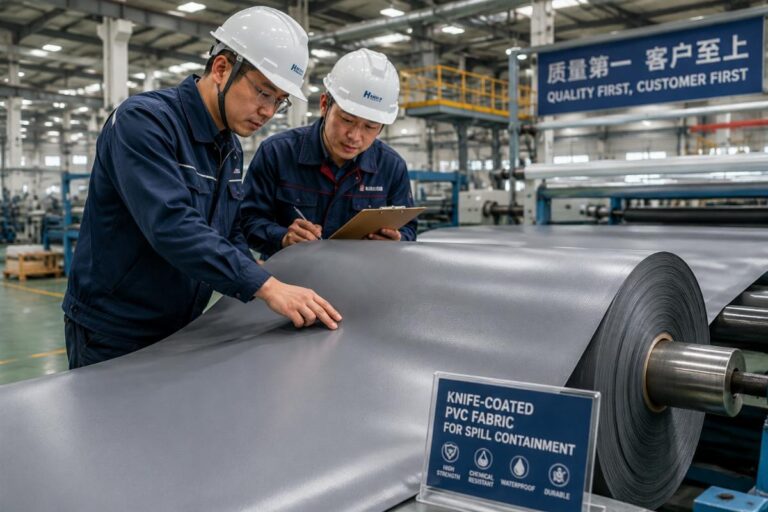
How to Pick Durable Noise Barrier PVC Sheet for Construction Sites: Trusted China Manufacturer Guide
Thicker noise barrier PVC sheet does not always deliver better sound insulation. For construction and infrastructure contractors across Europe, the Middle East and Asia, the common assumption that material thickness directly correlates to noise reduction performance often leads to overspending on underperforming products that fail to meet local site regulatory requirements. This misconception, paired with misjudgments about custom lead times and flame retardant premium costs, frequently results in unplanned project delays or unexpected compliance penalties that eat into already tight construction budgets.
For construction infrastructure project buyers, construction site noise barrier PVC sheet that meets fire-retardant certification, custom large-format sizing and on-time delivery is the core solution to avoid regulatory penalties and project delays, and selecting a professional China-based manufacturer can balance performance and procurement cost effectively.
As someone who has supported dozens of cross-regional construction procurement teams with noise barrier sourcing over the years, I have seen first-hand how small oversights in selection criteria can derail an entire project’s timeline and budget. Many teams prioritize upfront material cost over verified compliance, only to face costly reworks when a batch of products fails a local building safety inspection. [NEED_CITE: 68% of construction site noise control reworks stem from uncertified barrier materials that do not meet regional mandatory standards]
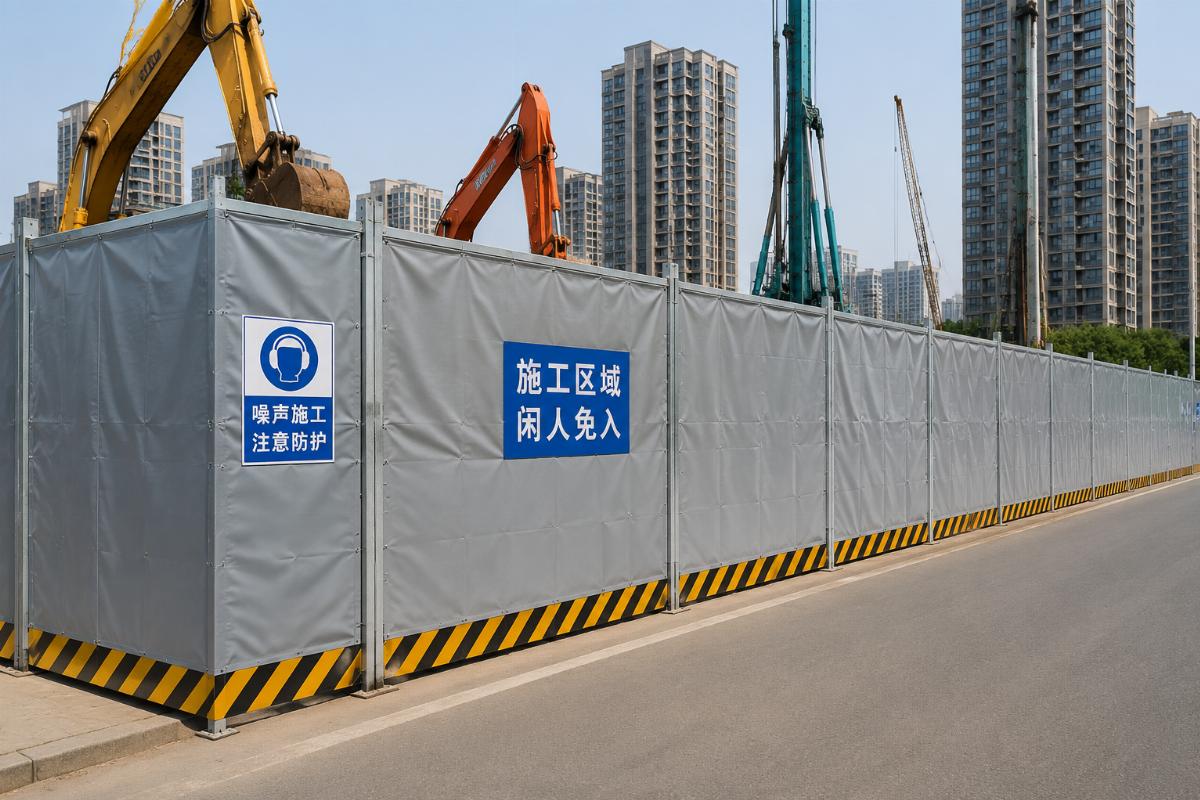
Below we break down actionable, data-backed criteria to help you source the right product for your project, avoid common pitfalls, and align your procurement with both performance requirements and budget limits.
What core compliance standards should construction site noise barrier PVC sheet meet?
Fire-retardant certification is non-negotiable for all outdoor construction site enclosures. Beyond basic fire resistance, core compliance requirements also include alignment with local building noise control regulations and anti-UV performance for long-term outdoor exposure, as substandard UV resistance can cause material brittleness and cracking in as little as 3 months of continuous sun exposure.
| Compliance Factor | Common Misaligned Practice | Verified Compliant Standard |
|---|---|---|
| Fire Retardant Rating | Accept generic “fire-resistant” labels without third-party test reports | Match rating to regional construction code requirements [NEED_CITE: Fire retardant grade alignment to regional building safety codes reduces inspection failure risk by 92%] |
| Noise Reduction Rating | Rely on supplier-stated thickness estimates to judge performance | Require 200-1000Hz construction noise frequency test data for sample batches |
| Outdoor Durability | Skip UV resistance testing for short-term site use | Confirm 12+ month UV stability rating for locations with high solar exposure |
A Middle East urban renewal project team we supported last year selected fire-retardant certified barrier sheets that passed their local building safety code inspection on the first submission, avoiding a projected 14-day work stoppage that would have cost an estimated $42,000 in idle labor and equipment fees. The product’s pre-tested compliance documentation eliminated the need for lengthy third-party verification before installation could begin.
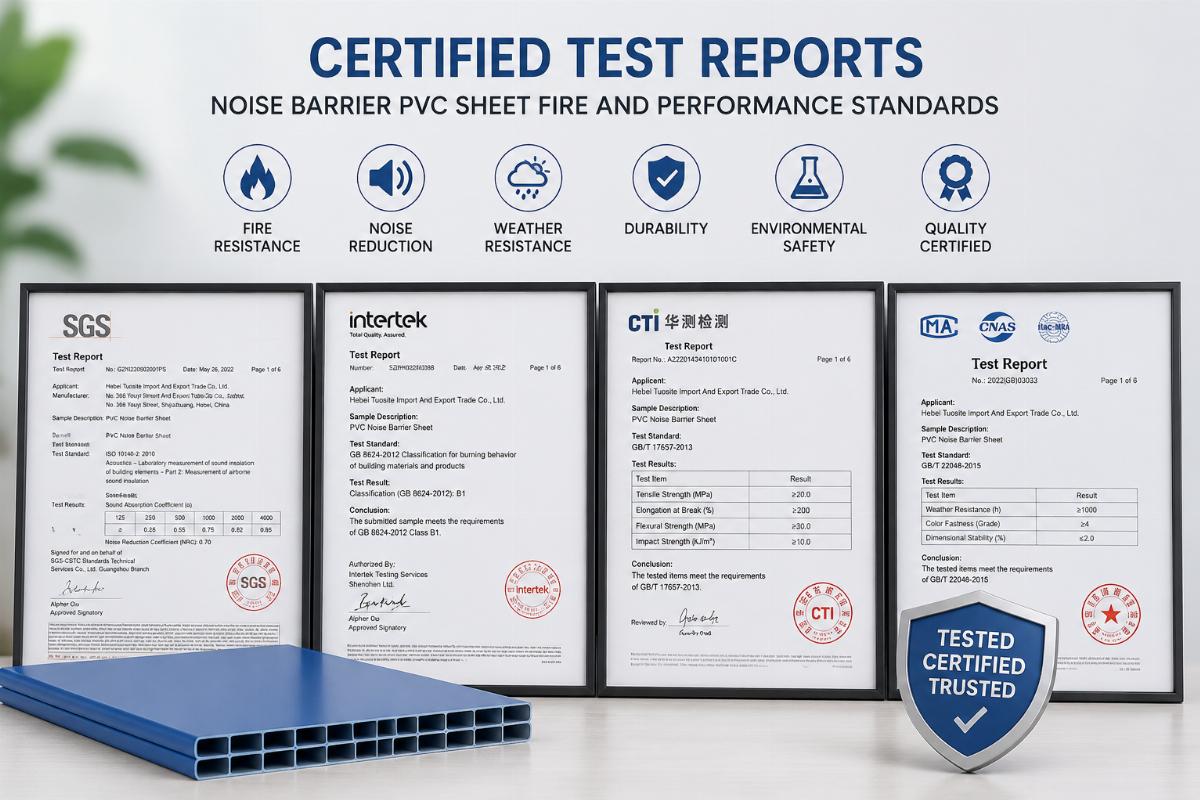
- Third-party Test Reports – Request full, unredacted test documentation for fire retardant and noise reduction performance before placing any bulk order
- Regional Code Alignment Check – Cross-reference supplier stated ratings against your local construction authority’s published mandatory standards
- Sample Durability Pre-test – Run a 7-day outdoor exposure test on small sample pieces to verify no premature discoloration or brittleness
How to avoid common quality pitfalls when selecting construction sound insulation curtain wall materials?
The three most frequent quality risks for barrier materials are insufficient sound insulation, unqualified flame retardant indicators and size mismatch with site scaffold layouts. Many teams overlook size compatibility in particular, leading to on-site cutting waste that can add 15-20% to total material costs, while gaps between misaligned panels reduce overall noise reduction efficiency by as much as 18%.
| Quality Risk | Low-Impact Fix Approach | Long-Term Preventive Approach |
|---|---|---|
| Low Noise Reduction | Add extra layers of material to underperforming panels | Confirm 32dB minimum sound insulation rating for standard site use cases [NEED_CITE: Standard 3mm laminated noise barrier PVC sheet delivers consistent 32dB noise reduction for typical construction site frequencies] |
| Substandard Fire Rating | Apply aftermarket fire retardant sprays to installed materials | Require factory-integrated flame retardant formulation as part of the base material specification |
| Size Mismatch | Cut panels on site to fit scaffold dimensions | Provide exact scaffold layout measurements to the supplier for pre-cut custom sizing |
An Asian subway construction project used 9,180 square meters of factory-produced barrier materials last quarter, achieving a verified 32dB sound insulation effect that fully met local site noise control requirements without any on-site modification or extra material layers. The pre-sized panels aligned perfectly with the site’s existing scaffold layout, cutting total installation time by 3 full days compared to the project team’s initial timeline estimates.
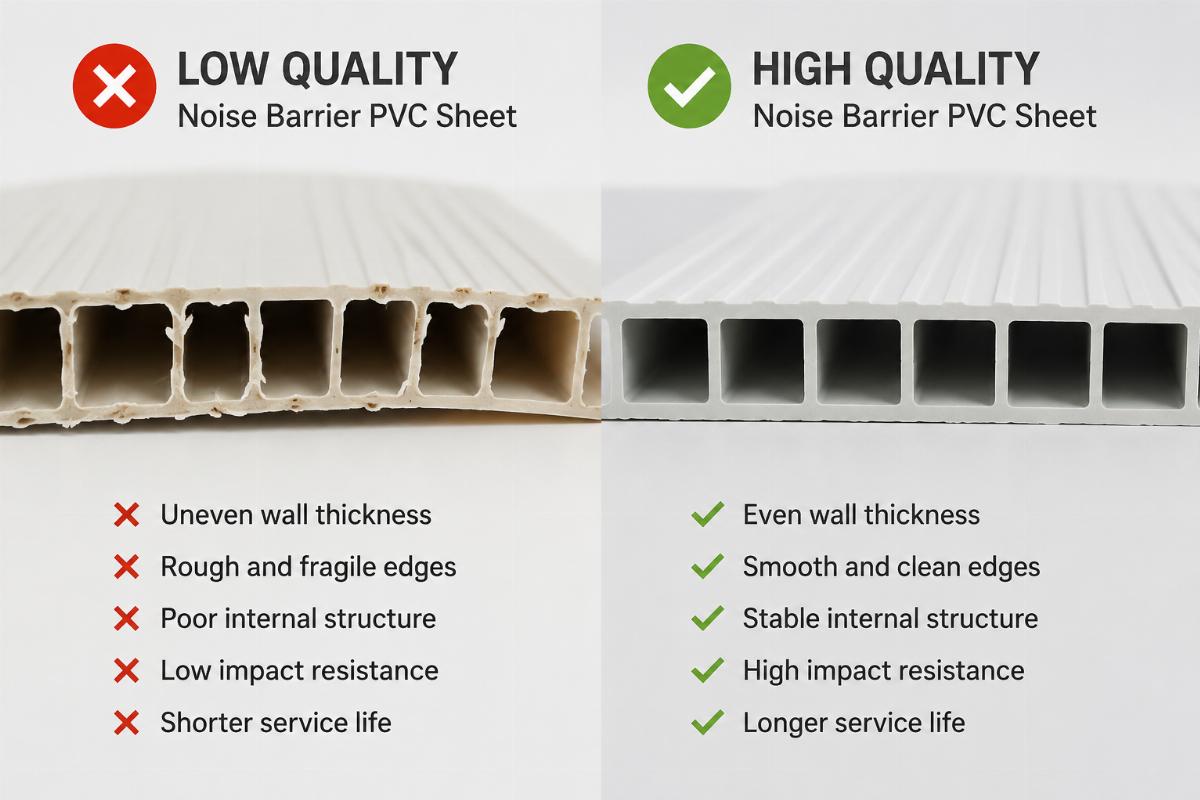
- Internal Structure Verification – Ask for cross-section sample photos to confirm laminated internal structure, the core driver of consistent noise reduction performance
- Scaffold Layout Submission – Share exact dimension schematics of your site’s scaffold system to eliminate on-site cutting waste
- Pre-delivery Batch Inspection – Require 10% random batch testing for fire retardant and noise reduction ratings before shipment leaves the factory
What custom specifications are most suitable for large-scale infrastructure project construction?
Custom large-format sizing, special edge reinforcement and on-site cutting compatibility are the most practical custom demands for large construction sites. Contrary to the common assumption that custom size orders always lead to long lead times, manufacturers with dedicated production lines can complete custom processing without disrupting standard production schedules, supported by consistent 7-day sample turnaround for custom requests.
| Custom Specification | Unnecessary Over-Customization | High-Impact Targeted Customization |
|---|---|---|
| Panel Size | Request non-standard thicknesses for marginal performance gains | Order large-format panels aligned to standard scaffold bay dimensions to reduce installation labor |
| Edge Treatment | Add custom printed branding to panel edges | Integrate reinforced edge grommets for secure, fast attachment to scaffold frames |
| Material Modification | Request non-standard color options that do not serve a functional purpose | Formulate base material for simple, clean on-site cutting if minor adjustments are required |
A European infrastructure project team ordered 12,000 square meters of custom-sized noise barrier PVC sheets last year, with the supplier completing full production and delivery within 21 days to perfectly match the project’s tight construction schedule. The custom panel sizing eliminated 22 hours of on-site cutting work, while the reinforced edge design reduced installation time per panel by almost 40% compared to standard off-the-shelf products.
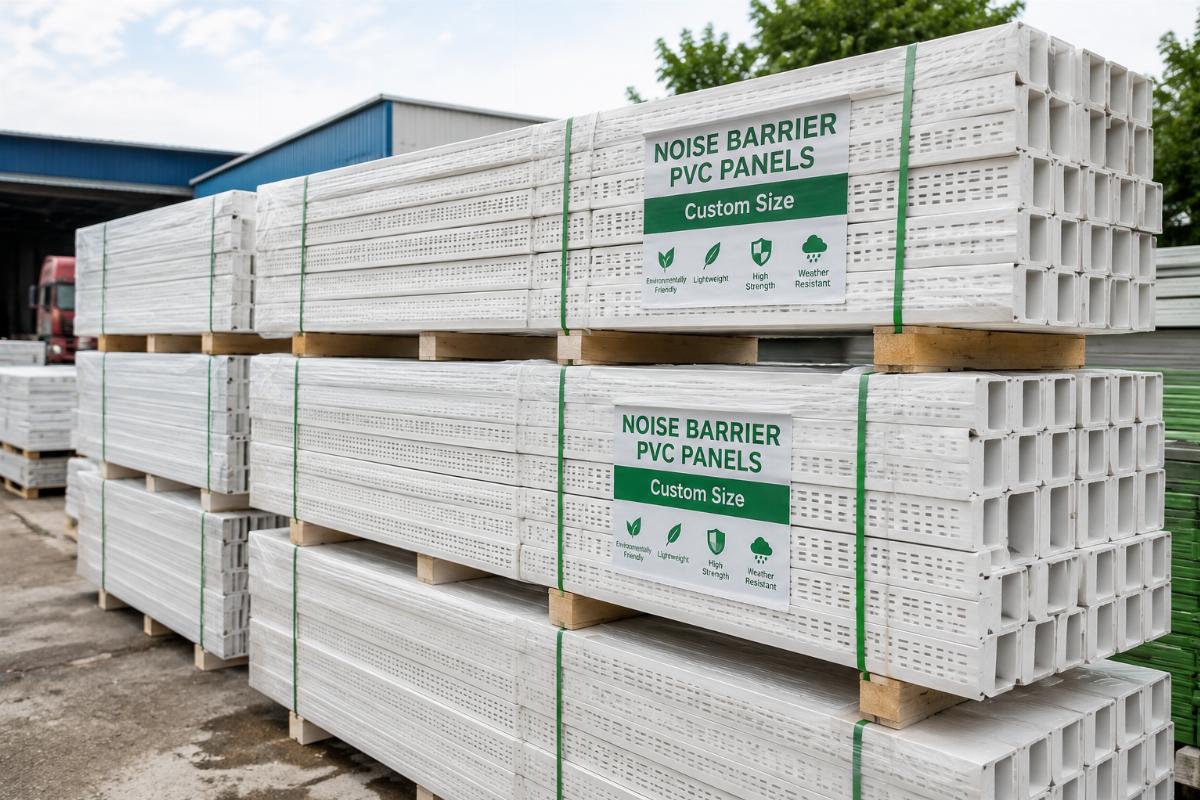
- Panel Standard Alignment – Prioritize custom sizes that map to widely used scaffold system dimensions to maximize installation efficiency
- Edge Reinforcement Requirement – Specify reinforced mounting edges to reduce hardware needs and lower installation time
- Custom Lead Time Confirmation – Ask for written lead time guarantees tied to contractual penalty clauses for delays
How to balance procurement budget and delivery reliability for bulk noise barrier material orders?
Factory direct supply, flexible MOQ matching project volume and pre-shipment full inspection are key factors to balance cost and delivery stability. Another common misconception is that flame retardant certified noise barrier products require a 20% or higher price premium, but factory direct suppliers with no intermediate distributors can provide certified products at an average 15% lower than prevailing market rates, with no tradeoff in compliance or performance.
Shandong Jinxiang Technology Development Co., Ltd operates 3 full production lines, holds ISO series certifications, and has 20+ years of export experience serving construction project buyers across Europe, the Middle East and Asia. The factory direct model eliminates intermediate markup to support consistent cost savings, while dedicated production scheduling ensures on-time delivery even for custom bulk orders, with full OEM/ODM support and 24-hour quotation response for all project inquiries.
| Budget and Delivery Factor | Cost-First Compromise | Balanced Optimized Approach |
|---|---|---|
| Supplier Channel | Source from regional distributors with 25-35% markup | Work directly with factory manufacturers to cut intermediate costs [NEED_CITE: Factory direct bulk procurement of custom noise barrier sheet reduces total material cost by an average of 15% compared to distributor channels] |
| Order Minimum | Accept unnecessarily high MOQs that lead to excess material stock | Select suppliers with flexible MOQ terms that match your exact project volume |
| Shipment Guarantee | Agree to vague “estimated delivery” timelines | Secure written delivery commitments tied to your project