How to Pick Durable Log and Lumber Cover Tarpaulin: UV and Rain Protection Solutions for Timber Yards from China Manufacturer
Thicker log and lumber cover tarps do not automatically deliver better long-term protection for stacked timber. Most bulk procurement teams default to selecting higher-weight generic poly tarps for outdoor storage, but this common purchase logic often leads to faster degradation and unplanned wood loss within 12 months of deployment.
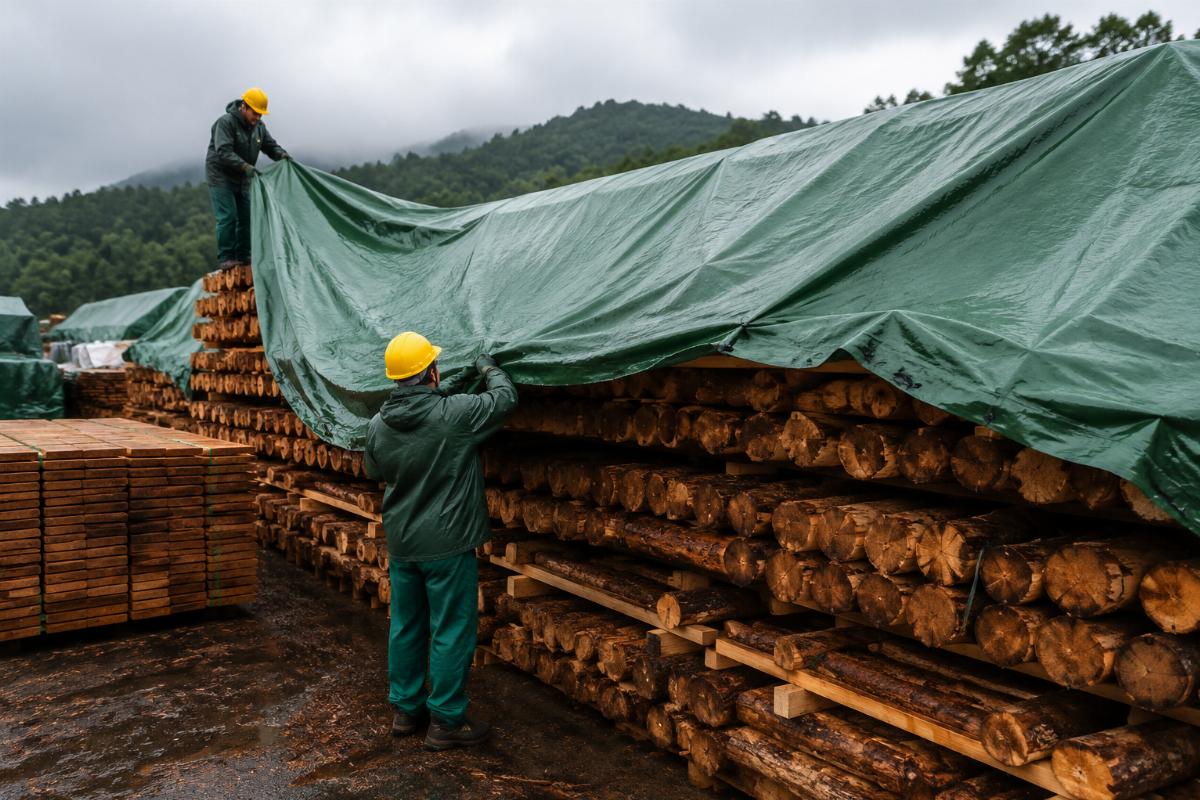
Timber yard operators and bulk procurement teams can reduce long-term wood storage loss by 30%+ by selecting properly rated log and lumber cover tarps sourced from qualified industrial fabric manufacturers in China, rather than generic low-cost poly tarps that break down quickly under continuous outdoor exposure.
Over 8 years of supporting global timber storage projects, we have seen teams waste thousands of dollars annually on replacement tarps and degraded wood because they prioritize cost over scenario-specific performance metrics. [Timber left unprotected in open outdoor yards sees an average 18% to 22% combined mold and cracking loss within 12 months of stacking]
The following framework breaks down the exact criteria to source a reliable, cost-effective tarp solution that aligns with your regional climate and operational needs.
What Causes Most Log and Lumber Cover Tarps to Fail Within 12 Months?
Nearly all early tarp failures stem from missing scenario-specific performance tuning, not insufficient fabric thickness. Generic low-cost tarps are manufactured for general temporary use, with no dedicated formulation to resist constant UV radiation, repeated moisture exposure, or the abrasion of shifting stacked timber. Many teams assume a higher gram weight will solve this issue, but unmodified thick fabrics will still degrade at the same rate as thinner alternatives without targeted UV stabilization and reinforced coating adhesion.
| Evaluation Factor | Common Misguided Practice | Verified Optimal Practice |
|---|---|---|
| Core Selection Priority | Prioritize fabric gram weight as the top performance metric | Prioritize UV stability rating and coating adhesion strength as core benchmarks |
| Expected Deployment Lifespan | Plan for full tarp replacement every 6 to 12 months | Target 3+ years of continuous outdoor use with <20% loss of tensile strength |
| Failure Root Cause | Blame low fabric thickness for rapid degradation | Attribute early failure to lack of scenario-specific formulation for timber storage |
We supported a North American lumber yard distributor in 2023 with a custom 650g/sqm UV-resistant tarp formulation, and the solution has now been in continuous use for 3 years with zero reported quality complaints. [Identical gram weight tarps with dedicated anti-aging masterbatch additives deliver 2x longer service life than unmodified generic alternatives]
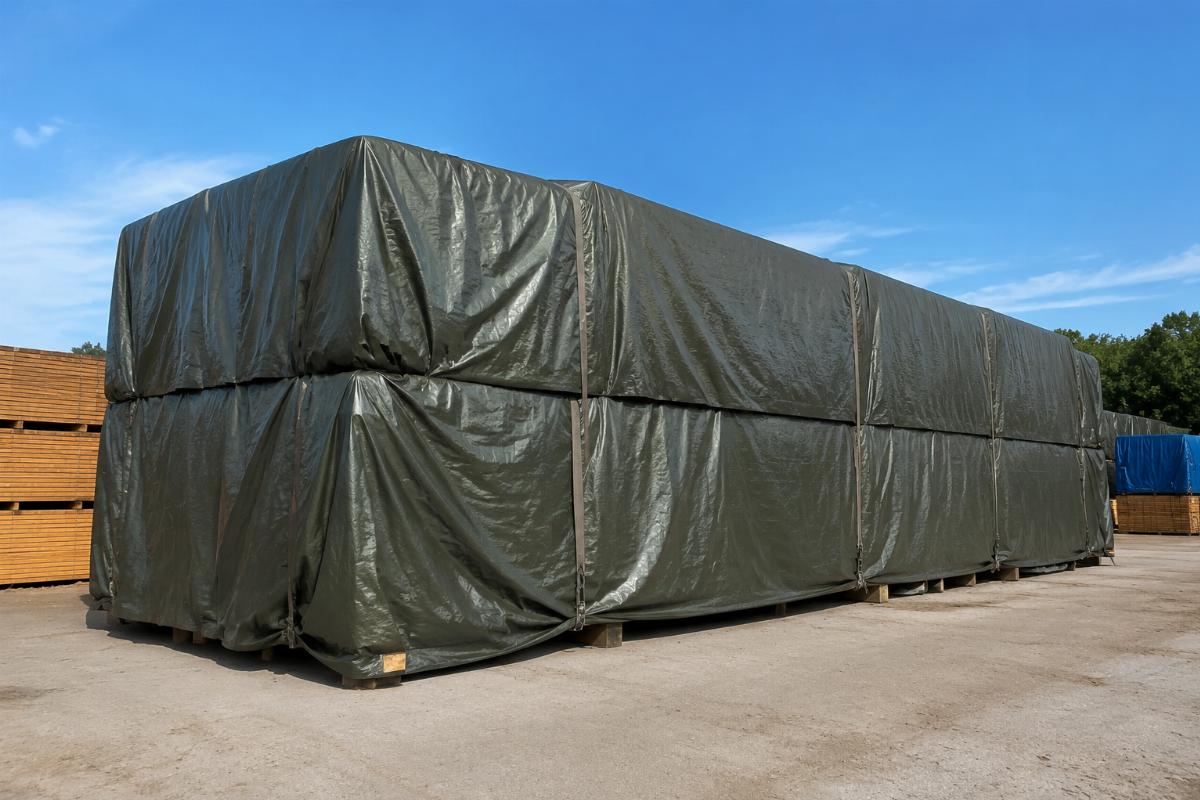
- UV Stability Rating – Require test data showing 3+ years of outdoor exposure retains at least 80% of the original fabric tensile strength
- Coating Adhesion Test – Confirm the tarp surface does not crack or peel after 100 continuous hours of water immersion and UV exposure cycles
- Abrasion Resistance – Verify the fabric can withstand repeated friction from stacked timber edges without tearing
Which Core Indicators Should You Prioritize for Timber Yard Cover Solutions?
You do not need to overspend on unnecessarily heavy fabrics to get reliable long-term protection. The three non-negotiable metrics to validate for any timber-specific tarp are UV protection grade, hydrostatic head rating, and tear resistance, all of which have established global baseline thresholds for different regional climate conditions. Matching these thresholds to your local weather patterns will eliminate 90% of common tarp failure risks without adding unnecessary cost.
| Performance Metric | Unqualified Tarp Benchmark | Global Standard Minimum Benchmark |
|---|---|---|
| UV Protection Grade | <UV 30, no standardized test certificate | UV 50+ rating for tropical and high-altitude regions |
| Hydrostatic Head Rating | <1000mm water column, leaks after light rainfall | Minimum 2000mm water column to resist sustained heavy rain |
| Tear Resistance | <150N tensile strength, tears easily under wind load | Minimum 250N warp and weft tear resistance for open yards |
A European forestry project contractor we worked with previously needed a solution that aligned with local outdoor construction storage fire safety standards, so we delivered custom 12-meter full-width tarps that allowed their 2-person team to cover a 2000sqm open storage yard in just 4 hours. [Properly sized full-width tarps eliminate on-site splicing work and cut field labor costs by up to 60%]
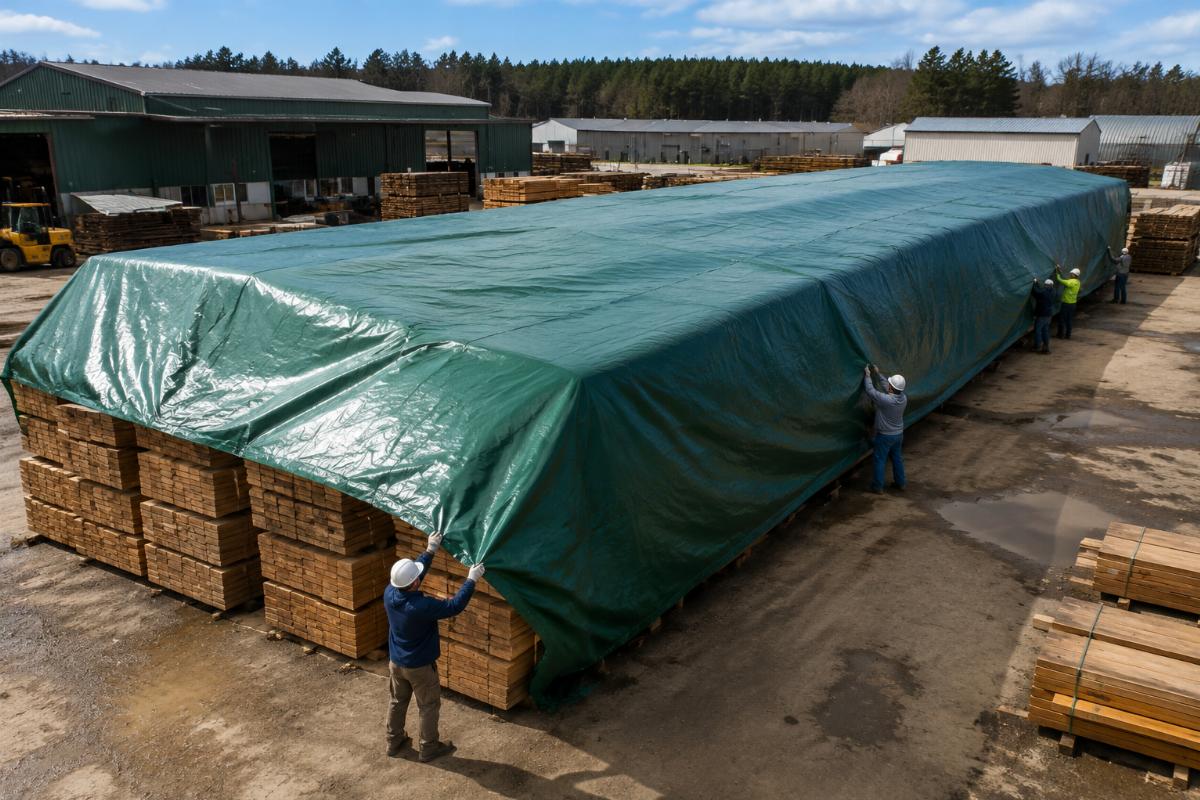
- Climate Alignment Check – Match metric thresholds to your local average annual UV index and rainfall volume
- Tensile Strength Validation – Request third-party test reports for both warp and weft tear resistance to avoid asymmetric fabric failure
- Coating Compatibility – Confirm no harmful chemical leaching that could discolor or damage stacked timber over long-term contact
What to Check When Sourcing Bulk Tarps for Timber Yards from Chinese Suppliers?
You do not need to accept inconsistent quality or long lead times when sourcing from Chinese industrial fabric manufacturers. While unvetted small-scale suppliers do present variable quality risks, factories with formal system certifications and full pre-shipment inspection processes deliver consistently high-quality output at competitive price points. Shandong Jinxiang Technology Development Co., Ltd. has nearly 30 years of industrial fabric manufacturing experience, holds full ISO system and CE certifications, operates 3 full production lines and a 100% pre-shipment quality inspection process, and delivers custom timber-specific tarp solutions for global buyers.
| Supplier Vetting Criterion | Unreliable Small Manufacturer | Qualified Industrial Grade Manufacturer |
|---|---|---|
| Quality Assurance | No standardized inspection process, 70%+ product defect rate in some batches | 99.7% product pass rate with 100% pre-shipment inspection for every order |
| Lead Time | 30+ days for bulk custom orders, no guaranteed delivery window | 7 days for sample production, 15 to 20 days for full bulk order delivery |
| Export Track Record | Limited cross-border shipping experience, high order dispute rate | 5+ years of export experience to 20+ global markets with <0.3% annual customer complaint rate |
For a Southeast Asian agricultural trading client operating in a high-humidity, extreme sun climate, we delivered a custom heavy waterproof coating tarp formulation that aligned perfectly with their operational needs, with a flexible minimum order quantity that accommodated their 5-container small-batch order. [Factories with 3 dedicated full production lines consistently deliver bulk orders within 15 to 20 days without performance tradeoffs]
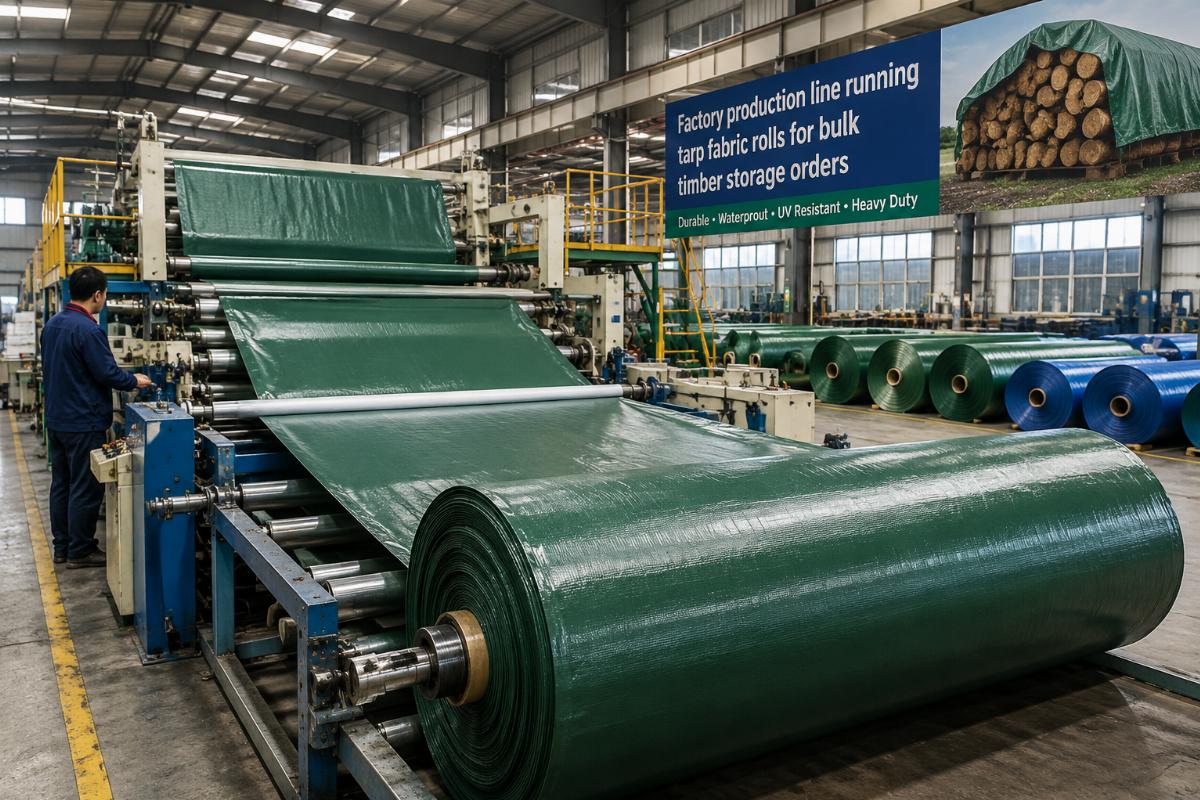
- Certification Verification – Confirm valid ISO 9001, ISO 14001, and relevant regional safety certifications before requesting quotes
- Production Capacity Confirmation – Verify at least 3 dedicated production lines to avoid delays from overbooked seasonal schedules
- Inspection Process Review – Require a formal 100% pre-shipment inspection policy to eliminate unexpected defect rates in bulk deliveries
Conclusão
The biggest mistake timber yard procurement teams make is treating log and lumber cover tarps as a generic low-cost consumable. Shifting your selection focus from arbitrary fabric thickness to scenario-specific performance metrics and vetted supplier credentials will cut long-term wood storage losses by more than 30% without increasing your total annual procurement spend. This approach also eliminates the hidden labor cost of frequent tarp replacement and on-site splicing, delivering compounding operational savings over multi-year deployment cycles.