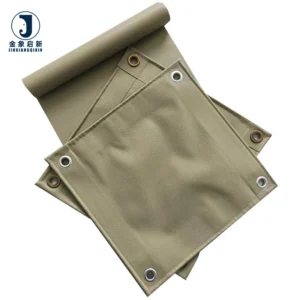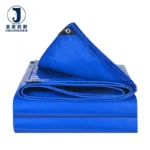
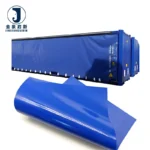
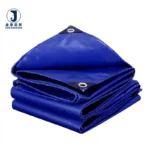
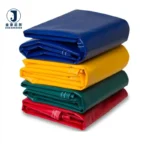
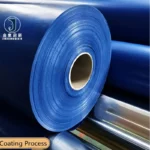
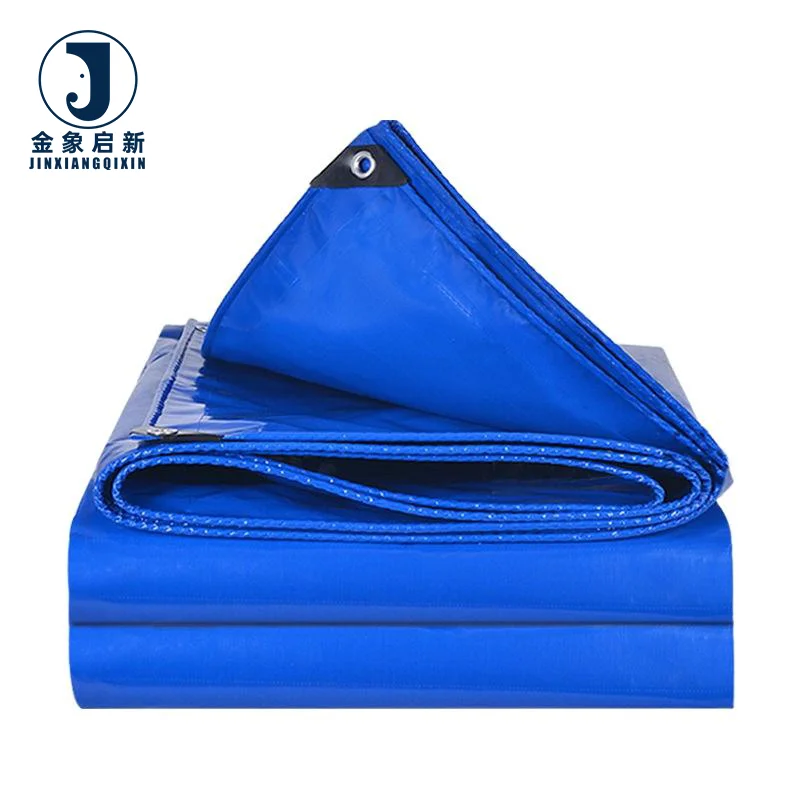
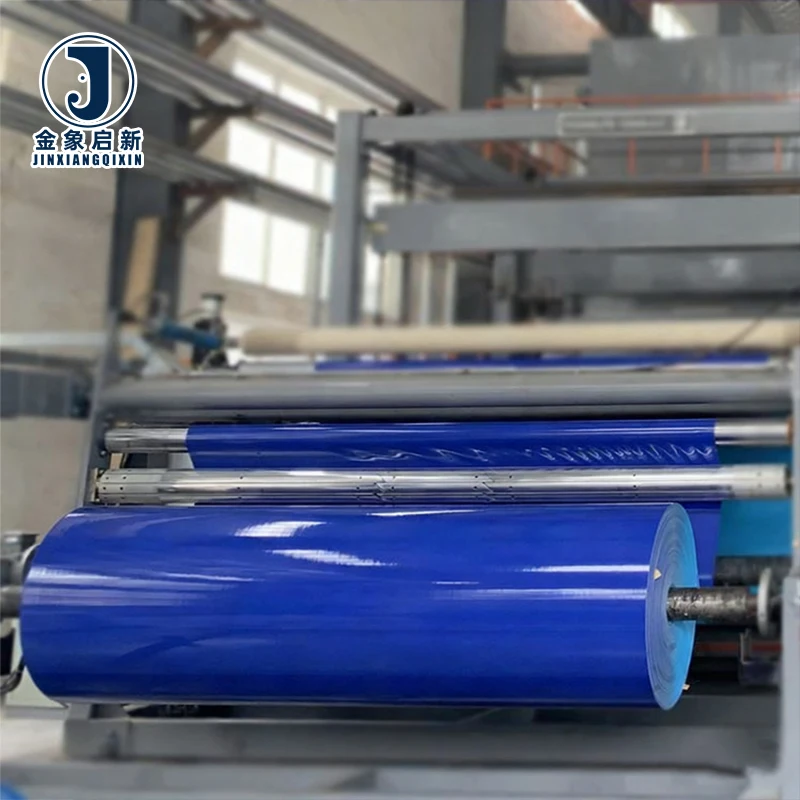
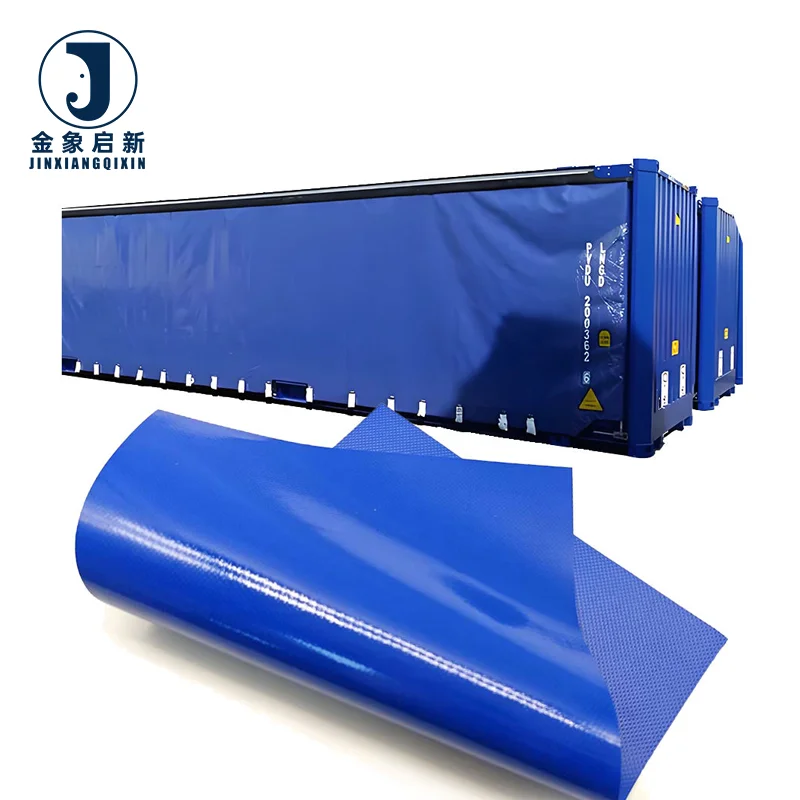
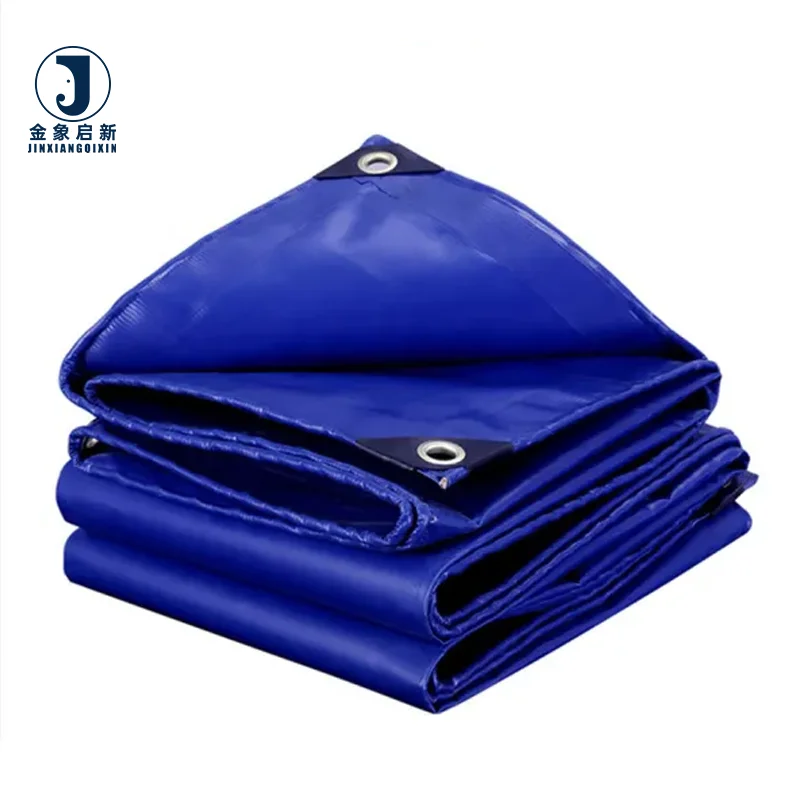
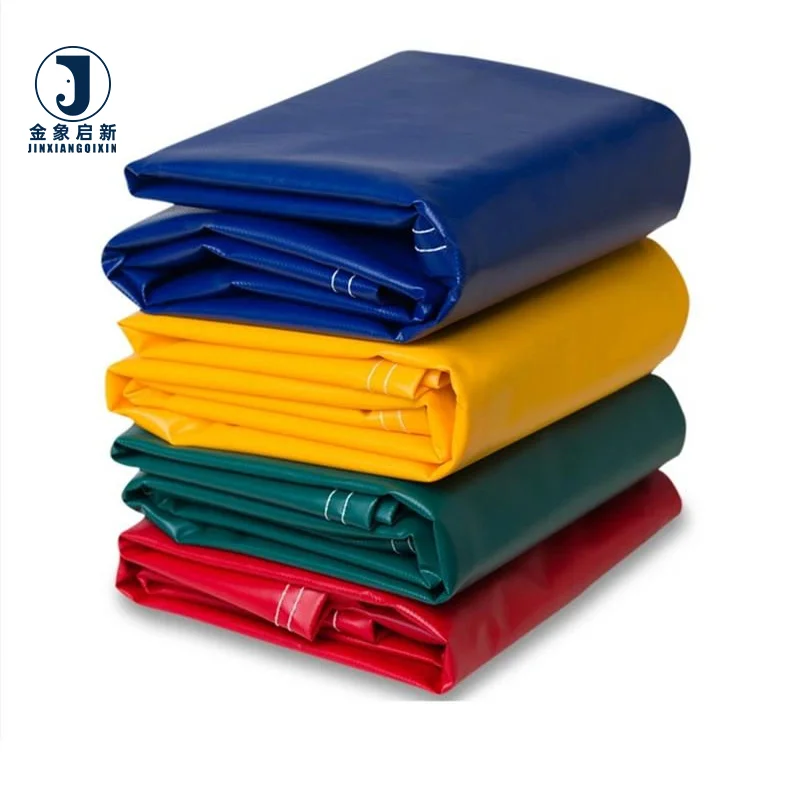
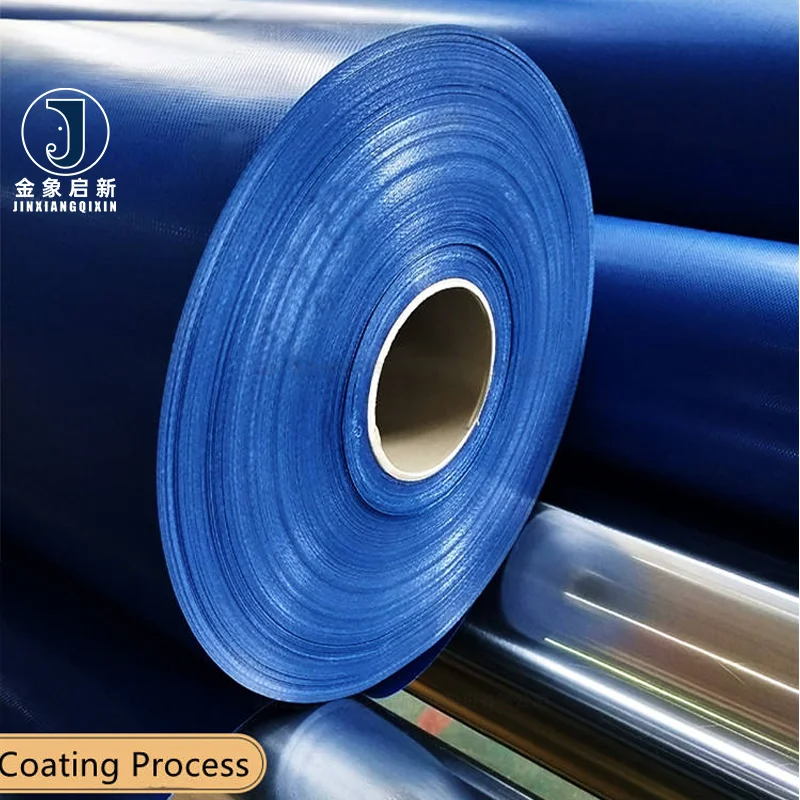
Precision-Coated Fabric Production — 3 full production lines and 36 sets of professional equipment deliver batch-to-batch consistency for ventilation duct and specialist structure fabric orders.
Technical Specifications
| Parameter | Value |
|---|---|
| Product Type | PVC Coated Tarpaulin |
| Material Composition | PVC coating on high-strength polyester mesh fabric |
| Coating Method | Laminated technology & Hot-melt Coating technology |
| Weight Options | 350gsm / 420gsm / 500gsm / 550gsm / 600gsm / 750gsm (confirm grade for application) |
| Total Thickness | 0.32mm / 0.35mm / 0.4mm / 0.45mm / 0.5mm / 0.65mm |
| Roll Width | 2m / 2.1m |
| Roll Length | 75m / 50m |
| Surface Finish | Glossy Surface or Matt Surface |
| Color Options | Blue / Red / Yellow / Light blue / Grey (Customized) |
| Anti-Static Treatment | Available (surface resistance grade not stated — confirm requirement) |
| Anti-Mildew | Yes |
| Cold Crack Resistance | Yes |
| Waterproof | Double-sided fully waterproof coated construction |
| Service Life | 3-7 years under normal circumstances (verify against specific installation conditions) |
Application Suitability
| Application | Exposure & Requirement |
|---|---|
| Poultry & livestock housing curtains | Moisture, ammonia, biological growth, static control in ventilated environments |
| Mining & tunnelling ventilation ducts | Airflow containment, fire safety compliance, mechanical abrasion from duct flexing |
| Temporary industrial enclosures | Wind loading, UV exposure, site debris impact, rapid deployment |
| Scaffolding & building wraps | Weather protection, debris containment, visual screening, wind pressure cycling |
| Aviation ventilation structures | Airflow management, static dissipation, regulatory fire classification |
| Agricultural & aquaculture covers | Constant moisture, biological exposure, pond lining chemistry |
Why Static Buildup Matters in Poultry and Ventilation Fabric
Anti-static treatment must be specified before coating, not added as an afterthought to standard material.
When PVC Coated Tarpaulin fire retardant or anti-static requirements are overlooked during specification, the installed fabric can accumulate static charge in low-humidity ventilation environments. This becomes a compliance issue on sites where electrostatic discharge presents an ignition risk or interferes with sensitive monitoring equipment. [NEED_CITE: anti-static surface resistance classification for coated textiles in ventilation applications]. Many buyers discover too late that the fabric arrived without any test result to support the anti-static claim on the quotation. Specifying the required surface resistance range at the inquiry stage ensures the treatment is integrated into the coating process and documented on the material specification sheet before production begins.
Coating Technology and Adhesion for Ventilation Duct Fabrication
Hot-melt coating and laminated technology each produce a different bond between the PVC layer and the polyester mesh base. For ventilation duct fabrication, where seams are thermally welded under pressure, the coating adhesion directly determines whether the weld fails before the fabric does. The PVC Coated Tarpaulin for industrial ventilation relies on this bond integrity at every flex point along the duct run. High tenacity polyester yarns provide the tensile backbone, but it is the coating-to-yarn adhesion that transfers load across the welded joint.
Anti-Mildew and Cold Crack Resistance in Humid Installations
Poultry housing and agricultural ventilation environments subject curtain fabric to continuous moisture exposure, temperature fluctuation, and biological contamination. Anti-mildew formulation within the PVC coating inhibits fungal growth on the fabric surface, preventing degradation that compromises waterproof integrity over time. Cold crack resistance ensures the material remains flexible during low-temperature periods without surface micro-cracking. [NEED_CITE: cold crack test methodology for flexible PVC coated fabrics]. These treatments work together to sustain performance across seasonal cycles where humidity and temperature vary significantly.
Reading GSM, Thickness, and Base Fabric Together
GSM alone does not predict how a coated fabric will perform under tensile or tear load. A 650gsm material with a low-denier base fabric and heavy coating may resist abrasion but tear more readily than a lighter fabric woven from high tenacity polyester yarns with a balanced coating weight. The coating method also matters: hot-melt coating typically achieves higher peel strength at welded seams compared to standard laminated processes, which affects duct fabrication yield. Roll width selection between 2m and 2.1m influences how many longitudinal welds a duct or curtain requires, directly impacting fabrication labor and potential failure points. Surface finish choice between glossy and matt affects dust accumulation in ventilation applications — glossy surfaces shed particulate more readily, while matt surfaces may suit environments where glare reduction matters. The total thickness correlates with coating weight but must be evaluated alongside the base fabric denier to understand puncture and tear behavior.
The Cost of Unverified Anti-Static and Flame Retardant Claims
Fabric specified as anti-static or flame retardant without supporting documentation creates risk at the point of site inspection or regulatory audit. When ventilation duct installed in a mining or aviation facility lacks the fire-retardant or anti-static certification the site requires, the entire duct run may need replacement before commissioning. [NEED_CITE: fire classification standards for flexible ventilation duct in underground mining]. Color variation between rolls in the same order becomes visible once multiple panels hang side by side on a poultry curtain system, forcing selective panel replacement or complete reinstallation. Welded seams that fail under flexing load — because the coating adhesion was insufficient for the welding parameters used — typically surface weeks after installation, when the duct or curtain is already in service and replacement costs multiply.
Why Source This Fabric Here
Three full production lines dedicated to coated fabric allow bulk roll orders to be scheduled without displacing other product runs, supporting reliable on-time delivery for project timelines. A 10-person R&D team handles material selection and sample development, producing custom color and width samples within days for approval before full production. Every roll passes through dedicated QA/QC inspection at each production stage, with 100% pre-shipment inspection verifying GSM, coating weight, color consistency, and treatment application before dispatch. Hot-melt and laminated coating capability on the same production site means the coating method can be matched to the fabrication method your workshop uses, rather than forcing one process onto every application. ISO and CE certified production ensures documentation accompanies every shipment, eliminating delays at customs or site acceptance. [NEED_CITE: ISO quality management system scope for coated fabric manufacturing].
Documentation & Verification
- Material specification sheet stating confirmed GSM, base fabric construction, and coating method per roll
- Anti-static and flame retardant test reports matching the grade specified on the purchase order
- Pre-shipment inspection record documenting weight verification and visual QA per roll
- Roll packing list with individual roll weights and dimensions for container loading planning
- ISO and CE certificates included with dispatch documentation for customs and site compliance
- Certificate of origin prepared to match destination market trade agreement requirements
Fabrication, Handling & Storage
- Thermal welding temperature and dwell time must match the selected coating method, whether hot-melt or laminated
- Roll storage should maintain original wrapping to prevent surface marking on glossy or matt finish panels
- Cold-temperature transport requires gradual warming before unrolling to preserve cold crack resistance integrity
- Cutting layout planning across 2m or 2.1m roll widths minimizes offcut waste on large curtain or duct panels
- Surface cleaning agents should be tested on a sample section first to confirm compatibility with the anti-mildew formulation
What to Include in Your Inquiry
To match the correct GSM grade, coating method, and treatment package to your application, provide the installation environment, regulatory fire or anti-static classification required by the target market, and the total linear meterage or roll quantity needed. Specify whether you require supply by the roll or finished panels cut to dimension, and confirm your preferred color from the available range or provide a reference for custom matching. If weld seam fabrication will be performed in your own workshop, note your welding equipment type so the coating method can be aligned accordingly.
Frequently Asked Questions
Q: What anti-static surface resistance level is available for ventilation duct applications?
A: Anti-static treatment is applied during the coating process. The specific surface resistance range achieved depends on the formulation selected for your application. Confirm the resistance value required by your site safety standard or regulatory body, and we will align the treatment and provide a test report with the shipment. Request a sample to verify before full production.
Q: How do I choose the right GSM grade for a poultry curtain versus an industrial enclosure?
A: Poultry curtains typically use lighter grades in the 350gsm to 550gsm range for flexibility and ease of operation, while industrial enclosures and scaffolding wraps benefit from heavier grades offering greater tear resistance under wind load. Share your exposure conditions and mechanical requirements so we can recommend the appropriate grade with supporting tensile data.
Q: Is color consistency guaranteed when ordering multiple rolls for a single project?
A: Batch-to-batch color matching is controlled through our in-process QA system, with 100% pre-shipment inspection comparing rolls within the same order. For projects requiring panels installed side by side, we recommend ordering the full quantity in one production run to minimize variation. Pre-production samples are available for approval.
Q: What welding parameters work best with the hot-melt coated variant?
A: Hot-melt coating generally supports higher peel strength at welded seams compared to standard laminated fabric. Exact temperature, pressure, and dwell time depend on your welding equipment and the GSM grade selected. We provide recommended starting parameters with sample rolls and can adjust coating formulation to match your fabrication setup.
Q: What documentation ships with each order for customs and site compliance?
A: Each dispatch includes a material specification sheet, test reports for specified treatments such as anti-static performance, a roll-by-roll packing list, ISO and CE certificates, and a certificate of origin. Additional documentation can be prepared to meet specific destination market customs or regulatory requirements upon request.