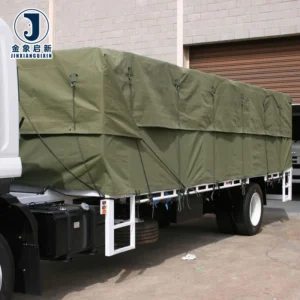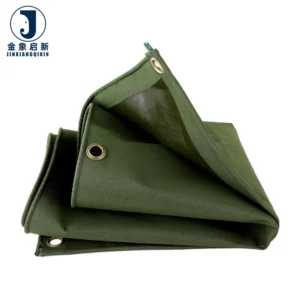
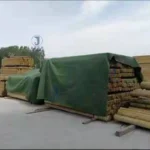
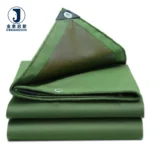
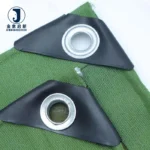
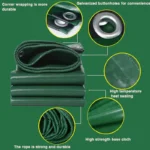
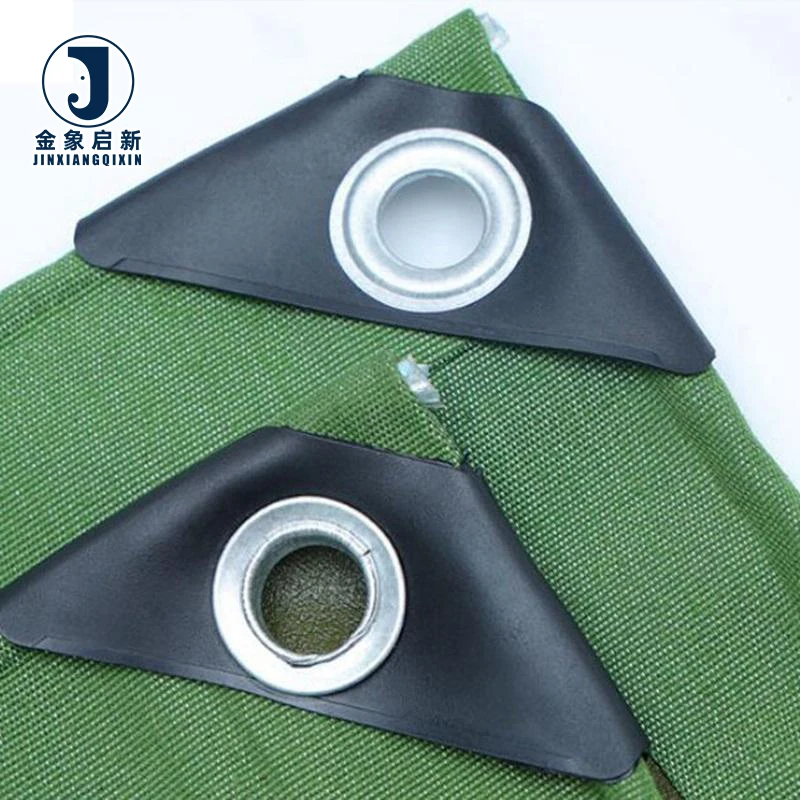
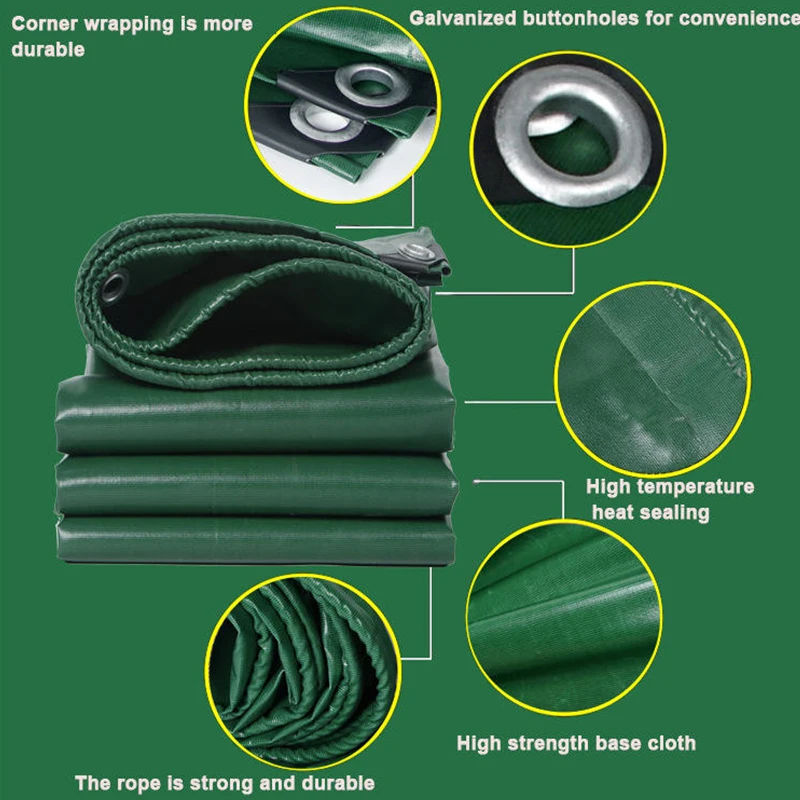
Deep process control over coating weight and adhesion — nearly 30 years focused on coated fabric, with three full production lines and 36 sets of equipment delivering consistent PVC coating performance for ventilation ducts, membrane structures and specialist industrial covers.
Technical Specifications
| Parameter | Value |
|---|---|
| Product Type | PVC Coated Tarpaulin |
| Material | PVC coating on high-strength polyester mesh base fabric |
| Weight Options | 350gsm / 420gsm / 500gsm / 550gsm / 600gsm / 750gsm |
| Total Thickness | 0.32mm / 0.35mm / 0.4mm / 0.45mm / 0.5mm / 0.65mm |
| Roll Width | 2m / 2.1m |
| Roll Length | 75m / 50m |
| Coating Technology | Laminated technology & Hot-melt coating technology |
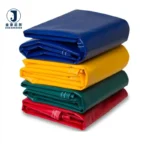
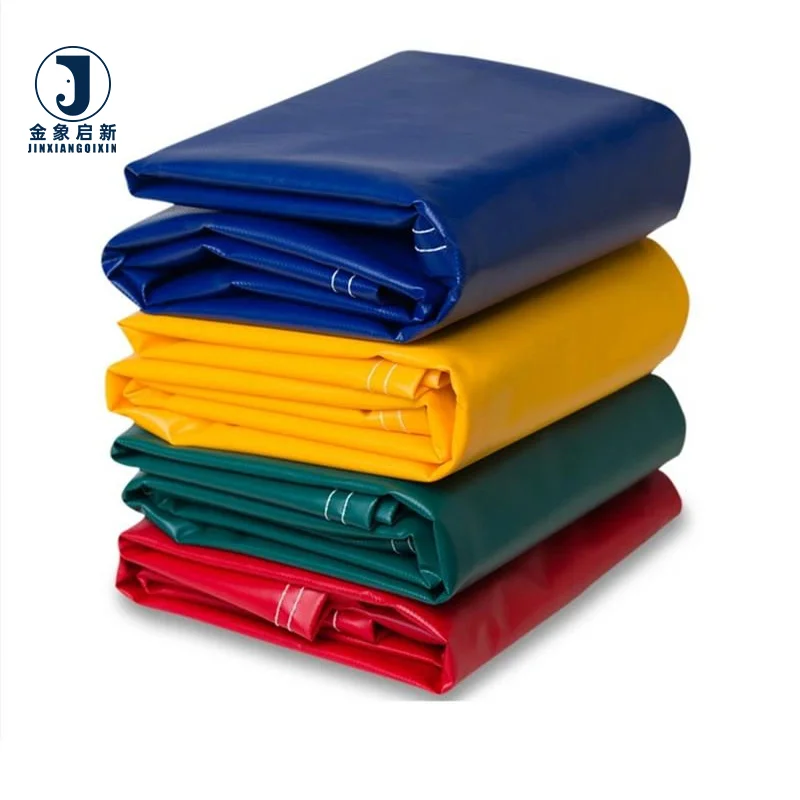
| Colour Options | Blue / Red / Yellow / Light blue / Grey (custom colours available) |
| Key Features | Cold crack resistance, anti-mildew, waterproof, anti-static treatment (grade not stated — confirm surface resistance requirement), flame retardant options available (grade not stated — confirm standard for your market) |
| Standards | ISO, CE certified manufacturing |
Application Suitability
| Application | Exposure & Requirement |
|---|---|
| Mining and tunnelling ventilation duct | Continuous airflow pressure, flex stress at bends, mandatory fire-retardant and anti-static compliance underground |
| Construction site ventilation duct | Dust-laden air, mechanical abrasion from handling and installation, UV exposure during outdoor staging |
| Aviation ground ventilation duct | Fuel-rich environment requiring anti-static fabric, strict flame-retardant certification for airside use |
| Membrane and inflatable structure fabric | Tensile load from internal air pressure, long-term UV exposure, welded seam integrity under constant stress |
| Specialist industrial enclosure covers | Chemical-laden atmosphere, wash-down cleaning cycles, fire code compliance within the facility |
Why Certification Documentation Must Arrive Before the Fabric Does
A ventilation duct without its fire-retardant or anti-static test report is a failed inspection waiting to happen.
When PVC coated tarpaulin fire retardant grades are specified for underground mining or aviation ventilation projects, the site inspector asks for the certificate — not a promise. Yet fabric often arrives on site with no test documentation in the packing crate. The PVC coated tarpaulin anti-static certified grade you paid for becomes impossible to verify, and the entire installation stalls while you chase paperwork across time zones. [NEED_CITE: mining ventilation compliance documentation requirements for fire-retardant duct fabric]
This PVC coated tarpaulin certified grade supply chain is built around dispatching complete documentation — material specification sheets, test reports and pre-shipment inspection records — with every roll, so your site team has what they need before the inspector arrives.
Fire-Retardant and Anti-Static Grades for Regulated Environments
Ventilation ducts in mining, tunnelling and aviation facilities must meet specific fire-retardant and anti-static standards enforced by site safety regulations. The PVC coated tarpaulin fire retardant options span multiple grades — confirm which standard applies to your project, whether M2, B1 per DIN 4102, or NFPA 701, so the correct formulation is produced and the matching test report is generated before dispatch. Anti-static treatment is similarly specification-dependent; surface resistance values must align with the compliance threshold your site authority requires.
Coating Adhesion Under Duct Flex and Airflow Pressure
Hot-melt coating and laminated technology create a bond between the PVC layer and the high-strength polyester mesh base fabric that resists delamination under the repeated flex cycles a ventilation duct experiences at bends and junctions. When the duct pressurises and relaxes with fan operation, the coating must stay adhered at every point — especially along welded seams where airflow stress concentrates. [NEED_CITE: tensile and tear test methods for coated fabrics per ISO 1421] Batch-to-batch adhesion consistency is maintained through controlled coating weight application across all three production lines.
How GSM, Thickness and Coating Method Interact in Technical Fabric
Selecting the right grade starts with understanding that GSM alone does not define duct performance. A 550gsm fabric with a loose base weave may tear more easily than a 500gsm fabric with high-denier yarns in a tight weave — the polyester mesh density and yarn tenacity determine how load distributes across the fabric when the duct flexes. Total thickness, ranging from 0.32mm to 0.65mm across available grades, affects both the stiffness of the duct wall and its resistance to puncture during installation. Hot-melt coating technology produces strong PVC-to-yarn adhesion suited to high-frequency welded seams, while laminated technology offers a cost-effective alternative for lower-pressure duct applications. The coating method chosen also influences how the fabric handles at the fabrication stage — hot-melt coated rolls typically weld at different temperature settings than laminated grades, and fabricators must adjust accordingly to avoid seam failure.
What Happens When the Wrong Grade Reaches the Job Site
Specifying a flame-retardant grade without confirming the test standard leads to a scenario where the duct fabric passes visual inspection but fails the fire compliance audit — forcing a complete strip-out and reinstallation at significant cost. Anti-static treatment claimed without a surface resistance test report creates the same exposure in environments where static discharge near combustible dust or fuel vapour is a safety-critical risk. Colour variation between rolls in the same shipment becomes visible once membrane panels are installed side by side, requiring selective replacement. Welded seams that fail before the fabric body reaches its expected service life point to a mismatch between coating technology and the fabricator’s welding parameters. [NEED_CITE: fire classification standards for PVC coated fabrics in building and industrial ventilation]
Why Technical Buyers Source This PVC Coated Tarpaulin Here
Three full production lines and 36 sets of professional equipment support bulk roll capacity with on-time delivery for large ventilation duct contracts and membrane structure projects. A 10-person R&D team handles material selection, custom width, colour matching and certification documentation aligned to your project specification — not a generic datasheet. Dedicated QA/QC runs at every production stage with 100% pre-shipment inspection, so GSM, coating weight and colour consistency are verified before rolls leave the facility. Samples for custom technical fabric requirements are developed within days, allowing you to test weld parameters and confirm compliance before committing to a full production run. Nearly 30 years of focused coated fabric process control means coating adhesion, weight distribution and treatment effectiveness are managed through established production protocols rather than trial and error.
Documentation & Verification
- Material specification sheet stating GSM, base fabric type, coating method and colour reference per roll
- Fire-retardant and anti-static test reports matched to the batch shipped and the standard you specified
- Pre-shipment inspection record confirming weight verification against stated GSM before dispatch
- Roll packing list with lot numbers traceable to production date and coating line
- ISO and CE certificates covering the manufacturing facility and quality management system
- Certificate of origin and customs documentation prepared for destination-country import requirements
Fabrication, Handling & Storage
- Hot-melt coated rolls require weld temperature calibration distinct from laminated grades — run test strips before full production
- Welded seams on 550gsm and above should be tested for peel strength at duct flex points before final assembly
- Store rolls vertically on pallets in a dry environment to prevent compression marks on the PVC coating surface
- Allow cold-stored rolls to acclimatise to workshop temperature before unrolling to avoid coating crack at low temperatures
- Anti-mildew treatment reduces biological growth in humid ventilation installations but does not eliminate the need for periodic inspection
- Custom-width rolls minimise off-cuts and reduce the number of welded seams in large membrane structure panels
Before You Enquire — What We Need to Specify Correctly
Provide the ventilation duct diameter, operating pressure and installation environment so we can recommend the appropriate GSM, thickness and coating technology for your application. Confirm which fire-retardant standard and anti-static surface resistance value your site authority requires, so matching test documentation is produced with your batch. Indicate the roll widths and annual volume you need, and whether you require finished cut sizes or raw roll stock for in-house fabrication.
Frequently Asked Questions
Q: What fire-retardant grades are available and which test reports are supplied?
A: PVC coated tarpaulin is produced in flame-retardant formulations aligned to standards commonly required in mining, aviation and construction ventilation — including M2, B1 and NFPA 701 classifications. Confirm the specific grade your project requires at enquiry stage so the correct formulation is manufactured and the matching test report is included with your shipment documentation.
Q: How is anti-static performance measured and what standard does the fabric meet?
A: Anti-static treatment is applied during the coating process and measured by surface electrical resistance. The acceptable threshold depends on your site’s safety regulations — mining ventilation and aviation ground equipment each have distinct requirements. Provide your compliance specification so we can confirm the treatment grade and supply the corresponding test data.
Q: Can this fabric be supplied with full certification documentation for site inspection?
A: Every shipment includes a material specification sheet, applicable fire-retardant and anti-static test reports matched to the production batch, pre-shipment inspection records and ISO/CE manufacturing certificates. Documentation is prepared to support site compliance audits and customs clearance at your destination port.
Q: Which GSM and thickness are recommended for ventilation ducts versus membrane structures?
A: Ventilation ducts typically require mid-to-heavy GSM grades that balance flexibility for fabrication with sufficient stiffness to hold duct shape under airflow pressure. Membrane structures often specify heavier grades for tensile load resistance. Share your engineering requirements and our R&D team will recommend the appropriate grade combination from the available range.
Q: How are welded seams tested to ensure they hold under duct airflow pressure?
A: Welded seam integrity is critical where the duct flexes most — at bends, junctions and fan connection points. We recommend fabricators run peel-strength tests on weld samples from each roll before full production. Our hot-melt and laminated coating technologies are both engineered for strong weld adhesion, and our team can advise on optimal welding parameters for each grade.