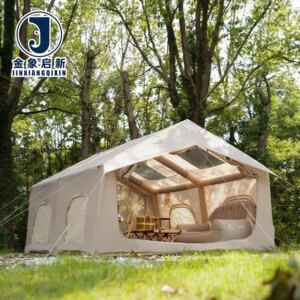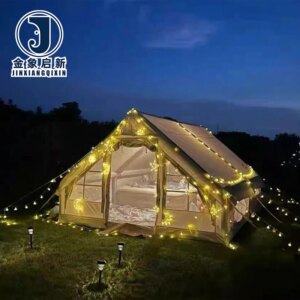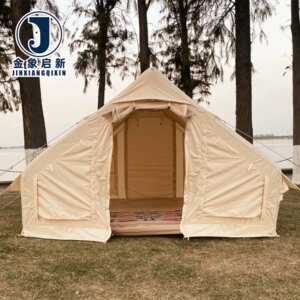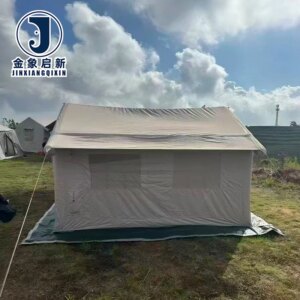
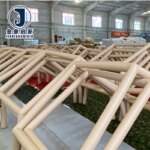
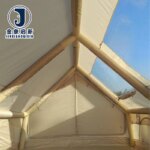
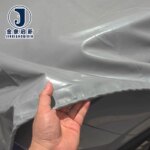

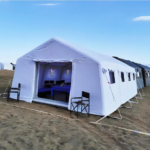

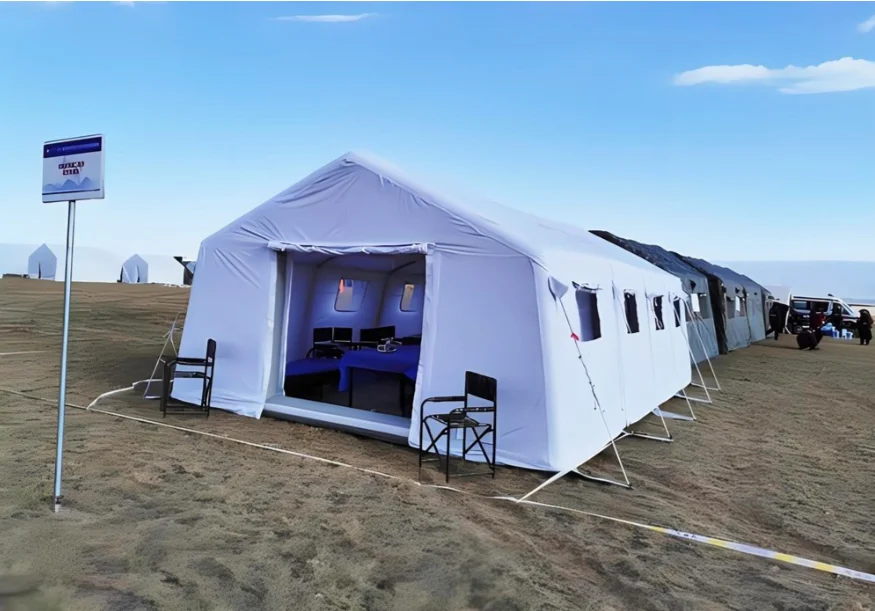
Certified Material Traceability — Every batch of inflatable structure fabric ships with test reports matching the fire-retardant and anti-static grade required for your site compliance.
Technical Specifications
| Parameter | Value |
|---|---|
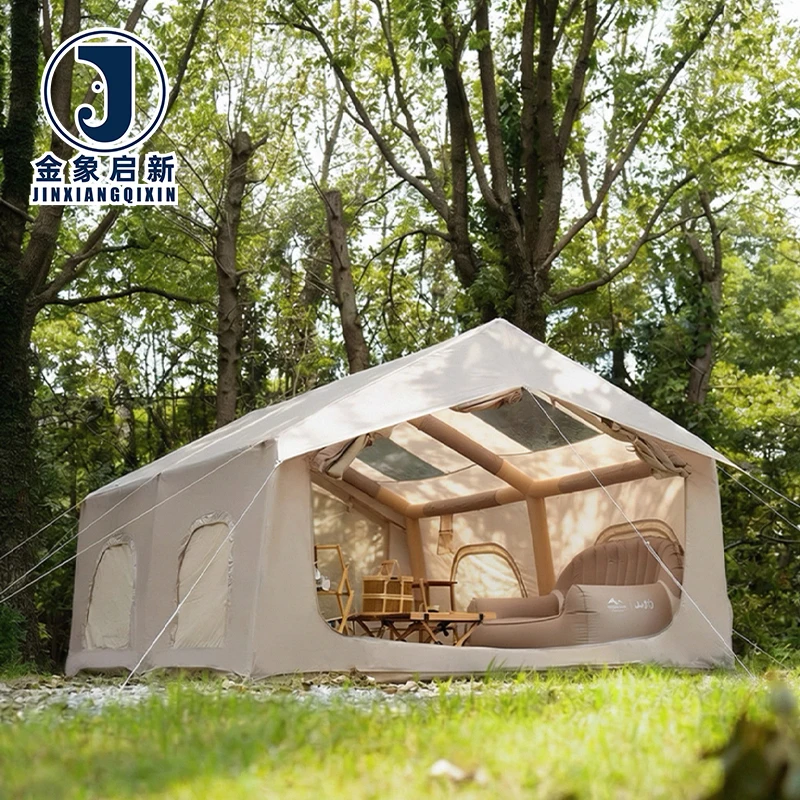
| Product Type | Inflatable Tent |
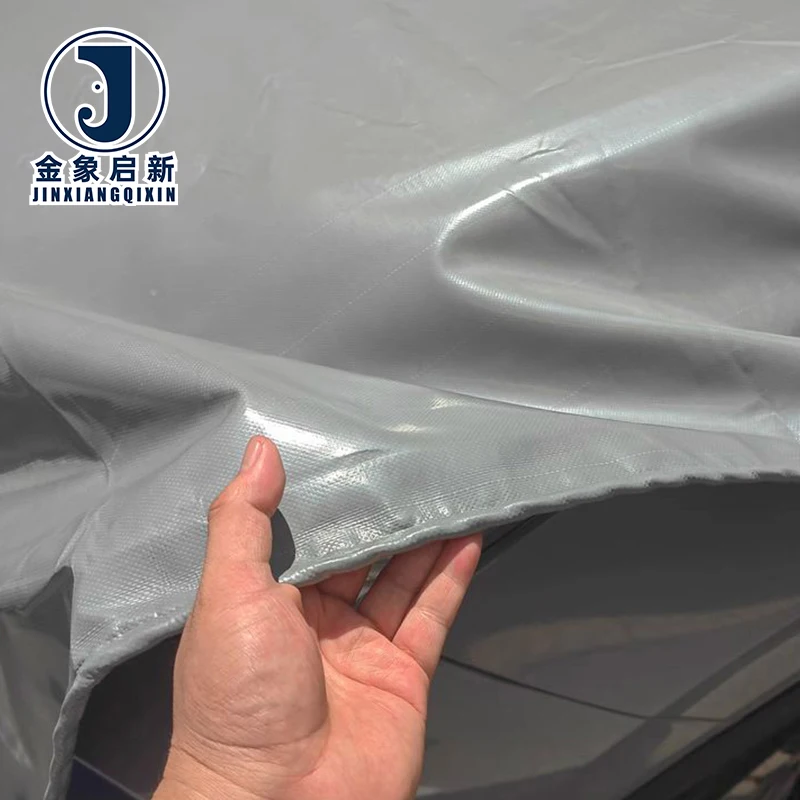
| Core Material | PVC Tarpaulin |
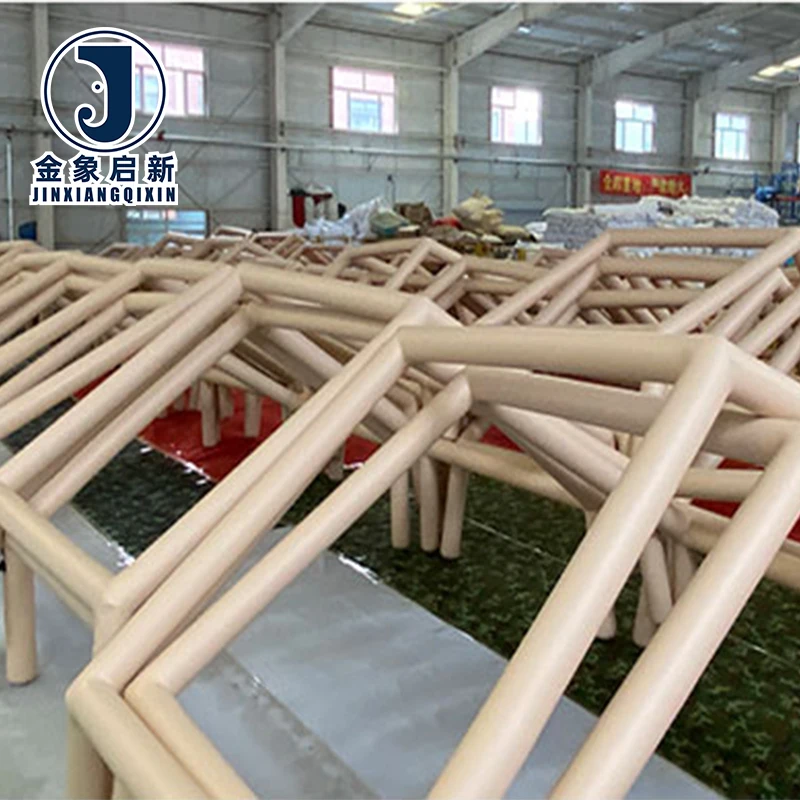
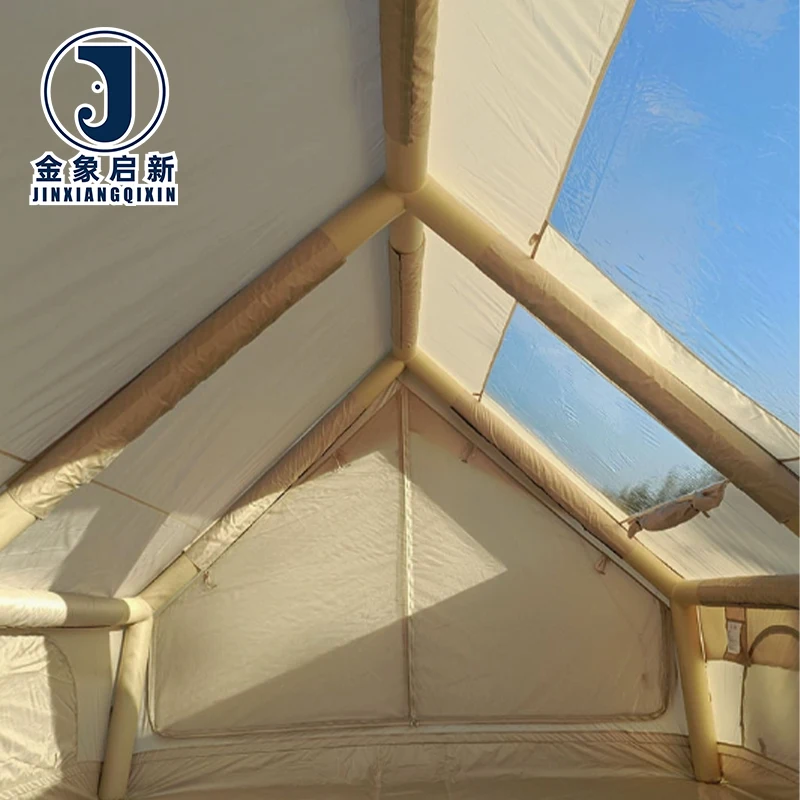
| Product Forms | Inflatable structure with single layer construction |
| Key Performance | Waterproof, UV-resistant (test basis not stated in source), Tear-resistant, Fire-retardant (grade not stated in source), Anti-static (standard not stated in source) |
| Customization Service | OEM & ODM (sample customization, pattern printing) |
| Production Facility | 9,180 m² with 3 full production lines and 36 sets of professional equipment |
| R&D Team | 10 technicians |
| Quality Control | Full-process QA & QC inspection |
| Certifications | ISO9001, ISO14001, ISO45001, CE |
Application Suitability
| Application | Exposure & Requirement |
|---|---|
| Mining and tunnelling inflatable shelters | Continuous underground deployment, fire-retardant compliance mandatory, high humidity and particulate exposure |
| Aviation ground support enclosures | Tarmac UV exposure, fuel vapour environments requiring anti-static surfaces, rapid deployment and deflation cycles |
| Construction site temporary accommodation | Wind load on inflated walls, rain and dust ingress prevention, repeated inflation and storage cycles |
| Disaster relief emergency shelters | Immediate deployment under variable weather, transport durability, multi-season thermal performance |
| Outdoor event mobile storage | Equipment protection from moisture and UV, frequent relocation, public access safety requirements |
What "Certified" Means When Inflatable Structure Fabric Fails an Audit
Certification only protects your project when the test report references the exact standard your site inspector demands.
Industrial contractors regularly receive inflatable structure fabric fire retardant anti-static certified material accompanied by generic certificates that do not match the specific fire classification or surface resistance range required on site. The gap between a manufacturer’s in-house test and the compliance standard enforced by a mining safety officer or aviation ground operations manager is where project delays originate. [NEED_CITE: fire classification standards for temporary structures in mining and construction]
When an inflatable shelter arrives without a batch-specific test report tied to a recognised standard, the entire installation can be rejected at the pre-commissioning inspection. This is not a theoretical risk — it is a recurring reason why temporary structures are dismantled before they ever enter service.
Coating Formulation for Fire-Retardant Compliance
Inflatable structures demand a PVC coating that maintains fire-retardant properties through repeated inflation cycles, folding, and field deployment. The formulation must remain stable across the temperature extremes encountered on construction sites and in underground mining environments. Available in fire-retardant grades — confirm the grade required for your market and project specification before placing your order.
Anti-Static Surface Integration for Hazardous Zones
Anti-static treatment integrated into the PVC coating addresses the electrostatic charge accumulation that occurs when inflatable structures are deployed near fuel handling, solvent storage, or combustible dust environments. The surface resistance range must align with the safety specification enforced at your site. Inflatable structure fabric fire retardant anti-static certified for your application requires documented measurement against the relevant standard — request the specific surface resistance data sheet for your compliance file. [NEED_CITE: anti-static surface resistance standards for industrial temporary structures]
Reading Beyond the Specification Sheet
GSM alone does not determine how an inflatable structure performs under wind load or inflation pressure. The base fabric denier and weave density work together with coating weight to define tensile and tear behaviour. A lighter base fabric with tight weave can outperform a heavier open-weave construction in tear propagation resistance. Coating adhesion — determined by the lamination or knife-over-edge method — governs whether seams hold under cyclic inflation stress. Fire-retardant additives affect coating flexibility at low temperatures, which directly impacts deployment speed in cold-weather disaster relief scenarios. Understanding these relationships prevents specification decisions based on a single number.
The Hidden Cost of Mismatched Compliance Documentation
Specifying inflatable structure fabric without confirming the exact fire-retardant grade and anti-static standard creates a liability chain that extends from procurement through to site commissioning. Material that passes one standard may not satisfy the inspector applying a different classification framework. [NEED_CITE: cross-referencing fire test standards across jurisdictions for temporary structures] Batch-to-batch inconsistency in treatment application compounds this problem — a shipment that passed testing in January may not carry the same performance profile by June if process controls are not enforced at every coating stage.
Why Procurement Teams Source Inflatable Fabric Here
Three full production lines and 36 sets of professional equipment support volume consistency across repeat orders of inflatable structure fabric fire retardant anti-static certified to your specification. The 10-person R&D team develops custom samples with your exact compliance requirements before mass production begins, reducing the risk of specification mismatch. Full-process QA and QC inspection at coating, welding, and assembly stages ensures every batch ships with traceable test documentation. ISO9001, ISO14001, ISO45001, and CE certifications provide the compliance framework international contractors require for audit trails. OEM and ODM capabilities including pattern printing allow project branding without compromising certified performance properties.
Documentation & Verification
- Material specification sheet detailing base fabric denier, coating weight, and fire-retardant grade references for each inflatable structure fabric order
- Batch-specific fire-retardant test report citing the standard and classification achieved during production
- Anti-static surface resistance measurement report matched to your site safety specification
- Pre-shipment inspection record covering coating integrity, seam welding quality, and dimensional verification
- Certificate of origin and customs documentation supporting international project logistics
- ISO and CE certification copies aligned with the product batch and shipment date
Fabrication, Handling & Storage
- Hot-air welding parameters must be adjusted to account for fire-retardant additives that alter PVC melting behaviour at seam joints
- Anti-static coating surfaces require neutral-pH cleaners to preserve surface resistance properties over repeated maintenance cycles
- Single layer construction enables compact packing but demands careful folding to prevent permanent crease marks on the coated surface
- Store rolls or folded structures in dry conditions away from direct sunlight to preserve UV-resistant treatment integrity
- Field repairs on PVC tarpaulin inflatable structures require compatible adhesive and patch material matching the fire-retardant grade
Project Specification and Enquiry Guidance
Provide the fire-retardant classification and anti-static surface resistance range required by your site safety specification so we can match the correct formulation to your inflatable structure project. Include deployment dimensions, expected inflation cycle frequency, and the environmental conditions your structures will face — underground humidity, tarmac UV exposure, or coastal salt air each demand different coating priorities. Specify whether you require finished structures or roll stock for your own fabrication operation.
Frequently Asked Questions
Q: Which fire-retardant standard does the inflatable fabric meet, and can it be matched to my project specification?
A: The fabric is available in fire-retardant grades suitable for industrial and construction applications. Provide the specific standard or classification your site inspector requires — such as a local mining safety code or aviation ground operations regulation — and we will supply the matching test report with your shipment documentation.
Q: What anti-static certification is provided, and what surface resistance range is achieved?
A: Anti-static treatment is integrated into the PVC coating formulation for hazardous environment deployment. The surface resistance measurement and test standard are documented per batch. Share your site safety specification and we will confirm whether the achieved range aligns with your compliance requirement before production begins.
Q: How is batch-to-batch consistency ensured for certified performance across large orders?
A: Every production stage — coating formulation, application, and curing — is monitored by dedicated QA and QC staff. Each batch of inflatable structure fabric fire retardant anti-static certified undergoes testing before dispatch, with results recorded in the pre-shipment inspection documentation you receive.
Q: Can custom dimensions and pattern printing be applied while maintaining certified performance?
A: OEM and ODM customization including custom sizing and pattern printing is available. The fire-retardant and anti-static properties are embedded in the coating formulation, so dimensional changes and surface printing do not alter certified performance when applied within our controlled process parameters.
Q: What documentation accompanies each shipment for compliance audits?
A: Each shipment includes a material specification sheet, batch-specific test reports for fire-retardant and anti-static properties, pre-shipment inspection records, ISO and CE certificates, certificate of origin, and a detailed packing list supporting your project audit trail and customs clearance.