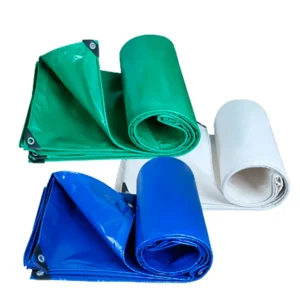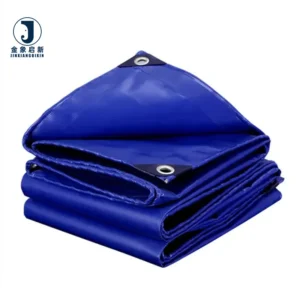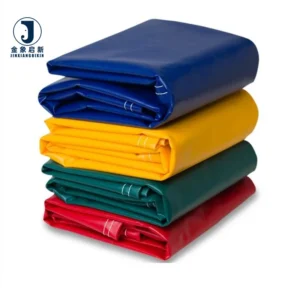
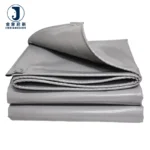
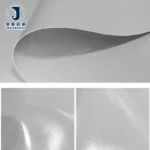
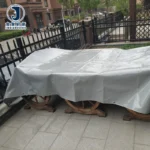
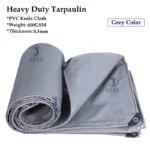
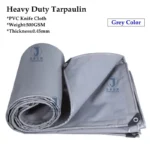
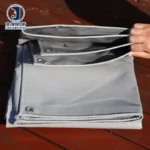
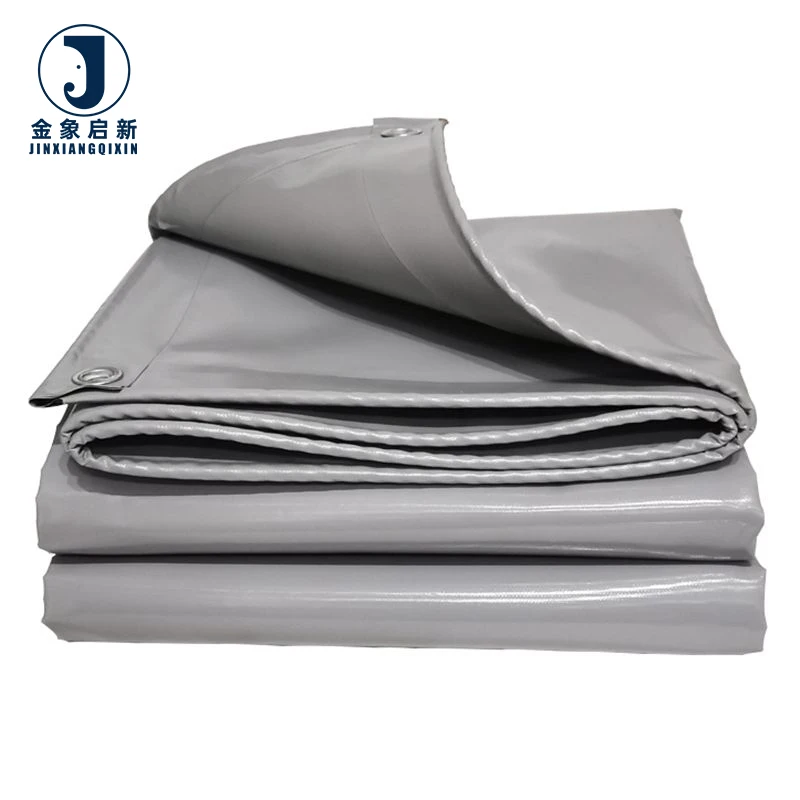
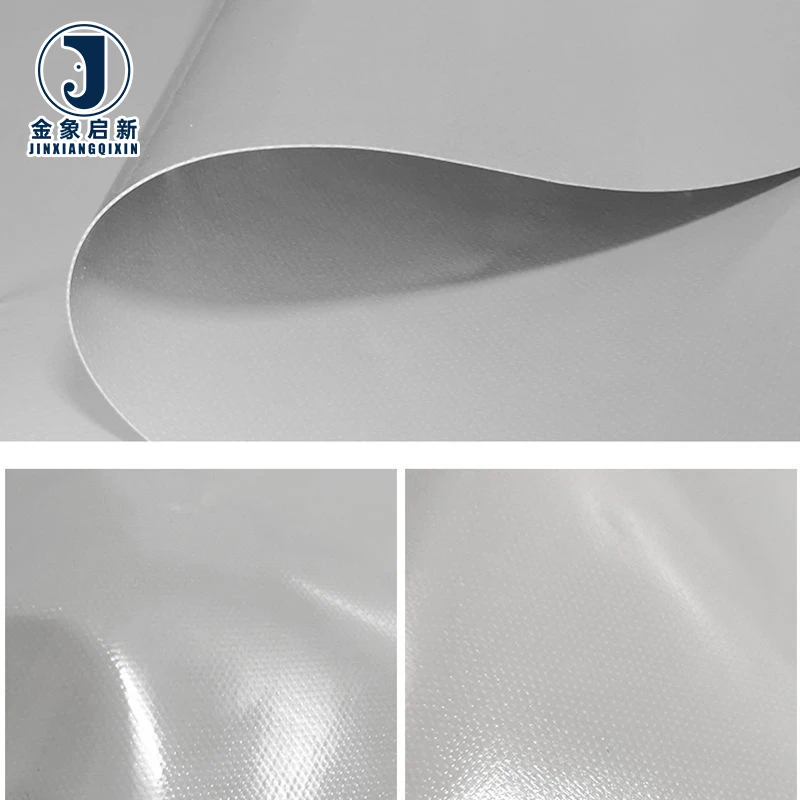
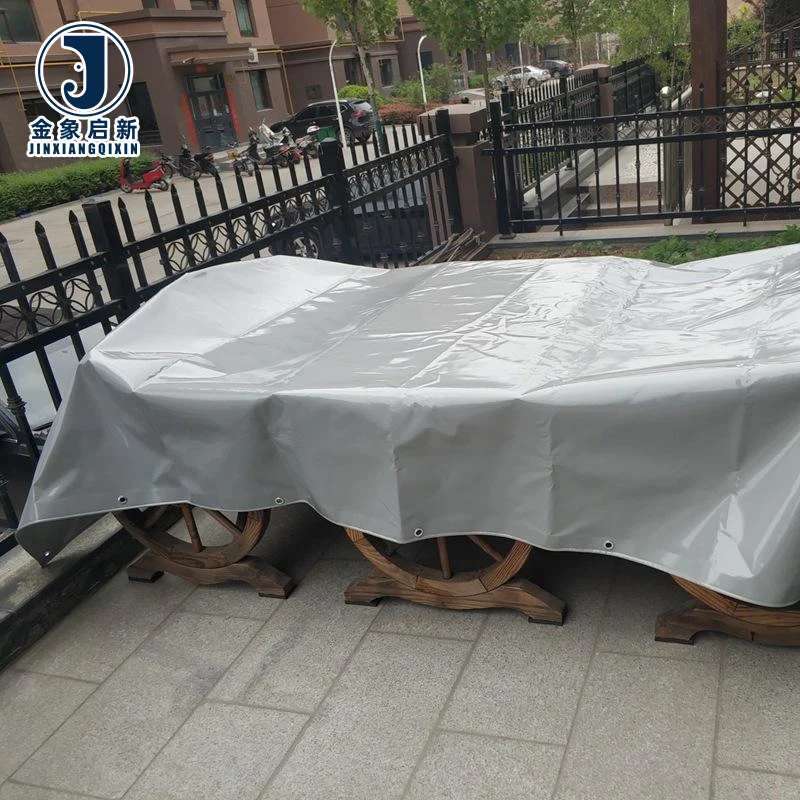
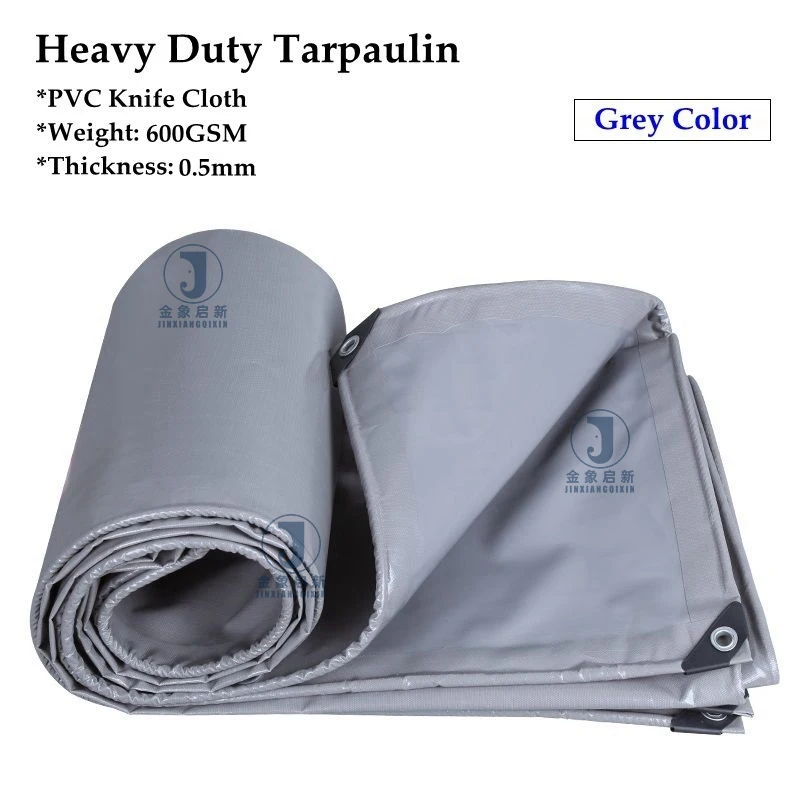
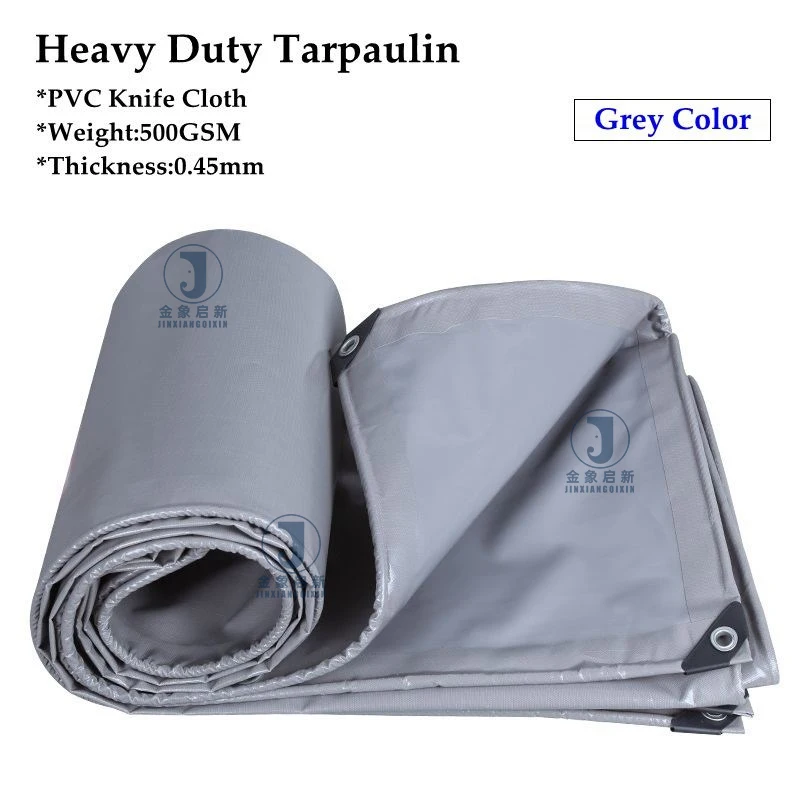
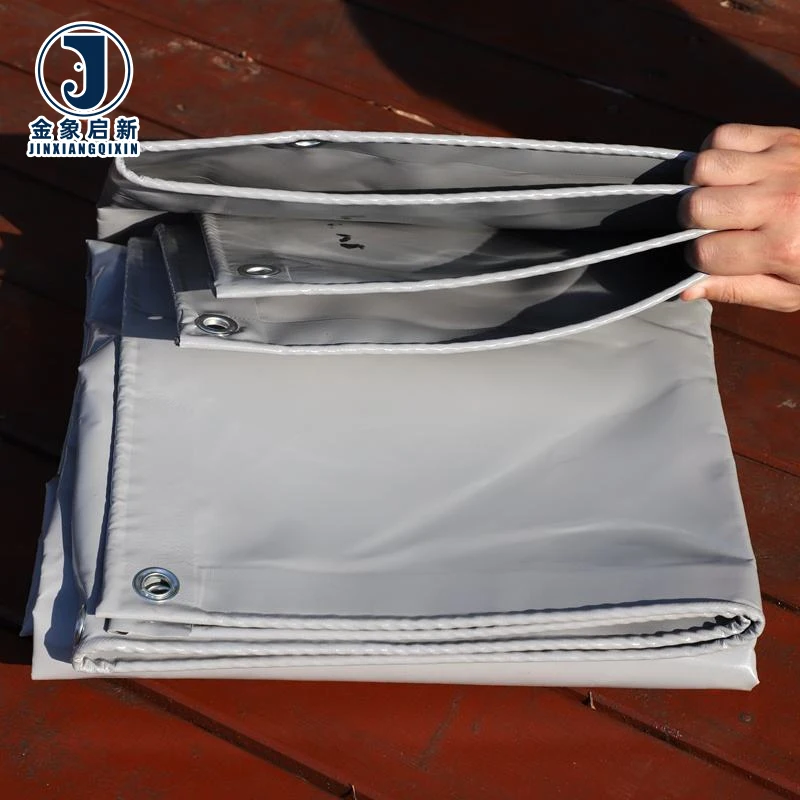
Process Control Over Coating Adhesion — Three full production lines with 36 sets of professional equipment maintain consistent knife-coated layer bonding across every roll of PVC knife-coated fabric dispatched.
Technical Specifications
| Parameter | Value |
|---|---|
| Product Type | PVC Knife-Coated Fabric |
| Weight | 500 to 800 g/m² (confirm the grade for your project) |
| Coating Material | PVC |
| Coating Method | High-frequency heat combined, knife coated |
| Waterproof Rating | Anti-permeable ≥ 20 KPa |
| Flame Retardancy | ≤ 10 seconds (grade not stated — confirm the standard required for your market) |
| Low-Temperature Flexibility | Not fractured by pliers at -30°C |
| Corrosion Resistance | Acid, alkali and brine resistant |
| Mildew Proofing | Mildew proofing properties stated |
| UV Treatment | Anti-UV (test basis not stated — request test report for your exposure conditions) |
| Seam Construction | High-frequency heat combined, water tight and will not crack |
| Tensile Strength | High tensile strength (standard not stated) |
| Water Absorption | Almost no absorbable water, dries quickly after rain |
| Applications | Car tents, canopies, awnings, industrial covers, outdoor shelters |
Application Suitability
| Application | Exposure & Requirement |
|---|---|
| Inflatable and membrane structures | Sustained internal pressure, wind load cycling, weld integrity at stress points |
| Aviation ground support shelters | Rapid deployment, low-temperature flexibility, fire-retardant compliance on airfield sites |
| Mining and tunnelling ventilation ducts | Continuous airflow, fire-retardant and anti-static certification for underground compliance |
| Temporary event and exhibition enclosures | UV exposure, crowd proximity fire safety, repeated assembly and dismantling |
| Coastal and chemical environment shelters | Salt spray, alkali and brine corrosion resistance, mildew in high-humidity conditions |
Why Coated Fabric Fails at the Weld Before the Fabric Itself Does
Seam failure originates from coating adhesion and welding parameters, not from the base fabric tensile rating alone.
When PVC knife-coated tarpaulin is specified for membrane or inflatable structures, the welded seam carries the load at every flex and stress point. [NEED_CITE: tensile and tear test methods for coated fabrics per ISO 1421]. A coating layer that bonds poorly to the base fabric will delaminate under high-frequency welding heat, leaving a seam that cracks before the body of the fabric shows any sign of strain. The result is a structure that passes material inspection but fails at the first load cycle. Buyers who focus only on the GSM figure on the quotation miss the relationship between coating weight, adhesion quality and weld compatibility — the three variables that actually determine whether the seam holds.
Coating Adhesion and Weld Integrity in Specialist Structures
The knife coating process lays a controlled PVC layer onto the base fabric, and the bond between coating and yarn determines how well the material responds to high-frequency heat welding. For inflatable shelters and tensile membrane roofs, every welded seam must transfer load without peeling. PVC knife-coated tarpaulin produced with consistent coating weight maintains predictable weld behaviour, allowing fabricators to set welding parameters once and repeat them across an entire production run. Inconsistent adhesion forces constant re-calibration, increasing scrap rates and delaying project timelines.
Fire-Retardant and Anti-Static Compliance for Regulated Sites
Mining ventilation ducts and aviation ground support enclosures operate under strict fire safety codes. A fabric that claims flame retardancy without a documented test standard creates a compliance gap that surfaces only when the site inspector asks for the certificate. Our PVC knife-coated fabric is available in flame retardant grades — confirm the grade required for your market and request the matching test report before production begins. Anti-static treatment follows the same logic: the specification must state the standard, and the test report must accompany the shipment. [NEED_CITE: DIN 4102 fire classification for building materials].
How Base Fabric Construction and Coating Weight Interact
The weight range of 500 to 800 g/m² covers multiple grades within this fabric family, and the correct grade depends on the structural load and environmental exposure of the end application. Coating weight and base fabric denier work together: a heavier coating on a lower-denier base may improve waterproofing but reduce tear propagation resistance, while a lighter coating on a high-density weave preserves flexibility at the cost of surface abrasion protection. The high-frequency heat combined seam method relies on both layers melting at compatible temperatures, which is why coating formulation and base fabric selection must be matched rather than chosen independently. Low-temperature flexibility verified at -30°C means the PVC compound retains plasticity in cold-climate deployment, preventing brittle fracture when the fabric is folded or tensioned in sub-zero conditions.
The Hidden Cost of Specifying on Weight Alone
A PVC knife-coated fabric that arrives lighter than the quoted GSM forces a choice: accept reduced performance or reject the shipment and delay the project. When the coating weight falls short, anti-permeability drops below the expected threshold, and the waterproof rating of ≥ 20 KPa may not hold under sustained hydrostatic pressure. In membrane structures, under-weight fabric also means thinner coating at the weld zone, where the material needs full thickness to fuse properly. [NEED_CITE: coating weight verification methods for PVC tarpaulin]. Batch-to-batch colour variation compounds the problem when panels from different rolls are installed side by side on a single structure, making visual inconsistency visible from the ground.
Why Procurement Teams Source This Fabric Here
Dedicated QA and QC inspection at every production stage catches coating weight deviation before the roll leaves the line, supported by a 100% pre-shipment inspection record. A 10-person R&D team handles material selection, custom width development and sample production, delivering samples within days for project-specific requirements. Three full production lines and 36 sets of equipment provide the capacity to fulfil container-load orders with consistent roll-to-roll weight and colour. Nearly 30 years of focused experience in coated fabric translates to process parameters that have been refined across thousands of production cycles, not guessed from a datasheet. ISO and CE certified systems underpin the documentation package that accompanies every dispatch.
Documentation & Verification
- Material specification sheet stating GSM, base fabric denier and coating method for the grade ordered
- Test report for flame retardant and anti-UV grades matching the performance level quoted
- Pre-shipment inspection record confirming weight and visual consistency across all rolls
- ISO and CE certificates included in the dispatch documentation package
- Certificate of origin provided for customs clearance at destination
Fabrication, Handling & Storage
- High-frequency welding parameters should be set and tested on a sample piece of the 500 to 800 g/m² grade before full production
- Store rolls upright on a flat surface to prevent permanent creasing in the PVC knife-coated surface
- Allow cold-stored rolls to reach ambient temperature before unrolling to avoid coating crack at low-temperature flexibility limits
- Use PVC-compatible cleaning agents to protect the coating surface and preserve anti-UV treatment integrity
- Cut panels with sealed edges where possible to maintain the anti-permeable ≥ 20 KPa rating at exposed fabric edges
What We Need to Quote Accurately
Provide the intended structure type, expected wind or pressure load, and the fire safety or anti-static standard your local authority requires. Specify the roll width you need, annual volume estimate, and whether you require finished panels or roll stock only. If colour consistency across multiple rolls is critical for your project, let us know so we plan production from a single coating batch.
Frequently Asked Questions
Q: What fire-retardant or anti-static certifications are available for this PVC knife-coated fabric?
A: The fabric is produced in flame retardant grades with a self-extinguishing time of ≤ 10 seconds. The specific test standard and grade must be confirmed against your local building or mining code before production. Anti-static treatment is available on request. We supply the matching test report with the shipment documentation for site compliance verification.
Q: Can you develop a custom GSM and width for a specific membrane structure project?
A: Yes. Our R&D team handles custom weight grades within the 500 to 800 g/m² range and non-standard widths. Samples are developed within days for your approval before bulk production begins. Confirm the required coating weight, base fabric construction and roll dimensions so we can prepare the sample and quotation.
Q: How do you ensure colour and weight consistency across multiple rolls in one order?
A: Every production run passes through dedicated QA and QC checks at each stage. Rolls from the same batch are produced with identical coating formulation and colour masterbatch. A 100% pre-shipment inspection verifies weight and visual consistency before dispatch, and the inspection record ships with the order for your audit.
Q: What welding method is recommended, and does the seam match the fabric tensile strength?
A: High-frequency heat welding is the recommended method for this knife-coated fabric. The process fuses the PVC coating layers into a water tight bond that will not crack under normal structural flexing. Welding parameters should be calibrated on a sample of the specific GSM grade to ensure the seam achieves full adhesion without burning through the coating.
Q: What documentation ships with the order for site compliance verification?
A: Each dispatch includes a material specification sheet, test reports for the specified performance grades, ISO and CE certificates, a pre-shipment inspection record, a roll packing list and a certificate of origin. Additional documentation can be prepared to match the compliance requirements of your destination market.