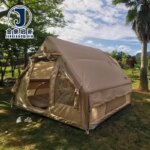
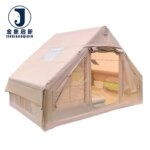
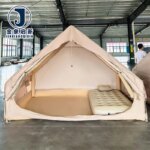
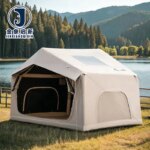
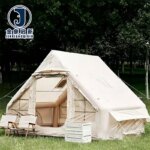
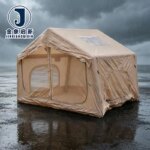
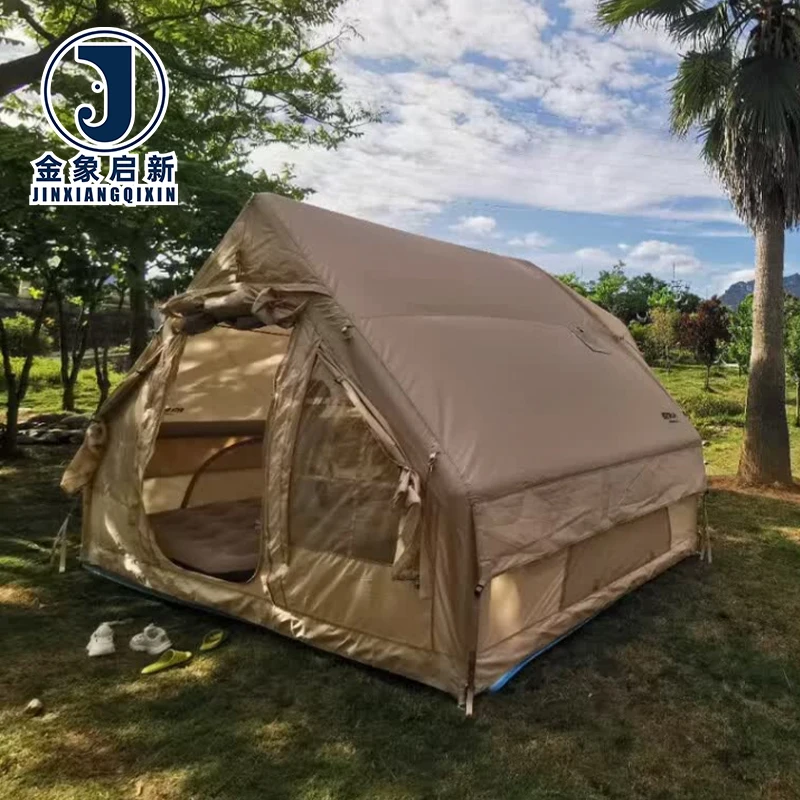
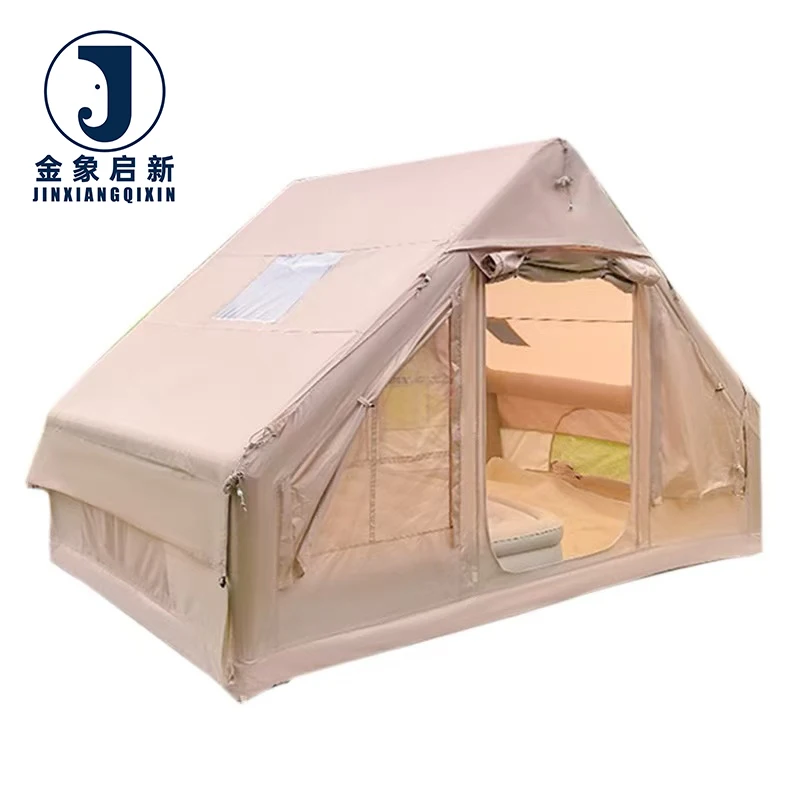
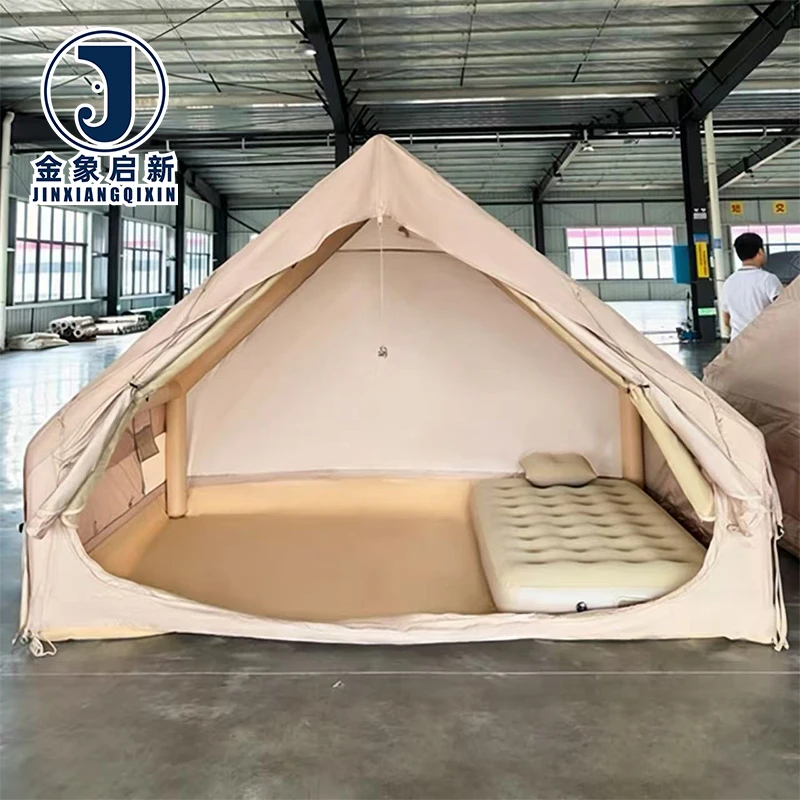
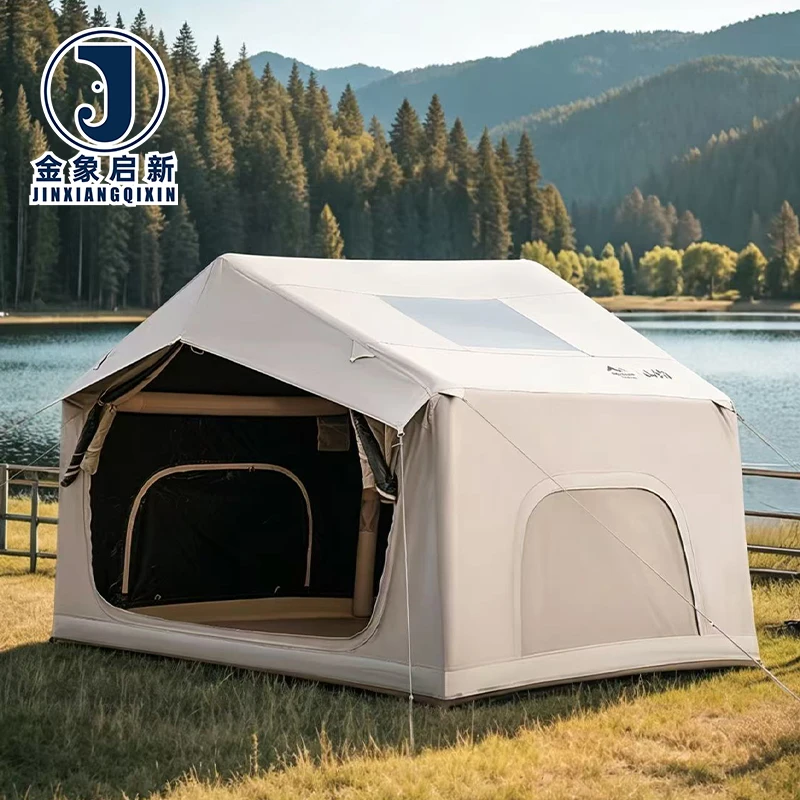
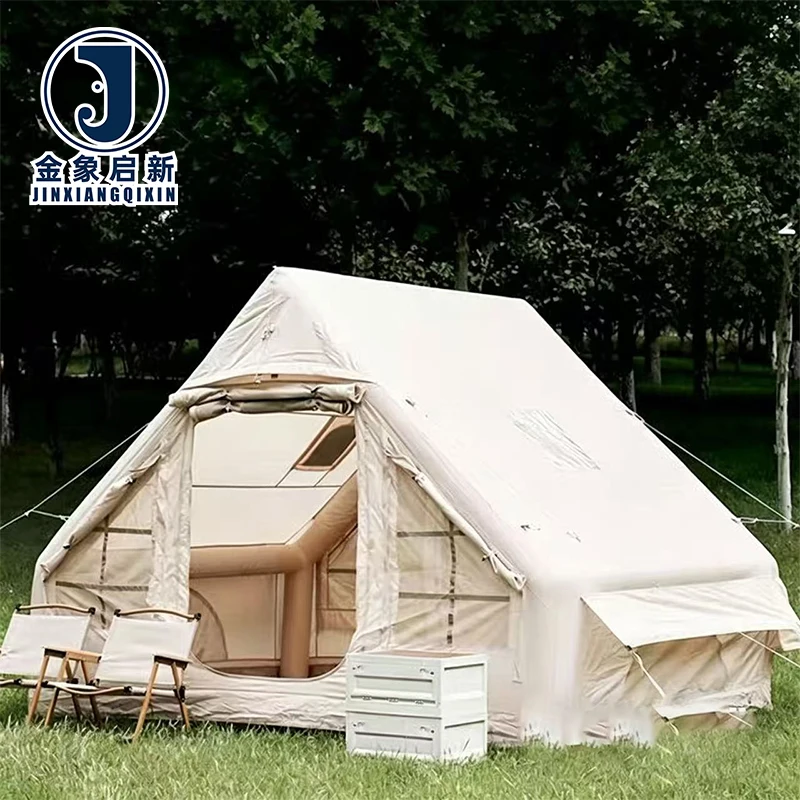
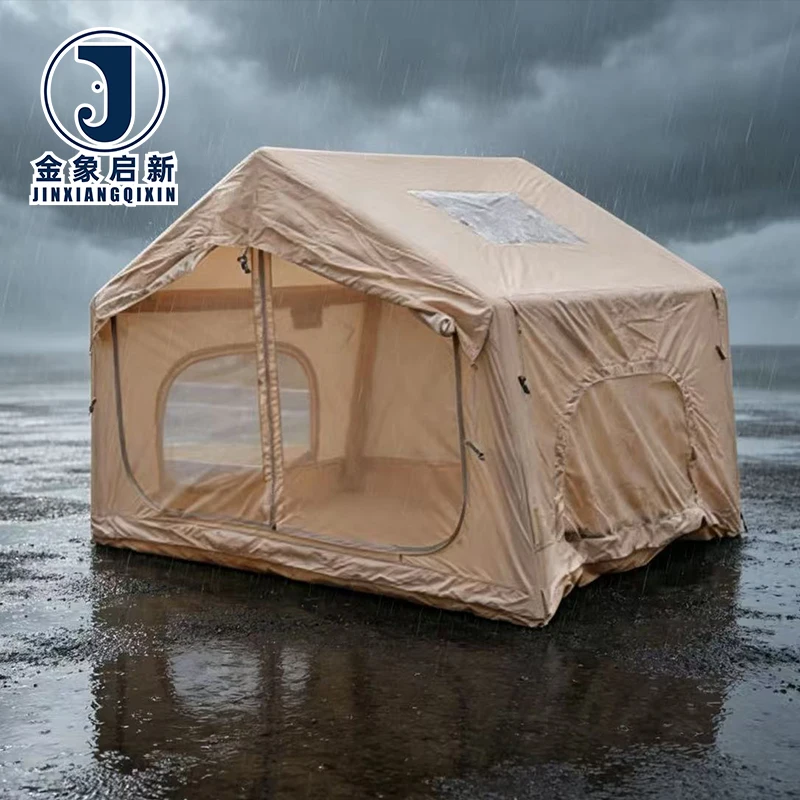
Precision-Coated Shell Fabric — Our 10-technician R&D team develops and validates every batch of inflatable tent fabric against your specific airtightness and compliance requirements before production scales up.
Technical Specifications
| Parameter | Value |
|---|---|
| Product Type | Inflatable Tent |
| Core Material | PVC tarpaulin |
| Construction | Single layer PVC tarpaulin |
| Waterproof Rating | ≥2000mm water column (source value — verify against manufacturer catalog) |
| Tear Resistance | ≥300N (source value — verify against manufacturer catalog) |
| UV Stability | 500 hours exposure (source value — verify against manufacturer catalog) |
| Fire Retardant | Available in flame retardant grades — confirm the grade required for your market |
| Anti-Static | Available in anti-static grades — confirm the surface resistance standard required for your application |
| Season Rating | 4 Season |
| Capacity | 8-10 Person |
| Production Facility Area | 9180 square meters |
| Production Lines | 3 full production lines |
| Processing Equipment | 36 sets of professional processing equipment |
| R&D Team Scale | 10 technicians |
| Prototype Lead Time | 7-10 business days |
| Production Lead Time | 15-20 days for standard orders |
| Standards | ISO9001, ISO14001, ISO45001, CE |
| Customization | OEM & ODM (sample customization, pattern printing, material selection, product design) |
Application Suitability
| Application | Exposure & Requirement |
|---|---|
| Commercial camping equipment manufacturing | Repeated inflation cycles, flex stress at beam joints, consistent airtightness across production batches |
| Outdoor gear wholesale and distribution | Branded tent ranges requiring roll-to-roll colour consistency and verified fire-retardant certification for regulated retail markets |
| Family-sized camping shelter assembly | Structural loads from 8-10 person capacity, seam integrity under internal pressure, weather exposure in varied climates |
| Industrial production lines for inflatable structures | High-volume cutting and heat-welding throughput, material flatness for automated layup, batch traceability for quality audits |
What "Certified" Inflatable Tent Fabric Actually Means on the Factory Floor
A certificate on a website is not the same as a test report matching your specific production batch.
Inflatable tent fabric fire retardant anti-static certified claims are easy to print on a quotation. What matters is whether the fire-retardant grade matches the fire safety code of the market where the tent will be pitched, and whether the anti-static surface resistance was measured on the roll you actually received. I have seen commercial tent manufacturers ship an entire container of shelters, only to have the end-market safety auditor reject the batch because the test report referenced a different formulation than the one produced. The cost is never just the fabric — it is the dismantled production run, the delayed launch, and the lost contract [NEED_CITE: fire classification standards for temporary membrane structures].
Formulation Control for Inflatable Structural Integrity
The airtightness of an inflatable tent depends entirely on the coating layer and the heat-welded seams that join the beam panels. Our Inflatable tent fabric fire retardant anti-static certified production process controls coating weight at every stage, ensuring the PVC layer bonds to the base fabric without pinholes or thin spots that would leak under pressure. When a camping equipment manufacturer scales from a prototype to a full production run, this consistency is what separates a tent that holds pressure overnight from one that sags before dawn.
Matching the Fire-Retardant Grade to Your End Market
Different jurisdictions enforce different fire safety classifications for temporary shelters and membrane structures. Some markets reference building material standards, while others apply specific codes for inflatable and tensile structures [NEED_CITE: DIN 4102 fire classification for building materials]. Our inflatable tent fabric is available in multiple flame retardant grades. The critical step is confirming which standard your target market requires before we formulate the coating. We supply the corresponding test report with each batch, so your compliance documentation matches the material on the cutting table.
Reading Beyond the Single Number on a Spec Sheet
A waterproof rating stated as a single water column figure tells you what the fabric passed in a lab test — it does not tell you how that rating holds up after repeated inflation cycles or prolonged UV exposure. Tear resistance values depend on the base fabric denier and weave density, not just the coating thickness. The UV stability figure reflects a controlled exposure test, not a guaranteed outdoor lifespan, because real-world degradation depends on latitude, altitude, and seasonal sun intensity. Understanding these distinctions prevents the common mistake of comparing two fabrics by their headline number alone and then wondering why the lighter one fails at the weld line in the field [NEED_CITE: tensile and tear test methods for coated fabrics per ISO 1421].
The Hidden Cost of Specifying by Price Per Square Metre
When procurement teams select inflatable tent fabric based primarily on cost per unit area, the consequences surface later in production. A coating that is lighter than quoted may pass a waterproof test on arrival but cannot hold the internal pressure required for an 8-10 person shelter structure. An anti-static treatment applied at the minimum threshold may read correctly on a surface resistance meter in the warehouse but degrade after the first season of field use. A batch with inconsistent colour across rolls forces the assembly line to sort and match panels before cutting, adding labour hours that erase the saving on the raw material. These are not hypothetical — they are the failure patterns that repeat across the inflatable structure supply chain [NEED_CITE: common failure modes in coated fabric for inflatable structures].
Why Commercial Tent Manufacturers Source Their Inflatable Shell Fabric Here
Our three full production lines and 36 sets of processing equipment handle the volume that commercial camping equipment manufacturers require, with capacity to run parallel orders without sacrificing lead time. The 10-person R&D team develops custom formulations — adjusting fire-retardant loading, anti-static treatment levels, and coating weight — and produces prototype samples within 7-10 business days so you can validate weld parameters and airtightness before committing to bulk. Every roll undergoes dedicated QA/QC inspection before dispatch, with 100% pre-shipment checks that verify coating weight, colour consistency, and surface treatment performance against the specification sheet you approved. Our ISO9001, ISO14001, ISO45001, and CE certifications are not wall decorations — they govern the documented process controls that produce batch-to-batch repeatability across large-volume orders. OEM and ODM support extends from material selection through pattern printing and custom sizing, with full documentation packages tailored to your compliance requirements.
Documentation & Verification
- Material specification sheet stating PVC coating type, base fabric construction, and treatment details for your batch
- Fire-retardant test report with stated grade and standard matching the formulation produced
- Anti-static surface resistance test documentation referencing the applicable measurement method
- Pre-shipment inspection record covering coating weight, colour match, and surface integrity per roll
- ISO9001, ISO14001, ISO45001, and CE certificates included with shipping documentation
- Certificate of origin and customs support documentation for international shipment
Fabrication, Handling & Storage
- Heat-weld parameters must be calibrated to the single layer PVC tarpaulin construction — test weld settings on a sample strip before running production panels
- Cutting layout should account for the full roll width to maximise yield and minimise offcuts on 8-10 person tent beam patterns
- Store rolls upright on a flat surface to prevent compression creases that affect airtightness at the weld line
- Avoid dragging the PVC surface across uncoated workshop tables — use protective layup film during cutting and assembly
- Clean welded seams with PVC-compatible solvent only — aggressive cleaners can degrade the fire-retardant and anti-static surface treatment
- Inflate finished tent structures gradually during QC testing to allow heat-welded seams to settle under progressive load
Requesting a Production Quote
Tell us the fire-retardant standard and anti-static requirement your end market enforces, the annual volume you plan to produce, and whether you need rolls in stock widths or custom-cut panels. If you are developing a new inflatable tent model, we recommend starting with a prototype sample order so your engineering team can validate welding parameters, airtightness, and structural behaviour under load before we move to full production. Include any pattern printing or colour matching requirements with your initial enquiry so we can factor them into the sample development timeline.
Frequently Asked Questions
Q: What fire-retardant certifications do you provide for regulated markets like North America and Europe?
A: We supply inflatable tent fabric in multiple flame retardant grades. The specific grade you need depends on the fire safety code applicable to temporary membrane structures in your target market. Confirm the required standard with your local regulatory body, and we will formulate the coating accordingly and include the matching test report with your shipment documentation.
Q: Can you supply material samples before we commit to a full production order?
A: Yes. Our R&D team produces prototype samples of inflatable tent fabric within 7-10 business days, covering your specified fire-retardant grade, anti-static treatment, and any custom colour or printing requirements. We recommend testing weld parameters and airtightness on the sample before authorising bulk production.
Q: How do you ensure waterproof and coating consistency across large-volume batch orders?
A: Every production run on our three full lines follows documented process controls under ISO9001 certification. Dedicated QA/QC staff conduct 100% pre-shipment inspection, verifying coating weight, surface finish, and treatment performance against your approved specification sheet before any roll is packed for dispatch.
Q: What customisation options are available for our branded inflatable tent range?
A: OEM and ODM services cover material selection, custom dimensions, colour matching, and pattern printing. Our 10-technician R&D team works from your design brief to develop the formulation and finish, producing samples for your approval before production scales to full order quantities.
Q: What is the typical timeline from sample approval to full production delivery?
A: Once you approve the prototype sample, standard production orders are completed within 15-20 days. This covers coating, treatment application, in-process QA, pre-shipment inspection, and packing. Custom formulations or large-volume orders may require additional time, which we confirm at the quotation stage.