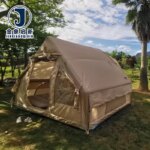
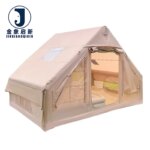
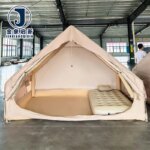
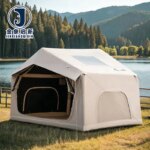

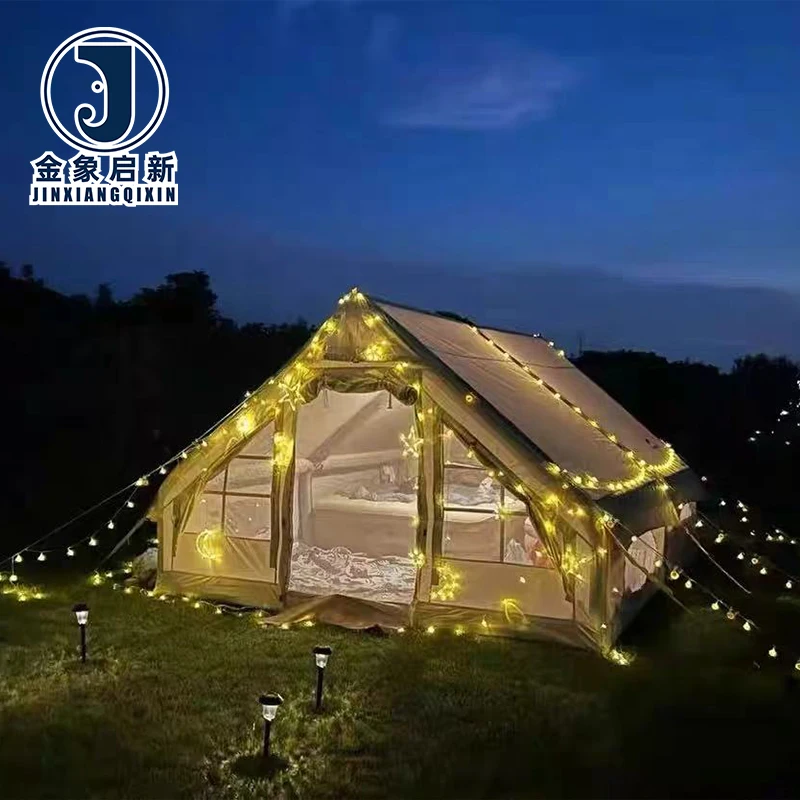
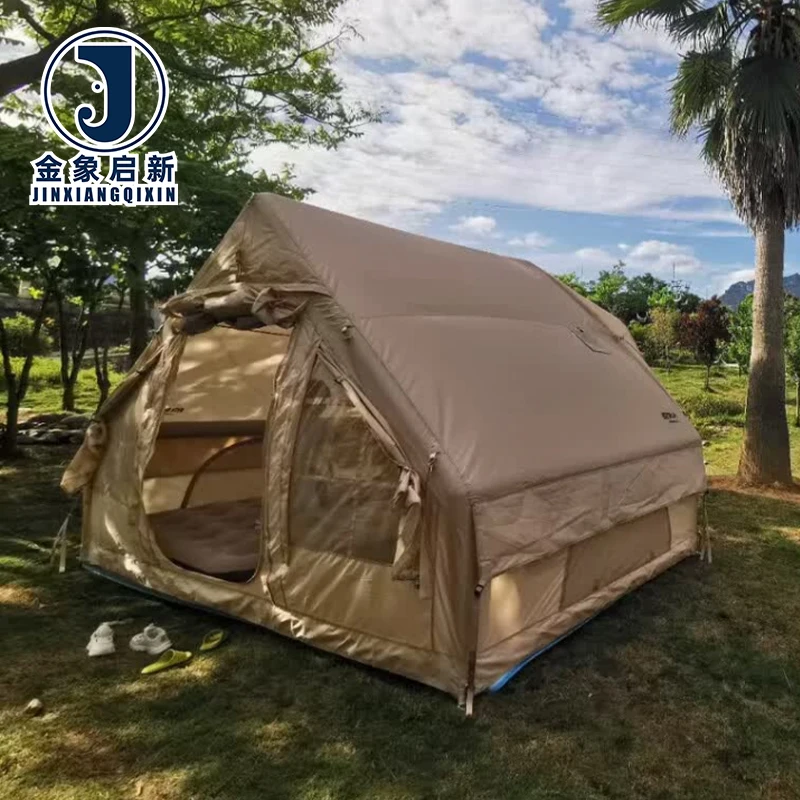
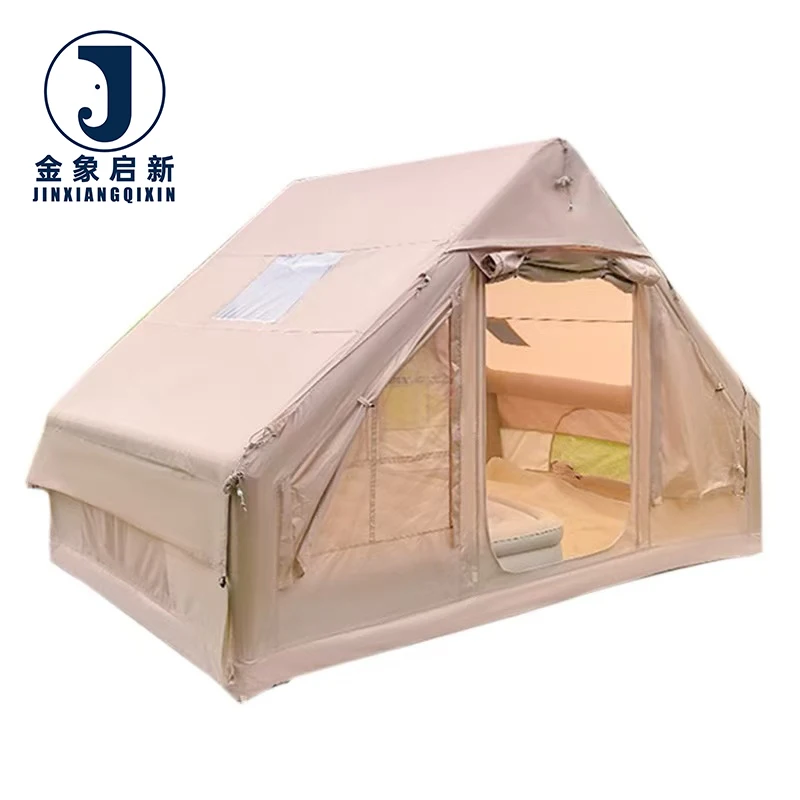
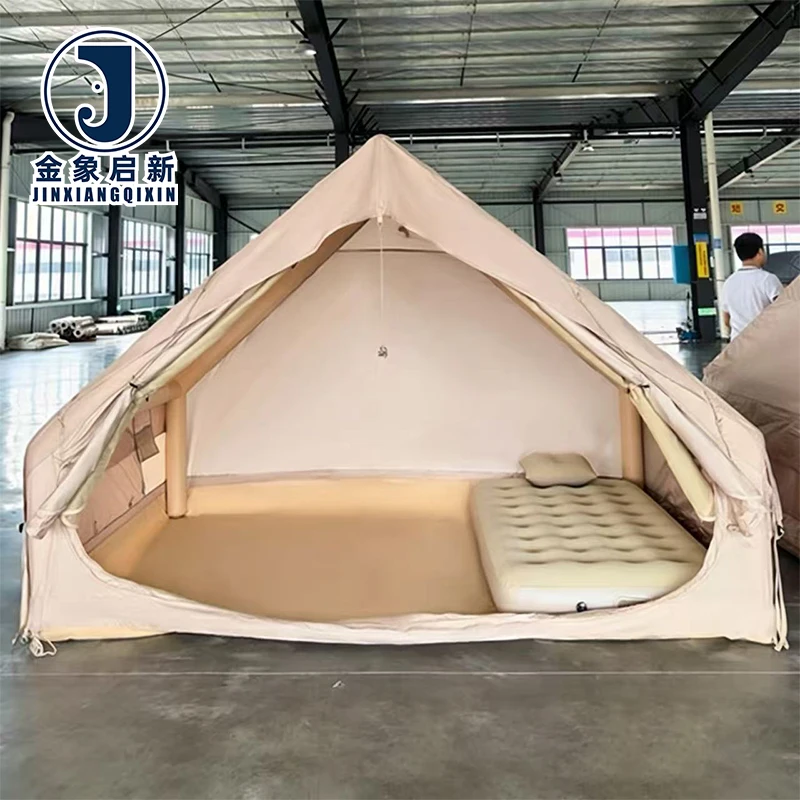
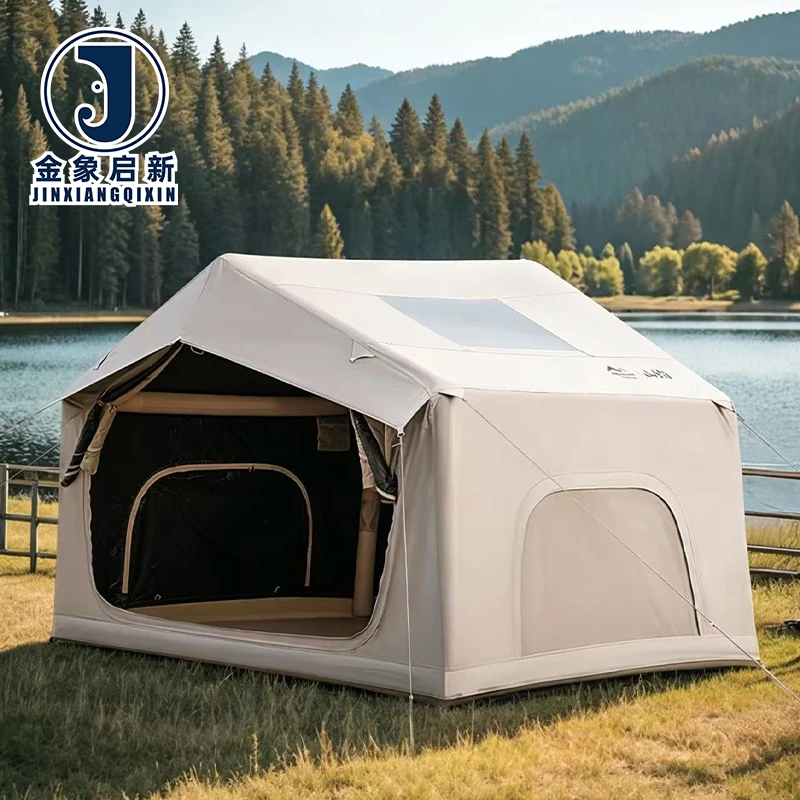
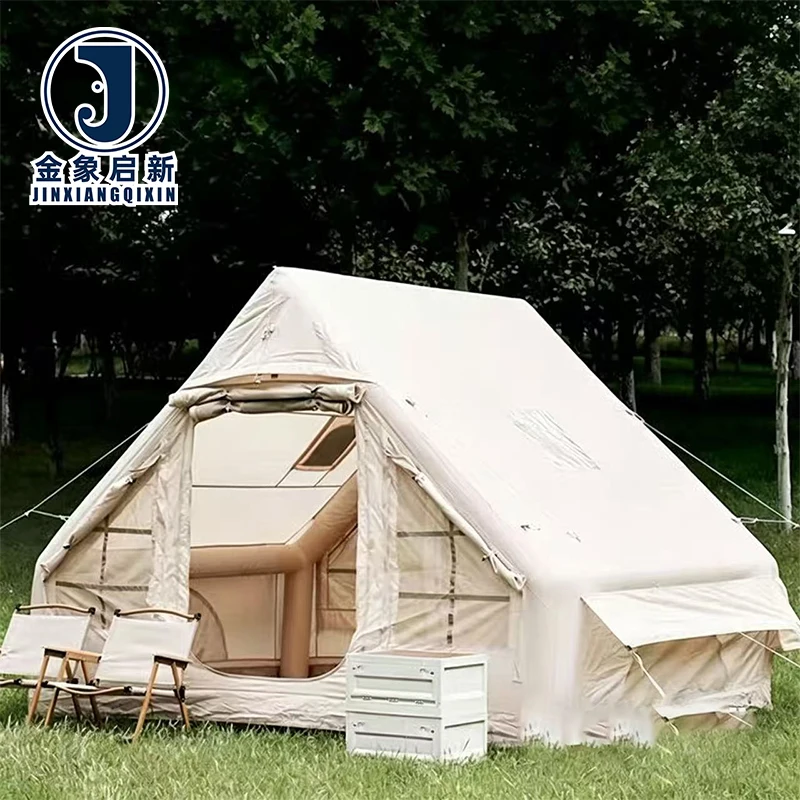
Coated Fabric Expertise — Nearly 30 years of PVC coating process control ensures every roll of inflatable tent fabric meets the fire-retardant and anti-static compliance your site demands.
Technical Specifications
| Parameter | Value |
|---|---|
| Product Type | Inflatable Tent |
| Core Material | PVC tarpaulin |
| Key Performance | Waterproof, UV-resistant (test basis not stated in source), tear-resistant, fire-retardant (grade not stated in source), anti-static (standard not stated in source) |
| Capacity | 4-6 Person |
| Opening Mechanism | Quick Automatic Opening (inflatable) |
| Customization | OEM & ODM (sample customization, pattern printing, size adjustments, color matching) |
| Production Lines | 3 full production lines |
| Processing Equipment | 36 sets of professional processing equipment |
| R&D Team Scale | 10 technicians |
| Quality Control | Strict full-process quality inspection with dedicated QA&QC staff on site |
| Certifications | ISO 9001, ISO 14001, ISO 45001, CE |
Application Suitability
| Application | Exposure & Requirement |
|---|---|
| Mining and tunnelling inflatable ventilation structures | Continuous airflow pressure, underground moisture, mandatory fire-retardant compliance for enclosed spaces |
| Aviation and construction ventilation inflatable ducts | Static charge buildup risk, abrasive particulate exposure, anti-static certification required on site |
| Commercial outdoor gear manufacturing | Batch consistency across production runs, colour uniformity, weld integrity at inflation seams |
| Specialist membrane and inflatable structure contractors | Tensile load under internal pressure, UV exposure during extended outdoor deployment, certified documentation for project handover |
Why Inflatable Tent Fabric Fire Retardant Certified Documentation Matters More Than the Label
A fire-retardant claim without a batch-specific test report is a liability, not a specification.
When an inflatable structure fails a site safety audit because the fabric supplier cannot produce a test certificate tied to the actual roll delivered, the entire installation stalls. Contractors working in mining, tunnelling, and aviation environments face this compliance gap regularly — the Inflatable Tent Fabric fire retardant certified documentation either arrives with the shipment or it does not, and project timelines do not wait for paperwork to catch up. I have seen inflatable ventilation ducts rejected at the tunnel portal because the anti-static standard was stated on the quotation but absent from the delivery file [NEED_CITE: fire-retardant and anti-static compliance verification for underground and aviation ventilation structures].
How Coating Formulation Determines Fire-Retardant Behaviour in Inflatable Structures
The PVC coating applied to inflatable tent fabric carries the fire-retardant additives that determine how the material responds to ignition sources in enclosed environments. For mining and tunnelling applications, the coating must resist flame propagation while maintaining flexibility under continuous inflation pressure. Available in flame retardant grades — confirm the grade required for your market before placing the order, as different jurisdictions enforce distinct classification systems.
Anti-Static Treatment for Inflatable Ventilation Ducts in Hazardous Zones
Static charge accumulation on inflatable duct surfaces poses a discharge risk in environments with combustible dust or gas. Anti-static treatment is available for this Inflatable Tent Fabric fire retardant certified product line — verify the surface resistance standard your project specifies before production begins. The 10-person R&D team can formulate coating adjustments to align with project-specific electrostatic requirements [NEED_CITE: anti-static surface resistance standards for ventilation ductwork in hazardous atmospheres].
Reading the Specification Sheet Beyond the GSM Number
GSM alone does not predict how inflatable tent fabric will perform under inflation pressure or at welded seams. The base fabric denier and weave density determine how tensile and tear loads distribute across the material, while the coating method — whether knife-over-roll, laminating, or calendering — controls adhesion strength between the PVC layer and the textile substrate. Coating weight and base fabric construction must be evaluated together: a lighter base with a heavier coating may show acceptable GSM but fail at the peel line when the structure flexes under wind or internal pressure changes. Surface finish selection, whether glossy or matte, influences both print adhesion for branding and the ease of field cleaning during extended deployment.
The Hidden Cost of Undocumented Fire-Retardant and Anti-Static Grades
When the fire-retardant grade stated on a quotation does not match the test report — or when no test report accompanies the shipment at all — the buyer absorbs the full cost of replacement material, re-fabrication, and project delay. Anti-static fabric installed without verified surface resistance readings can trigger a site shutdown in regulated environments. Colour variation between rolls in the same order becomes visible once inflatable panels are joined side by side, forcing selective rejection and patchwork assembly. Welded seams that fail before the fabric itself indicate a mismatch between the heat-sealing parameters and the actual coating formulation delivered [NEED_CITE: welded seam failure analysis in coated technical fabrics].
Why Technical Buyers Source This Inflatable Fabric Here
Three full production lines and 36 sets of professional processing equipment support consistent output volume for bulk inflatable tent fabric orders without sacrificing batch-to-batch uniformity. A dedicated QA and QC team inspects every production stage, with 100 percent pre-shipment inspection ensuring that fire-retardant and anti-static properties are verified before rolls leave the facility. The 10-technician R&D team handles sample development, pattern printing, and material adjustments within days, not weeks. ISO 9001, ISO 14001, ISO 45001, and CE certifications are maintained under regular audit and included in shipment documentation. Pre-production samples are available for engineering validation before mass production begins.
Documentation & Verification
- Material specification sheet stating fire-retardant grade, anti-static standard, base fabric, and coating details per roll
- Batch-specific test reports for flame retardancy and anti-static metrics provided with shipment
- ISO 9001, ISO 14001, ISO 45001, and CE certificates included in dispatch documentation
- Pre-shipment inspection record confirming GSM, colour reference, and coating adhesion
- Certificate of origin and customs documentation prepared for export clearance
Fabrication, Handling & Storage
- Heat-seal temperature and dwell time must match the PVC coating formulation to prevent seam delamination
- Store rolls vertically on pallets to avoid permanent creasing in the coated PVC surface
- Allow cold-transported rolls to reach ambient temperature before unrolling to prevent coating crack
- Use compatible PVC adhesive for field repairs on inflatable tent fabric seams and punctures
- Plan cutting layout to minimise off-cuts and reduce the number of welded joins per inflatable panel
- Clean with mild detergent only; solvents may degrade the fire-retardant and anti-static coating layer
What We Need From Your Enquiry
Provide the fire-retardant classification and anti-static surface resistance standard your project or market requires, along with the target inflation pressure and deployment environment. Specify the roll width, colour reference, and whether pattern printing or OEM branding is needed on the finished fabric. Confirm whether you require raw roll stock for your own fabrication line or pre-cut panels with welded seams, and indicate your estimated annual volume so we can align production scheduling and sampling.
Frequently Asked Questions
Q: What fire-retardant grade does the inflatable tent fabric meet?
A: The fabric is available in multiple fire-retardant grades aligned with international classification systems. Confirm the specific grade your site or market requires — such as M2, B1, or NFPA 701 — and we will formulate the PVC coating accordingly and provide a batch-specific test report with your shipment.
Q: How is anti-static performance verified on this fabric?
A: Anti-static treatment is applied during the PVC coating process. The applicable surface resistance standard depends on your project specification. Share your required threshold with our R&D team before production, and we will include the corresponding measurement data in the batch documentation.
Q: Can you provide batch-specific test reports with every shipment?
A: Yes. Each production batch of inflatable tent fabric is tested for flame retardancy and material composition. The test reports are tied to the specific roll numbers in your order and included in the dispatch documentation package alongside ISO and CE certificates.
Q: What OEM and ODM customization is available for inflatable tent fabric?
A: Customization covers size adjustments, pattern printing, colour matching, and material thickness modifications. Our 10-person R&D team develops pre-production samples for your approval before mass production begins, ensuring the final fabric meets your design and performance requirements.
Q: How does the quality control process ensure consistency across bulk orders?
A: Dedicated QA and QC staff inspect every production stage, from base fabric intake through coating, winding, and packing. A 100 percent pre-shipment inspection checks GSM, colour uniformity, coating adhesion, and fire-retardant compliance before any roll is released for dispatch.