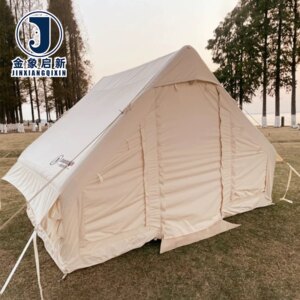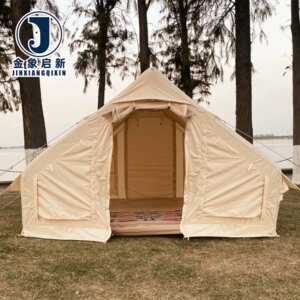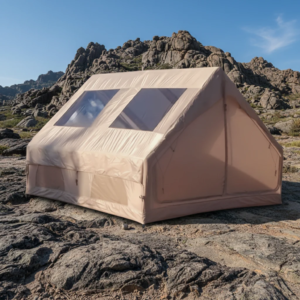
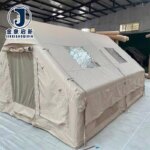
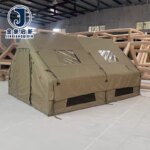
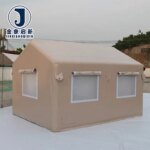
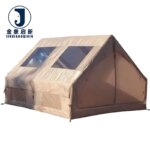
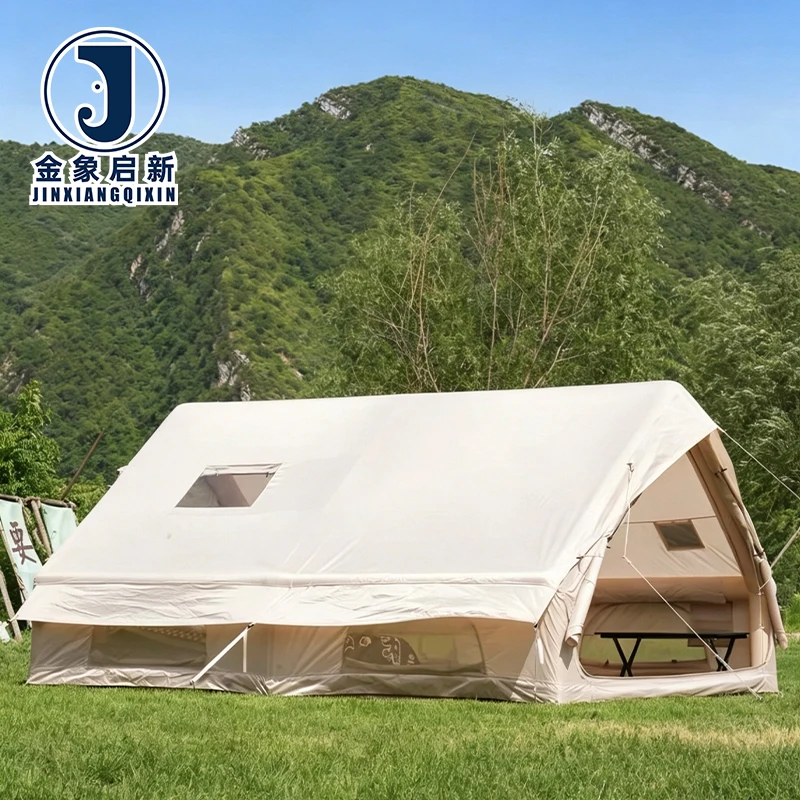
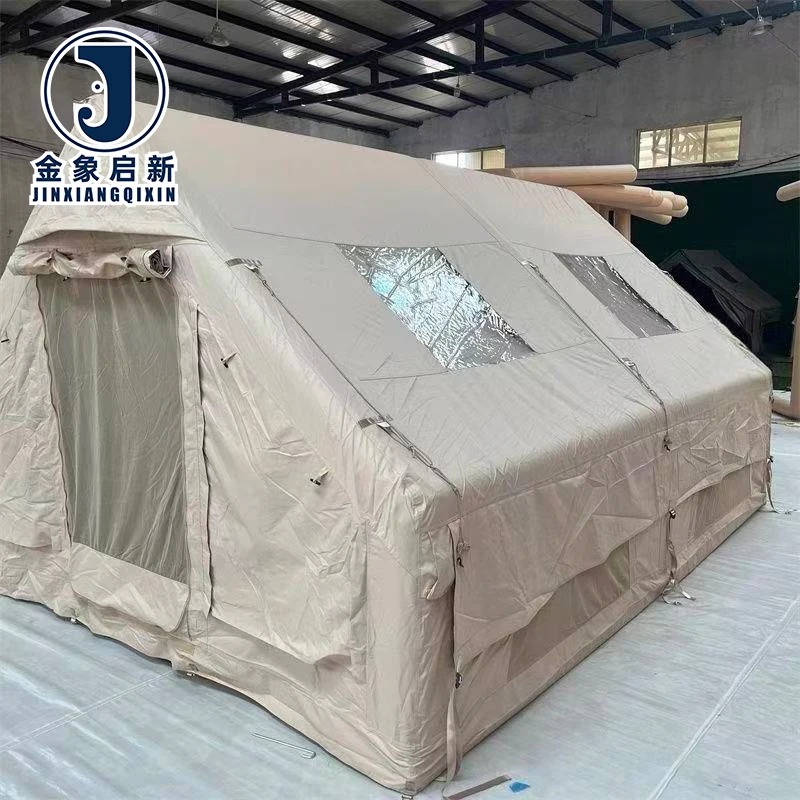
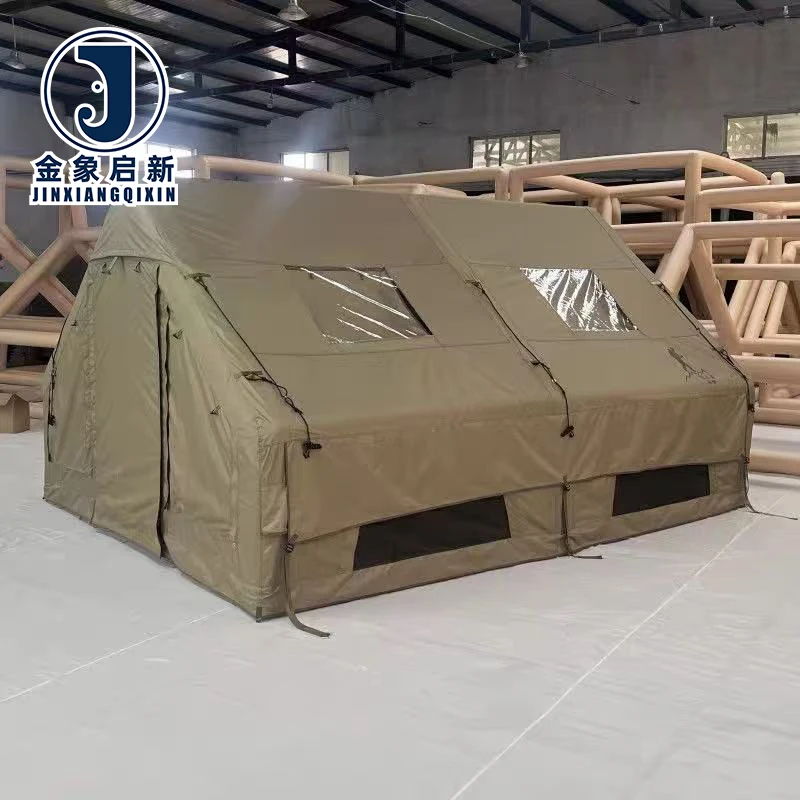
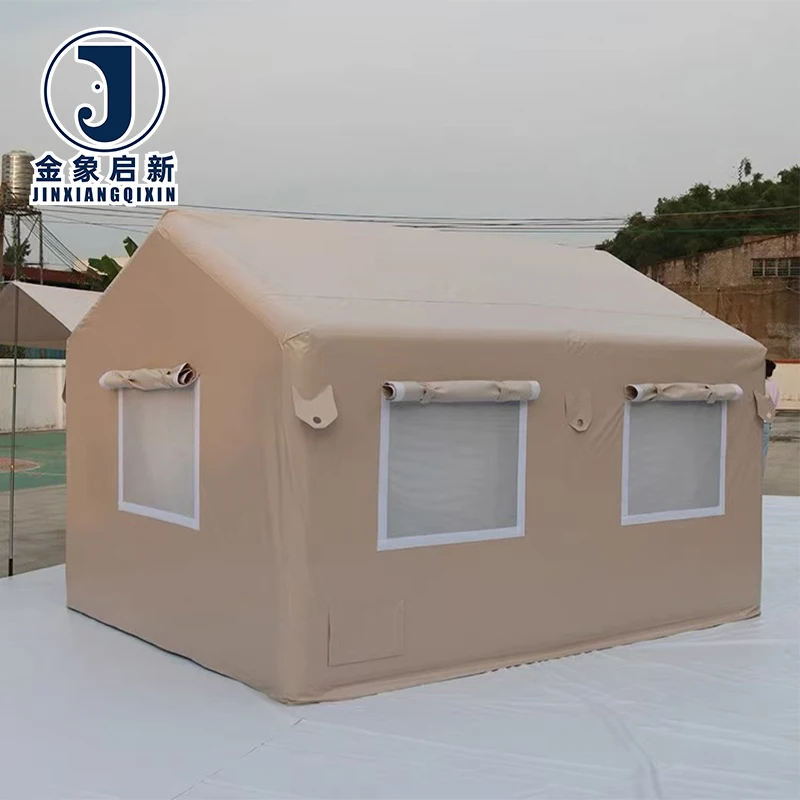
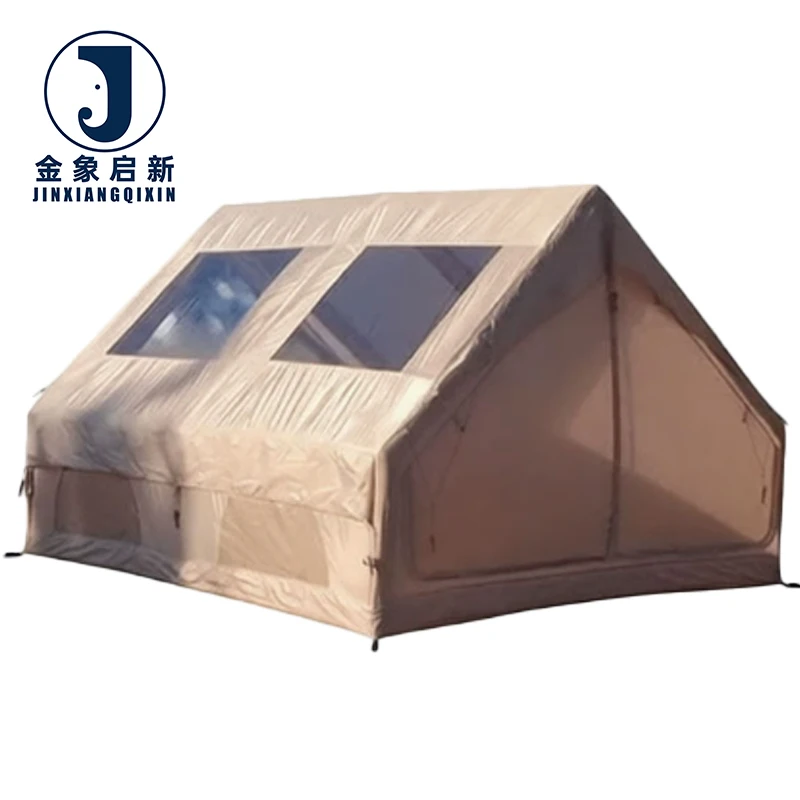
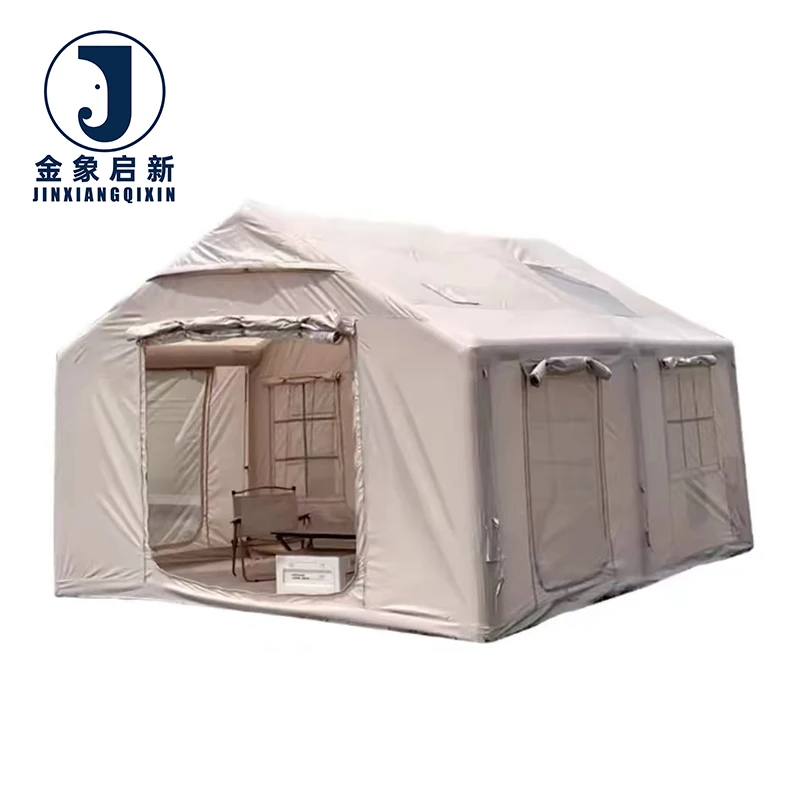
Deep Process Control Over Coated Fabric — nearly 30 years focused on PVC coating weight and adhesion ensures batch-to-batch consistency for inflatable structures requiring certified fire-retardant and anti-static performance.
Technical Specifications
| Parameter | Value |
|---|---|
| Product Type | Inflatable Tent |
| Capacity | 8–10 Person |
| Core Material | PVC Tarpaulin |
| Waterproof Rating | 3000mm water column |
| Flame Retardant | EN 13501-1 |
| UV Treatment | Anti-UV (test basis not stated in source) |
| Anti-Static | Claimed (surface resistance or standard not stated in source) |
| Thickness Tolerance | ±2% |
| Raw Material | Virgin PVC resin per GB/T 5761-2006 |
| Season Rating | Four-Season |
| Setup System | Quick Automatic Opening |
| Management Standards | ISO 9001, ISO 14001, ISO 45001, CE |
Application Suitability
| Application | Exposure & Requirement |
|---|---|
| Remote workforce housing at project sites | Sustained wind load, temperature extremes, rapid deployment needs, fire safety compliance on industrial sites |
| Expedition base camps for adventure tourism | High-altitude UV exposure, snow loading, abrasion from repeated inflation cycles, guest safety standards |
| Outdoor event management structures | Public assembly fire codes, frequent relocation, ground contact moisture, crowd-adjacent wear |
| Field research stations | Isolation from supply chains, long-term weathering, anti-static needs near sensitive instrumentation |
| Commercial glamping and resort operations | Guest-facing aesthetics, seasonal tear-down and storage, repeated setup without seam degradation |
Why Certification Gaps in Inflatable Tent Fabric Create Site Shutdown Risk
Commercial inflatable structures that cannot produce batch-specific fire-retardant documentation are a compliance liability, not a shelter solution.
When an inflatable tent arrives on a remote mining camp or a public event site without the fire-retardant certificate the local authority requires, the entire installation halts. Purchasing teams often assume "flame retardant" on the quotation translates to site acceptance, only to discover the inspector demands a specific grade tied to a recognized standard. Anti-static claims face the same scrutiny near sensitive electronics or in classified atmospheres. I have seen project timelines slip by weeks because the fabric documentation did not match the regulatory framework the site was operating under [NEED_CITE: EN 13501-1 classification system for construction products and building elements]. The inflatable tent fabric you specify must arrive with test reports that speak the language of your local fire marshal.
Virgin Resin Formulation and Thickness Consistency Across Batches
The raw material foundation matters more than most buyers realize when sourcing inflatable tent fabric. This PVC tarpaulin uses virgin resin sourced to GB/T 5761-2006, which governs the purity and molecular weight distribution of the polymer. Recycled or blended resins introduce variability in plasticizer absorption, meaning the coating weight drifts from roll to roll even when the calendering settings remain unchanged. With a maintained ±2% thickness tolerance, the air-holding tubes and structural beams of the inflatable tent inflate uniformly. Uneven wall thickness creates soft spots that flex more under wind load, concentrating stress at the heat-welded seams where failure typically initiates.
24-Hour Inflation Testing Before Dispatch
Every completed inflatable tent undergoes a full 24-hour airtightness and structural stability test before it leaves the production floor. This is not a visual inspection or a quick pressure check. The unit is inflated to operating pressure and monitored for pressure decay, tube deformation, and seam integrity through a complete thermal cycle. Any micro-leak at a heat-welded junction or a pinhole in the PVC tarpaulin coating reveals itself during this window. Units that do not hold stable pressure are rejected and reworked before packing, so the inflatable tent fabric you receive has already proven it can sustain internal pressure without continuous blower compensation [NEED_CITE: standard airtightness test protocols for inflatable structures].
Reading the Specification Sheet Beyond Marketing Claims
A 3000mm waterproof rating tells you the hydrostatic head pressure the PVC tarpaulin can withstand before water penetrates, which is well beyond what a tent structure encounters in rain or ground splash. The EN 13501-1 flame retardant reference aligns with European reaction-to-fire classification, though the specific grade within that standard should be confirmed for your target market’s building or temporary structure code. Anti-static properties are claimed for this inflatable tent fabric, but the surface resistance value or test method should be requested if your deployment is near classified zones or sensitive field instruments. UV treatment is applied to resist solar degradation across extended outdoor seasons, and the actual test basis for accelerated weathering should be verified against your regional solar exposure profile. Thickness tolerance at ±2% is tight enough to prevent the uneven inflation that causes asymmetric loading on the tent’s structural tubes.
What Happens When Fabric Specifications Are Not Verified Before Production
A tent manufacturer once received a container of inflatable tent PVC tarpaulin that looked correct on the roll but deflated unevenly after heat welding. Investigation revealed thickness variation beyond stated tolerance, causing some tube sections to be stiffer than others. The softer sections bulged and fatigued at the flex points where the tube meets the ground anchor. On another project, an inflatable structure destined for a public festival was denied site approval because the flame retardant documentation referenced a standard that the local fire authority did not recognize, even though the fabric itself may have performed adequately [NEED_CITE: temporary structure fire safety approval processes at municipal level]. These are not material failures — they are specification communication failures that delay projects and erode buyer-supplier trust.
How Production Discipline Translates to Reliable Inflatable Structures
Three full production lines and 36 sets of professional processing equipment allow this facility to maintain output volume without sacrificing the inspection rigor that inflatable structures demand. A 10-person R&D team handles material selection, custom door and window configurations, Pantone color matching, and logo printing — all validated through sample development before bulk commitment. The QA/QC protocol runs from calendering through heat sealing, with digital thickness gauges and tension testing at each stage. ISO 9001, ISO 14001, and ISO 45001 management systems are in place, and CE marking is available for markets that require it. Every inflatable tent ships with a pre-shipment inspection record that documents the actual measured values, not the nominal specification [NEED_CITE: ISO 9001 quality management requirements for process inspection records].
Documentation & Verification
- Batch-specific thickness and tensile strength inspection reports referencing GB/T 5761-2006 raw material compliance
- EN 13501-1 flame retardant test documentation matched to the production batch of your inflatable tent fabric
- Waterproof rating verification at 3000mm water column per roll before dispatch
- Anti-static surface resistance data sheet available upon request for classified environment deployments
- ISO and CE certificates included in the shipment documentation package
- Pre-shipment inspection record with 24-hour inflation test results for every completed unit
Fabrication, Handling & Storage
- Heat welding parameters should match the PVC tarpaulin coating weight and thickness to prevent seam failure at tube flex points
- Store inflatable tent rolls flat or on supported cores to avoid permanent creasing in the ±2% tolerance coating
- Inflate to operating pressure gradually in cold conditions to allow the PVC tarpaulin to reach flexibility before full pressurization
- Use mild, non-solvent cleaners on the PVC surface to preserve the anti-UV treatment and flame retardant coating integrity
- Repair minor punctures with compatible PVC adhesive patches matching the virgin resin formulation per GB/T 5761-2006
- Plan cutting layout for custom door and window openings to maximize material yield from each PVC tarpaulin roll
What We Need From You to Move Forward
Share your deployment environment — climate zone, altitude, wind exposure, and the specific fire safety or anti-static codes your local authority enforces for temporary structures. Let us know whether you need finished inflatable tents in standard 8–10 person configuration or custom dimensions with specific door, window, and branding requirements. Confirm your target delivery window and whether sample validation with material certification is required before you commit to bulk production.
Frequently Asked Questions
Q: What fire safety certifications does this inflatable tent carry for commercial use?
A: The PVC tarpaulin used in this inflatable tent references EN 13501-1 for flame retardant classification. The specific grade within that standard should be confirmed against your local authority’s requirements for temporary structures. We provide batch-specific test documentation with every shipment so your site inspector has the compliance evidence needed for approval.
Q: How are anti-static properties verified for sensitive environments?
A: Anti-static treatment is applied during the PVC tarpaulin coating process, but the surface resistance value and test method depend on your deployment environment. If your inflatable tent will be positioned near sensitive instrumentation or in a classified atmosphere, request the specific anti-static data sheet before production so we can match the treatment to your compliance framework.
Q: Can I order samples before committing to bulk production?
A: Yes. We develop samples within days for custom requirements including size adjustments, Pantone color matching, logo printing, and custom door or window configurations. Each sample ships with the same material specification sheet and test documentation you will receive with bulk production, allowing full validation before commitment.
Q: How do you control color consistency across multiple inflatable tent units?
A: Color matching follows Pantone references with QA checkpoints at the coating stage. Rolls produced for the same order are compared side by side under controlled lighting before cutting. Any visible deviation triggers a hold and re-evaluation, preventing the batch-to-batch color variation that becomes obvious when multiple inflatable tents are installed adjacent to each other at a single site.
Q: What documentation comes with each shipment for regulatory compliance?
A: Each shipment includes a material specification sheet, batch-specific quality inspection reports covering thickness and tensile strength, EN 13501-1 flame retardant test documentation, ISO and CE certificates, a pre-shipment inspection record with 24-hour inflation test results, a roll packing list, and a certificate of origin. MSDS sheets are available on request for customs and regulatory submissions.