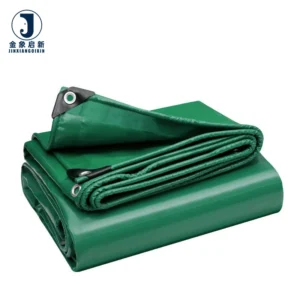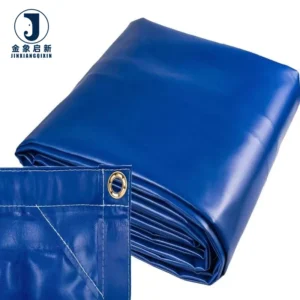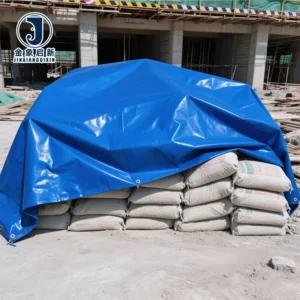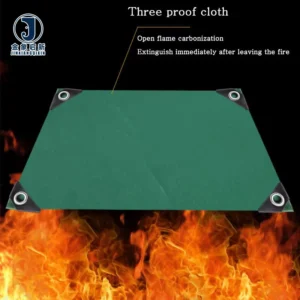
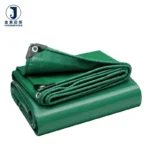
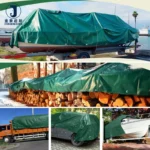
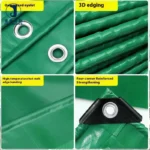
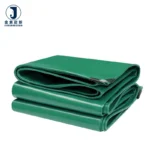
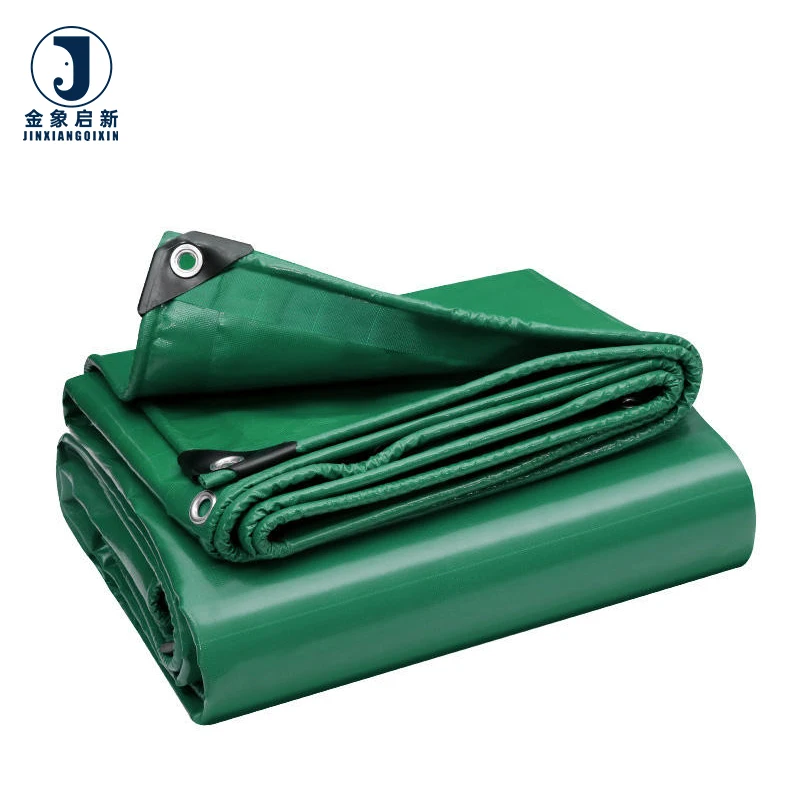
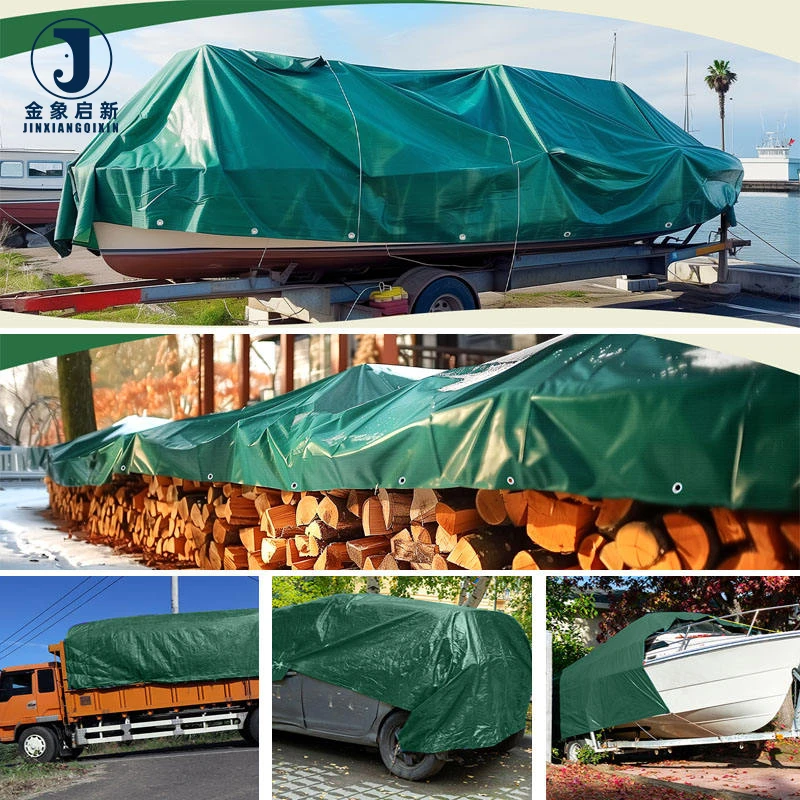
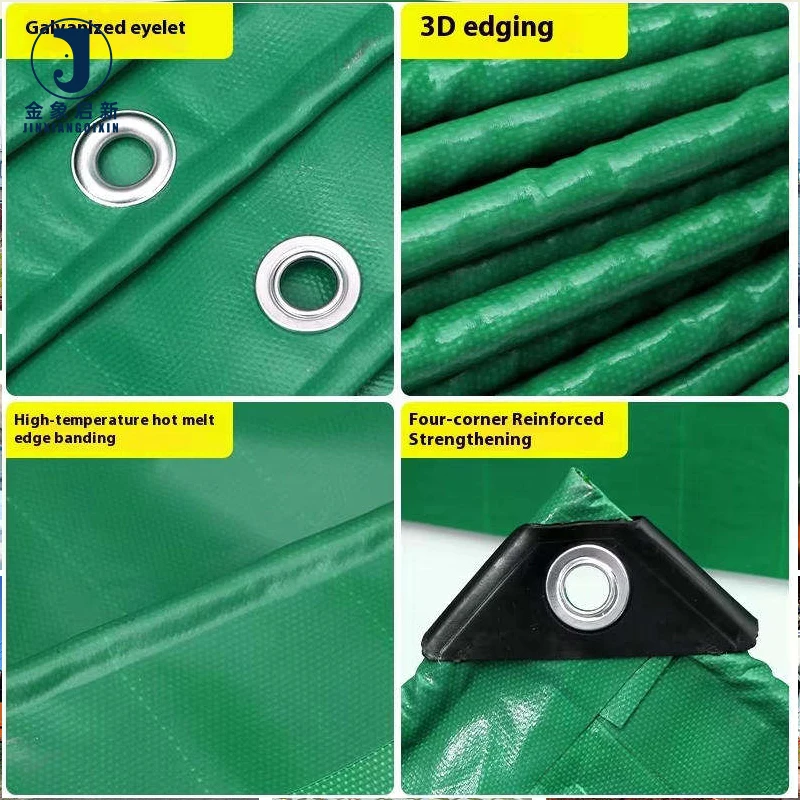
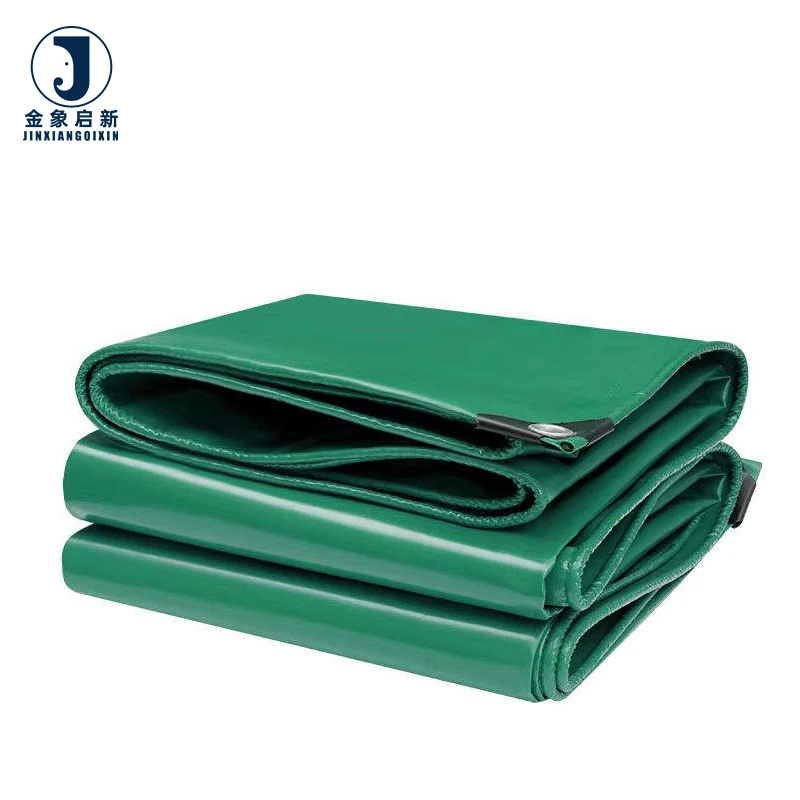
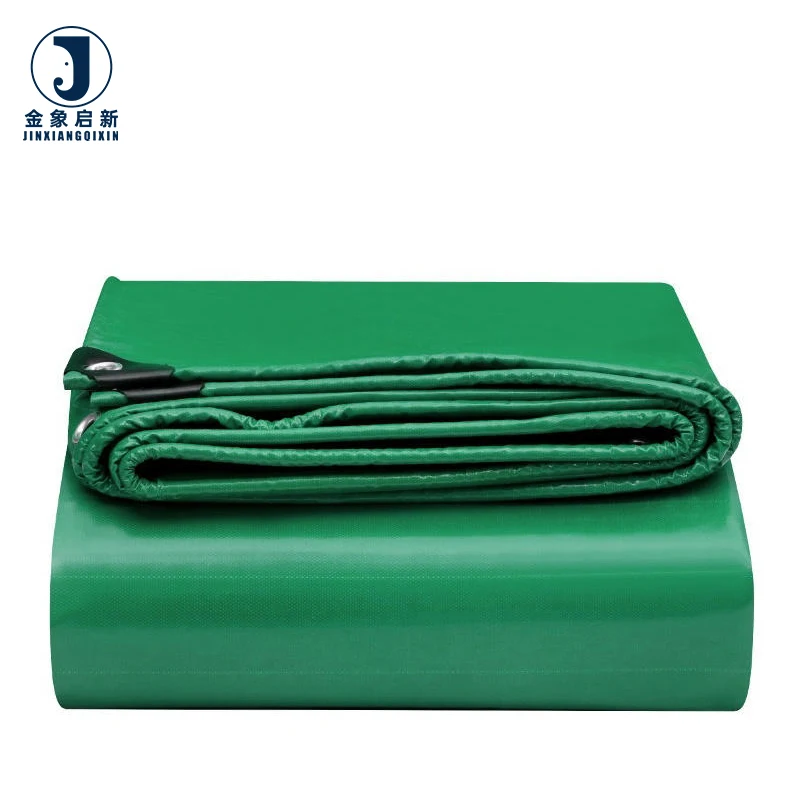
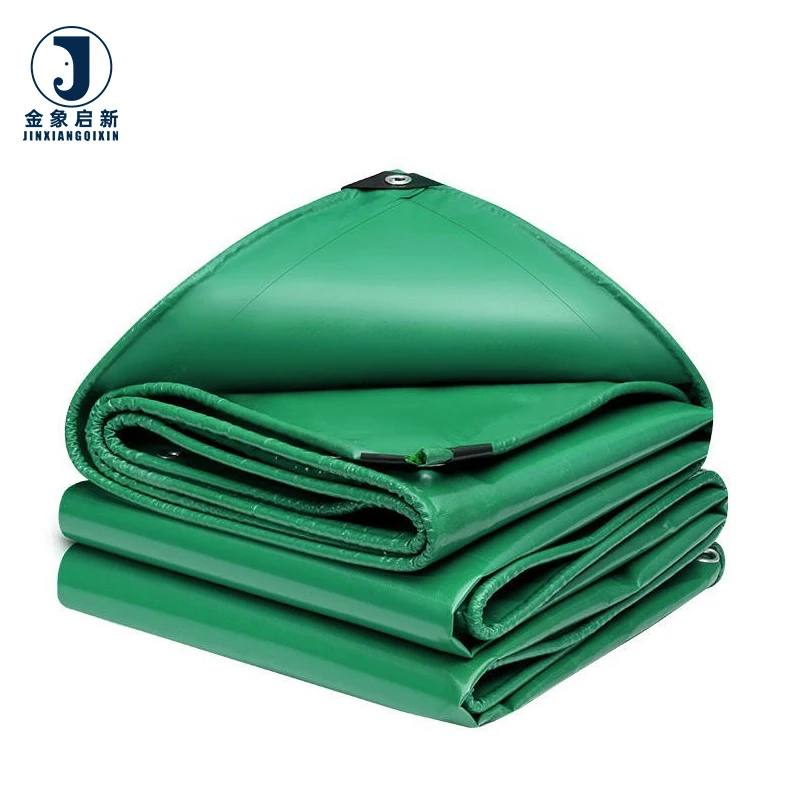
Process Control Expertise — Coating weight and adhesion are verified at every production stage, ensuring the PVC coated tarpaulin you specify matches the material data sheet on arrival.
Technical Specifications
| Parameter | Value |
|---|---|
| Product Type | PVC Coated Tarpaulin |
| Weight (GSM) | 250gsm–1500gsm (confirm the grade required for your application) |
| Base Fabric Denier | 200DX300D / 500DX500D / 840DX840D / 1000DX1000D |
| Coating Material | PVC (Vinyl) |
| Color Options | Blue, Yellow, Black, Green, White, or custom |
| Surface Finish | Glossy or matte |
| Temperature Range | -15°C to 70°C |
| UV Treatment | Customized (test basis not stated in source — confirm standard required) |
| Flame Retardant Grade | FR treated (grade not stated in source — confirm the grade required for your market) |
| Additional Treatments | Waterproof, anti-fungal treated |
| Standard Sizes | 3x4m, 6x8m, 8x10m, 10x12m or custom made |
| Working Life | 3–10 years depending on usage environment |
| Certifications | ISO, CE |
Application Suitability
| Application | Exposure & Requirement |
|---|---|
| Mining ventilation duct | Continuous airflow, fire hazard zones, anti-static compliance underground |
| Tunnel construction duct | Abrasive dust, mechanical damage risk, flame retardant certification required on site |
| Aviation ground ventilation | Jet blast exposure, fuel vapour proximity, fire safety documentation |
| Inflatable membrane structures | Constant tensile stress, UV exposure, weld seam integrity at curved panels |
| Tensile architectural fabric | Long-term weathering, structural load at fixing points, surface cleanliness |
| Industrial extraction duct | Chemical-laden air, temperature fluctuation, internal abrasion from particulates |
Why "Flame Retardant" Means Nothing Without a Grade Attached
PVC coated tarpaulin fire retardant claims appear on nearly every supplier data sheet, yet the specific classification is frequently absent. When a mining site safety officer asks for the test certificate and receives only a generic statement, the entire duct run can be rejected at inspection.
A flame retardant claim is only as defensible as the test report behind it — specify the classification your jurisdiction demands before production begins.
Buyers who accept an unspecified FR treatment often discover, during third-party audit, that the material meets one regional standard but not the one enforced at the project location. [NEED_CITE: DIN 4102 fire classification for building materials] This gap between supplier assurance and on-site compliance creates costly re-ordering cycles and project delays that affect the entire construction or mining schedule.
Base Fabric Denier and the Mechanics of Tear Propagation
The base fabric denier — from 200DX300D through to 1000DX1000D — determines how a puncture or cut propagates once the coating is breached. Higher denier yarns create a denser grid that arrests tear spread, which matters in ventilation duct applications where internal pressure cycles the fabric continuously. Selecting the correct denier is the first material decision in any PVC coated tarpaulin specification for industrial duct or membrane work.
Coating Weight, Adhesion, and What Happens at the Weld Line
Coating weight control directly governs how the material behaves during hot-air or wedge welding. Insufficient coating thickness leads to starved welds where the base fabric contacts itself without adequate PVC flow, while excessive coating can produce brittle, over-fused joints. The adhesion between coating and base fabric must survive repeated flex cycles without delamination — a failure mode that compromises both duct airtightness and structural membrane integrity. [NEED_CITE: tensile and tear test methods for coated fabrics per ISO 1421]
Reading the Specification Sheet Beyond the GSM Figure
GSM alone tells you how much material exists per square metre, but it does not distinguish between a heavy base fabric with light coating and a light scrim buried under thick PVC. For ventilation duct and membrane applications, the ratio of base fabric weight to coating weight determines whether the material will resist tensile loads or resist abrasion. A 500DX500D base at a given GSM will behave very differently under duct pressure cycling than a 1000DX1000D base at the same GSM. Surface finish — glossy or matte — influences not only appearance but also dirt accumulation on architectural membranes and the ease of cleaning extraction ducts in food or chemical environments. Temperature range of -15°C to 70°C defines the operational envelope; below the lower limit, PVC stiffens and becomes susceptible to crack propagation at fold lines during installation or transport.
The Cost of Specifying the Wrong Material Grade
Selecting a PVC coated tarpaulin grade based solely on price per square metre, without verifying the denier-to-coating ratio, leads to predictable field failures. Duct sections that delaminate at the weld after weeks of pressure cycling force unplanned shutdowns underground. Membrane panels specified with a glossy finish for an exterior tensile structure may show every streak of accumulated dirt, triggering client complaints about appearance within months. Anti-fungal treatment specified for one climate zone may prove inadequate when the same duct design is deployed in high-humidity tropical mining operations. [NEED_CITE: industrial ventilation duct failure modes and material selection criteria]
Why Technical Buyers Source This PVC Coated Tarpaulin Here
Coating weight and adhesion are controlled through dedicated process parameters on each of the three full production lines, so the PVC coated tarpaulin you approve at sample stage matches the bulk run at dispatch. The 10-person R&D team handles material selection for specific ventilation and membrane applications, developing samples within days rather than weeks. Every roll undergoes 100 percent inspection before shipment — a stage where GSM is physically verified against the quotation, not assumed. The facility operates with ISO and CE certification, providing documentation that satisfies project-level compliance requirements for mining, tunnelling, and aviation ventilation specifications. Custom widths, colours, and flame retardant grades are produced with the same process control as standard stock, eliminating the quality gap that typically appears when suppliers outsource specialty runs.
Documentation & Verification
- Material specification sheet stating GSM, base fabric denier, coating method, and colour reference for every roll
- Flame retardant and UV test reports provided where applicable to the grade specified in your purchase order
- Pre-shipment inspection record confirming weight verification per roll against the stated GSM
- ISO and CE certificates included with every consignment for project compliance submission
- Certificate of origin and customs documentation prepared to match destination country requirements
Fabrication, Handling & Storage
- Hot-air weld temperature and speed must be calibrated to the specific GSM and glossy or matte surface finish
- Anti-fungal treated grades require storage in ventilated conditions to maintain treatment efficacy before fabrication
- Rolls should be stored upright on end caps to prevent flat-spot deformation of the PVC coating layer
- Cold-weather installation below -15°C risks coating crack propagation at fold lines and welded joints
- Matte surface finishes tolerate industrial cleaning agents differently than glossy — test solvent compatibility first
- Custom-cut panels should be laid out flat before welding to release any roll-set curvature in the base fabric
What We Need to Quote Your Requirement
Provide the intended application — ventilation duct, membrane structure, or other industrial use — along with the fire classification or anti-static standard enforced at your project site. Specify the required width, colour, and whether you need roll stock or finished cut-to-size panels. If flame retardant or anti-fungal treatment is required, confirm the test standard your jurisdiction accepts so we can match the correct grade.
Frequently Asked Questions
Q: Which flame retardant grades are available for mining and tunnel ventilation duct?
A: The material is available in flame retardant grades suitable for industrial ventilation applications. The specific classification — such as M2, B1 per DIN 4102, or NFPA 701 — must be confirmed against your project’s safety requirements before production. We supply test documentation for the grade specified in your purchase order to support site inspection and regulatory compliance.
Q: How is GSM verified to ensure the delivered roll matches the quotation?
A: Every roll undergoes physical weight measurement during the 100 percent pre-shipment inspection. The measured GSM is recorded on the inspection report and compared against the specification stated on your order. Rolls that fall outside the agreed tolerance are held and not shipped, ensuring the material arriving at your facility matches the technical data sheet you approved.
Q: Can the PVC coated tarpaulin be supplied with anti-static treatment for underground mining?
A: Anti-static treatment is available for ventilation duct applications where static discharge poses a hazard in confined underground environments. The specific anti-static standard required by your mining authority must be communicated at the inquiry stage so the correct additive package is incorporated during coating. Test documentation supporting the anti-static classification is provided with the shipment.
Q: How does surface finish choice affect membrane structure fabrication and maintenance?
A: Glossy finish provides a smooth surface that resists dirt accumulation and is easier to wipe clean on architectural membranes. Matte finish reduces glare and reflection, which is preferred for tensile structures in visible public spaces. Both finishes can be welded, but hot-air welding parameters may require adjustment depending on the surface texture and coating thickness of the selected grade.