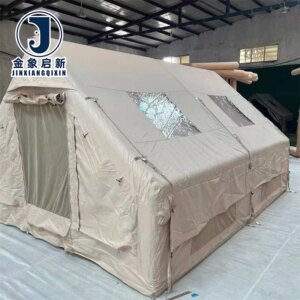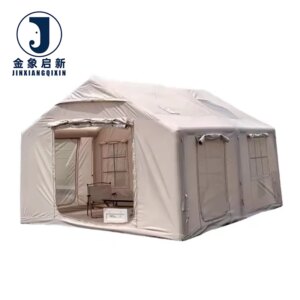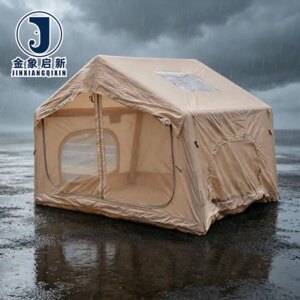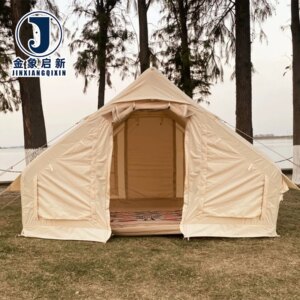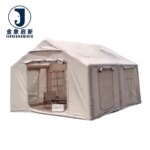
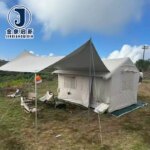
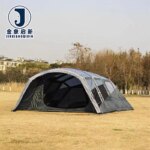
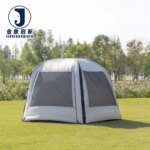
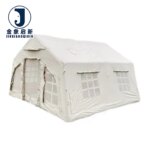
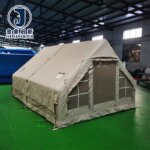
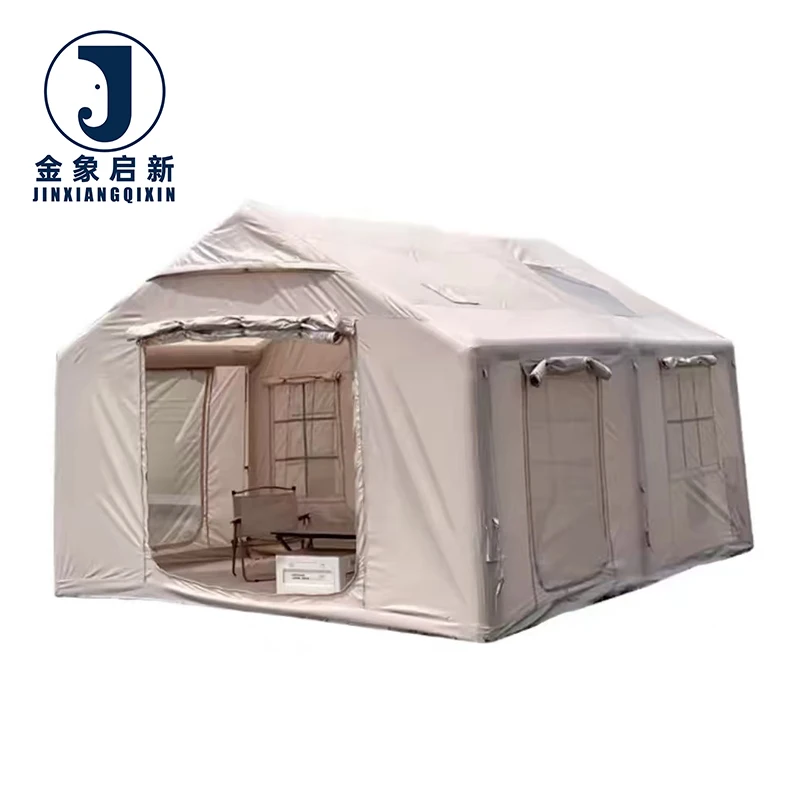
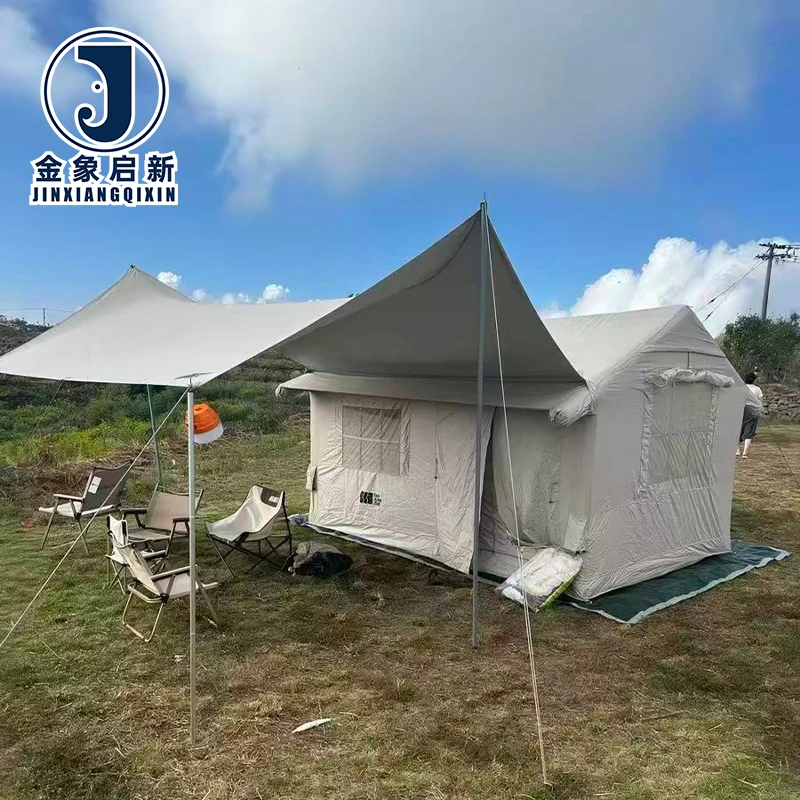
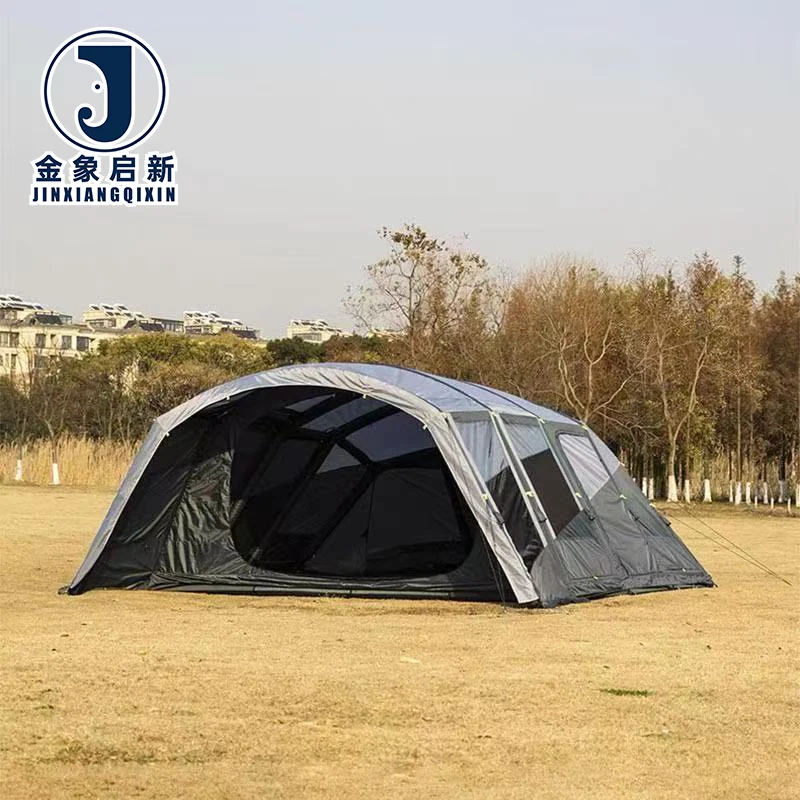
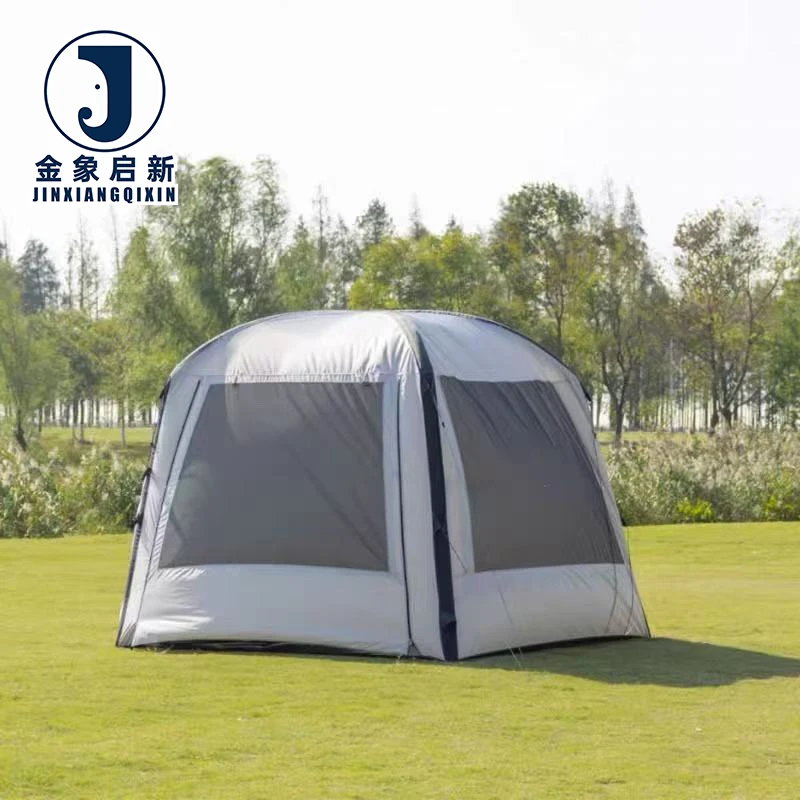
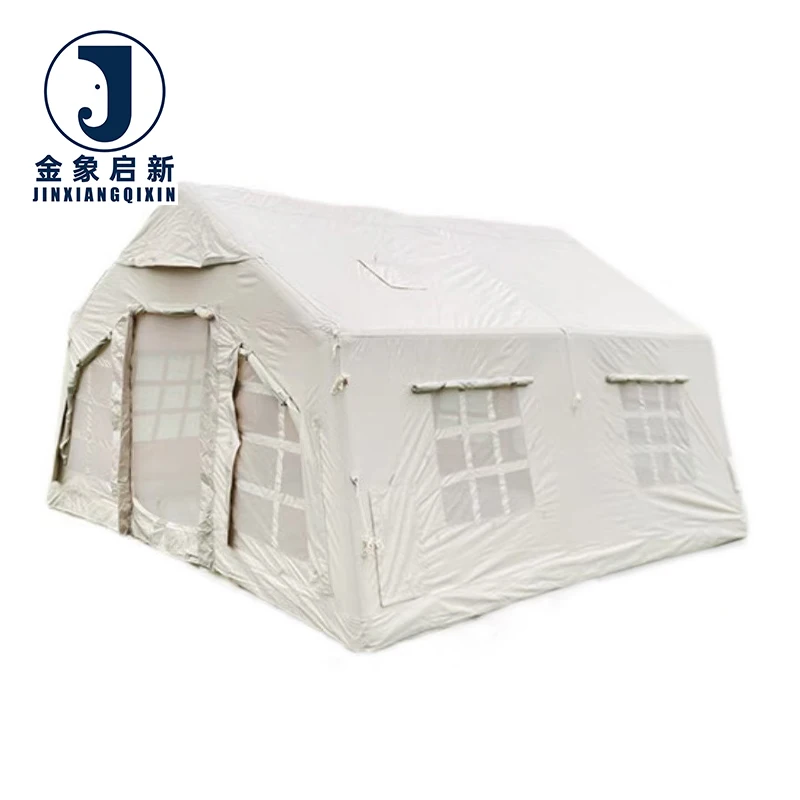
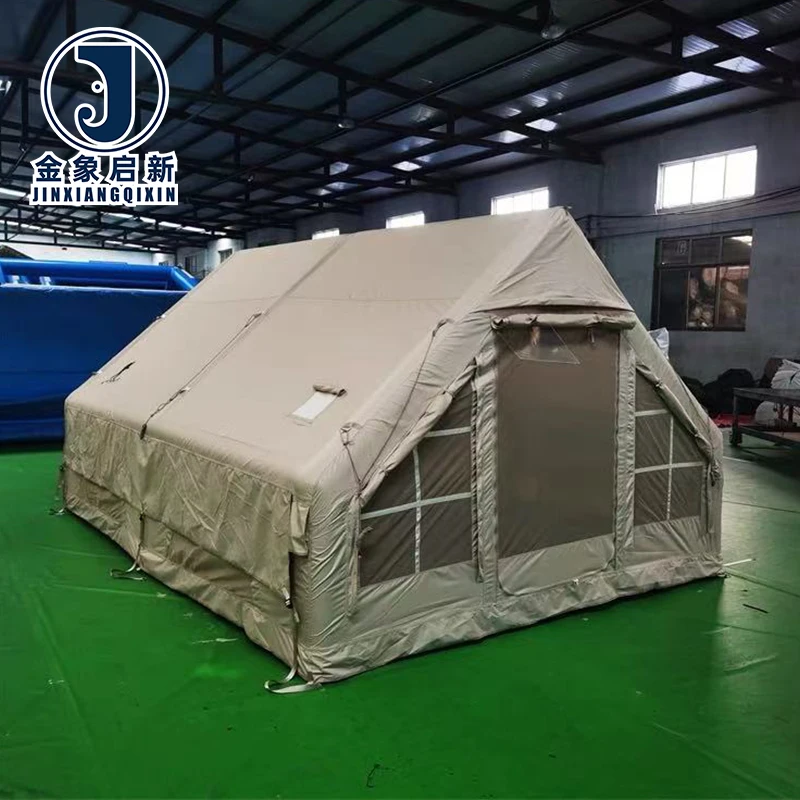
Process-Controlled Fabrication — Every batch of PVC inflatable emergency tent fabric passes through a 36-equipment processing line with dedicated QA/QC checkpoints, ensuring structural integrity and compliance documentation match industrial site requirements.
Technical Specifications
| Parameter | Value |
|---|---|
| Product Type | Inflatable Emergency Shelter Tent |
| Core Material | PVC tarpaulin (PVC knife-coated fabric) |
| Capacity | 3-5 person |
| Design | Four-Season Use, Single Layer Construction, Extended Type |
| Waterproofing | Fully waterproof coated construction |
| UV Resistance | UV-resistant treatment applied (test basis not stated in source) |
| Flame Retardant | Available in flame retardant grades — confirm the grade required for your market |
| Tear Resistance | Tear-resistant PVC knife-coated structure |
| Inflation Mechanism | Quick automatic opening |
| Customization | OEM & ODM support (size, thickness, color) |
| Certifications | ISO9001, ISO14001, ISO45001, CE |
Application Suitability
| Application | Exposure & Requirement |
|---|---|
| Emergency command centers for large-scale industrial facilities | Continuous operational demand, rapid deployment, structural stability under wind load |
| Temporary site offices during infrastructure recovery | Prolonged outdoor exposure, UV radiation, temperature fluctuation across seasons |
| Equipment storage shelters in post-disaster operations | Heavy equipment ingress and egress, abrasion at contact points, weather ingress prevention |
| Mining and tunnelling ventilation support structures | Fire-retardant compliance, anti-static requirements, high airflow internal pressure |
Why Certified Inflatable Emergency Shelter Fabric Demands More Than a Spec Sheet
Compliance on paper means nothing if the test report does not travel with the shipment.
Mining and aviation contractors frequently specify fire-retardant or anti-static inflatable structures for site operations, only to discover upon delivery that the supporting certification is either missing or references a different material batch. When an inflatable emergency shelter fails a site safety audit, the cost is not limited to the fabric itself — it halts operations, delays recovery timelines, and exposes procurement teams to liability. [NEED_CITE: fire safety compliance requirements for temporary industrial structures]
The disconnect usually happens when suppliers treat flame retardancy as a generic feature rather than a graded, test-backed specification. A PVC inflatable emergency tent destined for a mining ventilation corridor requires different documentation than one used for agricultural equipment cover. Sourcing certified inflatable emergency shelter fabric means verifying that the stated grade — whether B1, M2, or NFPA 701 — is confirmed by a laboratory report matched to the production batch.
Ventilation and Pressure Integrity in Inflatable Structures
Inflatable shelters depend entirely on the air-holding capability of the fabric envelope. The PVC knife-coated fabric used in this certified inflatable emergency shelter fabric range provides the tensile continuity needed to maintain internal pressure without seam separation. Unlike stitched constructions where needle holes create micro-leak paths, heat-welded joints on knife-coated PVC create a monolithic barrier that holds pressure under continuous blower operation.
For mining and tunnelling contractors pairing inflatable shelters with ventilation duct systems, the fabric must tolerate positive internal pressure while resisting abrasion from particulate-laden air streams. The single-layer extended-type construction reduces weight without compromising the pressure envelope, supporting rapid inflation and stable geometry across the shelter footprint.
Fire and Static Compliance for Regulated Sites
Industrial sites subject to fire safety audits require inflatable structures with documented flame retardant performance. This certified inflatable emergency shelter fabric is available in flame retardant grades — confirm the grade required for your market before specifying. Anti-static treatment is similarly available for environments where combustible dust or flammable vapours are present, though the specific surface resistance value must be verified against your site’s compliance threshold. [NEED_CITE: anti-static surface resistance standards for mining ventilation fabrics]
Aviation maintenance hangars and fuel-handling facilities represent environments where static discharge from inflatable fabric can pose ignition risks. Procurement teams sourcing for these applications should request both the flame retardant test report and the anti-static surface resistance measurement as part of the pre-shipment documentation package, ensuring both properties are verified on the actual production batch.
Knife-Coated Construction and What It Means for Structural Performance
The distinction between knife-coated and laminated PVC fabric directly affects how an inflatable shelter behaves under load. Knife coating forces PVC paste into the interstices of the base fabric under blade pressure, creating a mechanical lock between coating and yarn that resists delamination under repeated inflation and deflation cycles. Laminated fabrics, by contrast, bond a pre-formed PVC film to the surface — a process that can yield lower peel strength at the weld line.
For inflatable emergency shelters, this matters because every structural joint is a heat-welded seam. The coating adhesion strength determines whether the weld holds or the coating peels away from the base fabric under internal pressure. Single-layer construction places all structural demand on this one material, making coating-to-substrate adhesion the critical failure point to monitor during fabrication. [NEED_CITE: peel strength test methods for coated fabrics per ISO 2411]
The four-season design designation reflects the material’s ability to retain flexibility across temperature variations, preventing the low-temperature embrittlement that causes cracking in cheaper PVC formulations during winter deployment. UV-resistant treatment is applied to manage surface degradation during extended outdoor exposure, though the specific test protocol should be confirmed with the production batch documentation.
The Hidden Cost of Undocumented Material Properties
When an inflatable emergency shelter arrives on site without the fire-retardant grade stated in the original specification, the contractor faces a binary choice: proceed without compliance documentation and accept the audit risk, or reject the shipment and wait for replacement material. Neither outcome serves the project timeline. [NEED_CITE: consequences of non-compliant temporary structures on industrial sites]
Colour variation between production rolls presents a different but equally disruptive problem. An inflatable command centre assembled from panels cut from mismatched rolls signals poor quality control to every stakeholder on site, even if the structural performance is unaffected. Batch consistency in both colour and coating weight is a function of process control, not post-production sorting, and must be verified before the material leaves the factory floor.
Weld failures in inflatable structures almost always originate at points of highest flex — typically the junctions where curved inflation tubes meet flat panel sections. If the knife-coated fabric’s peel strength is marginal, these junctions delaminate under repeated pressurisation cycles, creating leaks that compromise the entire structure. Specifying material with verified coating adhesion is essential, not optional.
Why Industrial Buyers Source This Fabric Here
Three full production lines and 36 sets of professional equipment support bulk orders of certified inflatable emergency shelter fabric with consistent lead times, even when custom widths or flame retardant grades are specified.
A 10-technician R&D team handles pre-production sample confirmation, allowing buyers to evaluate weld behaviour, colour accuracy, and inflation performance before committing to full production runs.
Dedicated QA and QC staff conduct inflation testing and structural integrity checks on finished shelters before dispatch, catching seam leaks or coating defects that would otherwise surface only on site.
The 9,180 m² production facility maintains separation between coating, cutting, and welding operations, reducing cross-contamination risk and supporting traceability from raw material receipt to shipment.
Full OEM and ODM capability means custom dimensions, material thickness variations, and colour options are handled within the same production workflow rather than outsourced to third-party converters.
Documentation & Verification
- Material specification sheet detailing base fabric, PVC knife-coating weight, and colour reference per roll
- Flame retardant test report matched to production batch when applicable grade is specified
- ISO9001, ISO14001, ISO45001, and CE certificates available for compliance submission
- Pre-shipment inspection record including inflation test results and structural integrity verification
- Anti-static surface resistance test data provided when treatment is specified for regulated environments
- Certificate of origin and customs documentation supporting international shipment clearance
Fabrication, Handling & Storage
- Heat-weld seams using temperature and dwell settings matched to the PVC knife-coated fabric thickness to prevent coating burn-through
- Store rolls horizontally on padded racking to prevent permanent creasing in the knife-coated surface
- Avoid folding inflated shelters at the same crease line repeatedly to protect coating adhesion at flex points
- Clean PVC surfaces with neutral pH detergent only — solvent-based cleaners degrade the coating plasticiser layer
- Repair minor punctures using compatible PVC adhesive patches applied to clean, dry knife-coated surfaces
- Allow fabric to reach ambient temperature before unrolling in cold conditions to prevent low-temperature cracking
Before You Request a Quote
Specify the deployment environment and the compliance framework your site operates under — fire-retardant grade, anti-static threshold, or both. Provide the required shelter dimensions, anticipated annual volume, and whether you need finished shelters or roll stock for in-house fabrication. If your application demands a specific colour or custom thickness, note the sample evaluation timeline so pre-production confirmation can be scheduled before your deployment deadline.
Frequently Asked Questions
Q: How do flame retardant grades align with different regional fire safety codes?
A: Different markets require different classifications — B1 per DIN 4102 for many European sites, M2 for French specifications, NFPA 701 for North American applications. Confirm the grade your site mandates, and the corresponding test report will be supplied with the batch documentation for your certified inflatable emergency shelter fabric order.
Q: Is anti-static treatment verified by surface resistance testing?
A: Anti-static treatment is available for environments requiring static dissipation, such as mining ventilation corridors. The surface resistance value must be confirmed against your site’s compliance threshold — request the test data during the sample evaluation stage to ensure the certified inflatable emergency shelter fabric meets your regulatory requirement.
Q: What is the basis for the UV resistance claim on this fabric?
A: UV-resistant treatment is applied to manage surface degradation during prolonged outdoor exposure. The specific test protocol and exposure duration rating should be confirmed with the batch documentation. Request the UV test report when placing your order to verify suitability for your deployment climate.
Q: What are the minimums and sample timelines for custom sizes and thicknesses?
A: OEM and ODM customization covers size adjustments, material thickness variations, and custom colours. Minimum order quantities and sample development timelines depend on the specification complexity. Submit your requirements through the inquiry process, and the R&D team will confirm sample availability and production scheduling.
Q: How is weld strength ensured at high-stress junctions in inflatable structures?
A: Heat-weld parameters are calibrated to the specific PVC knife-coated fabric thickness and coating formulation. Inflation testing and structural integrity verification are conducted before shipment to identify seam weaknesses. Weld peel strength depends on coating adhesion — confirm your fabrication requirements during sample evaluation.