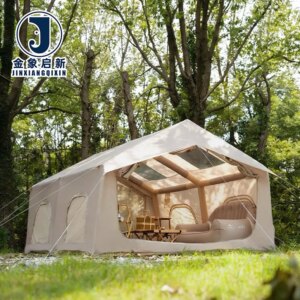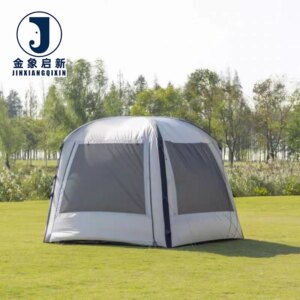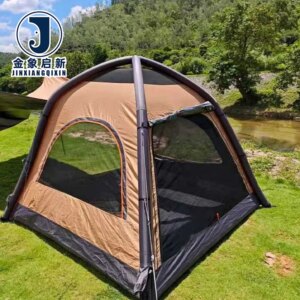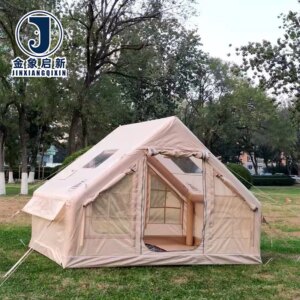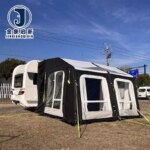


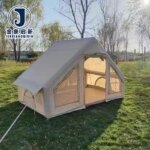
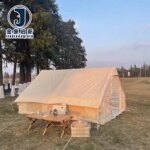
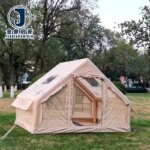
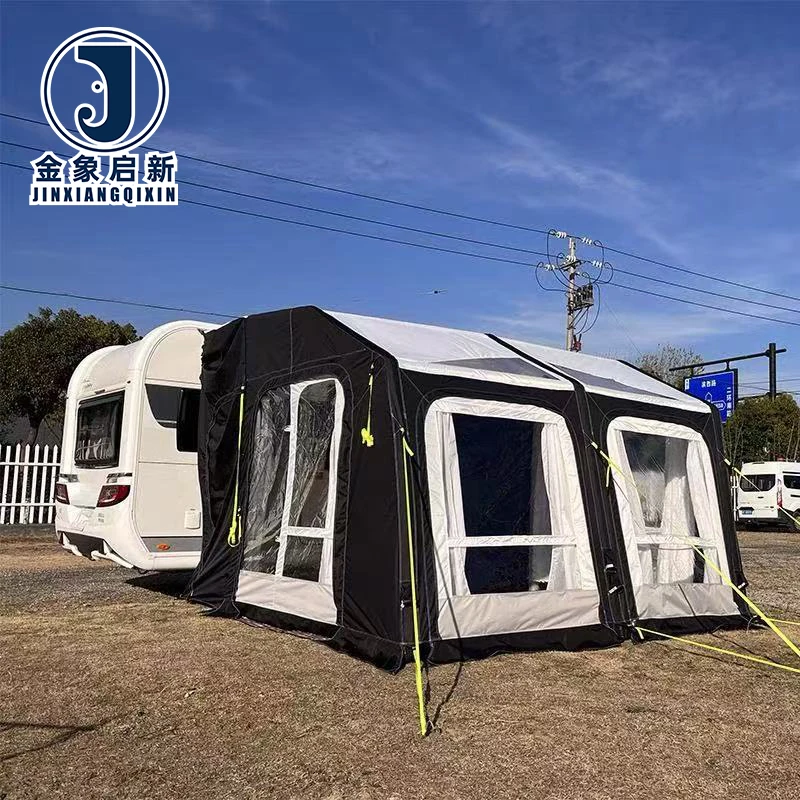
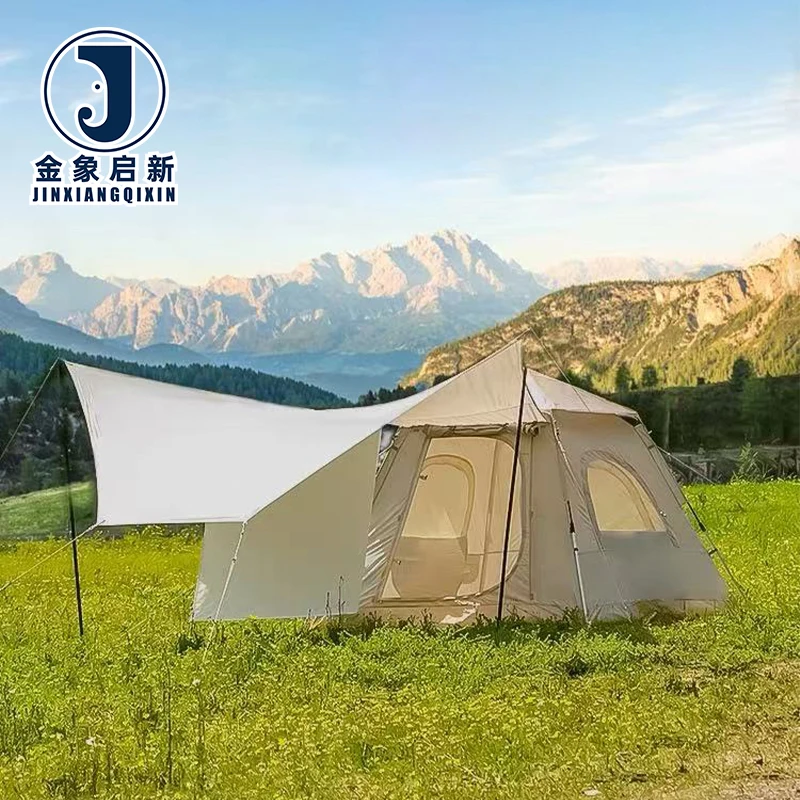
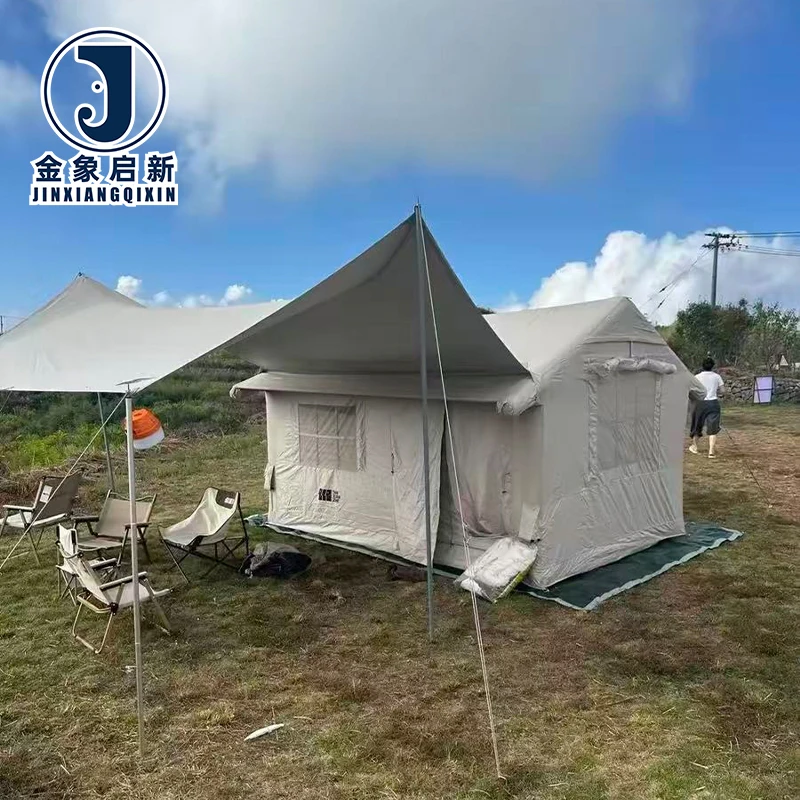
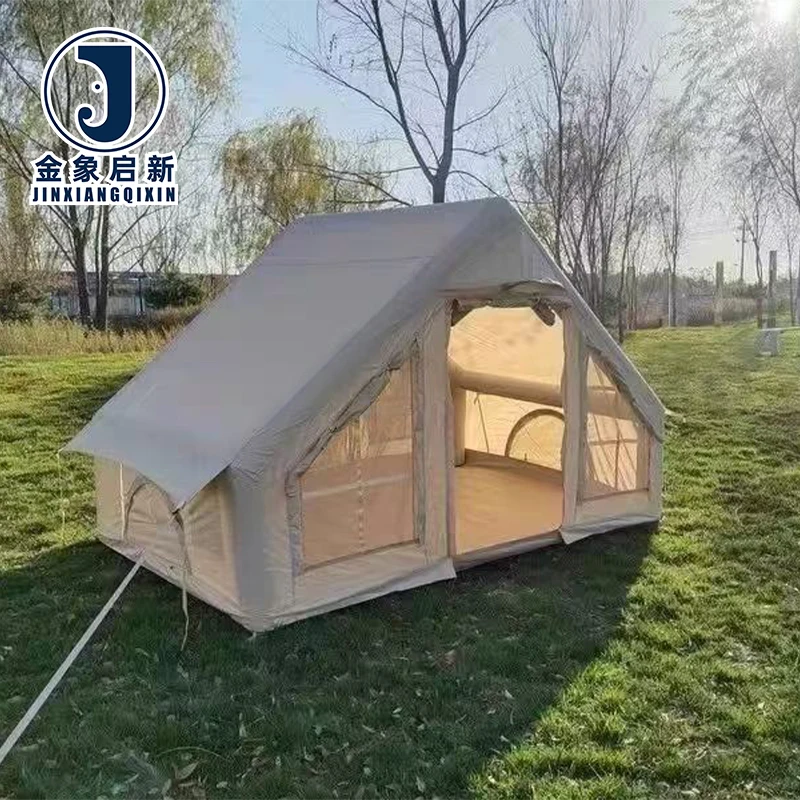
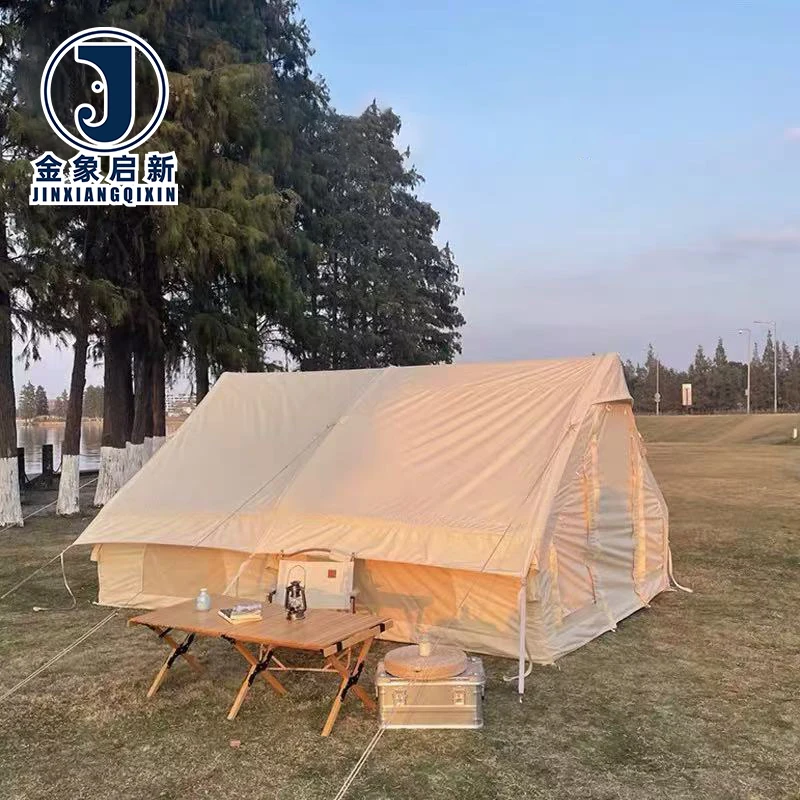
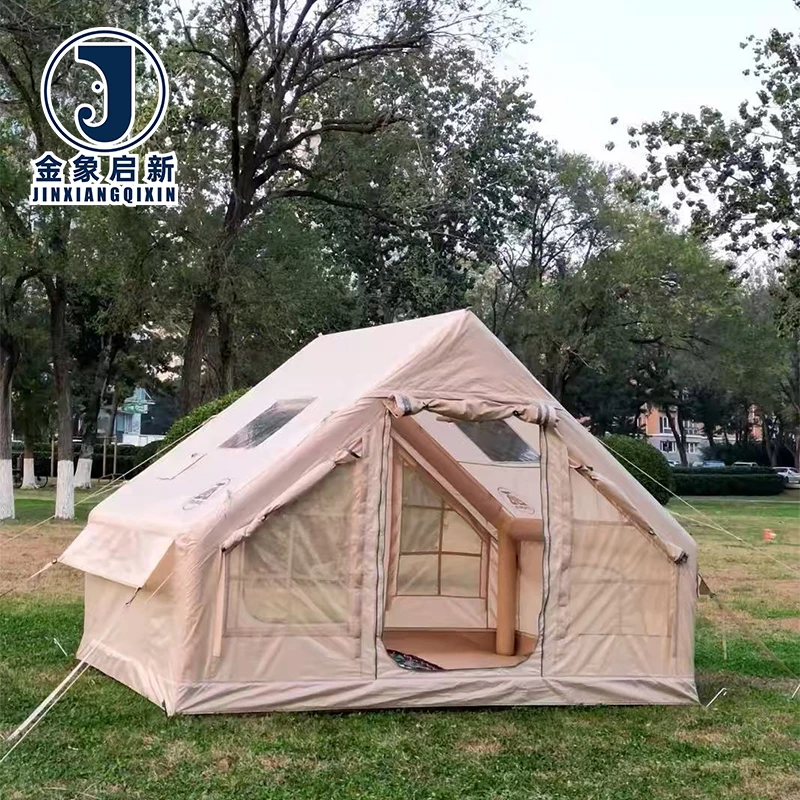
Rapid deployment expertise — inflatable emergency shelter structures built on a certified manufacturing system with three production lines, enabling consistent batch output for large-scale disaster preparedness programs.
Technical Specifications
| Parameter | Value |
|---|---|
| Product Type | Inflatable tent |
| Core Material | PVC Tarpaulin |
| Product Forms | Extended Type, Single Layer Construction |
| Key Performance | Waterproof, UV-resistant (test basis not stated in source), Tear-resistant |
| Customization | OEM & ODM — sample customization, pattern printing |
| Season Rating | Four-season design |
| Certifications | ISO 9001, ISO 14001, ISO 45001, CE |
| Intended Use | Industrial and commercial applications |
Application Suitability
| Application | Exposure & Requirement |
|---|---|
| Emergency response centers | Immediate deployment under unpredictable weather; must remain standing in sustained wind and rain without external frame support |
| Disaster relief temporary storage | Prolonged water contact from ground moisture and precipitation; fabric must resist pooling, mildew, and puncture from stored equipment |
| Mobile command posts for engineering projects | Repeated inflation and deflation cycles across multiple job sites; seams and valve points must endure mechanical fatigue |
| Auxiliary workspace at remote industrial sites | Continuous UV exposure in open terrain; single-layer PVC tarpaulin must maintain structural integrity without delamination or embrittlement |
| Construction site shelter | Abrasion from tools, aggregate, and heavy footwear; floor-to-wall transition areas subject to concentrated wear |
Why Batch Consistency Matters When Procuring an Inflatable Emergency Shelter Tent Manufacturer
Uniform material behavior across every unit in a multi-shelter deployment eliminates the risk that one unit fails in the field while the rest hold.
When emergency preparedness agencies procure inflatable shelters in volume, the most frequent complaint is not about a single defective unit — it is about variation between batches that went through different production runs [NEED_CITE: quality variance in bulk procurement of temporary shelter structures]. One batch may exhibit noticeably stiffer inflation characteristics while the next feels pliable, pointing to inconsistent coating weight or base fabric tension. In a disaster scenario where crews deploy shelters without the luxury of testing each unit beforehand, this variance translates directly into unpredictable setup times and uneven structural performance under load.
Inflation Speed and Structural Readiness
The quick automatic opening design built into this PVC inflatable camping tent addresses the core requirement of time-critical emergency deployment. When a disaster strikes, response teams need shelter structures that inflate with minimal manual intervention and reach full rigidity within minutes rather than hours. The extended-type form provides adequate internal clearance for equipment staging, personnel triage, or command communications without requiring secondary frame assembly. For the buyer evaluating an inflatable emergency shelter tent manufacturer, the question is whether the inflation mechanism has been validated across the full temperature range the product will encounter — cold air is denser and inflates differently than warm air, and valve design must account for this.
Single-Layer PVC Construction and Portability Trade-Offs
The single-layer PVC tarpaulin construction strikes a deliberate balance between weather protection and transport weight [NEED_CITE: single-layer versus dual-layer trade-offs in temporary industrial shelters]. Every kilogram saved in packed weight means more units can be loaded onto a single transport vehicle, which is a decisive factor when stocking regional disaster preparedness warehouses. The waterproof and tear-resistant performance of the coated fabric ensures the shelter survives repeated folding, packing, and redeployment cycles. Buyers should verify how the material behaves at fold creases after extended compression storage — PVC tarpaulin can develop memory marks at persistent fold lines, and the coating adhesion at those points should be confirmed before committing to a full order.
Reading the Specification Sheet Beyond Marketing Claims
The waterproof rating of PVC tarpaulin is fundamentally a function of the coating method and its continuity across the base fabric. A fully coated PVC construction — as opposed to a laminated or sprayed finish — eliminates pinhole pathways that allow moisture ingress under sustained hydrostatic pressure. The tear-resistant designation relates to the base fabric denier and weave density: a higher denier yarn in both warp and weft directions restricts the propagation of a tear once initiated by a puncture or abrasion point. UV resistance in PVC tarpaulin depends on the stabilizer package compounded into the coating formulation; without a stated test basis, buyers should request the specific exposure standard the material was evaluated against before assuming long-term outdoor suitability. The extended-type single-layer form means all environmental protection rests on one fabric layer — there is no secondary membrane to absorb residual stress.
The Cost of Specifying Inflatable Shelters Without Verifying Material Behavior
Procurement teams that approve inflatable emergency shelters based solely on the product brochure often discover performance gaps only after deployment. A fabric that appears tear-resistant in a small swatch may behave differently at full panel size, where the tension distribution across welded seams changes under inflation pressure [NEED_CITE: seam failure mechanics in pressurized membrane structures]. Coating weight variation between production batches can shift the inflation characteristics enough to require different pump settings — a detail that costs critical minutes during an emergency setup. If the UV stabilizer package was optimized for one climate zone but the shelters are deployed in another, accelerated surface chalking and embrittlement follow. These are not manufacturing defects in the strict sense; they are specification mismatches that a proper pre-production sample confirmation process would have caught.
What This Facility Delivers on Every Order
The 9,180 m² production facility with three full lines and 36 sets of professional processing equipment provides the throughput capacity to fulfill large-scale emergency preparedness orders within a single production window — avoiding the split-batch risk that comes from outsourcing overflow volume. The 10-technician R&D team handles size adjustments, material thickness variation, and pattern printing within the same facility, so the buyer negotiates with one entity from sample through dispatch. Full-process quality inspection with dedicated QA and QC staff means each inflatable shelter is checked at inflation, seam integrity, and valve function before packing. ISO 9001, ISO 14001, ISO 45001, and CE certification provide the compliance framework that government and institutional procurement officers require in their vendor qualification process. OEM and ODM capability, including sample customization, allows buyers to validate the product against their specific deployment protocol before authorizing mass production.
Documentation & Verification
- Material specification sheet confirming PVC tarpaulin composition, coating type, and base fabric construction
- UV and tear-resistance test reports referenced to the applicable standard for the destination market
- ISO 9001, ISO 14001, ISO 45001, and CE certificates valid at the time of shipment
- Batch-specific pre-shipment inspection record covering inflation test, seam integrity, and valve function
- Certificate of origin and customs documentation aligned with the importing country’s requirements
Fabrication, Handling & Storage
- Weld PVC tarpaulin seams using calibrated hot-air parameters matched to the specific coating thickness of the single-layer construction
- Store inflated units in a cool, dry, well-ventilated warehouse away from prolonged direct sunlight and open flames
- Fold along designated crease lines to prevent random memory marks from compromising coating adhesion over repeated cycles
- Avoid contact with sharp objects, corrosive chemicals, and abrasive surfaces during transport and field deployment
- Clean the PVC tarpaulin surface with mild detergent and water; solvent-based cleaners may degrade the coating finish
Before You Request a Quote
To generate an accurate specification for your inflatable emergency shelter program, provide the expected deployment environment — including typical temperature range, wind load expectations, and whether the shelter will remain inflated continuously or be cycled between uses. Confirm whether your market requires specific fire classification or environmental compliance documentation. Indicate the unit quantity and whether OEM branding or pattern printing is needed across the production run.
Frequently Asked Questions
Q: What customization options are available for size, thickness, and branding on inflatable shelters?
A: The OEM and ODM service covers size adjustments to the extended-type form, material thickness variation in the PVC tarpaulin construction, and pattern printing on exterior surfaces. A pre-production sample is developed for buyer approval before mass production begins, ensuring the customized specification is locked in.
Q: How is batch-to-batch consistency ensured for large-scale emergency preparedness procurement?
A: Full-process quality inspection with dedicated QA and QC staff runs through every production stage. Each inflatable unit undergoes inflation testing, seam verification, and valve function checks. The batch-specific inspection record accompanies the shipment, documenting material composition and performance results for that production run.
Q: What certifications and compliance documentation are provided with each shipment?
A: Shipments include ISO 9001, ISO 14001, ISO 45001, and CE certificates, along with a material specification sheet, test reports for applicable performance standards, and a pre-shipment inspection record. Certificate of origin and customs support documents are prepared in alignment with the destination country’s import requirements.
Q: How does the sample confirmation process work before mass production begins?
A: Buyers receive a sample built to the requested specification — including any size, thickness, or printing customization — for physical evaluation. Once the sample is approved, the production parameters are locked and mass manufacturing proceeds under the same QA and QC protocol that governs the sample build.
Q: What are the storage, handling, and maintenance requirements to extend service life?
A: Store units in a cool, dry, well-ventilated warehouse sealed away from direct sunlight, sharp objects, and corrosive materials. Fold along designated lines to preserve coating adhesion. Clean the PVC tarpaulin surface with mild detergent and water; avoid solvent-based cleaners that may compromise the single-layer coating.