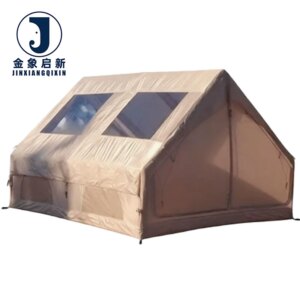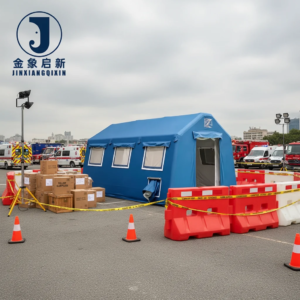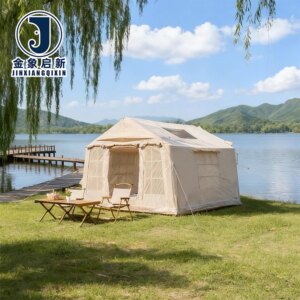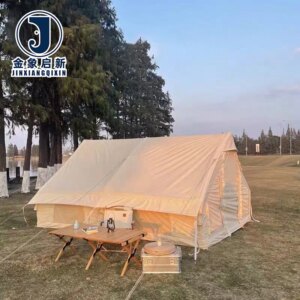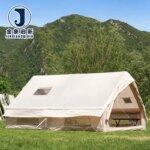
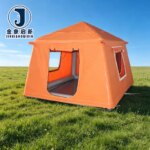
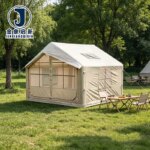
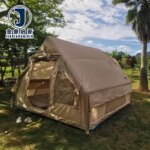
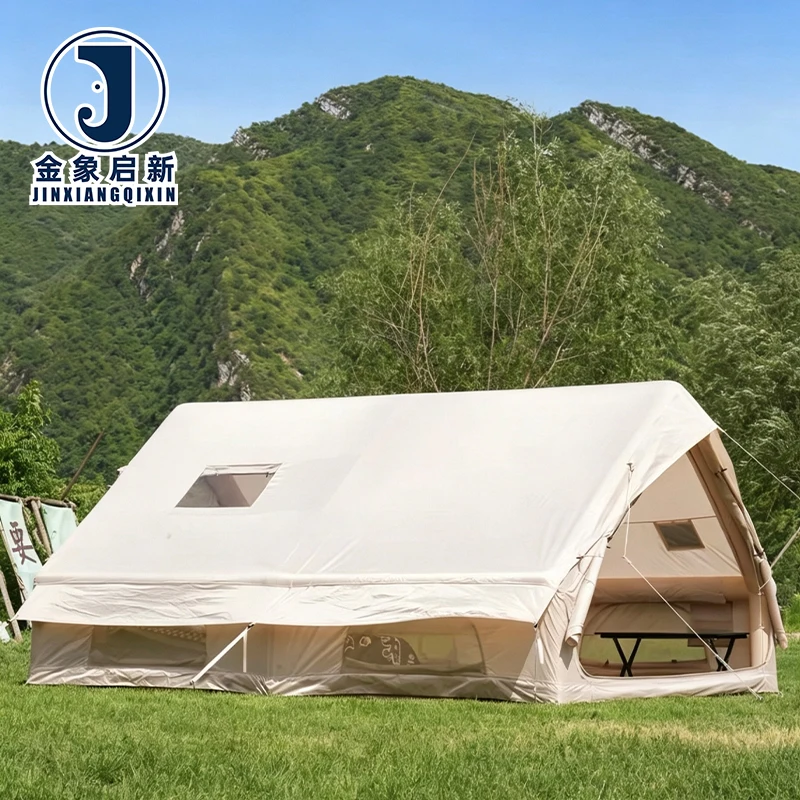
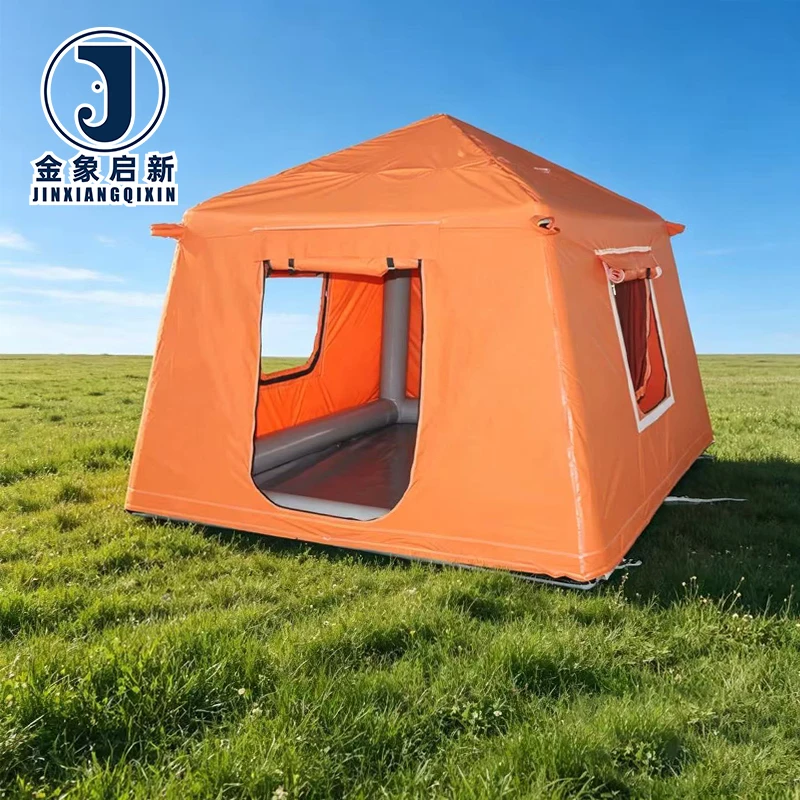
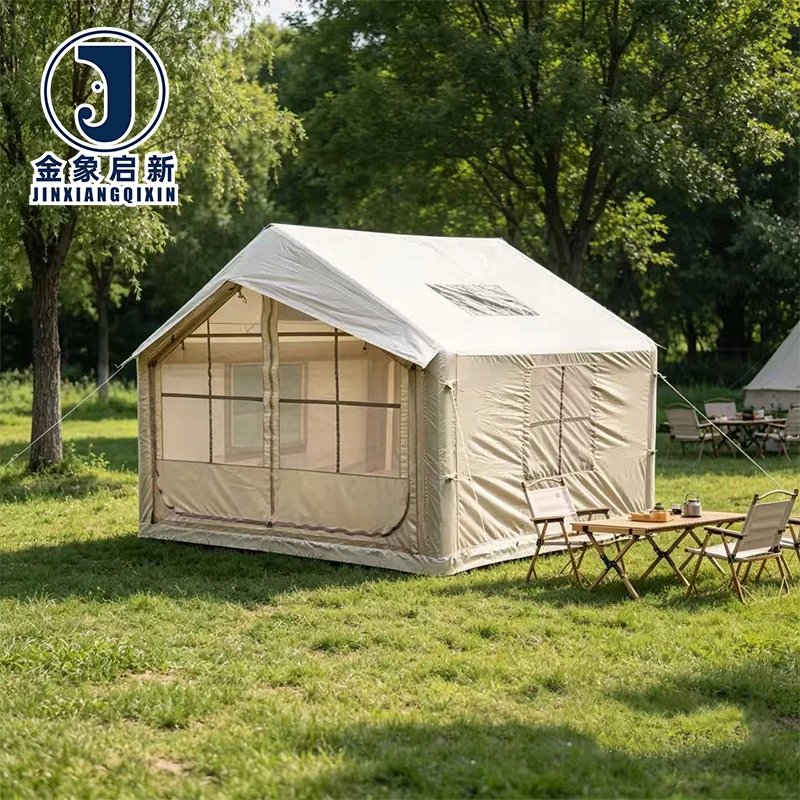
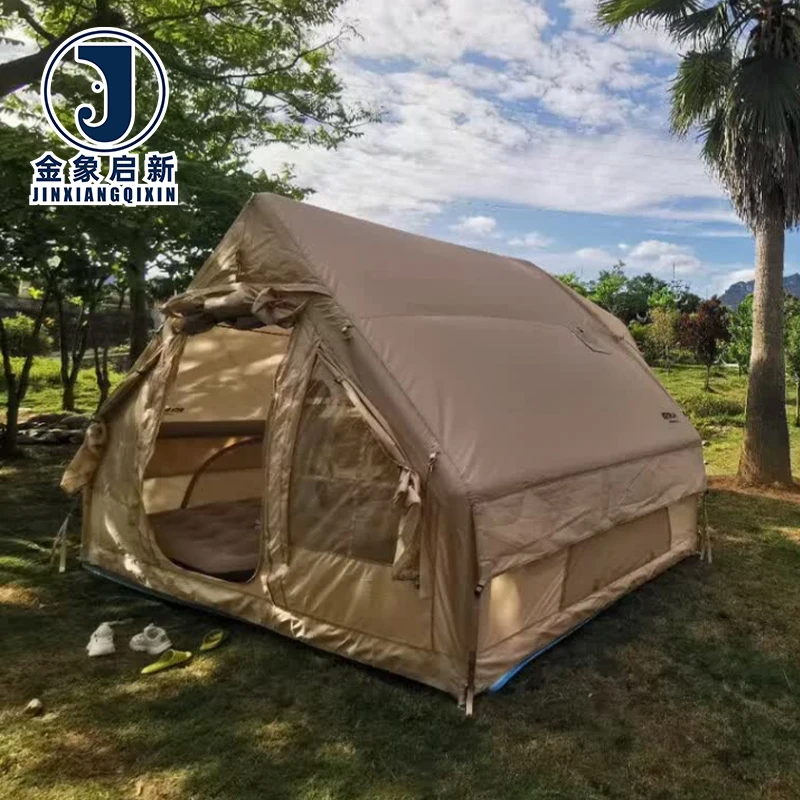
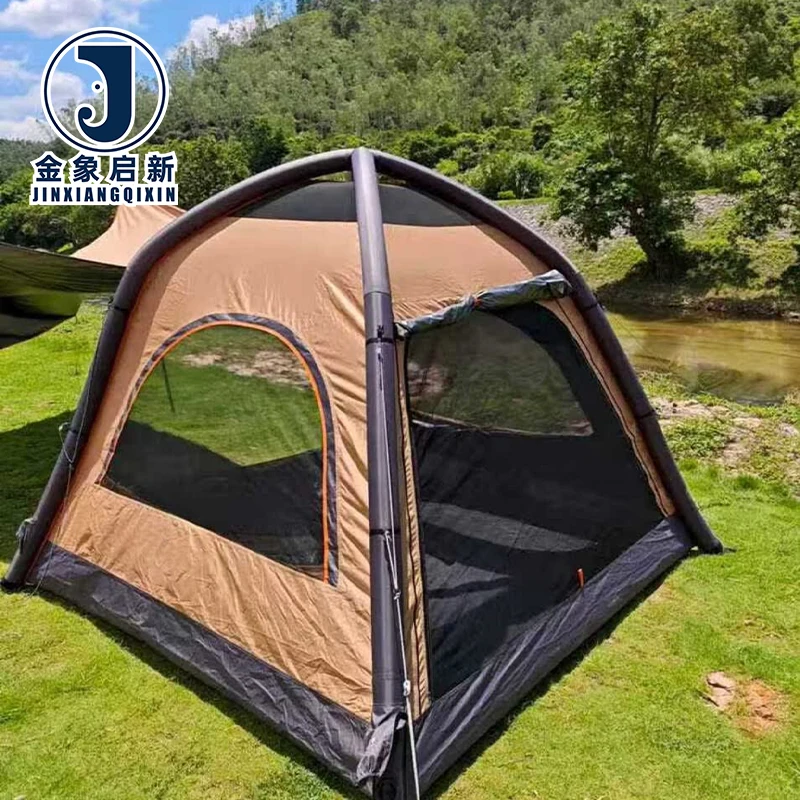
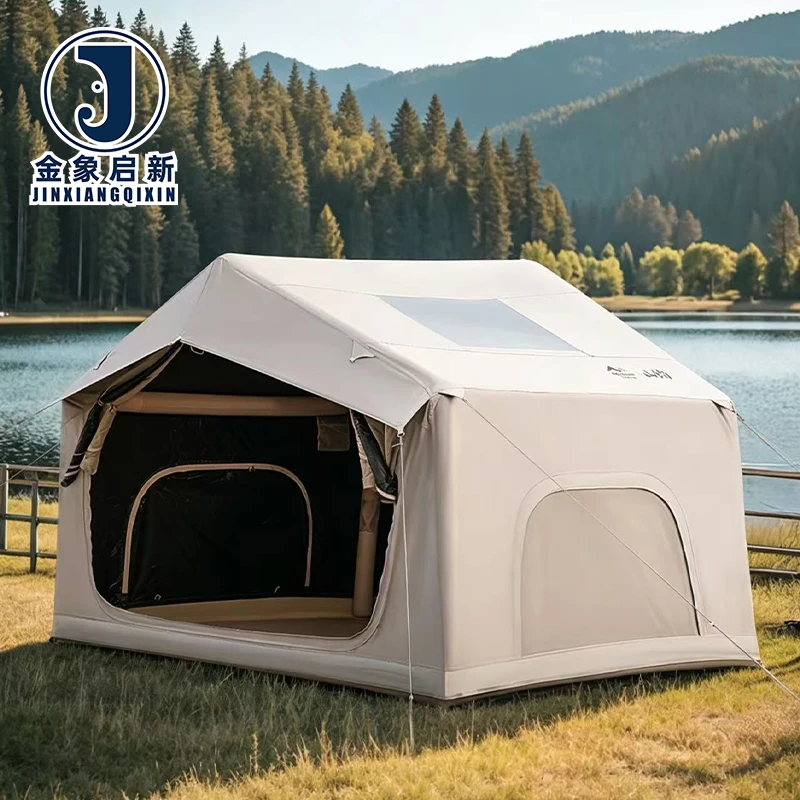
Precision heat-welding control — Every PVC Inflatable Camping Tent is assembled using calibrated thermal welding parameters matched to the coating weight, ensuring seams hold air pressure as reliably as the base fabric itself.
Technical Specifications
| Parameter | Value |
|---|---|
| Product Type | Inflatable Tent |
| Core Material | PVC tarpaulin |
| Key Performance | Waterproof, UV-resistant (test basis not stated), tear-resistant |
| Capacity | 2-3 Person |
| Design | Quick Automatic Opening, Four-Season, Single Layer |
| Customization | OEM & ODM (sample customization, pattern printing) |
| Production Lines | 3 full production lines |
| Processing Equipment | 36 sets of professional processing equipment |
| R&D Team | 10 technicians |
| Standards | ISO9001, ISO14001, ISO45001, CE |
Application Suitability
| Application | Exposure & Requirement |
|---|---|
| Temporary site shelters | Continuous outdoor weathering, wind load on inflatable frame, rapid deployment under project deadlines |
| Mobile field operations | Repeated inflation/deflation cycles, transport abrasion, variable terrain contact |
| Outdoor event management | High foot traffic floor zones, UV exposure across multi-day events, quick setup and teardown |
| Construction site auxiliary shelters | Dust, mechanical impact, chemical splash resistance from site activities |
| Commercial camping ground facilities | Year-round seasonal use, guest turnover wear, waterproof integrity across rain events |
| Outdoor exhibition booths | Branding surface quality, structural stability in open-air venues, frequent relocation |
What "UV-Resistant" Really Means When No Test Report Follows the Claim
A UV-resistant label without a documented test method is a marketing statement, not an engineering specification.
Project buyers ordering inflatable structures for extended outdoor deployment often discover that UV treatment claims lack a verifiable basis once the tent arrives on site. When the PVC Inflatable Camping Tent is exposed to continuous sunlight across a multi-week construction project or a summer event season, coating degradation manifests as surface chalking, loss of flexibility, and accelerated tear propagation at stress points. Sourcing teams need a test report tied to a recognized standard to confirm the treatment matches the expected exposure duration [NEED_CITE: UV exposure test methods for PVC coated fabrics]. Without it, replacement cycles and unplanned downtime become hidden costs that erode the project budget.
How Inflatable Tent Fabric Differs from Standard Tarpaulin Grades
The PVC Inflatable Camping Tent relies on a single-layer PVC tarpaulin construction that must perform two functions simultaneously: maintaining airtight integrity at the welded seams while resisting mechanical puncture from ground contact and handling. Standard tarpaulin grades designed for static covers do not face internal pressure cycling, so the coating formulation and base fabric density must be selected to withstand repeated inflation without delamination at the heat-welded joints.
Designing for Four-Season Commercial Deployment
Four-season usability in a commercial inflatable tent requires the PVC coating to remain flexible at low temperatures and stable under high-heat direct sun. The Quick Automatic Opening mechanism depends on consistent air retention across the inflatable frame, meaning any coating embrittlement in cold conditions or excessive softening in heat directly compromises structural rigidity. Specifying the correct coating weight and plasticizer balance is critical for operators running camping ground facilities or field shelters through seasonal transitions [NEED_CITE: low-temperature flexibility testing for PVC tarpaulin].
Reading Beyond the Specification Sheet
The tear resistance of the PVC tarpaulin used in this inflatable tent depends on the interplay between base fabric denier, weave density, and coating adhesion rather than any single value. A heavier coating weight improves waterproofing but can stiffen the fabric enough to reduce tear propagation resistance at fold lines. The single-layer construction eliminates the delamination risk found in laminated multi-layer fabrics, though it places the full burden of weather protection and structural integrity on one coating pass. Buyers evaluating the PVC Inflatable Camping Tent for demanding applications should request the base fabric specification alongside the coating weight to assess the combined mechanical performance.
The Hidden Cost of Skipping Weld Parameter Validation
When heat-welding parameters are not matched to the specific PVC coating weight and plasticizer content, seam failures appear before the fabric itself shows wear. On an inflatable tent, every welded joint carries internal air pressure, so a poorly tuned weld creates a leak path that deflates the structure under load. Sourcing teams who approve production without reviewing weld test samples often face field failures during the first inflation cycle, turning a batch delivery into a liability [NEED_CITE: thermal welding standards for PVC coated inflatable structures].
Why Production Process Control Matters Here
Deep process control over coating weight and adhesion ensures that each roll of PVC tarpaulin feeding into the inflatable tent production line meets the same baseline performance, eliminating the batch-to-batch variability that causes weld parameter mismatches downstream. A dedicated QA and QC team inspects every production stage, from base fabric intake through final inflation testing, with 100 percent pre-shipment inspection catching defects before they reach the buyer. The 10-technician R&D team develops pre-production samples that confirm custom dimensions, printing alignment, and valve placement before full batch commitment. Three full production lines equipped with 36 sets of professional processing equipment maintain consistent output capacity, supporting commercial order volumes without sacrificing individual tent inspection. ISO9001, ISO14001, ISO45001, and CE certifications underpin the quality management framework, providing auditable documentation for procurement compliance reviews.
Documentation & Verification
- Material specification sheet stating PVC coating weight, base fabric denier, and weave construction
- UV treatment test report provided where applicable to confirm exposure rating
- ISO9001, ISO14001, ISO45001, and CE certificates available for compliance review
- Pre-shipment inspection record covering weld integrity and inflation hold test
- Roll packing list with batch traceability for custom-printed tent orders
- Certificate of origin supporting customs documentation for international shipment
Fabrication, Handling & Storage
- Heat-weld temperature and dwell time must match the PVC coating weight to prevent seam delamination during inflation
- Store rolled PVC tarpaulin vertically on pallets to avoid permanent creasing that weakens the coating at fold lines
- Allow cold-stored tent fabric to acclimate to ambient temperature before inflation to prevent coating crack propagation
- Use PVC-compatible cleaners only, as solvent-based agents dissolve the plasticizer and reduce surface waterproofing
- Field repairs require matching PVC patch material and heat-activated adhesive compatible with the single-layer coating
- Pattern printing zones should avoid high-flex weld areas to maintain graphic integrity across repeated setup cycles
Before You Request a Quote
Provide your intended deployment environment, expected continuous outdoor exposure duration, and any fire classification or compliance requirements specific to your operating region. Confirm whether you need finished tents in standard 2-3 person capacity or custom dimensions, along with branding or color specifications for pattern printing. Share your projected order volume and whether pre-production samples are required before batch approval.
Frequently Asked Questions
Q: How is the waterproof and tear-resistant performance of the inflatable tent fabric verified upon delivery?
A: Every production batch undergoes 100 percent pre-shipment inspection, including inflation hold testing to confirm waterproof integrity at all welded seams. Buyers can request the material specification sheet detailing PVC coating weight and base fabric construction to cross-reference against their project requirements before accepting delivery.
Q: What test documentation supports the UV-resistant claim on the PVC tarpaulin?
A: UV-resistant treatment is available for the inflatable tent fabric, and test reports are provided where applicable to confirm the exposure rating. Buyers should specify the expected continuous outdoor exposure duration during inquiry so the appropriate treatment grade can be selected and documented for the order.
Q: What are the key quality checkpoints during heat-weld processing of the inflatable tent?
A: Heat-weld temperature, pressure, and dwell time are calibrated to the specific PVC coating weight to ensure airtight seams. The QA team inspects weld integrity through inflation hold tests at defined intervals during production, and a full pre-shipment inspection verifies every tent maintains pressure before packing.
Q: What is the sample development process for custom dimensions and branding?
A: The 10-technician R&D team produces pre-production samples confirming custom sizing, pattern printing alignment, and valve placement. Buyers review and approve the sample before batch production begins, ensuring design specifications are met across the full order without relying on generic size templates.
Q: How do ISO and CE certifications support procurement approval for commercial inflatable structures?
A: The manufacturing facility holds ISO9001, ISO14001, ISO45001, and CE certifications, providing auditable quality management and product safety documentation. Procurement teams can include these certificates in their compliance submission packages, and all certification documents are supplied alongside the shipment for regulatory review.