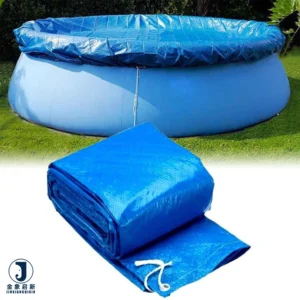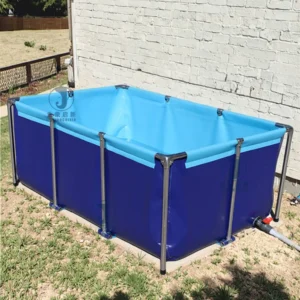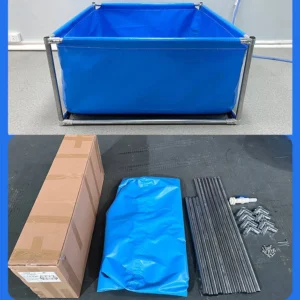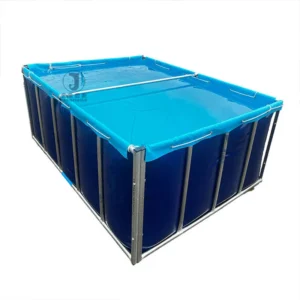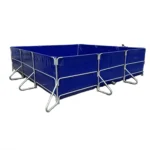
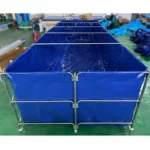
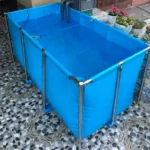
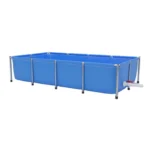

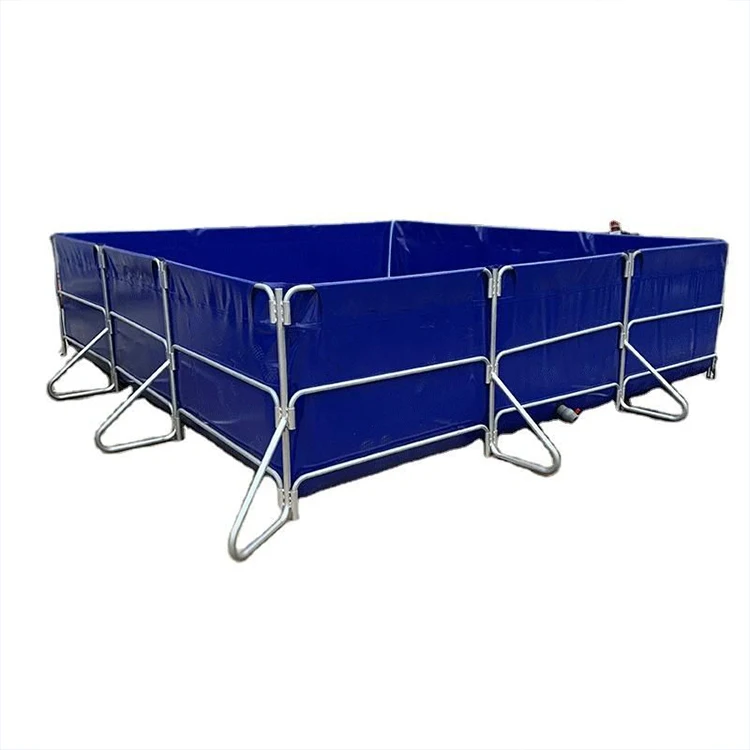
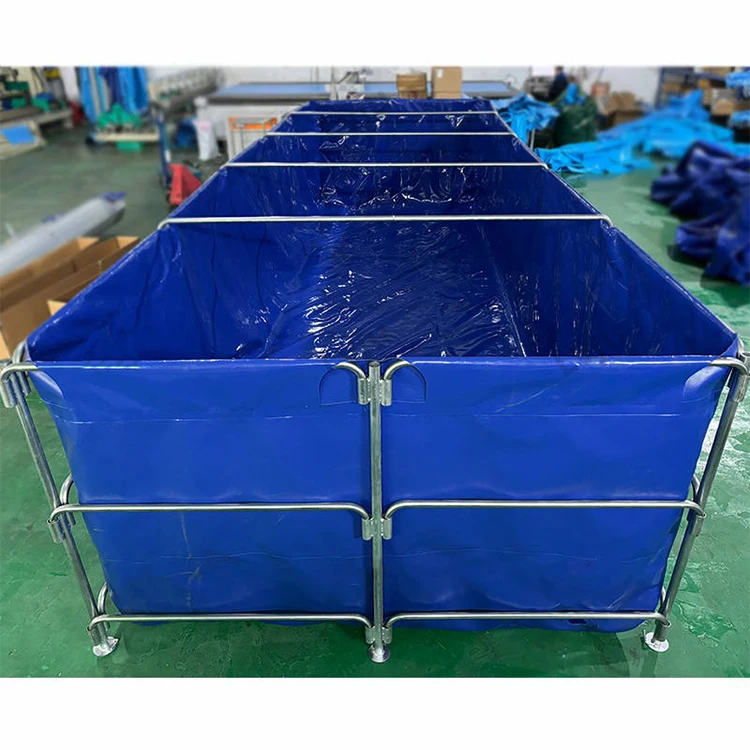
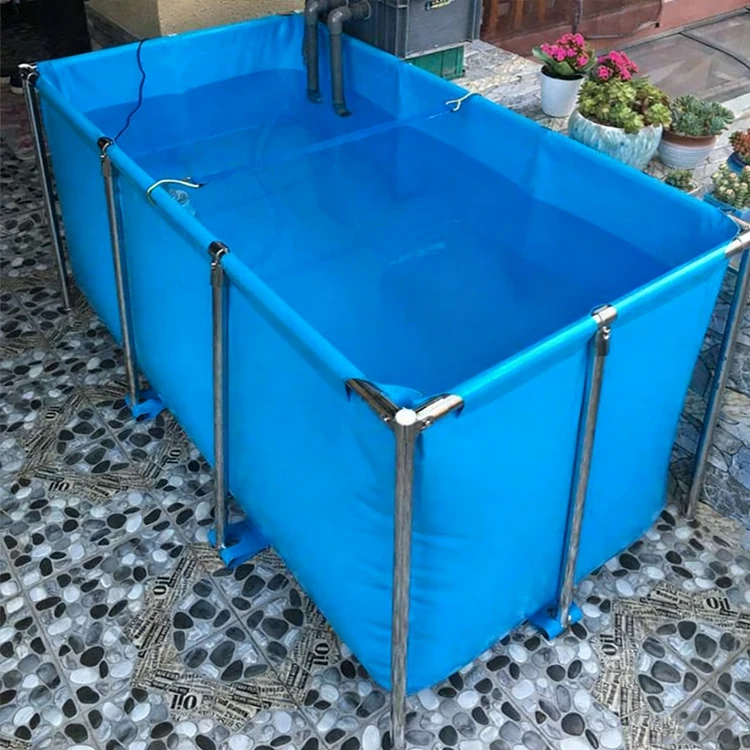
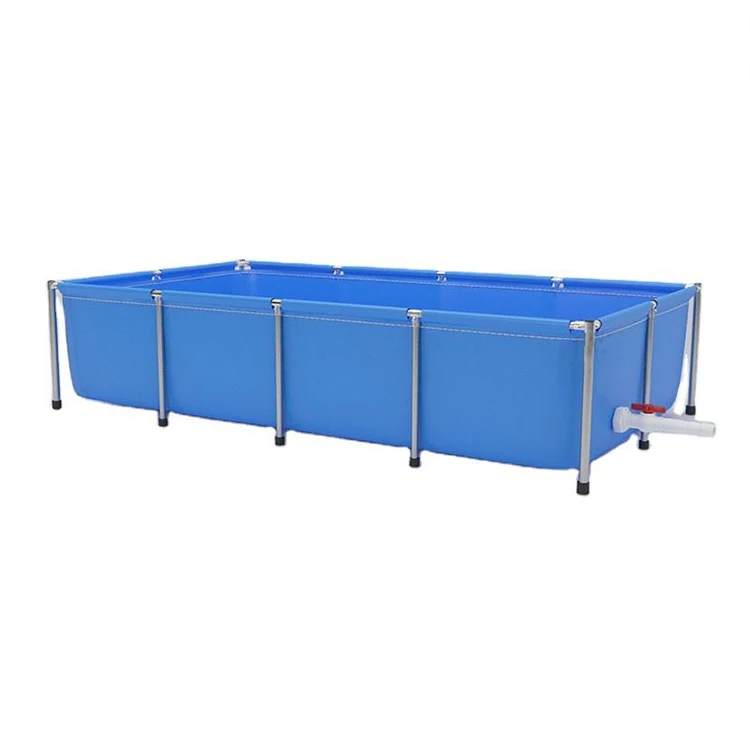
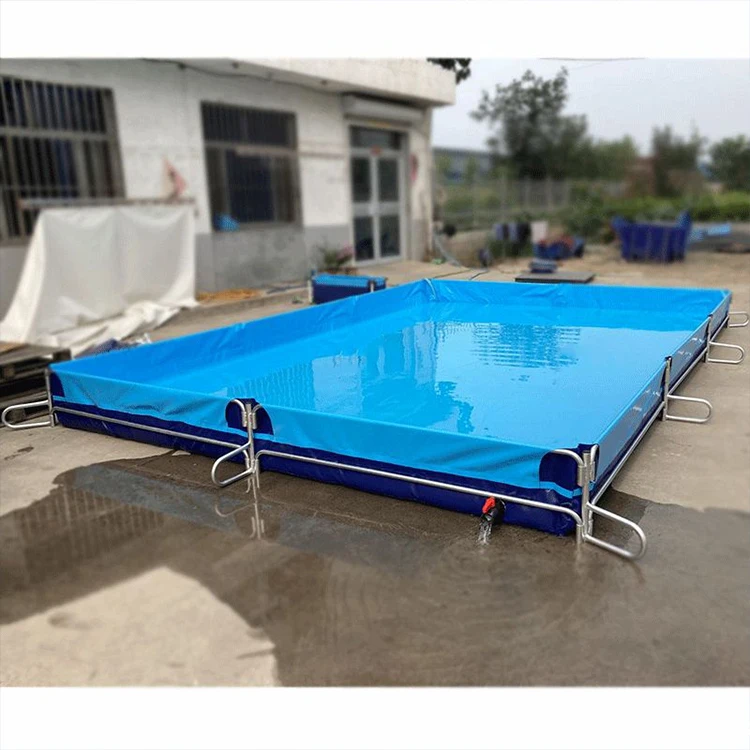
Coating Weight Control — nearly 30 years of process discipline in PVC coating applied to every pond liner panel, ensuring the GSM on your specification sheet is the GSM you receive on site.
Technical Specifications
| Parameter | Value |
|---|---|
| Product Type | PVC Coated Fish Pond Liner |
| Shape Options | Circular, Rectangular, Custom configurations |
| Base Material | PVC Coated Tarpaulin |
| Foldable Design | Yes — supports seasonal deployment and off-season storage |
| UV Treatment | Available in anti-UV grades — confirm the grade required for your market |
| Flame Retardant | Available in flame retardant grades — confirm the grade required for your market |
| Anti-Static | Available in anti-static grades — confirm the grade required for your market |
| Customization | Size, GSM, colour, printing, reinforced hems |
| Assembly State | Fabricated with heat-welded seams |
| Certifications | ISO, CE |
Application Suitability
| Application | Exposure & Requirement |
|---|---|
| Commercial aquaculture ponds | Permanent water contact, continuous hydrostatic pressure, biological exposure, seasonal UV |
| Fish farming tanks (circular) | Centralised water load, perimeter stress at weld seams, daily thermal cycling |
| Rectangular breeding pools | Corner seam tension, substrate abrasion, chemical treatment of water column |
| Portable water containment | Repeated folding and unfolding, transport abrasion, rapid deployment demand |
| Agricultural water reservoirs | Long-term standing water, soil-side puncture risk, algae and biofilm resistance |
Why Material Documentation Matters More Than a Quoted GSM for Pond Liners
The GSM figure on your quotation only protects you if the supplier can prove it at dispatch.
Aquaculture operators frequently receive pond liners that arrive lighter than agreed, with coating weight falling short of the original specification. When a liner is installed and filled with thousands of litres of water, a deficit in coating thickness shows up as premature seam failure or pinhole leaks within the first season. Anti-UV treatment is another area where claims circulate without supporting test data, leaving the liner exposed to degradation under continuous sun exposure [NEED_CITE: test methods for UV stability of PVC coated fabrics]. Jinxiang addresses this by issuing a material specification sheet with every PVC Fish Pond Liner order, stating the exact GSM, base fabric denier, and coating parameters so that receiving teams can verify the product against the original agreement.
Process Discipline from Industrial Fabric Lines Applied to Aquaculture Containment
The same coating-weight control and adhesion standards used across Jinxiang’s specialist industrial fabric lines are applied to every PVC Fish Pond Liner. Consistent coating weight across each panel prevents thin spots that would otherwise become leak paths under hydrostatic load. Heat-welded seams are constructed to match or exceed the strength of the parent fabric, addressing the failure mode where seams part before the material itself yields. This process discipline is what separates a liner that holds through multiple seasons from one that requires mid-cycle emergency repair.
Fire-Retardant and Anti-Static Compliance for Regulated Aquaculture Structures
Certain aquaculture installations — particularly indoor recirculating systems and covered breeding facilities — fall under building or fire codes that mandate specific material classifications. A liner without the correct certification documentation can halt a project at the inspection stage. Jinxiang supplies pond liners in flame retardant and anti-static grades where applicable, with test reports available to confirm the classification. Buyers specifying PVC Fish Pond Liner for enclosed or regulated environments should confirm the exact grade required by their local authority before placing the order [NEED_CITE: fire classification requirements for aquaculture building materials].
Reading Between the Specification Sheet Lines
GSM alone does not determine how a pond liner performs under load. The base fabric denier and weave density work together with coating weight to produce the tensile and tear resistance the liner needs when water pressure pushes against welded seams and anchored edges. A heavy coating on a low-denier base can crack at fold lines during deployment, while a light coating on a dense weave may lack the waterproof integrity needed for long-term containment. Heat-welded seam behaviour is equally critical: the welding temperature and dwell time must be calibrated to the specific PVC formulation so the bond does not become the weakest point in the structure. Surface finish also plays a role — a smoother finish supports easier cleaning between cycles, reducing biofilm buildup that can affect water quality for sensitive species.
The Hidden Cost of Specifying Pond Liners on Price Per Square Metre Alone
When procurement decisions rest on unit price without verifying coating weight or seam construction, the real cost appears after installation. A liner with insufficient GSM will flex excessively under water load, stressing weld seams at every perimeter anchor point until micro-tears propagate into visible splits. Colour variation between panels delivered in the same order creates a patchwork appearance that signals inconsistent material batches — a concern when operators are running multiple ponds side by side and need uniform performance across all units. Welded seams that fail before the fabric itself does force a complete drain-and-repair cycle, costing far more in lost production time than the price difference between a verified and an unverified liner [NEED_CITE: coated fabric weld seam failure analysis].
Why Aquaculture Operators Source Pond Liners Through Jinxiang
Three full production lines and 36 sets of professional equipment provide the capacity to fulfil large-volume pond liner orders with consistent output and reliable on-time delivery. A 10-person R&D team handles custom sizing, material selection, and sample development so that circular and rectangular configurations match the exact dimensions of each aquaculture installation. Every production stage carries dedicated QA/QC oversight, with 100 percent inspection before shipment catching coating defects or seam irregularities before they leave the factory. Custom samples are developed within days, allowing buyers to evaluate material hand, weld integrity, and colour before committing to a full production run. Documentation accompanies every dispatch — from the material specification sheet through to the pre-shipment inspection record — creating a traceable trail that procurement teams and site engineers can audit independently.
Documentation & Verification
- Material specification sheet stating exact GSM, base fabric denier, and coating type per pond liner order
- Test reports for UV stability and flame retardant grades where specified by the buyer
- Pre-shipment inspection record with 100 percent QA/QC verification before dispatch
- Certificate of origin and customs documentation for international aquaculture project shipments
- Roll packing list cross-referencing each fabricated liner to its production batch
Fabrication, Handling & Storage
- Heat-weld seams at temperatures matched to the PVC formulation to prevent bond-line brittleness in cold water
- Reinforce perimeter anchor points where continuous water load transfers stress to the liner edge
- Store folded liners in a dry, shaded area to protect the PVC coating surface from premature UV exposure
- Avoid dragging fabricated panels across abrasive ground during deployment to preserve the coating integrity
- Use mild, non-solvent cleaners on the liner surface between aquaculture cycles to protect the coating finish
- Allow cold-stored liners to reach ambient temperature before unfolding to prevent cracking at fold creases
What We Need to Prepare Your Pond Liner Quotation
Share your pond layout — circular or rectangular, with exact dimensions or target water volume — so the liner can be fabricated to fit without excess material or short panels. Specify the environmental conditions your installation faces, including whether the liner will be exposed to direct sunlight or housed within a covered structure that may require flame retardant certification. Confirm the GSM range or coating weight your project demands, along with any colour or printing requirements for site identification, and whether you need fabricated panels with finished edges or roll stock for on-site assembly.
Frequently Asked Questions
Q: How do I verify the GSM of the pond liner matches the quoted specification on arrival?
A: Every PVC Fish Pond Liner ships with a material specification sheet stating the exact GSM, base fabric denier, and coating type. Your receiving team can cross-reference this against the quotation and conduct a weight-per-area sample cut to confirm compliance before installation begins.
Q: Can you provide test reports for UV and flame retardant treatments?
A: Test reports are issued for UV and flame retardant grades where applicable and specified in the order. Confirm the classification or standard your local regulations require — our R&D team will match the treatment and provide the supporting documentation with your shipment.
Q: What is the lead time for custom-sized circular or rectangular pond liners?
A: Lead times depend on order volume and the complexity of custom dimensions. Samples for custom configurations are typically developed within days for buyer approval before bulk production begins, allowing you to verify fit and material quality in advance.
Q: Do you supply pond liners with reinforced edges and anchor points?
A: Reinforced hems and edge treatments are available as part of the fabrication process. Specify your anchoring method and perimeter load requirements when requesting a quotation so the liner is built with the appropriate reinforcement at stress-bearing points.
Q: How do you ensure colour consistency when ordering multiple pond liners in one batch?
A: Colour matching is controlled at the coating stage, with batch-to-batch consistency verified during the 100 percent pre-shipment inspection. All liners within a single order are produced from the same coating run to eliminate visible variation once installed side by side.