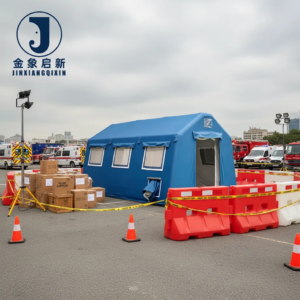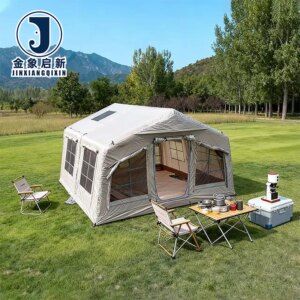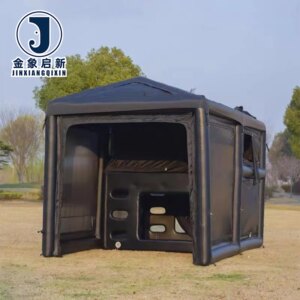


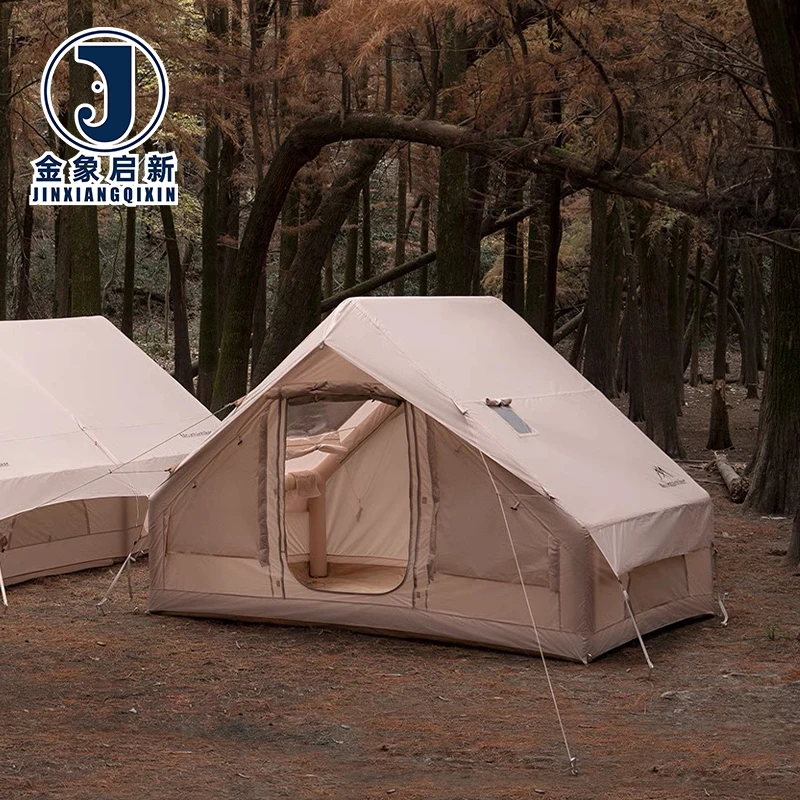
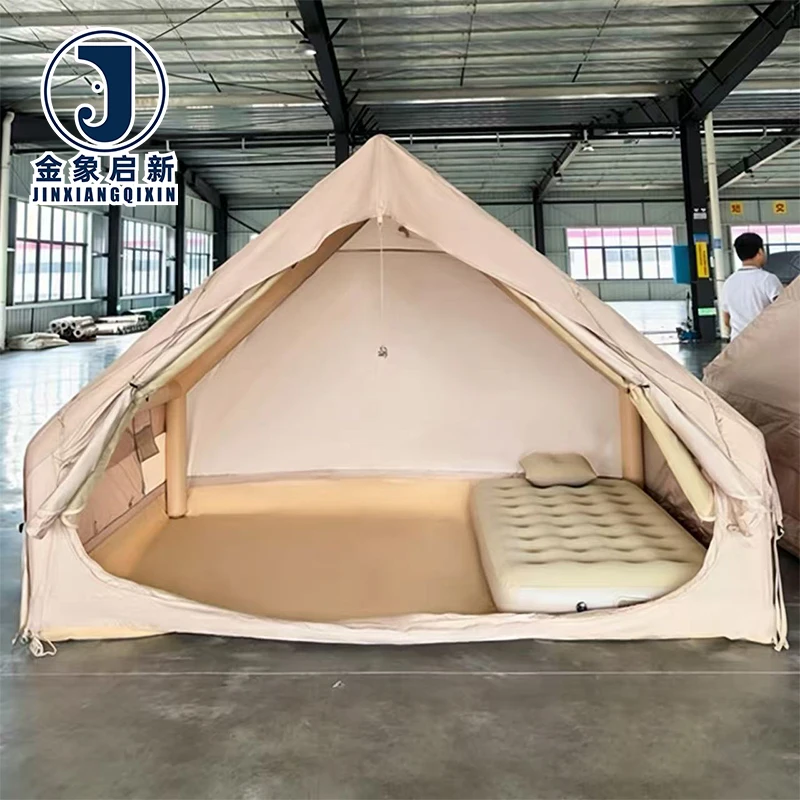
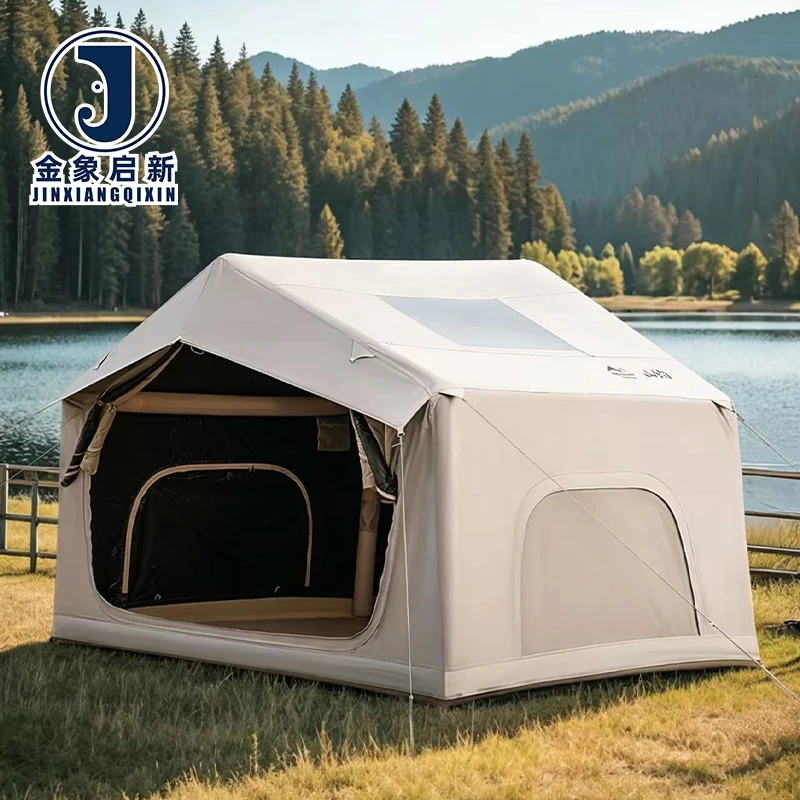
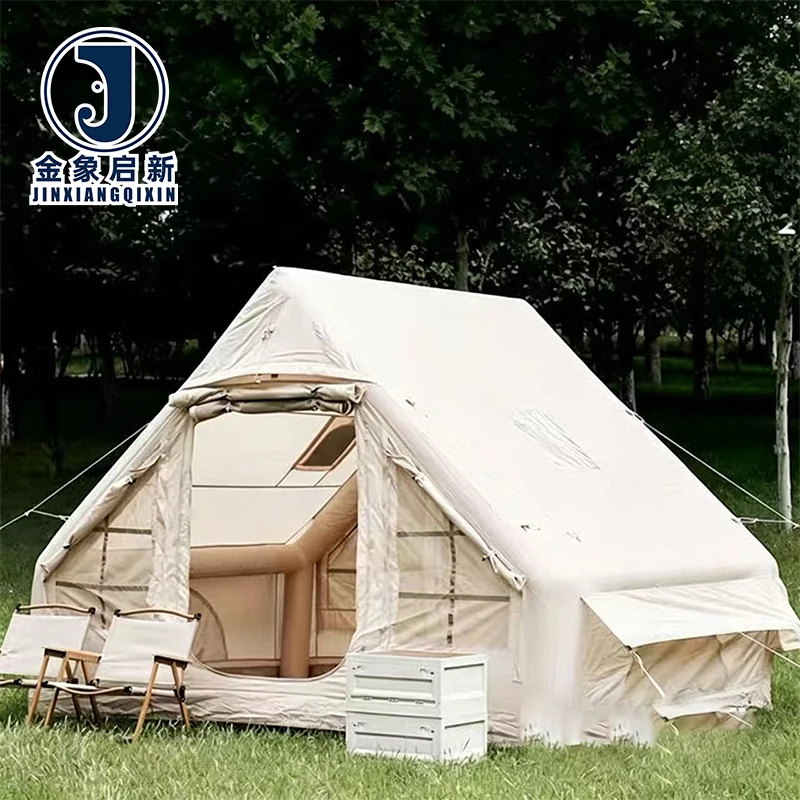
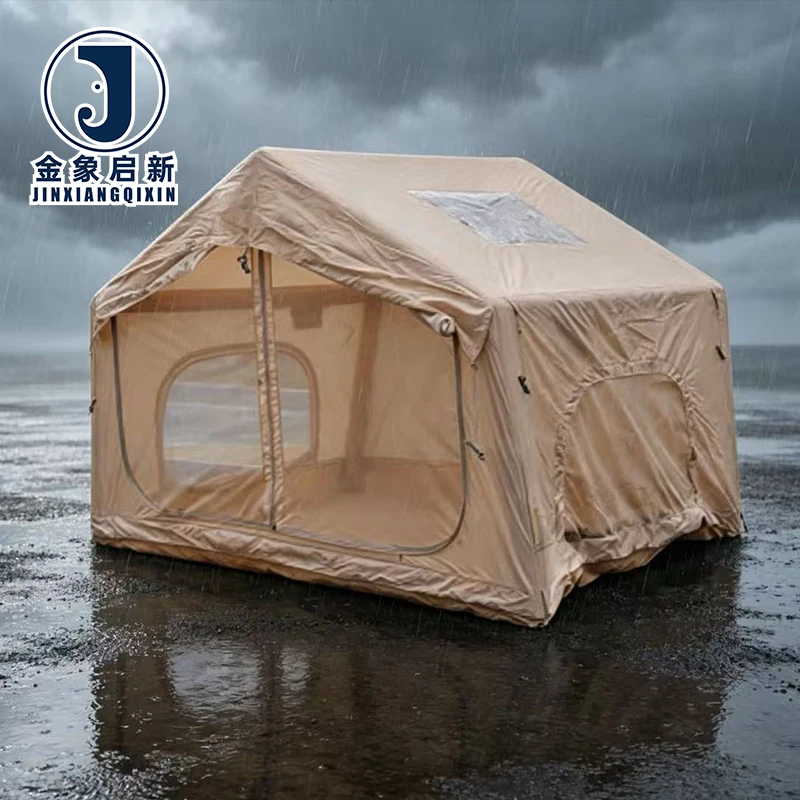
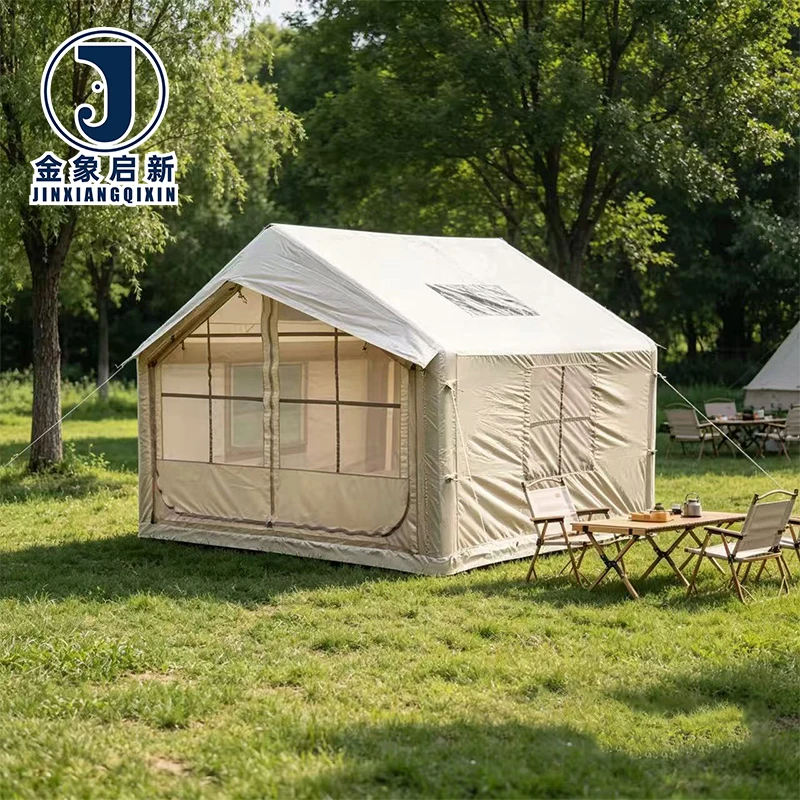
Coating formulation control — nearly 30 years of PVC coating process knowledge applied to every batch of inflatable structure fabric, ensuring fire-retardant and anti-static additives are fully integrated rather than surface-applied.
Technical Specifications
| Parameter | Value |
|---|---|
| Product Type | Inflatable Tent Fabric |
| Core Material | PVC tarpaulin |
| Key Performance | Waterproof, UV-resistant (test basis not stated in source), tear-resistant, fire-retardant (grade not stated in source), anti-static (standard not stated in source) |
| Customization | OEM & ODM — sample customization, pattern printing, material selection, product design |
| Production Facility | 9,180 m² with 3 full production lines |
| Processing Equipment | 36 sets of professional equipment |
| R&D Team | 10 technicians |
| Standards | ISO 9001, ISO 14001, ISO 45001, CE |
Application Suitability
| Application | Exposure & Requirement |
|---|---|
| Mining and tunnelling inflatable shelters | Underground moisture, confined-space fire safety mandates, anti-static compliance for explosive atmospheres |
| Aviation temporary inflatable enclosures | Fuel-adjacent fire-risk zones, rapid deployment, certified flame-retardant material required on site |
| Construction site inflatable structures | Wind-driven abrasion, UV exposure over multi-month projects, weld seam integrity under air-beam pressure |
| Commercial event inflatable tents | Crowd safety fire codes, repeated inflation cycles, colour consistency across large membrane panels |
| Emergency response inflatable shelters | Rapid field deployment, all-weather waterproofing, documented compliance for agency procurement audits |
What "Fire Retardant" Means Without a Certified Grade Behind It
Inflatable Tent Fabric fire retardant anti-static certified is only meaningful when the test report matches the batch you receive.
Procurement teams specify flame-retardant fabric for inflatable structures, then discover on site that the supplier cannot produce a test report tied to the roll number delivered. The material may carry a generic certificate from a different production run, or worse, from a different factory entirely. Mining and aviation sites reject shipments at the gate when documentation does not match the material on the truck. [NEED_CITE: fire classification standards for temporary structures in industrial sites]
Coating Formulation and Additive Integration
Fire-retardant and anti-static properties in Inflatable Tent Fabric fire retardant anti-static certified material depend on how the additives are introduced during the PVC coating process. Surface-applied treatments wash off or abrade within the first season of outdoor deployment, while formulation-integrated additives remain within the coating matrix for the service life of the membrane. Our R&D team selects additive packages based on the compliance requirements of the destination market, confirming the grade required for your specific application before production begins.
Air-Beam Pressure and Base Fabric Selection
Inflatable tent structures rely on continuous air-beam pressure to maintain their shape, which places constant tensile load on the base fabric. The denier and weave density of the polyester reinforcement must be matched to the operating pressure of the air beams — undersized base fabric stretches and deforms, while oversized material adds unnecessary weight and cost. Available in flame retardant grades — confirm the grade required for your market, and our technical team will recommend a base fabric specification aligned with your structural design. [NEED_CITE: tensile and tear test methods for coated fabrics per ISO 1421]
Seam Weld Integrity Under Cyclic Inflation
Every inflation and deflation cycle flexes the welded seams of an inflatable structure. If the coating adhesion is weaker than the base fabric tensile strength, the weld line will delaminate before the fabric itself fails. Coating weight and adhesion control during production directly determine whether the seam outlasts the membrane panel — a factor that matters more than GSM alone when evaluating long-term structural reliability.
Reading Specifications Beyond the Quoted GSM
GSM tells you the total weight of the coated fabric but nothing about how that weight is distributed between the base fabric and the PVC coating layers. A heavy coating on a light base fabric yields high GSM with poor tear resistance, while a balanced construction delivers structural performance that matches the air-beam pressure requirements of the inflatable design. Coating method — knife-over-roll, laminating, or calendering — affects peel strength, heat-welding behaviour, and the consistency of fire-retardant additive distribution across the roll width. Width and roll length determine cutting yield and the number of welded joints in a large membrane panel, directly affecting both fabrication labour and structural weak points.
The Cost of Undocumented Compliance on Arrival
When fire-retardant or anti-static certification is missing from the shipment documentation, the entire inflatable structure installation can be shut down by site safety officers. This is not a paperwork inconvenience — it halts project timelines, triggers penalty clauses, and forces emergency re-procurement at premium cost. Batch-specific test reports that match the roll numbers delivered are the only way to pass site compliance audits without delay. Colour inconsistency across rolls in a single order becomes visible once panels are installed side by side, requiring full disassembly and replacement. [NEED_CITE: common causes of material rejection at industrial construction sites]
Why Source Inflatable Structure Fabric Through This Facility
Process control over PVC coating weight and additive integration comes from nearly 30 years of focused coated fabric production, not from general-purpose manufacturing capability. Three full production lines and 36 sets of processing equipment support volume orders with consistent coating quality across every roll. The 10-person R&D team handles material selection, custom sizing, and sample development specifically for inflatable and membrane structure applications. Dedicated QA and QC inspection at every production stage, with 100 percent pre-shipment verification, ensures that the fire-retardant and anti-static properties stated on the specification sheet are the properties you receive.
Documentation & Verification
- Material specification sheet stating coating composition, base fabric construction, and treatment details for each roll
- Batch-specific fire-retardant and anti-static test reports matched to production lot number
- ISO 9001, ISO 14001, ISO 45001, and CE certificates covering the production facility
- Pre-shipment inspection record confirming coating weight and visual quality before dispatch
- Roll packing list with individual roll identification for traceability on site
- Certificate of origin and customs documentation for cross-border shipment
Fabrication, Handling & Storage
- Heat-weld parameters must be calibrated to the specific PVC coating formulation and weight before full panel production
- Store rolls horizontally on padded racks to prevent permanent creasing in the coated surface layer
- Allow cold-stored rolls to reach ambient temperature before unrolling to avoid coating micro-cracking
- Use compatible PVC-based repair patches and solvent cement for field repairs on air-beam seams
- Plan cutting layout to minimize welded joints across high-stress air-beam curvature zones
- Clean with mild detergent only — solvent-based cleaners may degrade the fire-retardant additive layer
Request a Specification Recommendation
Share your inflatable structure design parameters, including air-beam operating pressure, panel dimensions, and the fire-safety or anti-static standards required by the project site or destination market. Specify whether you need fabric supplied by the roll or pre-cut to panel size, along with target colour and any pattern printing requirements. Our technical team will return a material recommendation with sample availability and production lead time.
Frequently Asked Questions
Q: What fire-retardant grade and anti-static standard does this inflatable tent fabric meet?
A: Fire-retardant and anti-static treatments are integrated into the PVC coating formulation, with specific grades selected based on your market requirements. Available in flame retardant grades — confirm the grade required for your market, and we will provide the corresponding batch-specific test report with your shipment documentation.
Q: How is batch consistency verified for fire-retardant and anti-static properties across large orders?
A: Every production batch undergoes in-process quality checks at each stage on our three production lines. Pre-shipment inspection verifies coating weight, visual consistency, and treatment performance. Test reports are generated per batch and matched to roll numbers, ensuring the material you receive matches the certified specification.
Q: What documentation accompanies each shipment for site compliance audits?
A: Each order ships with a material specification sheet, batch-matched test reports for fire-retardant and anti-static properties, ISO and CE certificates, a pre-shipment inspection record, roll packing list, and certificate of origin. This documentation package supports site safety audits and procurement compliance verification.
Q: What custom sizing and material options are available for specialist inflatable structures?
A: Our 10-person R&D team supports OEM and ODM development, including custom width, material selection, pattern printing, and product design modifications. Samples are developed for approval before full production runs, allowing you to validate material performance and fabrication behaviour on your own welding equipment.
Q: How does the R&D team support sample development and performance validation before full production?
A: The technical team reviews your application requirements, selects the appropriate base fabric and coating formulation, and produces samples within days. You can test weld parameters, air-beam pressure response, and surface finish on the sample before authorizing bulk production, reducing the risk of specification mismatch on the full order.