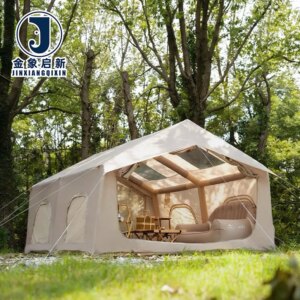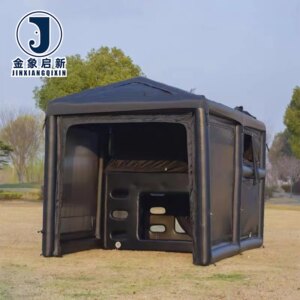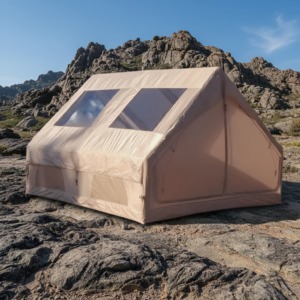


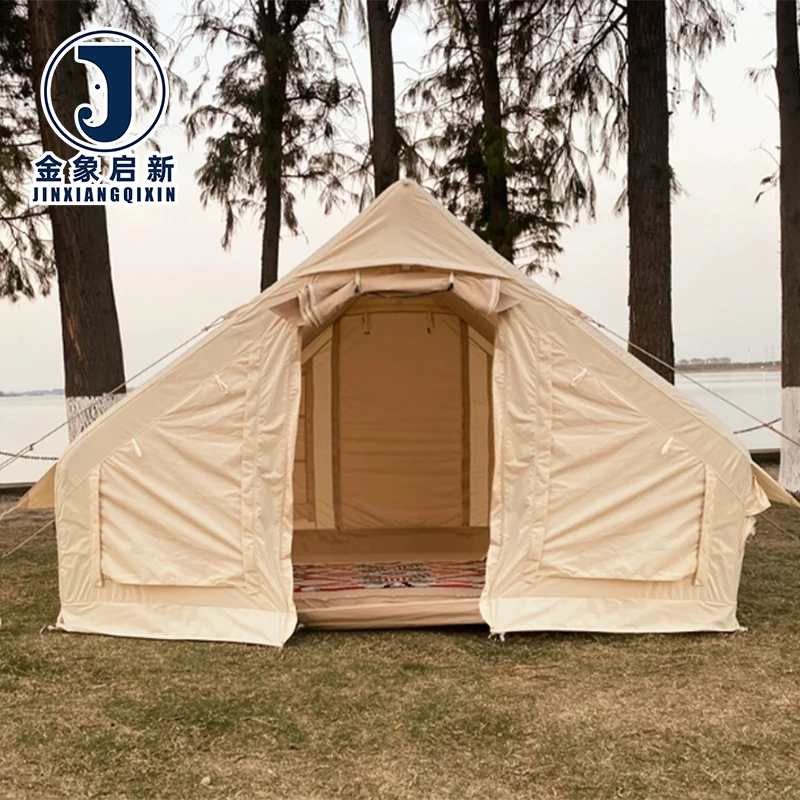
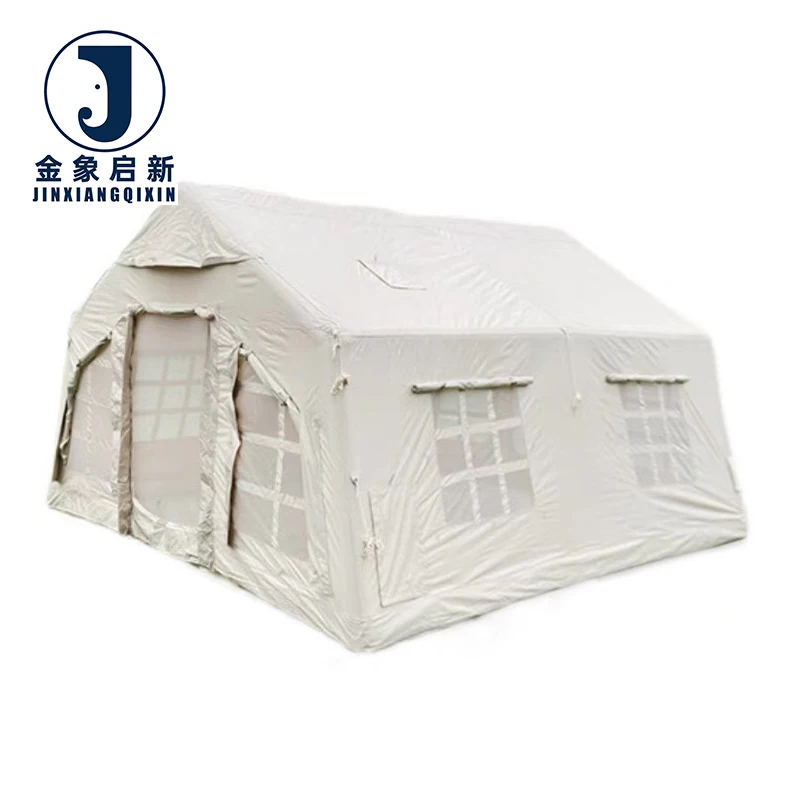
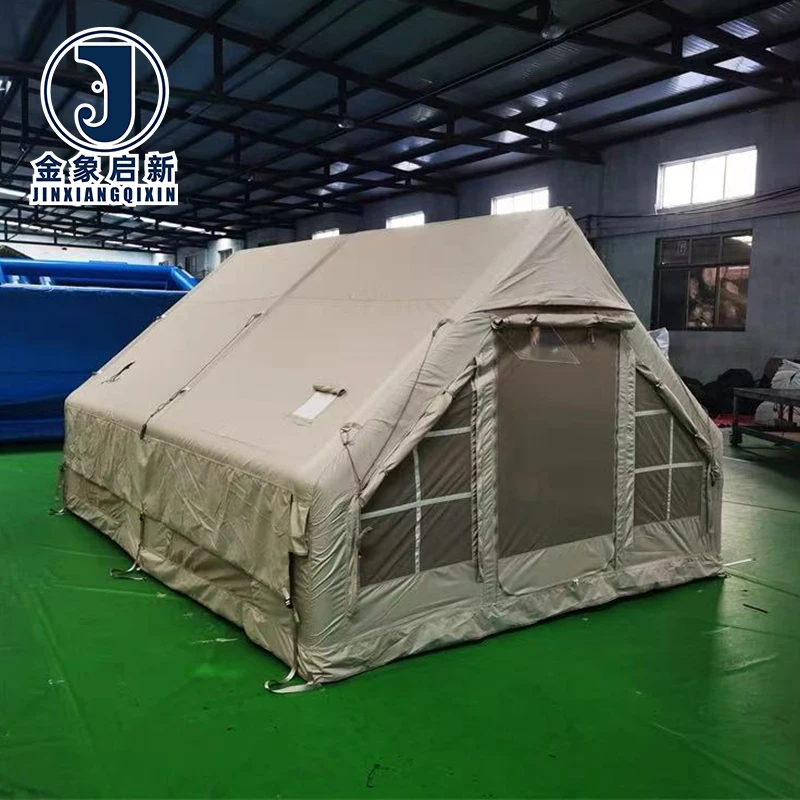
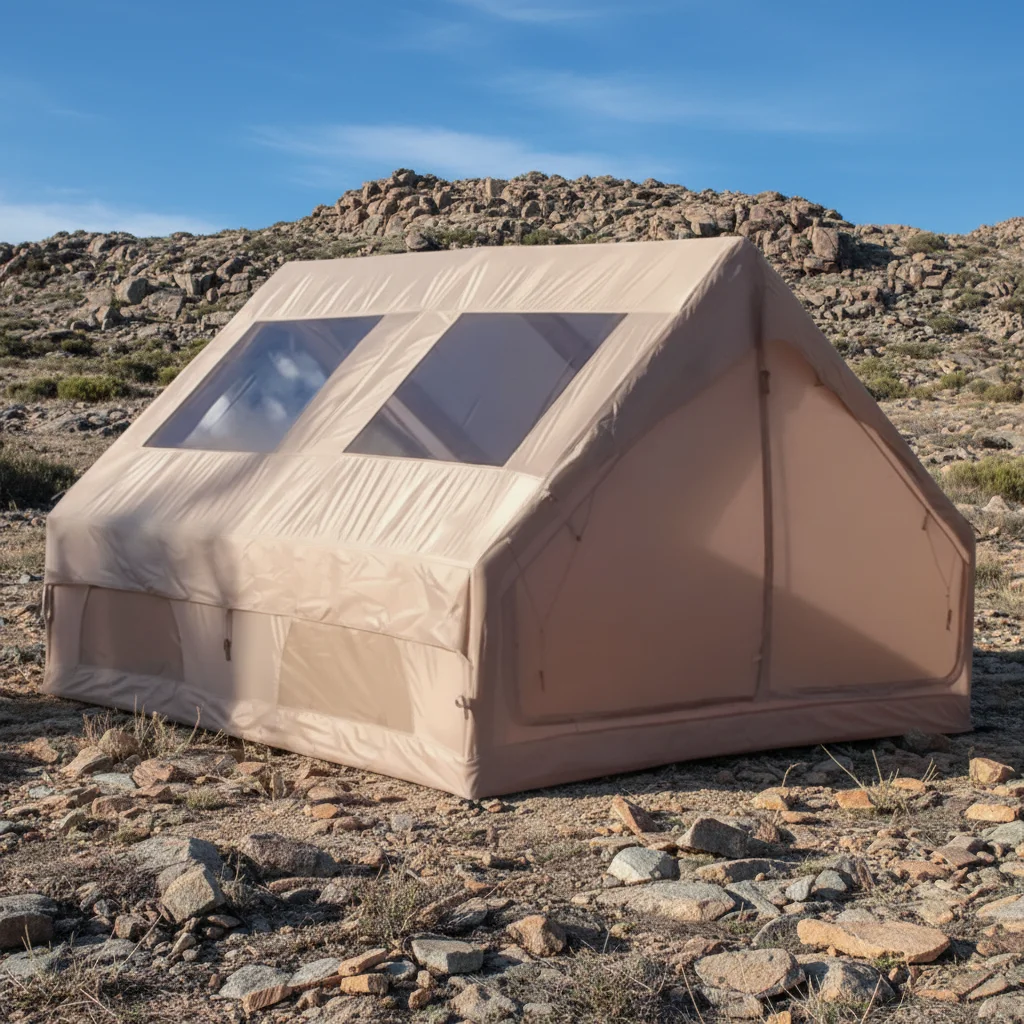

Specialist Membrane Fabrication Support — our technical team works directly with contractors specifying fire-retardant and anti-static requirements for inflatable and membrane structures, ensuring fabric compliance before production begins.
Technical Specifications
| Parameter | Value |
|---|---|
| Product Type | Inflatable Tent |
| Core Material | PVC Tarpaulin |
| Waterproof | Yes |
| UV-resistant | Available (test basis not stated in source) |
| Tear-resistant | Yes |
| Flame Retardant | Available (grade not stated in source) |
| Anti-static | Available (standard not stated in source) |
| Product Forms | Single Layer Construction, Extended Type |
| Customization Service | OEM & ODM (sample customization, pattern printing) |
| Standards | ISO9001, ISO14001, ISO45001, CE |
Application Suitability
| Application | Exposure & Requirement |
|---|---|
| Commercial glamping and event shelters | Repeated inflation/deflation cycles, prolonged UV exposure, guest safety compliance |
| Industrial temporary shelters at remote sites | Wind loading, temperature extremes, rapid deployment demands |
| Specialist inflatable structures for aviation or tunnelling support | Fire-retardant certification, anti-static discharge control, regulatory audit requirements |
What Happens When Inflatable Structure Fabric Fails Its Fire Compliance Check
Inflatable tent fabric fire retardant certification must match the regulatory standard enforced at your project site before the material leaves the factory.
Contractors deploying temporary membrane structures often discover during site inspection that the fire-retardant grade stated on the quotation does not align with local building or occupational safety codes. The structure is then barred from use until replacement fabric arrives — a delay that compounds into lost operational days and liquidated damages [NEED_CITE: fire classification standards for temporary membrane structures]. The inflatable tent fabric fire retardant grade must be confirmed against your specific jurisdiction, not assumed from a generic claim.
Engineering the Membrane for Inflation Stress and Static Control
Inflatable and membrane structures place unique demands on coated fabric. The material must tolerate repeated folding during transport, rapid expansion under air pressure during setup, and sustained tensile load while inflated. Inflatable tent fabric fire retardant performance must persist through these mechanical cycles without the coating cracking or the treatment migrating to the surface.
Anti-Static Requirements in Hazardous Atmospheres
Certain deployment environments — mining ventilation shelters, fuel-adjacent temporary structures, aviation support facilities — require controlled surface resistance to prevent electrostatic discharge. Where anti-static treatment is specified, the surface resistance value must be verified against your site’s safety protocol. Confirm the applicable standard with your safety officer before requesting a quote [NEED_CITE: anti-static surface resistance standards for industrial fabrics].
Reading Beyond the PVC Specification Sheet
The core PVC tarpaulin construction determines how the membrane behaves under inflation pressure and environmental load. Tear resistance governs whether a small puncture propagates into a structural failure — critical when the entire shelter depends on continuous air retention. The single layer construction and extended type forms each present different weld geometry challenges; the seam must hold under cyclic pressure without delaminating from the base fabric.
UV resistance and flame retardant treatments are chemical additions to the PVC compound. Their effectiveness depends on dispersion quality during coating, not merely their presence on a data sheet. Request batch-specific test reports rather than relying on catalogue claims [NEED_CITE: test methods for UV and flame retardant performance in coated fabrics per ISO standards].
The Cost of Undocumented Fabric Compliance
When fire-retardant certification is absent or mismatched, the entire inflatable structure may be rejected at site handover. Anti-static fabric installed without verified surface resistance readings exposes the contractor to liability in classified atmospheres. Batch-to-batch variation in coating weight alters weld parameters, causing seam failures that appear only after the structure is pressurised and occupied [NEED_CITE: weld failure modes in PVC coated membrane structures].
These failures share a common root: specifications confirmed at quotation stage but not re-verified against the production batch. Every roll must carry documentation that ties its physical properties back to the test standard your project demands.
Why Contractors Source Specialist Fabric Here
Our 10-person R&D team handles material selection and sample development specifically for inflatable and membrane structure applications, not generic tarpaulin orders. This means weld parameters, inflation stress behaviour, and treatment compatibility are evaluated before your production run begins.
Three full production lines with 36 sets of professional equipment maintain batch consistency across large-volume membrane orders, so colour and coating weight do not drift between the first and last roll. Every production stage includes dedicated QA/QC with 100% inspection before shipment — critical when a single non-conforming roll can halt an entire project installation.
Sample development within days allows you to test weld behaviour, inflation response, and treatment verification before committing to full production volume.
Documentation & Verification
- Material specification sheet stating PVC compound, base fabric construction, and coating weight for your inflatable membrane project
- Fire-retardant test report referencing the specific grade and standard applicable to your deployment jurisdiction
- Anti-static surface resistance documentation matched to your site’s discharge control requirements
- Pre-shipment inspection record confirming coating adhesion, weld integrity, and dimensional accuracy per roll
- ISO9001, ISO14001, ISO45001, and CE certificates included with every shipment batch
Fabrication, Handling & Storage
- Heat-weld PVC tarpaulin seams using temperature and dwell time settings confirmed on your pre-production sample
- Store membrane rolls upright on cores to prevent flat-spot creasing that weakens the coating at fold lines
- Allow cold-transported rolls to reach ambient temperature before unrolling to avoid PVC compound cracking
- Use compatible PVC adhesive for field repairs on single layer construction membranes to maintain air retention
- Confirm pattern printing ink compatibility with the PVC surface treatment before committing to full production
Requesting a Specification That Matches Your Project
To move forward, provide your deployment environment, the fire-retardant or anti-static standard enforced at your site, and the membrane dimensions or roll quantities required. Specify whether you need finished inflatable tent panels or raw fabric rolls for your own fabrication. Sample approval before mass production is standard practice — request it early in your project timeline.
Frequently Asked Questions
Q: What fire-retardant grades are available for inflatable structure fabric, and which standards do they meet?
A: Fire-retardant PVC formulations are available in multiple grades. The specific grade must be matched to the regulatory standard enforced at your project site — whether building code, occupational safety regulation, or mining compliance framework. Request a batch-specific test report confirming the grade before committing to production.
Q: How is anti-static performance verified and what surface resistance values can be supplied?
A: Anti-static treatment is applied to the PVC compound to control surface resistivity. Verification requires testing the finished fabric against the standard specified by your site safety protocol. Surface resistance values and test documentation are supplied per batch upon request.
Q: Can custom dimensions and pattern printing be produced for project-specific inflatable structures?
A: OEM and ODM services cover custom sizing, single layer or extended type construction, and pattern printing on the PVC surface. Pre-production samples are developed within days so you can verify dimensions, weld behaviour, and print quality before full production begins.
Q: What documentation accompanies each shipment to support site compliance and regulatory audits?
A: Each dispatch includes a material specification sheet, fire-retardant and anti-static test reports where applicable, ISO and CE certificates, a pre-shipment inspection record, roll packing list, and certificate of origin to support customs clearance and site regulatory audits.
Q: How does the pre-production sample process work for custom inflatable tent fabric specifications?
A: Submit your application requirements, target compliance standard, and dimensions. The R&D team develops a sample reflecting your specified PVC compound, treatment, and construction. Approve the sample before mass production to confirm weld parameters, inflation behaviour, and coating consistency.