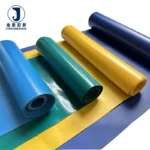
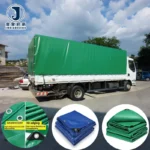

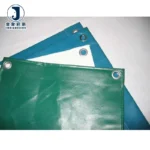
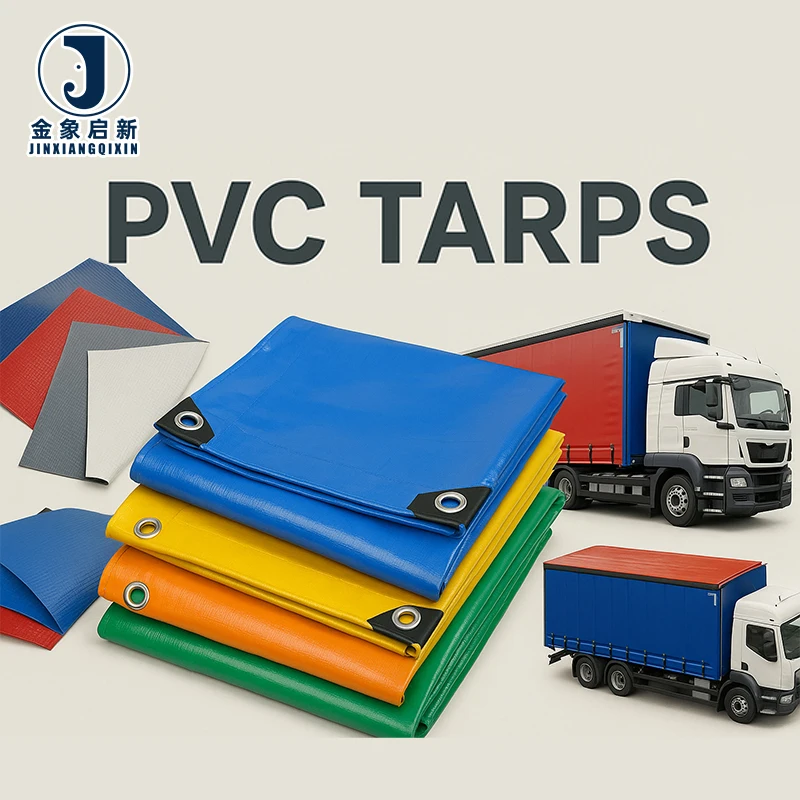
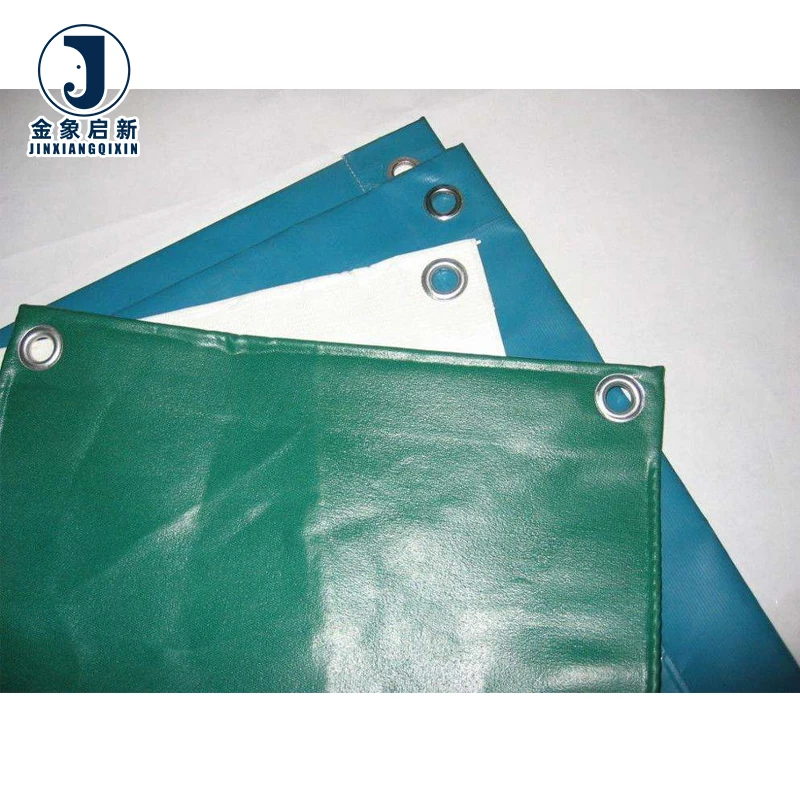
Specialist Coating Control — nearly 30 years of PVC coating process refinement applied to fire-retardant and anti-static ventilation duct fabric, with every roll verified before shipment.
Technical Specifications
| Parameter | Value |
|---|---|
| Product Type | PVC Coated Tarpaulin Roll |
| Weight (GSM) | 250gsm–1500gsm (confirm required grade for your application) |
| Base Fabric Denier | 200DX300D, 500DX500D, 840DX840D, 1000DX1000D |
| Coating Material | PVC |
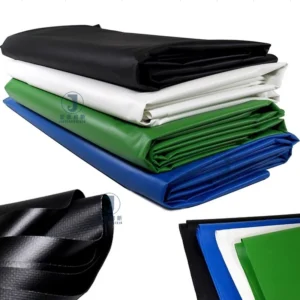
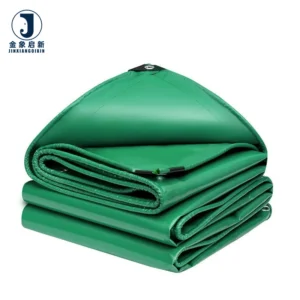
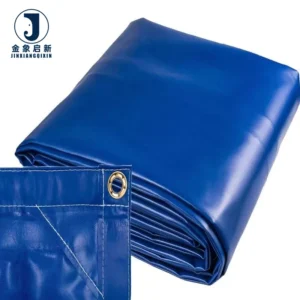
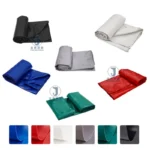
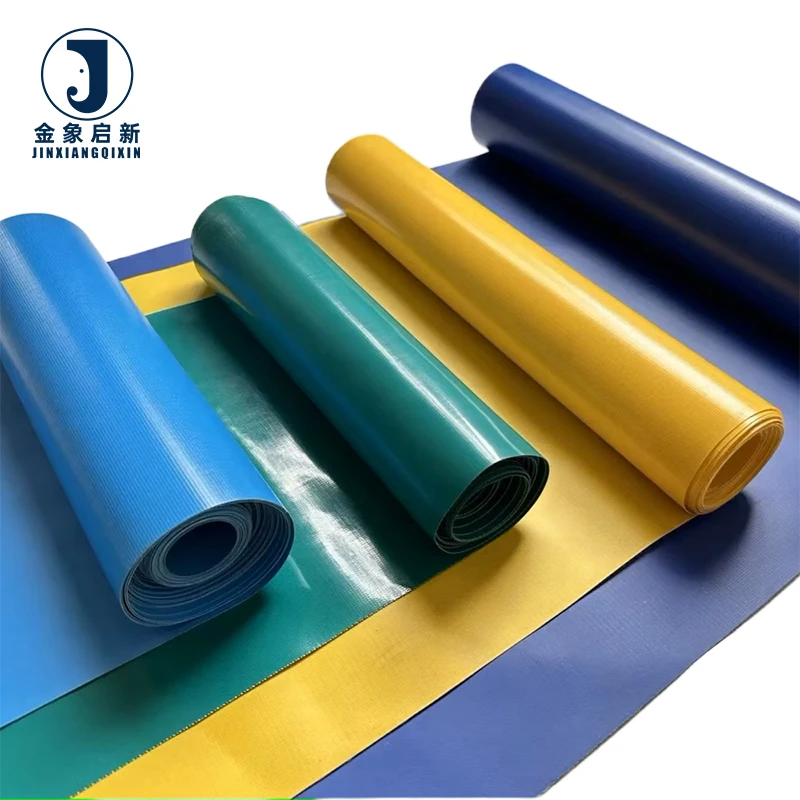
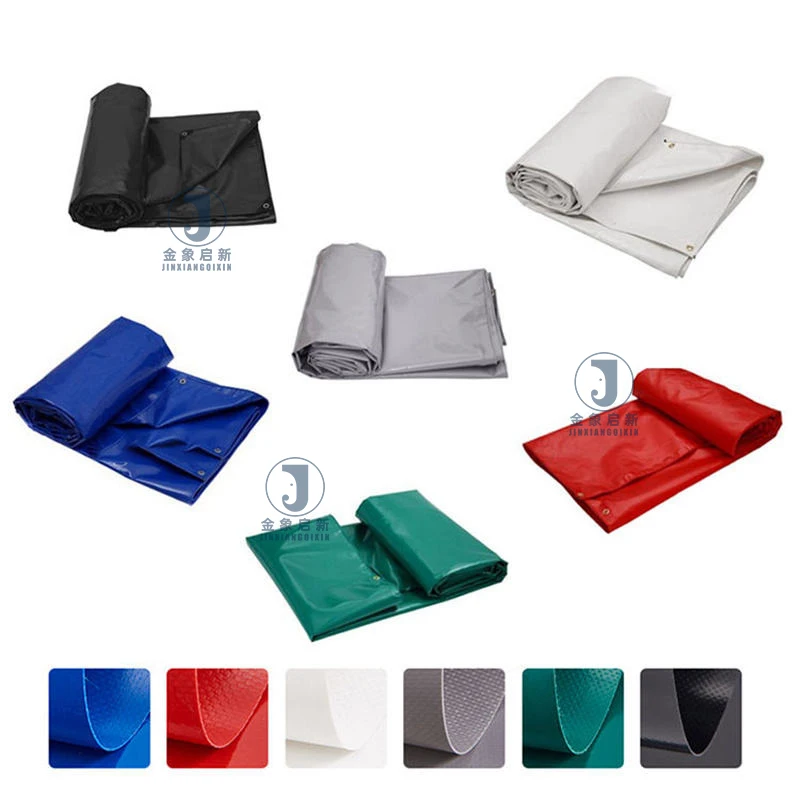
| Color Options | Blue, yellow, black, green, white, custom |
| Surface Finish | Glossy or matte (available per specification) |
| Temperature Range | -15ºC to 70ºC |
| Flame Retardant | FR treated — confirm the grade required for your market (M2 / B1 / NFPA 701 / DIN 4102 available) |
| Anti-Fungal | Treated |
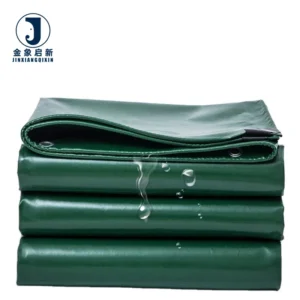
| Waterproof | Fully coated waterproof construction |
| OEM/ODM | Accepted |
| Working Life | 3–10 years depending on usage environment (verify against project specification) |
Application Suitability
| Application | Exposure & Requirement |
|---|---|
| Mining and tunnelling ventilation ducts | Continuous forced airflow pressure, high humidity, rock dust abrasion, mandatory fire-retardant and anti-static certification |
| Aviation ground support ducting | Jet blast proximity, fuel vapour environment, rapid deployment and tear-down cycles, regulatory compliance |
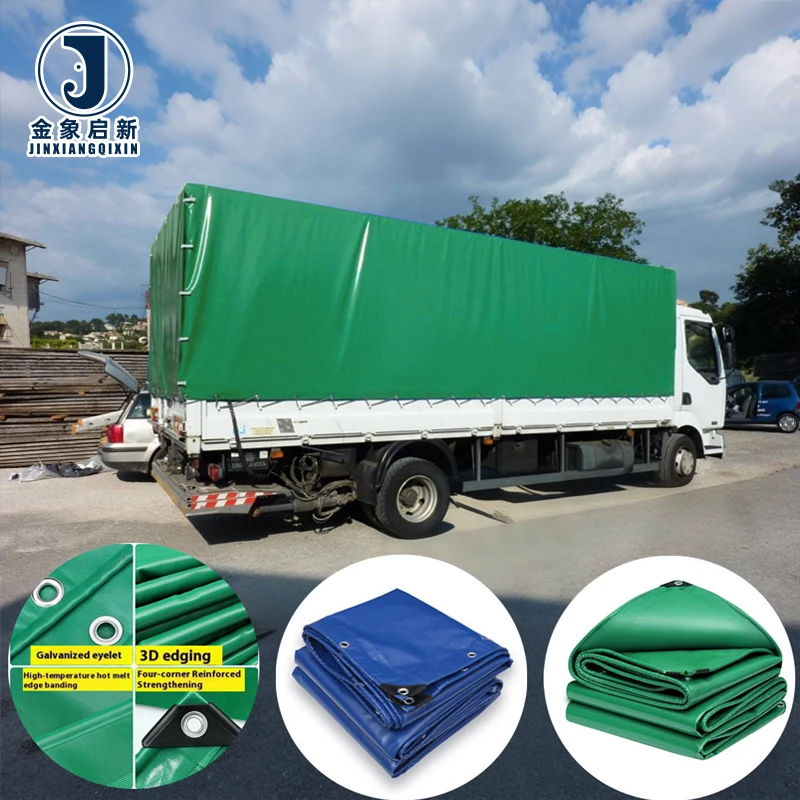
| Inflatable and membrane structures | Sustained internal pressure, solar UV loading, cyclic wind stress, weld integrity at panel joins |
| Industrial air handling systems | Chemical-laden exhaust exposure, temperature fluctuation, duct collapse risk under negative pressure |
What "Flame Retardant" Means Without a Test Certificate on Site
A fire-retardant claim without a matching test report is a compliance liability, not a safety feature.
Mining and tunnelling safety officers do not accept a supplier’s verbal assurance. When ventilation duct fabric arrives on site without a test report that names the specific standard and grade — whether DIN 4102 B1, NFPA 701, or M2 — the entire installation can be rejected at inspection. The cost of replacing duct runs already hung underground far exceeds the effort of specifying the correct grade at the inquiry stage [NEED_CITE: fire classification standards for underground ventilation materials]. We supply the fire retardant PVC tarpaulin roll for industrial ventilation and specialist applications with a batch-matched test document so that your site file passes audit without delay.
Certification That Matches the Job Site Requirement
Different markets and industries mandate different fire test standards. A mining operation in Australia may require AS 1530.2 compliance, while a European tunnelling project specifies EN 13501-1 classification. The fire retardant PVC tarpaulin roll for industrial ventilation and specialist applications can be produced to the grade your project demands — but the exact standard must be stated at the ordering stage so the correct additive package is incorporated during coating. We confirm the target standard with you before production begins and include the corresponding test report with every shipment.
Anti-Static Treatment for Hazardous Atmospheres
In environments where combustible dust or flammable vapours are present, surface resistivity becomes a critical safety parameter. Untreated PVC can accumulate static charge through airflow friction inside a duct, creating a spark ignition risk. Anti-static treatment is available upon request — confirm the surface resistance range required by your site safety specification. This treatment is applied during the coating stage and verified through testing [NEED_CITE: anti-static surface resistance requirements for ventilation ducts in explosive atmospheres].
Understanding Denier, Weave Density and Coating Weight Together
Base fabric denier — ranging from 200DX300D through to 1000DX1000D — determines the yarn thickness and therefore the fundamental tensile and tear capacity of the substrate. However, denier alone does not define the final strength of the coated fabric. The weave density (yarns per centimetre in warp and weft) controls how load distributes across the cloth before a tear propagates. Coating weight, expressed as part of the total GSM, fills the interstices between yarns and bonds both faces of the base fabric together. A 1000DX1000D base with low coating weight may exhibit excellent tear resistance but poor weld seam strength because insufficient PVC flows into the joint during hot-air welding. Conversely, a lighter denier base with heavy coating can produce stiff panels that crack at fold points during duct installation in cold conditions. Specifying denier and GSM together ensures the fabric performs as a balanced system rather than optimising one property at the expense of another [NEED_CITE: tensile and tear test methods for coated fabrics per ISO 1421].
The Cost of Specifying Duct Fabric on GSM Alone
Ventilation ducts flex continuously under positive or negative air pressure, concentrating stress at welded seams and suspension attachment points. When fabric is selected solely on a low GSM price advantage, the base fabric is often woven from lighter denier yarns with wider spacing, reducing the coating adhesion area between yarn intersections. This leads to delamination at weld lines where the duct flexes most — a failure mode that appears weeks or months after installation rather than during pre-shipment inspection. The duct then requires patching underground, where hot-air welding equipment is difficult to deploy and production downtime is measured in lost tonnes per shift. Specifying the correct denier and treatment combination at the outset avoids this hidden cost cycle [NEED_CITE: weld seam failure mechanisms in flexible ventilation ducting].
Why Procurement Teams Source This Fabric Here
Our three full production lines and 36 sets of professional equipment allow us to run fire-retardant and anti-static grades without cross-contamination from standard tarpaulin batches. The 10-person R&D team develops material formulations matched to specific ventilation duct designs, including custom widths that reduce longitudinal seams in large-diameter ducts. Every roll undergoes 100% pre-shipment inspection with documented GSM verification, so the weight on the certificate matches the weight on the scale at your receiving dock. Samples are developed within days for custom treatment requirements, allowing you to validate welding parameters and seam strength before committing to bulk production. Production runs maintain batch-to-batch colour and coating consistency so that duct sections fabricated from different rolls do not show visible variation when hung side by side on site.
Documentation & Verification
- Material specification sheet stating exact GSM, base fabric denier and coating weight for the grade supplied
- Fire-retardant test report with stated grade matched to the batch shipped (M2 / B1 / NFPA 701 / DIN 4102)
- Pre-shipment inspection record confirming GSM, coating adhesion and visual quality per roll
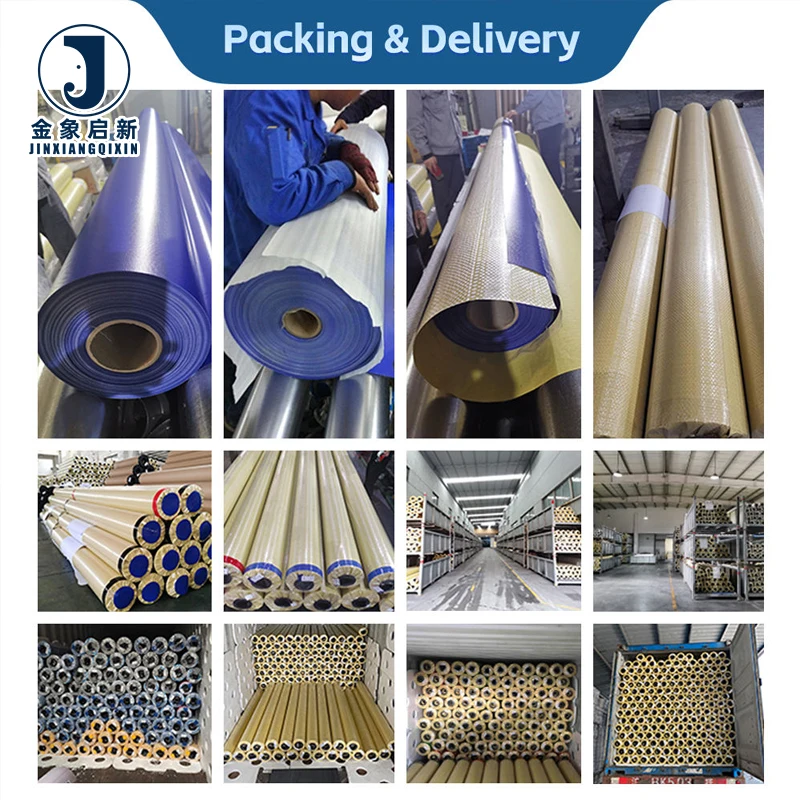
- Roll packing list with individual roll dimensions, net weight and production batch reference
- Certificate of origin and customs documentation for international shipment clearance
Fabrication, Handling & Storage
- Hot-air welding temperature must be calibrated to the specific PVC coating weight and glossy or matte finish of the roll received
- Rolls should be stored upright on end-caps to prevent flat-spot deformation that affects duct panel flatness during fabrication
- Allow cold-stored rolls to reach workshop temperature before unrolling to avoid cracking in the PVC coating layer at low temperatures
- Cut patterns should account for the fabric weave direction to align warp yarns with the primary stress axis of the duct
- Anti-static treated surfaces require compatible cleaning agents that do not strip the conductive finish from the coating
How to Structure Your Inquiry
To move from inquiry to sample efficiently, provide the target fire-retardant standard and grade required by your site or market, the preferred base fabric denier, the roll width that matches your duct panel cutting layout, and the estimated annual volume. If anti-static treatment is needed, state the required surface resistance range. Indicate whether you need rolls only or finished cut-and-welded duct sections. We will respond with a material specification recommendation, a sample for welding trials, and a quotation with lead time and minimum order parameters.
Frequently Asked Questions
Q: What fire-retardant grade can be supplied and which test standard does it meet?
A: The fabric can be produced to M2, B1 (DIN 4102), NFPA 701, or other standards as required by your project specification. The exact grade must be confirmed at the inquiry stage so the correct additive formulation is used during coating. A test report matching the stated grade and production batch is supplied with every shipment.
Q: How is GSM verified on arrival to match the quotation specification?
A: Every roll is weighed and measured during 100% pre-shipment inspection, and the actual GSM is recorded on the inspection report included with your documentation. Upon arrival, you can verify the weight against this report using a calibrated scale and a measured sample cut from the roll end.
Q: What base fabric denier is recommended for ventilation duct versus membrane structure use?
A: Ventilation ducts typically require higher denier base fabrics such as 840DX840D or 1000DX1000D to withstand continuous flexing under air pressure and abrasion from suspended hardware. Membrane structures may use lighter deniers where the primary load is tensile rather than cyclic. The optimal denier depends on your specific design and stress profile.
Q: Can anti-static treatment be added and what surface resistance is achievable?
A: Anti-static treatment is available and applied during the coating stage. The achievable surface resistance range depends on the formulation selected for your application. State the surface resistance value required by your site safety specification at the inquiry stage so the correct treatment level is confirmed before production.
Q: What roll width and length options are available for duct fabrication cutting efficiency?
A: Custom widths are available to match your duct panel cutting layout, reducing longitudinal seams and material waste in fabrication. Standard and custom roll lengths can be specified to align with your production run size. Confirm the width and length that optimise your cutting pattern at the sample stage.