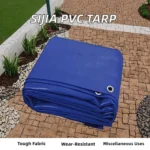
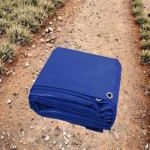
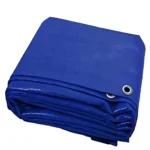
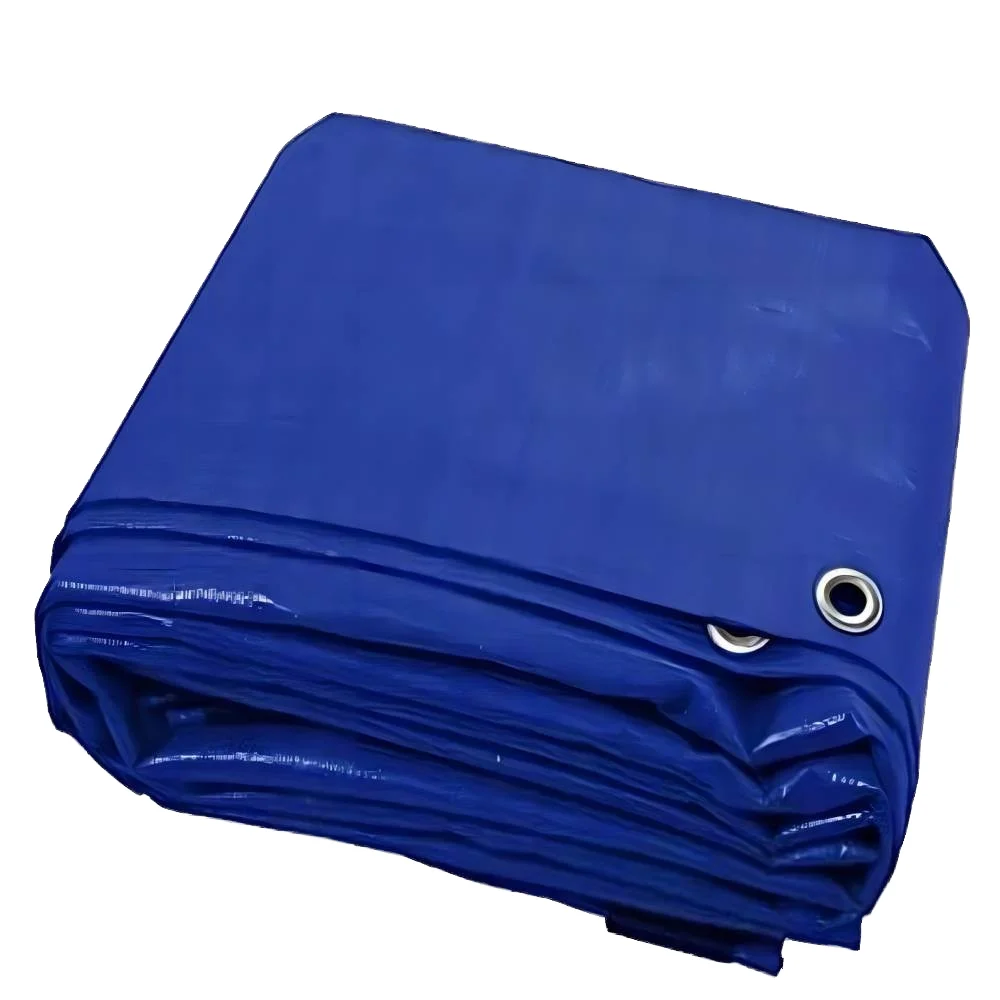
Specialist Technical Fabric Expertise — nearly 30 years of coated fabric process control applied to fire-retardant and anti-static ventilation materials for mining and tunnelling compliance.
Technical Specifications
| Parameter | Value |
|---|---|
| Product Type | Fire Retardant PVC Tarpaulin for Ventilation |
| Material | PVC + High-strength polyester mesh fabric |
| Coating Technology | Laminated technology & Hot-melt Coating technology |
| Weight (GSM) | 350gsm / 420gsm / 500gsm / 550gsm / 600gsm / 750gsm |
| Total Thickness | 0.32mm / 0.35mm / 0.4mm / 0.45mm / 0.5mm / 0.65mm |
| Roll Size | 2m width × 75m length / 2.1m width × 50m length |
| Finish Product Size | Custom items as per customer’s needs or sold by inventory |
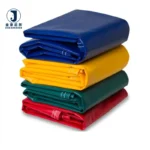
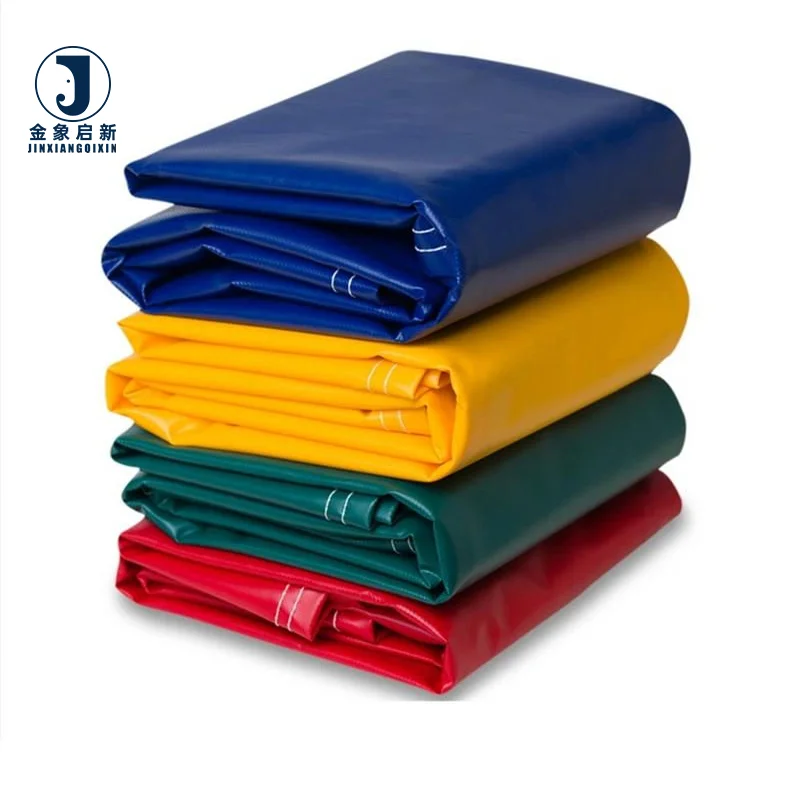
| Color | Blue / Red / Yellow / Light blue / Grey (Customized) |
| Key Features | Waterproof, Cold Crack Resistance, Anti-Mildew, Anti-Static treatment (test basis not stated in source — request certification), Outstanding tearing strength for welding |
| Standards | ISO, CE (company-level certification — confirm product-specific compliance) |
Application Suitability
| Application | Exposure & Requirement |
|---|---|
| Mine and tunnelling ventilation duct | Underground airflow, dust-laden atmosphere, anti-static compliance mandatory, continuous flex under positive or negative pressure |
| Inflatable and membrane structure fabric | Tensile load at seam points, UV and weather exposure, airtight weld integrity |
| Aviation ground support equipment covers | Fuel vapour proximity, static discharge risk, wide temperature swings on tarmac |
| Construction site ventilation systems | Abrasive particulate in airflow, temporary installation handling, fire safety regulations on enclosed sites |
Why Anti-Static Certification Is the Real Gate for Mine Ventilation Compliance
A ventilation duct without documented anti-static performance is a compliance liability, not a cost saving.
Mining and tunnelling sites operate under strict electrostatic discharge regulations because accumulated charge on duct surfaces can ignite methane or coal dust. When PVC tarpaulin for ventilation arrives on site without a surface resistance measurement or recognised standard certificate, the entire ventilation installation may fail inspection — delaying the project while replacement material is sourced. I have seen contractors assume anti-static treatment was included because the supplier listed it in the brochure, only to discover at pre-commissioning that no test report existed. The rework cost and schedule impact far exceed the price difference of specifying certified material up front. [NEED_CITE: electrostatic discharge regulations for underground mine ventilation ducts]
Hot-Melt Coating Adhesion and Duct Weld Integrity
Ventilation ducts for mining and tunnelling are fabricated by welding panels into cylindrical or flat-oval profiles. The hot-melt coating technology used on this PVC tarpaulin for ventilation creates a chemical bond between the PVC layers and the polyester mesh base, rather than a mechanical lamination. This matters at the weld line: when high-frequency or hot-air welding melts the coating, the adhesion strength determines whether the weld holds under duct operating pressure or delaminates before the base fabric reaches its tensile limit. Duct sections that flex at bends and transitions place repeated peel stress on every welded seam.
Cold Crack Resistance in High-Altitude and Arctic Installations
Ventilation ducts on tunnelling projects in cold climates or high-altitude mine sites face ambient temperatures well below zero. Standard PVC formulations become brittle and crack when flexed at low temperatures, creating air leaks that compromise ventilation volume and allow dust recirculation. The cold crack resistance built into this PVC tarpaulin for ventilation allows the material to maintain flexibility during installation and operation in these environments. The specific low-temperature threshold should be confirmed with a test report matched to the installation site’s minimum expected temperature. [NEED_CITE: cold crack test methods for PVC coated fabrics in sub-zero environments]
Base Fabric Density and Duct Structural Behaviour
The high-strength polyester mesh fabric provides the structural skeleton of the coated material. Tensile strength and tear resistance in a PVC coated tarpaulin are not determined by GSM alone — they result from the combination of base fabric denier, warp and weft density, and coating weight. A 600gsm material with a loose-weave base and heavy coating may show lower tear propagation resistance than a 550gsm material with a tighter, higher-denier mesh. For ventilation duct applications, where internal pressure creates biaxial stress on the fabric, the base fabric construction directly governs how the duct behaves under load and how damage propagates if a puncture occurs. This is why requesting the base fabric denier and weave specification is as important as confirming the total GSM.
What Happens When Ventilation Duct Material Is Specified on Price Alone
Choosing ventilation duct fabric based on the lowest GSM-quoted price introduces risks that surface only after installation. A roll that tests lighter than the stated GSM reduces tensile reserve and shortens the interval before the duct requires replacement underground — where replacement labour costs are multiplied by confined-space access requirements. Anti-static treatment that is claimed but not backed by a surface resistance test report leaves the contractor exposed to regulatory rejection at the worst possible moment: after the duct is hung and commissioned. Batch colour variation across rolls may seem cosmetic, but on a visible ventilation installation it signals inconsistent coating formulation, which often correlates with uneven treatment distribution. [NEED_CITE: correlation between coating consistency and treatment uniformity in PVC tarpaulin production]
Engineering Support and Fabrication Confidence
The 10-person R&D team handles material selection, pattern printing, custom sizing and sample development — allowing contractors to obtain trial panels for duct fabrication trials before committing to a full order. Three full production lines and 36 sets of professional equipment provide the capacity to supply large-diameter duct projects without splitting the order across multiple production runs, which protects batch consistency. Dedicated QA/QC at every production stage with 100% inspection before dispatch means GSM and coating thickness are verified per roll, not assumed from the production recipe. ISO and CE certification at company level provides a documented quality management framework, though product-specific fire and anti-static certificates should be requested separately for each compliance requirement. Samples for custom width, colour, or treatment combinations are developed within days, reducing the lead time risk on projects where the ventilation specification is finalised late.
Documentation & Verification
- Material specification sheet stating GSM, base fabric denier and weave, and coating weight per side
- Anti-static surface resistance test report matched to the mining or tunnelling standard applicable on site
- Fire-retardant grade certificate confirming the classification achieved by the supplied batch
- Pre-shipment inspection record showing weight and thickness measurement per roll
- Certificate of origin and customs documentation for international project delivery
- Roll packing list with batch numbers traceable to production records
Fabrication, Handling & Storage
- Hot-air welding temperature and speed must be matched to the hot-melt coating formulation — request the recommended weld parameters for the GSM grade ordered
- Store rolls upright on end-caps in a dry environment to prevent edge crushing and permanent creasing in the polyester mesh
- Allow cold-stored rolls to acclimatise before unrolling to avoid cracking the PVC coating at low flex temperatures
- Duct fabrication layout should minimise transverse welds in high-flex zones where the duct bends or transitions diameter
- Clean fabricated ducts with neutral pH detergent only — solvent-based cleaners can degrade the anti-static surface treatment
- Repair field punctures with compatible PVC patch material and the same hot-air weld process used in fabrication
Requesting a Quotation That Matches Your Compliance Requirements
To receive a specification recommendation and accurate lead time, provide the ventilation duct diameter or flat width, total linear metres required, and the mining or tunnelling standard that governs anti-static and fire-retardant performance on your site. If the duct will operate in sustained sub-zero conditions, state the minimum expected ambient temperature so the appropriate cold crack grade can be confirmed. Indicate whether you require rolls for your own fabrication facility or finished duct sections with welded seams and hanging hardware.
Frequently Asked Questions
Q: What anti-static test standard does the tarpaulin meet for mine ventilation compliance?
A: The material is produced with anti-static treatment, but the specific test standard and surface resistance values are not published in the general product data. Request a test report referencing the standard required by your mine safety authority — such as surface resistivity limits for underground ventilation ducts — and verify the result applies to the exact GSM grade you are ordering.
Q: Is flame retardant certification available for underground tunnelling applications?
A: Fire-retardant grades are available across the product range, but the specific classification must be confirmed against your project specification. Underground tunnelling typically requires a recognised flame spread and smoke development rating. Request the fire test report for the grade offered and verify it matches the tunnel safety standard enforced at your site before placing the order.
Q: How is cold crack resistance tested for arctic or high-altitude installations?
A: Cold crack resistance is listed as a feature of the material formulation. The test method and pass-fail temperature threshold should be requested from the manufacturer to confirm suitability for your site’s minimum operating temperature. Provide the lowest expected ambient temperature during installation and service so the correct grade can be matched to your project.
Q: What base fabric denier and weave pattern is used for duct fabrication strength?
A: The base fabric is a high-strength polyester mesh, with denier and weave density varying across the GSM range. Heavier grades typically use higher-denier yarns and tighter mesh construction to provide the tensile and tear performance needed for duct sections under positive pressure. Request the base fabric specification sheet for the specific GSM grade to confirm it meets your structural design requirements.