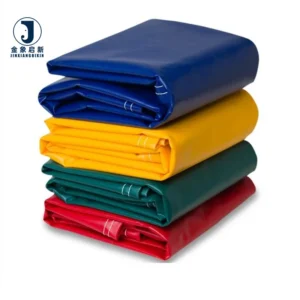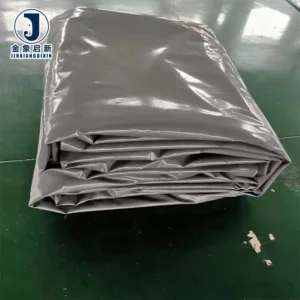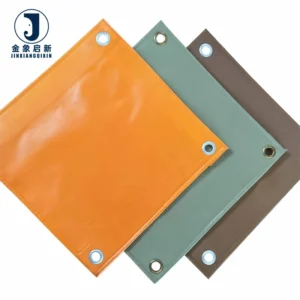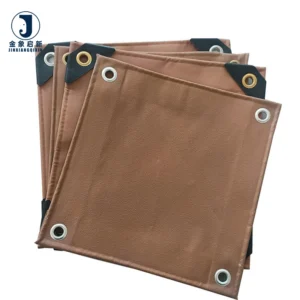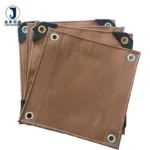
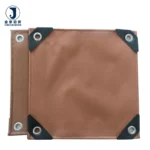

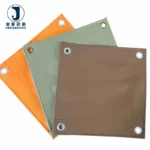
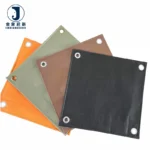
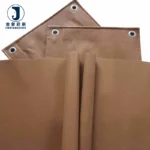
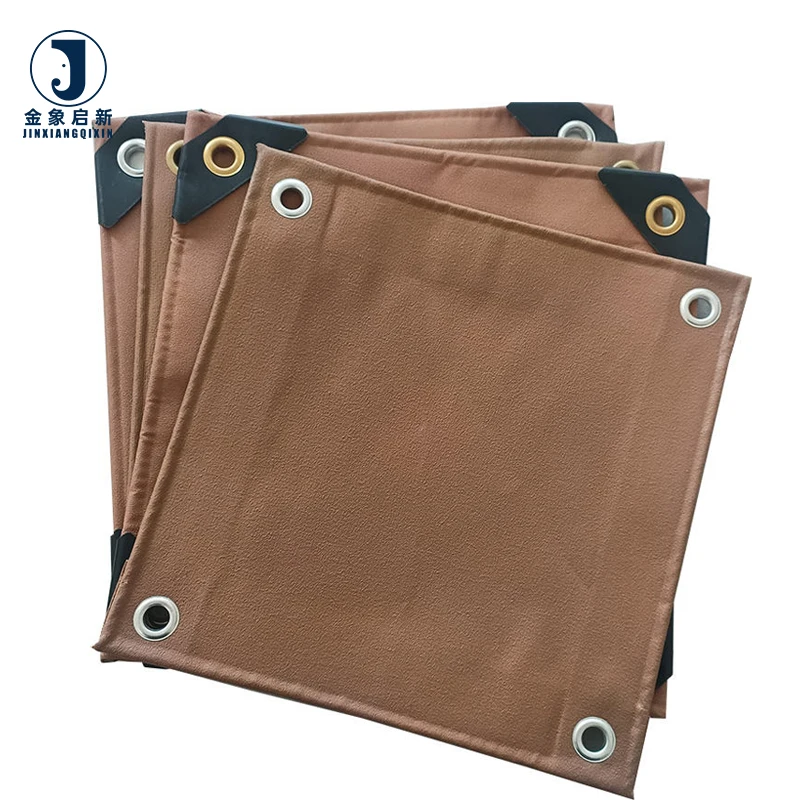
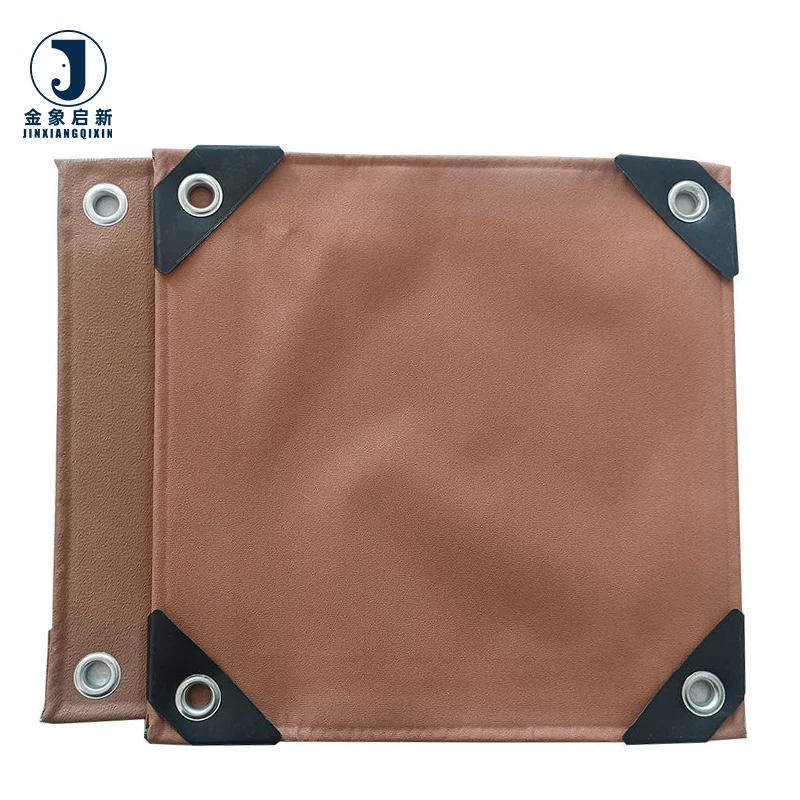
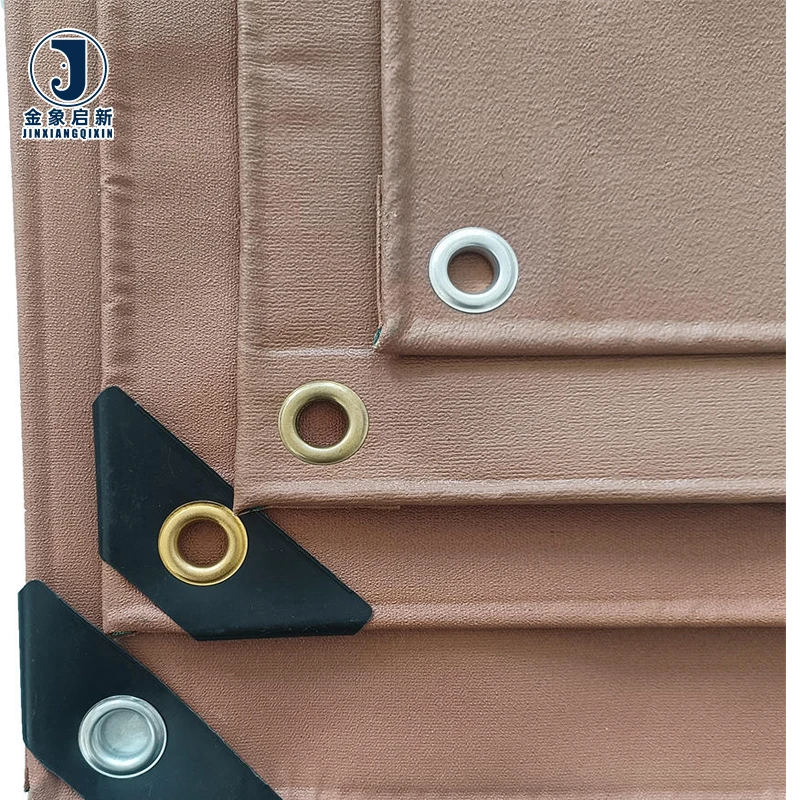
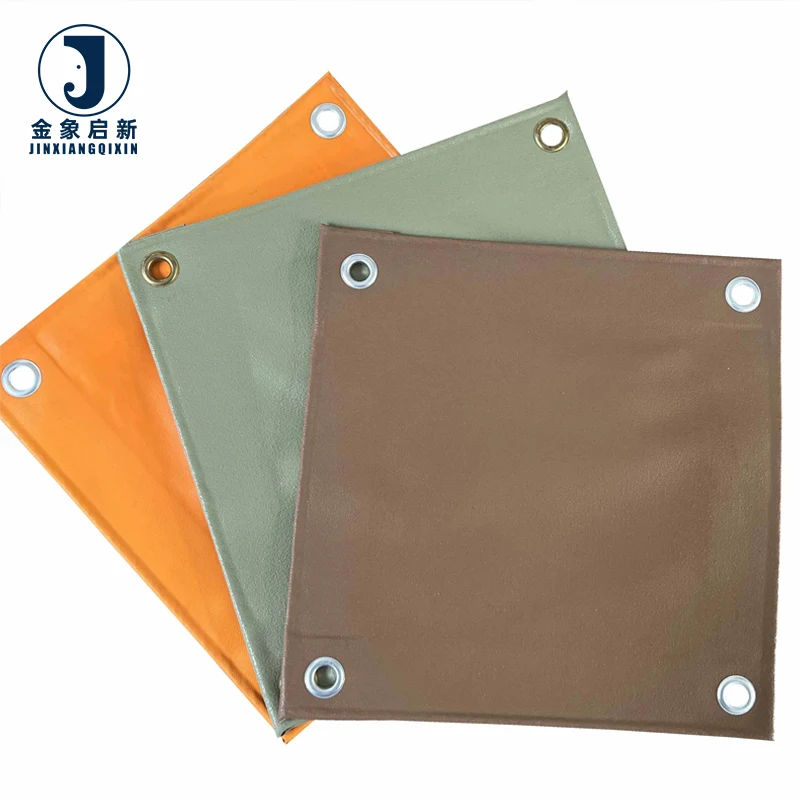
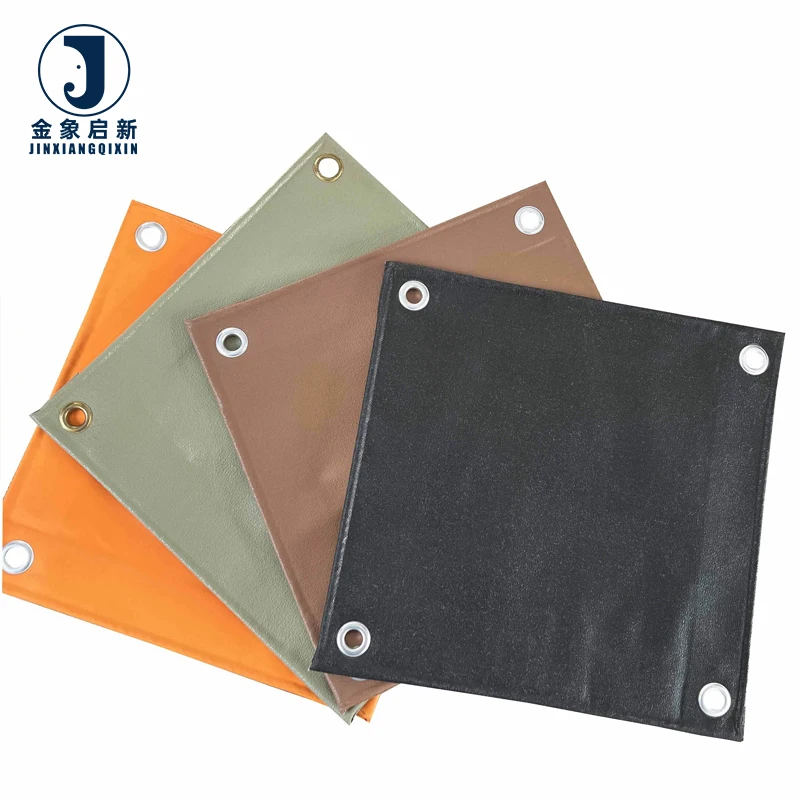
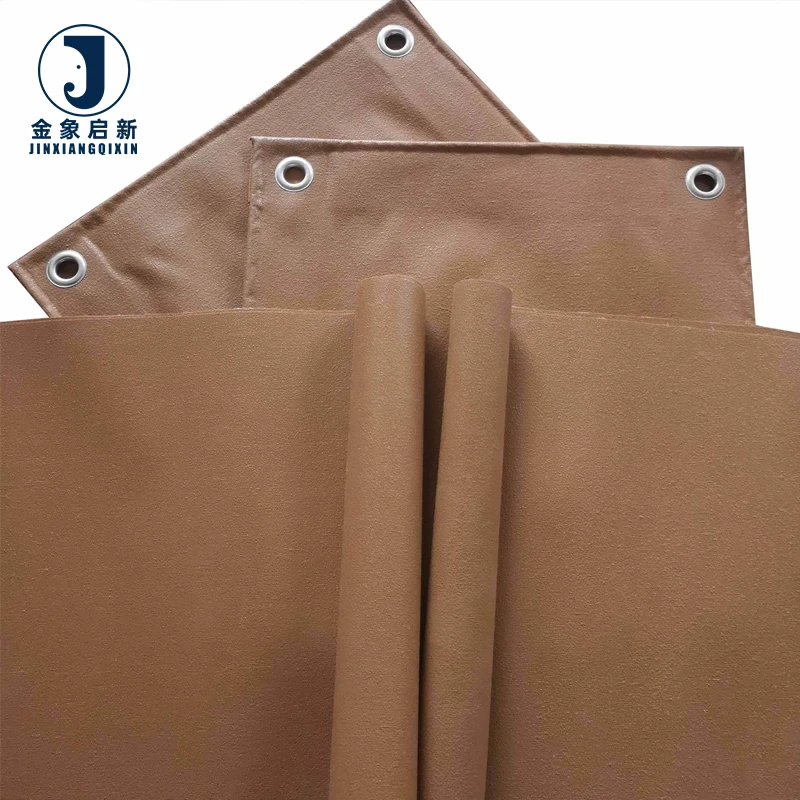
Verified coating control — Every roll of fireproof PVC tarpaulin undergoes stage-by-stage weight and adhesion checks across three dedicated production lines, ensuring the stated 500gsm or 600gsm grade matches what arrives on your dock.
Technical Specifications
| Parameter | Value |
|---|---|
| Product Type | PVC Coated Tarpaulin |
| Weight Options | 500gsm / 600gsm |
| Coating Material | PVC |
| Waterproof Rating | Fully Waterproof |
| Flame Retardant | Available in fire retardant grades — confirm the grade required for your market |
| Anti-Static | Available — surface resistance standard to be confirmed against site compliance |
| Anti-Cold Treatment | Available for low-temperature flexibility |
| Anti-Mildew Treatment | Available for humid or tropical operating environments |
| Outdoor Weather Resistance | Suited to extended outdoor exposure |
| Standards | ISO, CE certified production |
| Construction | High-strength coated fabric |
Application Suitability
| Application | Exposure & Requirement |
|---|---|
| Fire-retardant fabric for inflatable and membrane structures | Permanent UV and weather exposure, fire code compliance for public or industrial enclosures |
| Anti-static ventilation ducting for mining and tunnelling | Confined environments with combustible dust or gas, static dissipation mandated by site safety regulation |
| Specialist truck cargo covers | Constant flexing at load points, road abrasion, rain and UV exposure, certified flame retardant performance required by fleet policy |
What "Fireproof" Means Without a Test Report Behind It
A fireproof PVC tarpaulin is only as credible as the test report that accompanies it. [NEED_CITE: flame retardant classification systems for coated technical textiles per DIN 4102 and NFPA 701]
Buyers regularly receive material labelled "fire retardant" with no test certificate, no grade, and no reference to the standard the site inspector is asking for. The Fire Retardant PVC Tarpaulin for Industrial Ventilation and Specialist Application supplied here is available in grades that can be matched to your market’s compliance framework — but the exact grade must be specified at inquiry stage so the correct formulation and corresponding test report are produced. Ordering a generic "fireproof" fabric without naming the standard is the fastest route to a failed site inspection. [NEED_CITE: site safety audit rejection due to missing fire classification documentation]
Matching Treatment Packages to Site Compliance Requirements
Ventilation ducts in underground mining and tunnelling must dissipate static charge to prevent ignition in combustible atmospheres. The anti-static treatment available on this PVC coated tarpaulin addresses that requirement, but the surface resistance value must align with the regulation your site operates under. Similarly, membrane structures in aviation or public assembly spaces demand flame retardant grades verified by an independent laboratory. Our technical team works from your compliance specification backward to the correct fabric formulation, rather than supplying a one-size material and hoping it passes inspection.
Coating Weight, Fabric Denier, and What They Mean for Structural Loads
The 500gsm and 600gsm grades represent total coated weight, combining the polyester base fabric and the PVC coating layers. Tensile and tear performance depend on both the base fabric denier and weave density, not on coating weight alone. A Fire Retardant PVC Tarpaulin for Industrial Ventilation and Specialist Application at 600gsm with a high-density base will outperform a 600gsm fabric built on a looser weave in tear propagation resistance [NEED_CITE: tensile and tear test methods for coated fabrics per ISO 1421]. This is why material specification sheets should always state base fabric construction alongside total GSM — coating weight tells only part of the story.
Reading the Specification Sheet: GSM, Coating Method, and Treatment Chemistry
GSM is the total weight per square metre of the finished coated fabric. It correlates with overall durability but does not directly predict tensile strength — that is governed by the polyester yarn count and weave pattern in the base cloth. PVC coating is applied by knife-over-roll, lamination, or calendering, each producing different peel strength and heat-welding characteristics. For specialist applications where welded seams must match fabric strength, the coating method determines the thermal window for hot-air or wedge welding. Surface treatments — flame retardant, anti-static, anti-mildew, and anti-cold — are introduced into the PVC compound or applied as top-coats, and each affects the fabric’s hand feel, weld temperature, and long-term surface behaviour differently.
The Cost of Specifying on Price per Kilogram Instead of Performance Data
Purchasing coated fabric on a cost-per-kilogram basis creates a direct incentive for suppliers to reduce coating weight or substitute lower-grade base cloth, because the buyer has no verification mechanism at receiving. Rolls arrive within tolerance on the scale but fail prematurely at welded seams or under sustained tensile load. For fire-retardant grades, the additive chemistry is one of the most expensive components in the PVC compound, making it a prime target for dilution in unverified supply chains. The result is fabric that passes a visual check but fails the certification audit when the inspector requests the test report. [NEED_CITE: coating weight variance detected in pre-shipment inspection of imported PVC tarpaulin]
Why Source This Fireproof PVC Tarpaulin Here
Deep process control over coating weight and adhesion has been refined across nearly three decades of continuous PVC coated fabric production, giving you consistent GSM from first roll to last. Three full production lines and 36 sets of professional equipment support bulk orders without compromising delivery schedules for specialist technical fabrics. A 10-person R&D team handles material selection, treatment formulation, and sample development specifically for ventilation duct and membrane structure applications. Dedicated QA/QC runs at every production stage, with 100% inspection before dispatch — not a sampling protocol. Samples for custom treatment requirements, including specific flame retardant or anti-static grades, are developed within days so you can verify performance before committing to a production run.
Documentation & Verification
- Material specification sheet stating exact 500gsm or 600gsm grade, base fabric construction, and coating weight breakdown
- Flame retardant test report matched to your site compliance standard — specify grade at inquiry
- Anti-static surface resistance test data for mining and tunnelling ventilation duct applications
- Pre-shipment inspection record confirming roll-by-roll weight and treatment verification
- Certificate of origin and customs documentation package for international project shipments
Fabrication, Handling & Storage
- Hot-air welding temperature must match the PVC compound used — request recommended thermal parameters for the 500gsm or 600gsm grade ordered
- Store rolls vertically on pallets to prevent flat-spot deformation of the coated surface
- Allow cold-stored rolls to acclimatise before unrolling to avoid coating crack at low temperature
- Use only PVC-compatible cleaning agents to preserve anti-mildew and anti-static surface treatments
- Cut patterns should account for weld seam allowance and fabric stretch direction relative to the base weave
Requesting a Technical Quotation
Provide the fire classification or anti-static standard your site operates under, the required GSM grade, and the intended application environment. If you need finished duct sections or cut-to-size membrane panels rather than roll stock, include dimensional drawings and seam construction preferences. Colour and any branding requirements should be confirmed at sample stage to ensure batch consistency across the full order quantity.
Frequently Asked Questions
Q: What fire retardant grade can be achieved and which test standard does it meet?
A: Fire retardant treatment is available in multiple grades. The exact classification depends on the PVC compound formulation selected for your order. Specify the test standard required by your market — such as DIN 4102, NFPA 701, or a local building code reference — and the matching grade and test report will be supplied with the shipment.
Q: How is anti-static performance verified and what surface resistance is guaranteed?
A: Anti-static treatment can be formulated into the PVC compound for this tarpaulin. Surface resistance values must be confirmed against your site’s safety regulation, particularly for mining and tunnelling ventilation applications. Request the specific test method and acceptable resistance range at inquiry stage so the correct formulation is applied.
Q: How is GSM verified on arrival to ensure it matches the quotation?
A: Every roll undergoes weight verification during pre-shipment inspection against the stated 500gsm or 600gsm grade. A material specification sheet documenting base fabric and coating weight is included in the dispatch documentation package, giving you a reference to verify against on receipt.
Q: What is the difference between fireproof, flame retardant, and self-extinguishing classifications?
A: These terms refer to different positions within fire classification systems. Fireproof is a general descriptor, flame retardant indicates treated material with a specific test grade, and self-extinguishing describes behaviour under a particular test protocol. Always specify the exact classification and test standard your project requires rather than relying on generic terminology.
Q: How do anti-cold and anti-mildew treatments affect fabric flexibility and weldability?
A: Anti-cold additives modify the PVC compound to maintain flexibility at lower temperatures, while anti-mildew treatments protect against fungal growth in humid environments. Both can influence welding temperature and seam strength. Request recommended fabrication parameters for the specific treatment combination ordered to ensure reliable weld performance.