


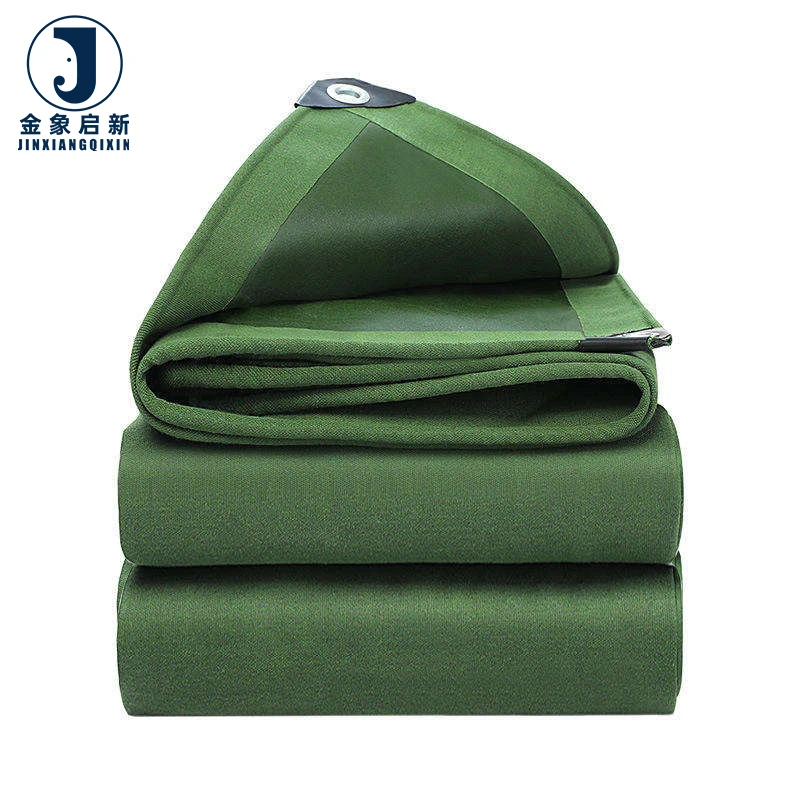

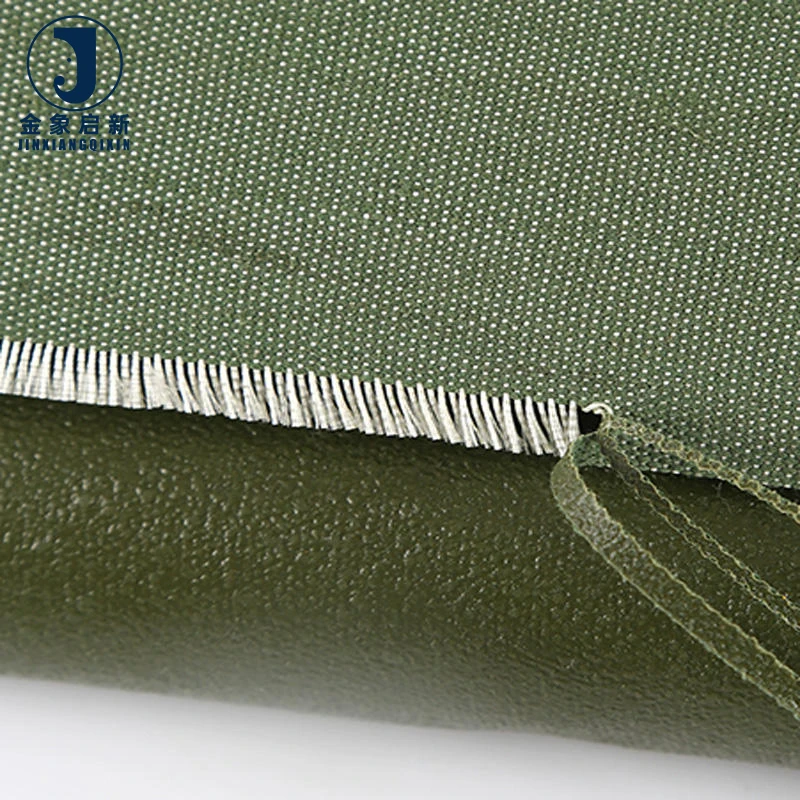
Proven Coating Process Control — 600gsm PVC laminated polyester-cotton canvas produced on three dedicated lines with stage-by-stage QA, verified against your fire-retardant and anti-static specification before dispatch.
Technical Specifications
| Parameter | Value |
|---|---|
| Product Type | Canvas Tarpaulin |
| Base Material | Polyester cotton industrial textile, 8–12 strands fine cotton yarn |
| Weight | 600 GSM |
| Total Thickness | 0.5 mm / 0.6 mm / 0.7 mm (confirm required option) |
| Coating Method | Laminated backing |
| Roll Width | 2 m |
| Roll Length | 100 m |
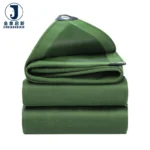
| Colour Options | Army Green Camouflage / Custom (confirm shade reference) |
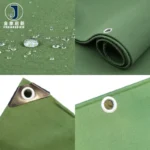
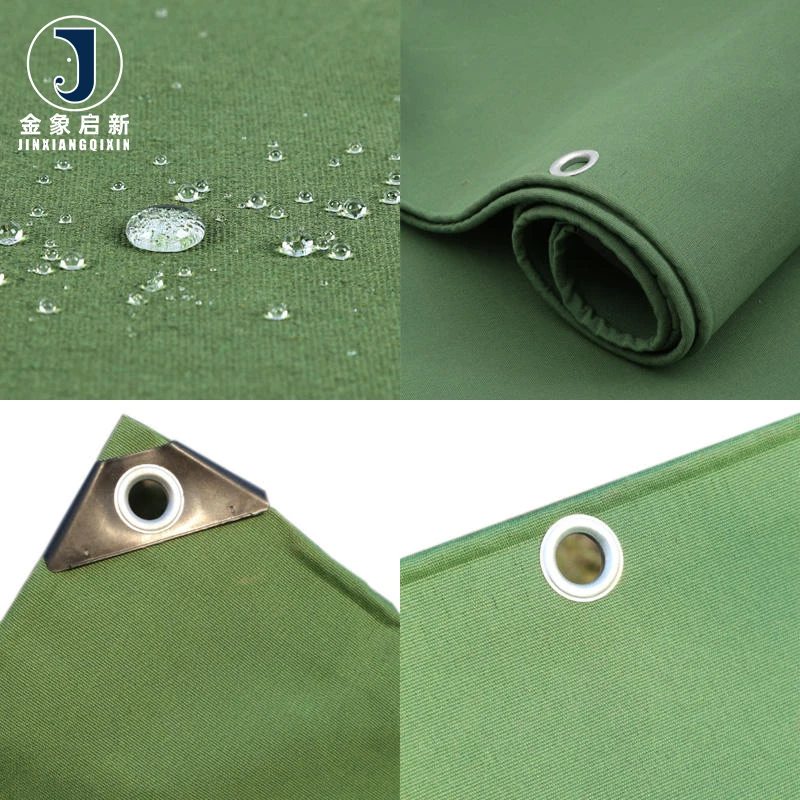
| Waterproof | Yes |
| Anti-Mildew | Yes (mold resistant treatment) |
| UV Treatment | Available — confirm test standard required for your jurisdiction |
| Flame Retardant Grade | Available in fire-retardant grades — confirm grade required for your market (e.g. M2, B1, NFPA 701, DIN 4102) |
| Anti-Static | Available — confirm surface resistance standard applicable to your site |
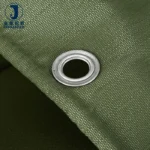
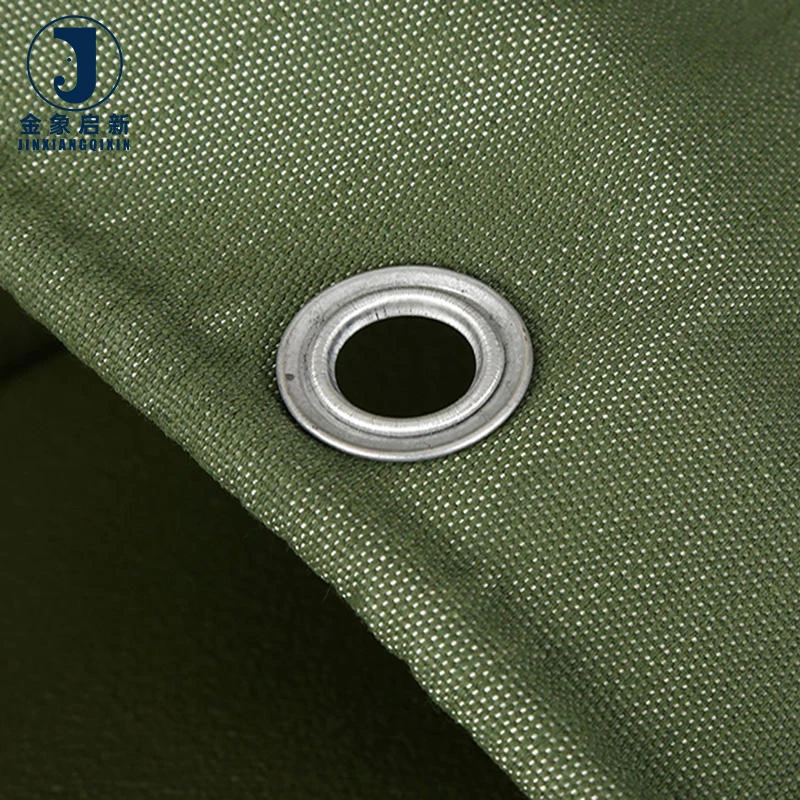
| Eyelet & Hem | Rust-proof aluminum grommets at 1 m intervals on corners and hem |
| Seam Construction | Folded and welded seams with poly rope reinforcement |
| Standards | CE, ISO |
Application Suitability
| Application | Exposure & Requirement |
|---|---|
| Mining & tunnelling ventilation duct | Fire-retardant certification mandatory for site entry, constant internal airflow pressure, humidity and particulate abrasion |
| Inflatable & membrane structure fabric | Biaxial tension load, UV exposure, weld integrity under flex, temporary deployment cycles |
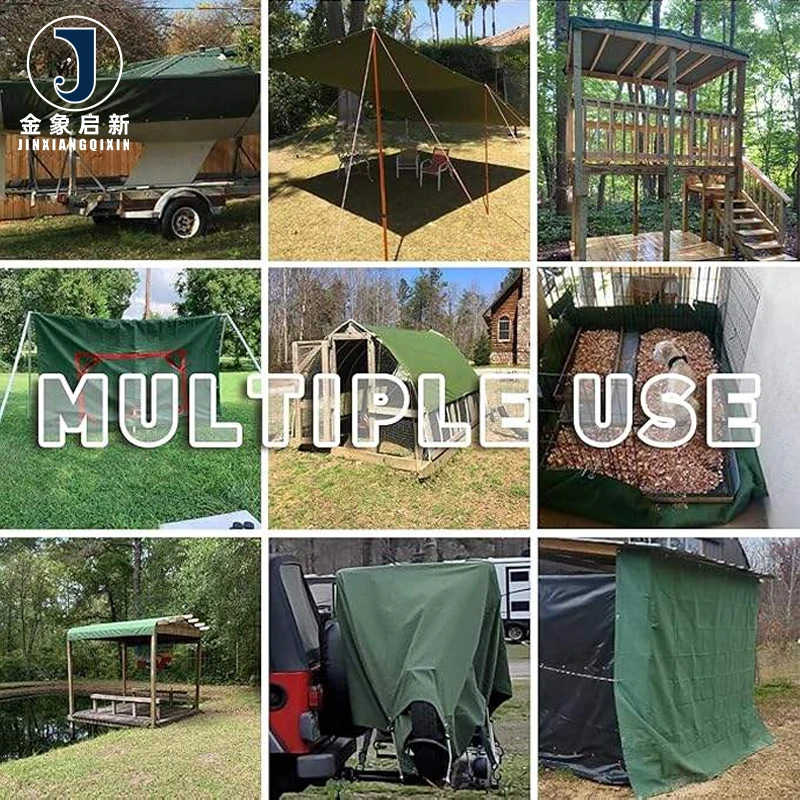
| Aviation and construction equipment cover | Outdoor weathering, chemical splash, mechanical abrasion from handling and wind |
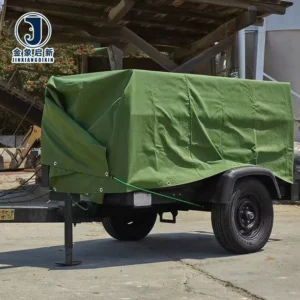
| Truck and transport fleet cover | Road vibration, tie-down tension at eyelets, UV and rain exposure during transit |
| Asphalt and hot-material cover | Elevated surface temperature contact, sustained UV, heavy abrasion on site |
Why a Test Report Matters More Than a Flame Retardant Claim on Site
A fabric labelled "flame retardant" without a cited standard and grade is not accepted at a regulated industrial site.
Procurement teams specifying PVC laminated canvas tarpaulin fire retardant or anti-static certified material routinely receive goods with a generic safety claim but no matching documentation. Mining ventilation duct and membrane structure projects cannot proceed to inspection without a test report that names the standard — DIN 4102, NFPA 701, M2 or B1 — and confirms the grade achieved. When the documentation gap is discovered on site, the entire roll is held, the project schedule stalls, and a replacement order is placed under time pressure. [NEED_CITE: fire classification standards for coated fabrics used in underground and industrial ventilation applications]
Ventilation Duct and Membrane Fabric Under Compliance Pressure
Mining and tunnelling sites enforce strict fire safety codes, and any fabric entering a regulated underground environment must carry a test report matched to the local jurisdiction. The PVC laminated canvas tarpaulin is available in fire-retardant grades — buyers should confirm which standard their site auditor requires before placing the order. Anti-static performance is equally critical where combustible dust or gas is present, and the applicable surface resistance value must be specified in the purchase contract.
Seam and Weld Behaviour in Specialist Structures
Inflatable shelters and tensioned membrane structures place continuous stress on every welded and sewn joint. The folded seam construction with poly rope reinforcement distributes load across the fold line, reducing the risk of peel failure at the points where the fabric flexes under wind or internal pressure. For duct applications, longitudinal welds must maintain adhesion under constant airflow pulsation — a factor that depends on coating method and the thermal settings used during fabrication. [NEED_CITE: weld peel strength test methods for laminated coated fabrics per ISO 1421]
Reading the GSM and Thickness Figures Together
A 600 GSM weight reading on its own does not define how the fabric will perform under load. The polyester-cotton base woven with 8–12 strands of fine cotton yarn provides the tensile skeleton, while the laminated backing adds tear resistance, waterproofing, and the surface needed for reliable heat welding. Total thickness options of 0.5 mm, 0.6 mm, and 0.7 mm reflect different ratios of base fabric to coating mass. A thicker laminate does not automatically mean a stronger fabric — if the base denier is unchanged, the extra mass sits in the coating layer, which improves puncture resistance but adds weight without proportional tensile gain. Buyers specifying material for duct or membrane panels should request both the GSM and the base fabric denier and weave density to make an informed comparison. Width at 2 m and roll length at 100 m define how many panels can be cut with minimal cross-seams, directly affecting fabrication time and material yield on larger structures.
The Cost of Specifying Without Documentation
When a ventilation duct contractor accepts a flame-retardant claim at quotation stage without insisting on the specific test report, the consequence surfaces during the site safety audit. The material is rejected, the duct run is dismantled, and a replacement order must be fulfilled on a compressed timeline. Colour inconsistency between rolls installed side by side on a membrane structure is equally costly — the visual mismatch triggers a client complaint even though the fabric performs to specification. Welded seams that separate before the fabric itself wears out are almost always traceable to thermal settings that did not match the laminate thickness chosen. [NEED_CITE: common failure modes in coated fabric installations and seam adhesion loss]
Why Source This Fabric Here
Three full production lines and 36 sets of professional equipment support bulk roll output with controlled on-time delivery, so multi-roll orders for large duct or membrane projects ship in a single dispatch window. A dedicated 10-person R&D team handles material selection, sample development, and custom sizing — meaning a trial panel cut to your exact duct diameter or membrane panel dimension can be produced before the bulk run is committed. QA coverage at every production stage, with 100 percent pre-shipment inspection, verifies GSM, coating adhesion, and seam integrity against your purchase specification. ISO and CE certification underpins the quality management system, and full customs documentation supports international project procurement from inquiry through delivery.
Documentation & Verification
- Material specification sheet stating 600 GSM, base fabric composition, and laminated coating method
- Fire-retardant test report citing specific grade and standard when applicable to the order
- Pre-shipment inspection record covering GSM, coating adhesion, and seam peel integrity
- Roll packing list with individual roll weight and dimensions for receiving verification
- Certificate of origin and full customs documentation for international project procurement
Fabrication, Handling & Storage
- Heat-weld seams at settings matched to the selected 0.5 / 0.6 / 0.7 mm laminate thickness for full peel adhesion
- Position rust-proof aluminum grommets at 1 m intervals and reinforce with poly rope to distribute tie-down load
- Store 2 m × 100 m rolls upright on pallets to prevent edge crushing and surface crease marks
- Allow cold-stored rolls to reach ambient temperature before unrolling to avoid laminate cracking
- Clean laminated PVC surface with mild detergent only; solvents may degrade the coating bond
- Plan panel cuts from the 2 m roll width to minimise cross-seams on large duct or membrane layouts
What to Include in Your Inquiry
Provide the ventilation duct diameter or membrane panel dimensions, the fire-retardant standard your site requires, and the annual roll volume you plan to procure. If anti-static performance is mandated, state the surface resistance range and the test method your safety auditor recognises. Confirm whether you need full roll stock or finished cut-to-size panels with welded seams and eyelets installed.
Frequently Asked Questions
Q: What fire-retardant grade does this fabric carry, and will my site auditor accept it?
A: The PVC laminated canvas tarpaulin is available in fire-retardant grades. You should confirm the specific standard — DIN 4102, NFPA 701, M2, or B1 — required by your local mining or construction code. Provide the standard reference at inquiry stage so the correct test report is issued with your shipment documentation.
Q: How is anti-static performance verified for underground or dust-hazard environments?
A: Anti-static treatment is available on request. The applicable surface resistance value and test method must be specified in your purchase contract. Share your site safety standard at inquiry so the fabric can be tested and documented against the exact threshold your project demands.
Q: Can roll width and cut length be adjusted to my duct or membrane panel size?
A: The standard roll is 2 m wide by 100 m long, but custom widths and finished cut sizes are available. Providing your duct diameter or panel drawing at inquiry stage allows sample development and seam placement planning before the production run begins.
Q: How is batch-to-batch colour and GSM consistency controlled across a multi-roll order?
A: Every production stage includes QA checks, and 100 percent pre-shipment inspection verifies GSM and colour against the approved reference. For multi-roll membrane installations, request the inspection record to confirm consistency before the rolls leave the facility.
Q: How are welded seams tested before the rolls ship?
A: Folded and welded seams with poly rope reinforcement are inspected for peel strength and adhesion during pre-shipment QA. The inspection record documents the results. If your project requires a specific peel strength threshold, state it in the purchase specification so the test is included.