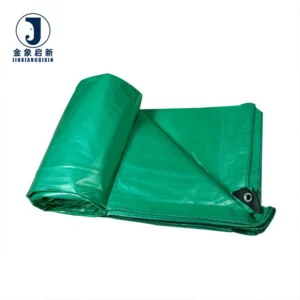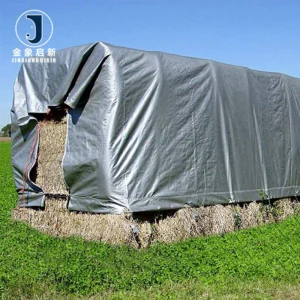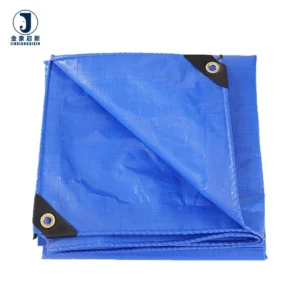
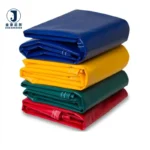
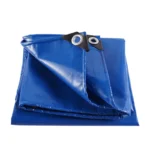
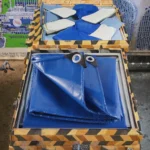
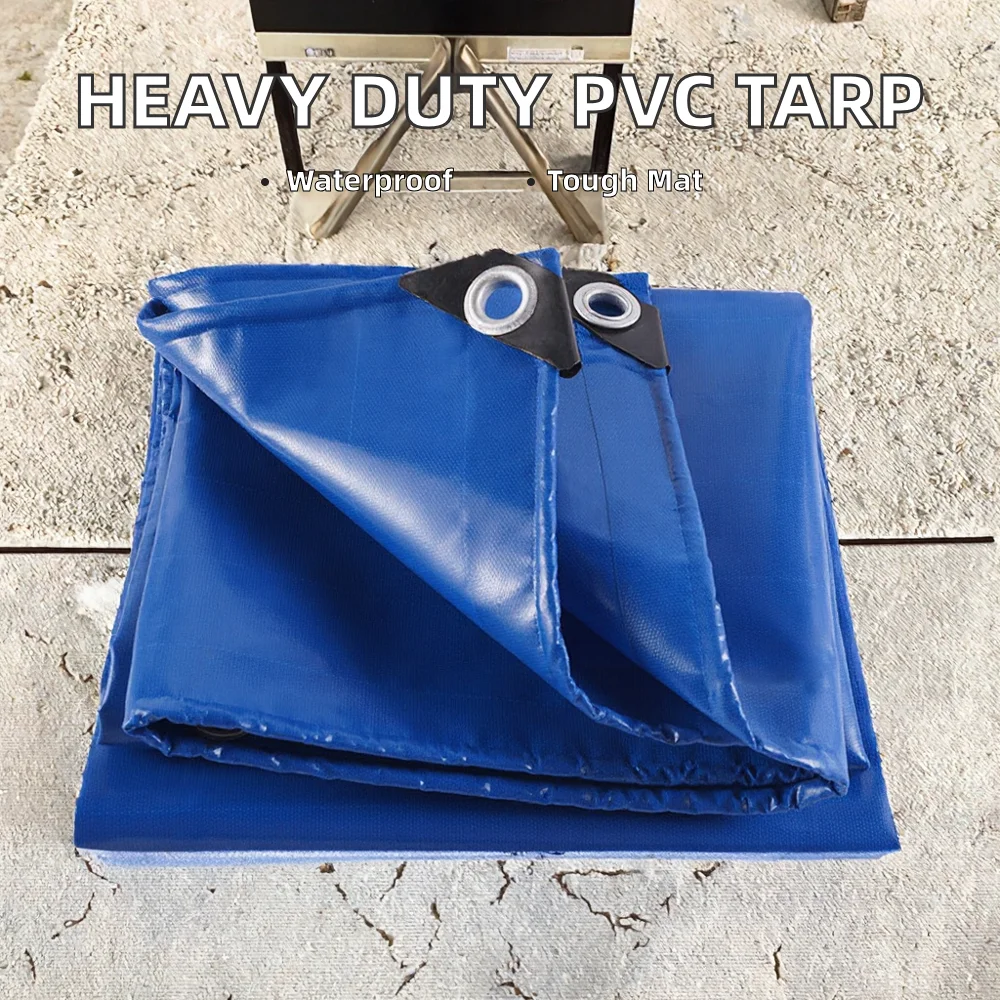
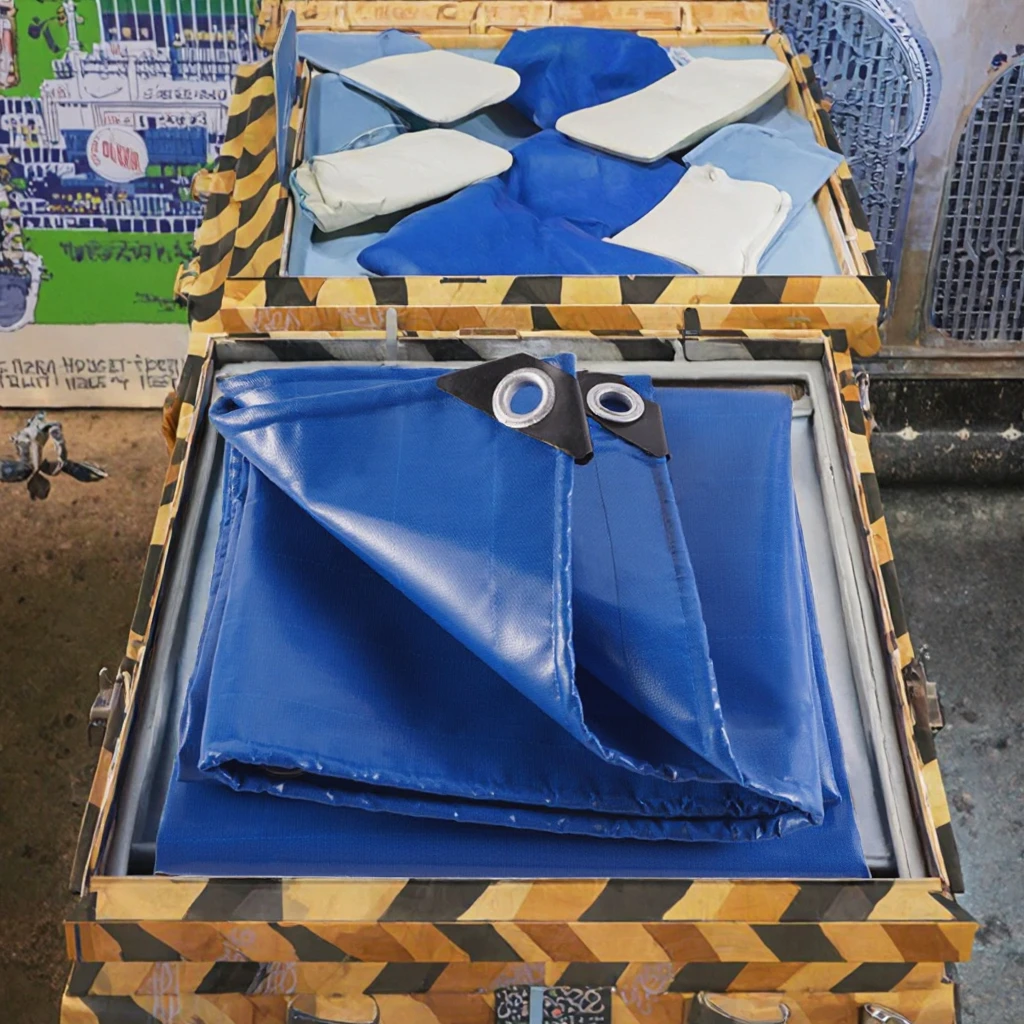
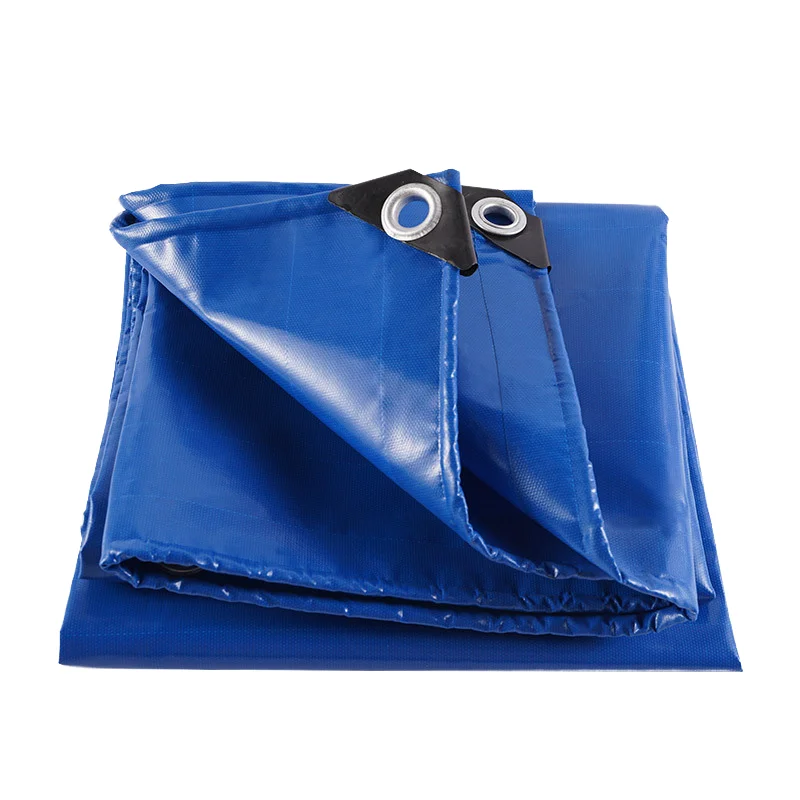
Specialist Coating Expertise — three full production lines with dedicated QA at every stage ensure fire-retardant and anti-static PVC coated tarpaulin meets mining and tunnelling compliance from specification to dispatch.
Technical Specifications
| Parameter | Value |
|---|---|
| Product Type | PVC Coated Tarpaulin |
| Material | PVC + High-strength polyester mesh fabric |
| Weight (GSM) | 350gsm / 420gsm / 500gsm / 550gsm / 600gsm / 750gsm |
| Total Thickness | 0.32mm / 0.35mm / 0.4mm / 0.45mm / 0.5mm / 0.65mm |
| Roll Width | 2m / 2.1m |
| Roll Length | 75m (2m width) / 50m (2.1m width) |
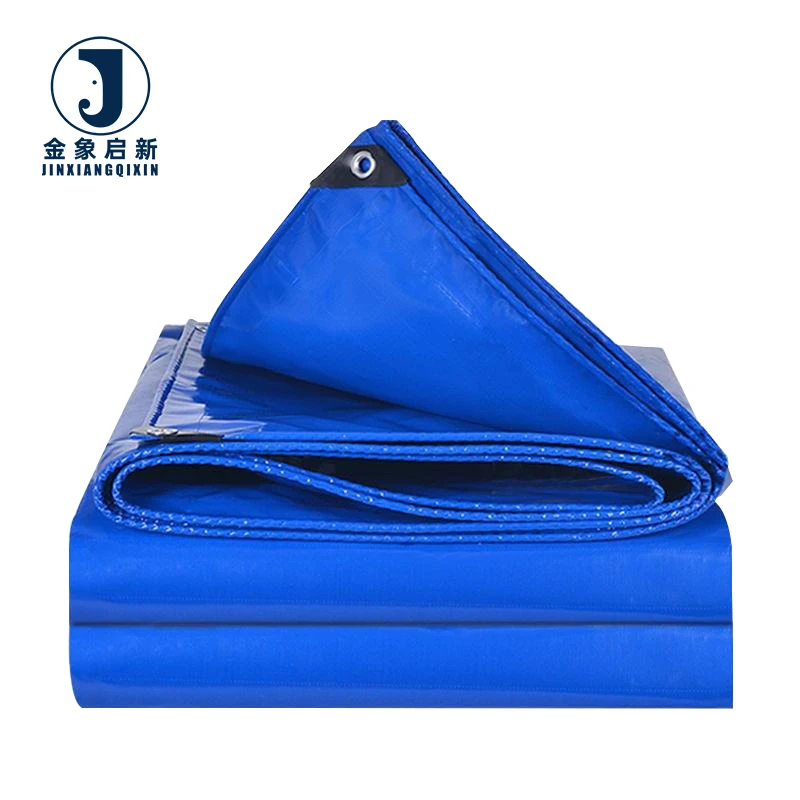
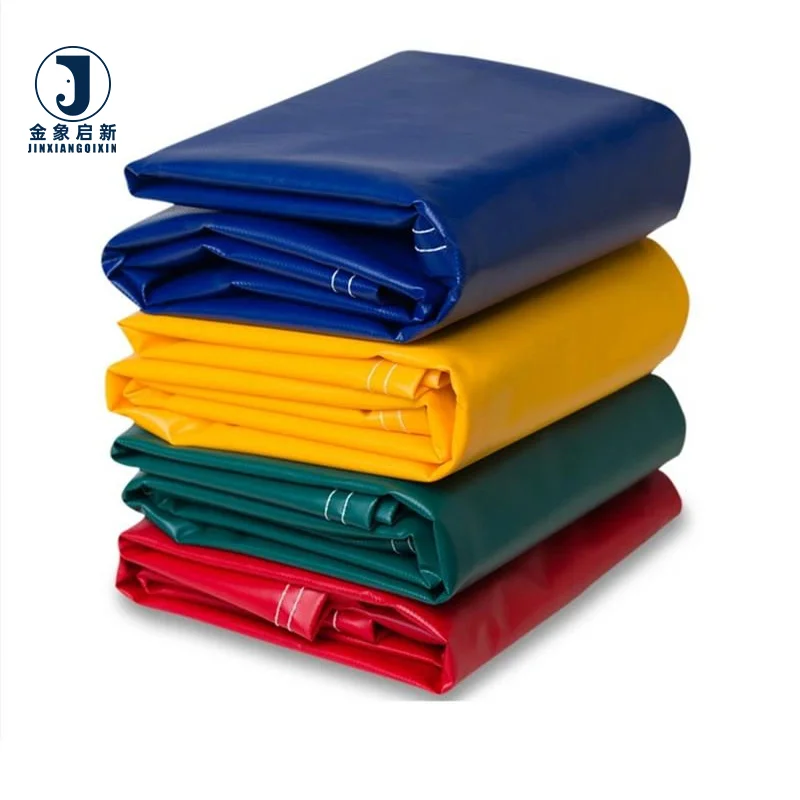
| Color Options | Blue / Red / Yellow / Light blue / Grey (customized available) |
| Coating Method | Laminated technology & Hot-melt Coating technology |
| Flame Retardant | Available in flame retardant grades — confirm the grade required for your market |
| UV Treatment | UV stable — test basis available on request |
| Anti-Static | Anti-static treatment available — confirm surface resistance requirement |
| Key Features | Cold crack resistance, anti-mildew, waterproof, outstanding tearing strength for welding |
| Standards | ISO 14001, ISO 45001, CE, RoHS |
Application Suitability
| Application | Exposure & Requirement |
|---|---|
| Mining ventilation ducting | Continuous airflow, fire-retardant compliance, anti-static discharge, abrasive particulate |
| Tunnelling air duct fabric | Confined environment safety standards, flexing under air pressure, moisture and chemical exposure |
| Membrane and inflatable structures | Structural tensile load, UV exposure, wind load, welded seam integrity |
| Aviation ground ventilation | Fire safety certification, anti-static requirement, fuel vapour environment |
| Temporary industrial enclosures | Weather exposure, rapid deployment, flame retardant compliance for occupied spaces |
| Specialist equipment covers in mining | Abrasion from rock dust, chemical contact, heavy handling and repeated folding |
Why Fire-Retardant Certification Cannot Be an Afterthought on Site
Specify the fire-retardant grade and anti-static class at inquiry stage, not after the material arrives on site.
Mining and tunnelling projects operate under strict ventilation and fire safety regulations. A PVC coated tarpaulin used for ducting or temporary enclosures must carry documentation that matches the site inspector’s checklist. When fire-retardant treatment is claimed without a named grade, the material may pass factory QC but fail the compliance audit underground. Anti-static performance is equally critical in environments with combustible dust or fuel vapour — surface resistivity must be measured and documented before installation. [NEED_CITE: fire classification standards for ventilation materials in underground mining]
Sourcing PVC coated tarpaulin fire retardant and anti-static grades with traceable test reports eliminates the risk of rejected shipments, work stoppages, and re-procurement delays that push project timelines off schedule.
Matching Coating Technology to Duct and Membrane Performance
The choice between laminated and hot-melt coating technology directly affects how this PVC coated tarpaulin performs in fabricated duct and membrane applications. Laminated construction bonds the PVC film to the polyester mesh under heat and pressure, producing a smooth surface suited to applications where airflow efficiency and easy cleaning matter. Hot-melt coating penetrates the mesh more deeply, creating a stronger mechanical bond that resists delamination under repeated flexing — a common condition in ventilation ducts that expand and contract with airflow cycles.
For membrane structures and inflatable enclosures, the coating method also determines thermal welding behaviour. Hot-melt coated fabric typically achieves stronger weld seams because the coating material flows consistently at welding temperature, filling the weave structure at the joint. Specifying the right coating method at the design stage prevents weld failures that compromise duct integrity or structural safety.
Understanding GSM, Tensile Strength, and Duct Structural Demand
Selecting the correct weight grade involves more than choosing a heavier PVC coated tarpaulin for higher strength. The 350gsm through 750gsm range covers applications from lightweight temporary ducting to heavy-duty membrane structures subject to sustained wind load. The high-strength polyester mesh base fabric carries the structural load, while the PVC coating provides environmental protection and fire-retardant chemistry. [NEED_CITE: tensile and tear test methods for coated fabrics per ISO 1421]
Thickness values from 0.32mm to 0.65mm correlate with GSM but do not scale linearly — a thicker coating adds chemical resistance and abrasion protection without proportionally increasing tensile strength. For ventilation ducts that must resist internal pressure without stretching, the base fabric denier and weave density matter more than total weight. For membrane structures spanning large areas, higher GSM grades provide the tear resistance needed at attachment points and welded seams where stress concentrates.
The Cost of Specifying Fire-Retardant Grades Too Late
When fire-retardant requirements are treated as a box to check after material selection, the consequences cascade through the project. A duct fabric that lacks the correct certification must be replaced before commissioning, meaning the entire installed run is removed, new material is procured, and fabrication starts over. In tunnelling operations where ventilation is safety-critical, this delay can halt face advancement.
Anti-static treatment applied as an afterthought rarely achieves the consistent surface resistivity that a treatment integrated during coating can deliver. Batch variability in post-coating anti-static sprays means some sections of the duct may meet specification while adjacent sections do not. [NEED_CITE: surface resistivity measurement methods for anti-static coated fabrics]
Roll-to-roll colour inconsistency in flame-retardant grades also creates problems when sections of duct or membrane are replaced during the project — visible colour mismatch signals non-uniform material to site inspectors and invites closer scrutiny of documentation.
Why Procurement Teams Source Specialist Fabric Here
A 10-person R&D team handles material selection and sample development specifically for technical applications, meaning fire-retardant and anti-static specifications are engineered into the coating formulation rather than added as a secondary process.
Three full production lines with 36 sets of professional equipment support the volume demands of mining and tunnelling projects, where ventilation duct runs can extend for kilometres and membrane structures cover substantial ground area.
Dedicated QA at every production stage includes GSM verification, coating weight measurement, and colour consistency checks before rolls leave the facility — catching deviations that would otherwise surface during site inspection.
Sample development within days allows procurement teams to confirm fire-retardant grade, anti-static performance, and welding behaviour before committing to production volume, reducing the risk of specification mismatch.
Full documentation packages ship with every order, including test reports for fire-retardant and anti-static grades where specified, matched to the compliance requirements named in the purchase order.
Documentation & Verification
- Material specification sheet confirming exact GSM, base fabric construction, and coating method per roll
- Fire-retardant test report matched to the grade specified for your mining or tunnelling compliance standard
- Anti-static surface resistivity test data where treatment is specified in the purchase order
- ISO and CE certificates included with shipment documentation for site inspector review
- Pre-shipment inspection record documenting GSM verification, colour consistency, and weld seam integrity
- Certificate of origin and customs support documentation for international project sites
Fabrication, Handling & Storage
- Hot-melt coated grades require adjusted welding temperature and dwell time compared to laminated fabric — request parameters for your GSM
- Weld seam strength testing recommended on first article before committing full duct or membrane fabrication run
- Store rolls horizontally on racking to prevent creasing that weakens the coating at fold lines
- Allow cold-stored rolls to reach ambient temperature before unrolling to prevent coating crack in cold crack resistant grades
- Anti-static treated surfaces should not be cleaned with solvent-based agents that strip the treatment layer
- Cut patterns to maximise yield from 2m or 2.1m roll widths, placing welded seams away from high-stress attachment points
Specifying Your Requirement
To move forward, share your application type and the compliance standards that apply at your project site — fire-retardant grade, anti-static class, and any ventilation regulation references. Confirm the GSM grade and thickness you need, along with roll width preference and whether you require finished fabricated panels or roll stock for your own workshop. If colour matching across multiple rolls is important for your installation, specify your reference so we can confirm batch consistency before production.
Frequently Asked Questions
Q: What fire-retardant grades are available and how do they map to mining or tunnelling compliance?
A: PVC coated tarpaulin fire retardant treatment is available in multiple grades. Share your site’s specific fire classification requirement — such as the standard referenced in your ventilation plan — and we will confirm which grade aligns, provide the test report, and include it with shipment documentation for inspector review.
Q: How is anti-static performance measured and what surface resistance can be achieved?
A: Anti-static treatment is integrated during the coating process for consistent surface resistivity across the roll. Specify the surface resistance range your project requires, and we will confirm the achievable value with test data before production. Post-coating treatments are less reliable for critical applications.
Q: How do I verify the GSM on arrival matches the quotation for my specified grade?
A: Every roll undergoes weight verification during pre-shipment inspection. The inspection record documenting actual GSM per roll ships with your order. On arrival, you can cross-check against this record using a scale and measured sample cut to confirm the material matches your specified grade.
Q: What are the thermal welding parameters for seam construction on duct and membrane applications?
A: Welding temperature, pressure, and dwell time vary between laminated and hot-melt coated grades and across GSM ranges. Request the welding parameter sheet for your specific material grade before fabrication. We recommend running weld strength tests on sample pieces before committing to full production runs.
Q: What certifications and test reports ship with the material for site inspector review?
A: Each shipment includes ISO and CE certificates, a material specification sheet confirming GSM and coating details, and test reports for fire-retardant or anti-static grades where specified. Pre-shipment inspection records and certificates of origin are also provided. Additional documentation can be arranged based on your project’s compliance requirements.