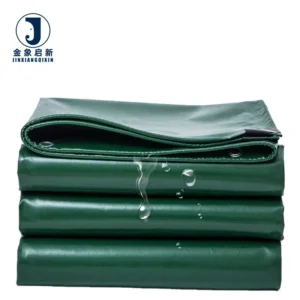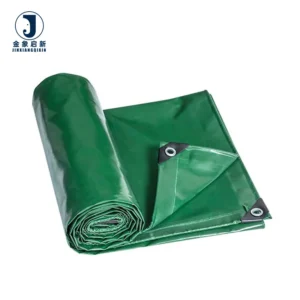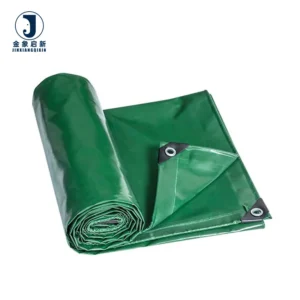
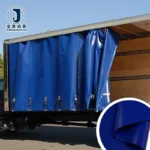
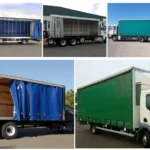
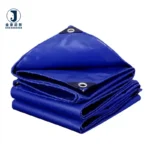
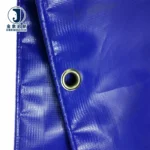
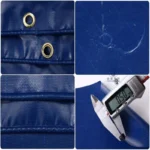
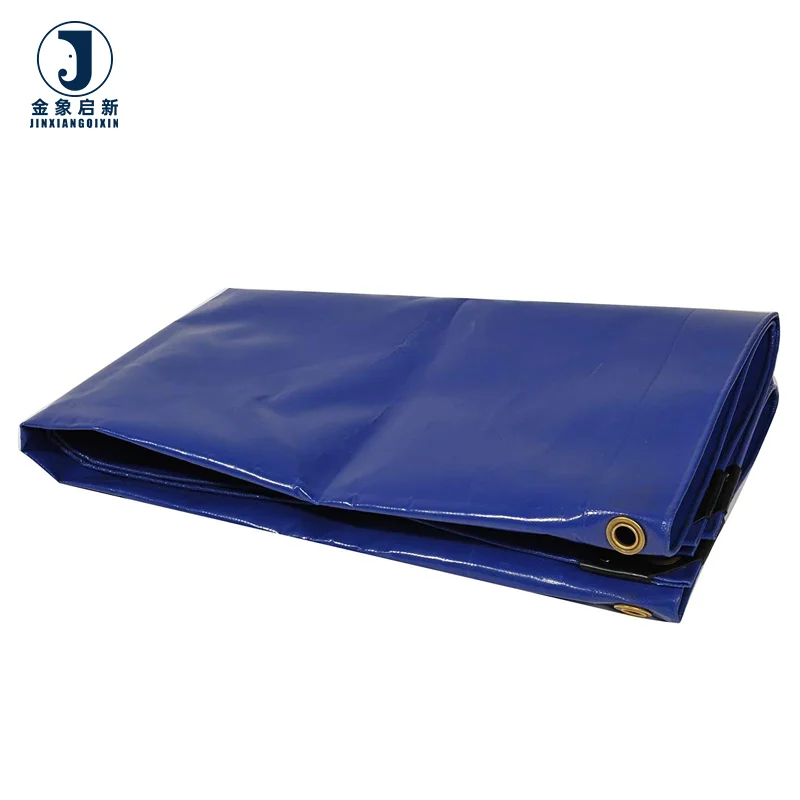
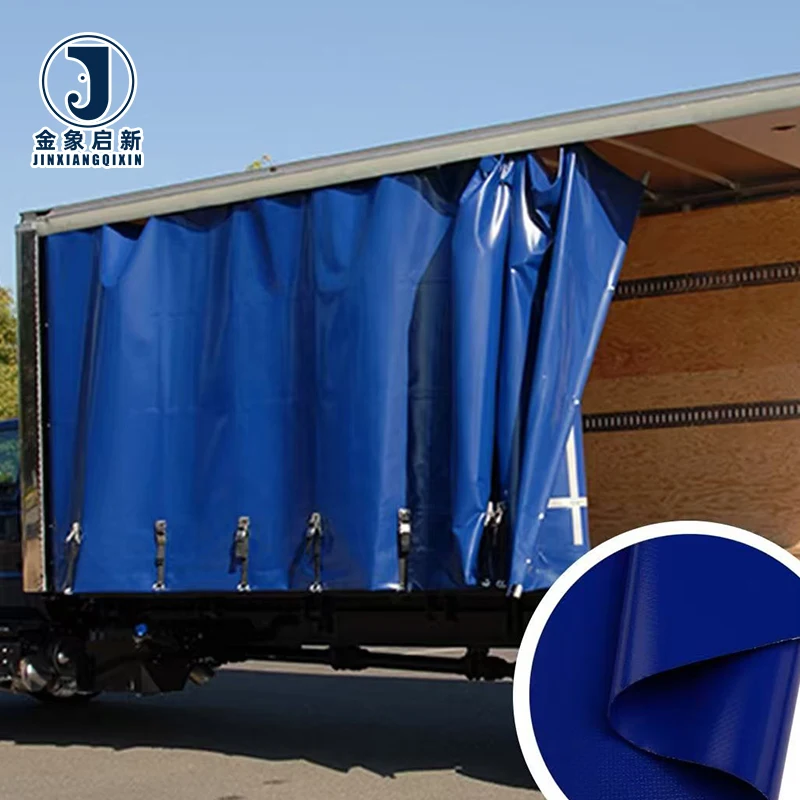
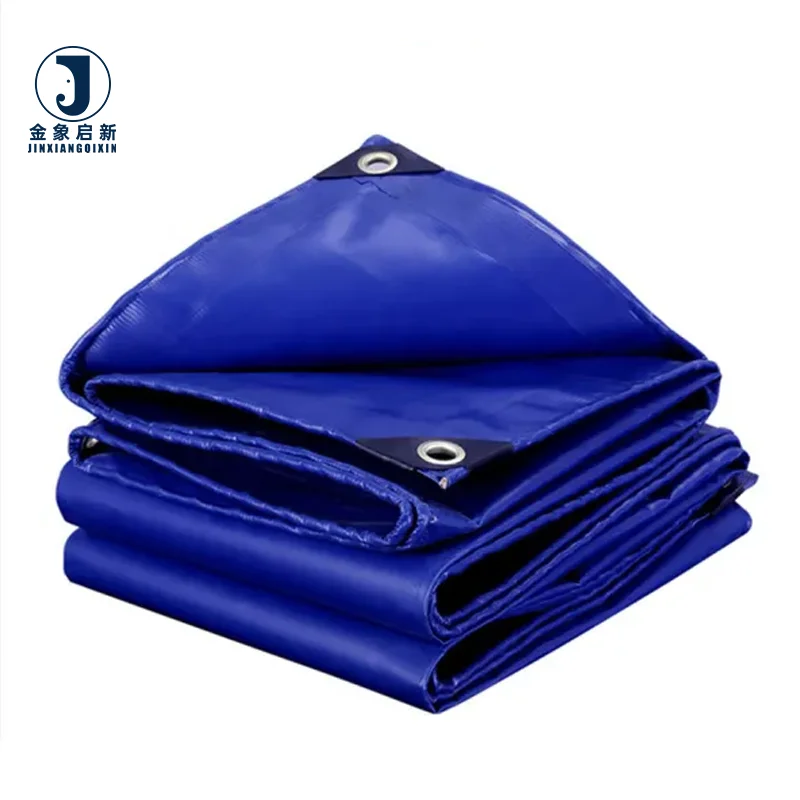
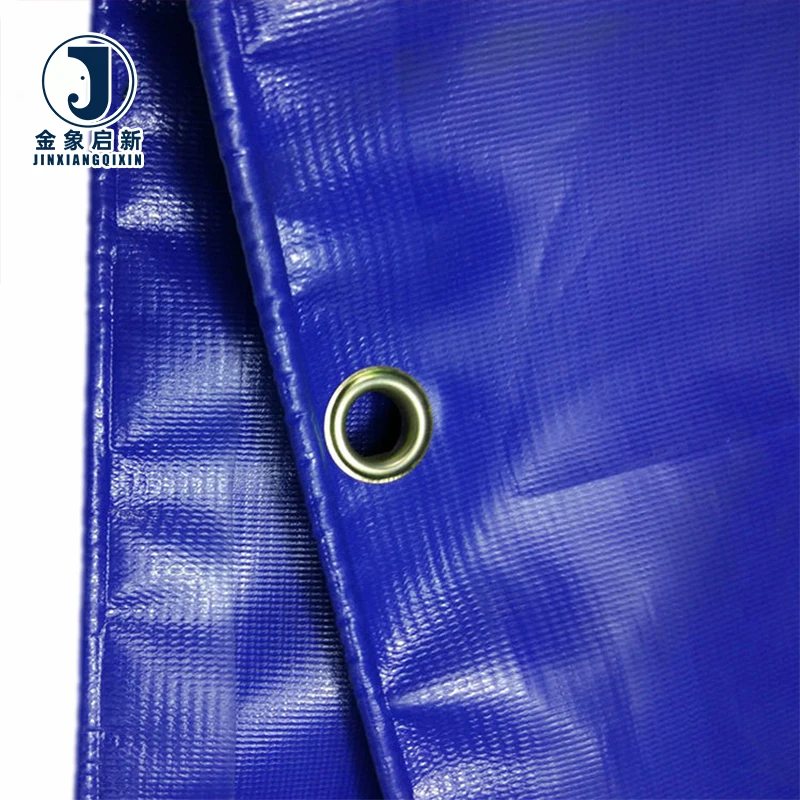
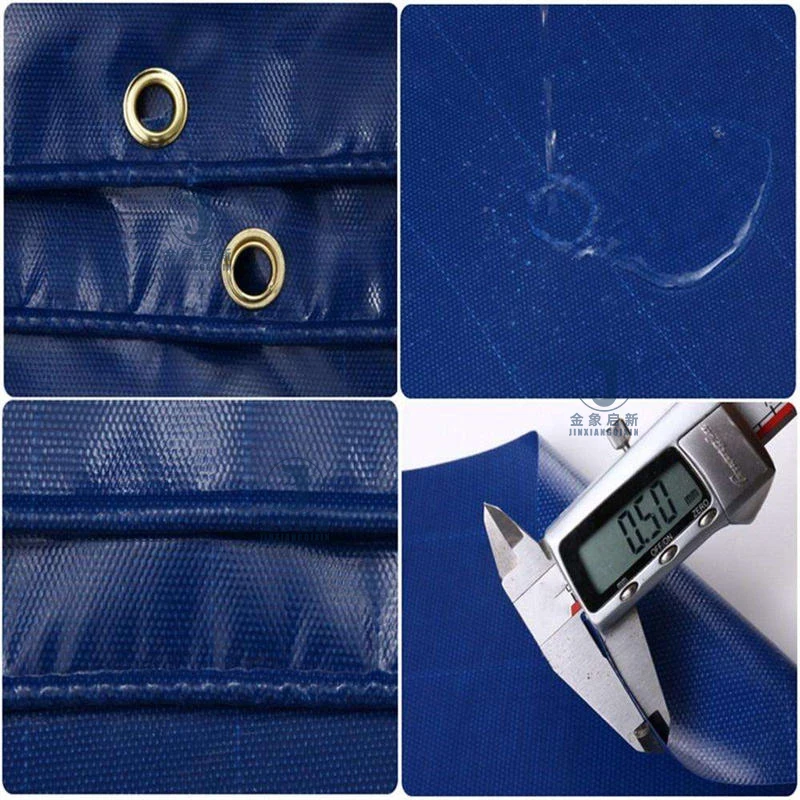
Coating Line Accountability — Every roll of heavy-grade PVC coated tarpaulin leaves our Jinan facility with verified weight documentation, not a quotation promise left unconfirmed at the loading dock.
Technical Specifications
| Parameter | Value |
|---|---|
| Product Type | PVC Coated Tarpaulin / Lorry Curtain Fabric |
| Weight Range | 250gsm to 1500gsm (select grade per application) |
| Base Fabric Denier | 200D×300D / 500D×500D / 840D×840D / 1000D×1000D |
| Coating Material | PVC |
| Surface Finish | Glossy or matte (available options) |
| Colour Options | Blue, yellow, black, green, white, or custom |
| Treatment | Waterproof; UV and flame retardant treatments available — confirm the grade required for your market; anti-fungal |
| Temperature Range | -15°C to 70°C |
| Standard Sizes | 3×4m, 6×8m, 8×10m, 10×12m, or custom made |
| Key Features | Fully waterproof construction, tear-resistant, rain-resistant, flexible, good abrasion resistance, high adhesion strength between coating and base fabric |
Application Suitability
| Application | Exposure & Requirement |
|---|---|
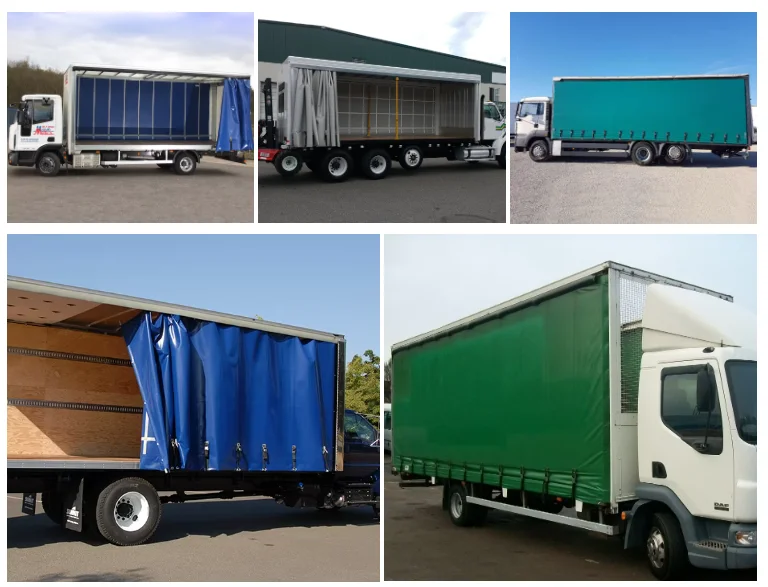
| Lorry side curtain systems | Constant flexing at tie-down points, road debris abrasion, prolonged UV and weather exposure, depot fire compliance |
| Trailer and flatbed load covers | Wind lift stress, load shifting friction, repeated folding and tension cycles |
| Temporary transport enclosures | Rapid deployment, weather sealing, flame retardant requirements in tunnel or enclosed routes |
| Inflatable and membrane structures (specialist crossover) | Air pressure loading, seam integrity under stress, fire-retardant certification for public or site use |
When "Fire Retardant" on the Quotation Means Nothing at the Gate
A flame retardant claim without a named grade and a test report is a compliance risk, not a material specification.
We see this repeatedly: a transport operator or site contractor receives a PVC coated tarpaulin marked as fire retardant on the commercial invoice, only to discover at audit that no test certificate accompanies the shipment. The depot safety officer or tunnel authority rejects the fabric, the load sits uncovered, and the rework cost lands on the buyer [NEED_CITE: fire classification standards for transport and temporary structure fabrics]. The heavy duty PVC coated tarpaulin you specify must carry a documented grade — M2, B1, NFPA 701, or whatever your operating jurisdiction demands — and that grade must be traceable to a test report issued against the actual batch supplied.
Fire Retardant and Anti-Static Compliance Starts with the Specification Conversation
The right approach begins before the order is placed. State the fire safety standard your route, depot, or site enforces. If the PVC coated tarpaulin will be used in a mining ventilation crossover or a tunnel environment, anti-static requirements may also apply alongside flame retardant grades. Our team confirms which treatment grades are achievable for the denier and weight you need, then provides the corresponding test documentation with the shipment. This is how heavy duty PVC coated tarpaulin orders avoid the gate-rejection problem [NEED_CITE: anti-static and flame retardant testing for industrial coated fabrics].
Base Fabric Denier and Coating Weight Define the Mechanical Envelope
The denier of the base fabric — from 200D×300D through to 1000D×1000D — determines the tensile and tear backbone of the material. The PVC coating weight layered on top controls abrasion resistance, waterproofing integrity, and how the fabric handles repeated folding at curtain runner points. A 500D×500D base with a heavy PVC coat behaves very differently at a tie-down flex point than a 1000D×1000D base with the same coat weight. Selecting the correct combination prevents early failure at the exact locations where lorry curtains experience the highest cyclic stress.
How GSM, Denier, and Coating Method Interact to Determine Real Performance
GSM alone tells you how much material is in a square metre, but it does not tell you where that weight sits. A PVC coated tarpaulin can reach a given GSM through a heavier base fabric, a thicker coating, or both — and each approach produces a fabric with different handling and strength characteristics. The denier and weave density of the polyester base govern how a tear propagates once initiated; a tighter weave arrests tear spread more effectively than an open weave at the same weight. Coating adhesion — the bond between PVC layer and polyester yarn — is what prevents delamination when the curtain flexes in cold weather or under load shift. When evaluating material for a demanding application, request the specification sheet that breaks out base fabric denier, coating weight, and total GSM separately, rather than accepting a single headline number [NEED_CITE: relationship between base fabric construction and coated fabric tensile performance per ISO 1421].
The Cost of Ordering on Weight Alone Without Denier Verification
Specifying by GSM without locking in the base fabric denier and weave opens the door to substitution. A lighter base fabric with a thicker PVC coat can match the quoted GSM on a scale, but the tensile and tear performance will not match what a properly constructed fabric delivers. At the curtain runner or tie-down ring, where the load flexes repeatedly, a low-denier base will show fatigue cracking in the coating long before a correctly specified fabric would. We verify denier and construction against your specification at the in-process stage, not just the final roll weight.
Why Source This PVC Coated Tarpaulin from a Specialist Coating Operation
Three dedicated production lines support bulk roll output with consistent coating weight across every production run — the batch-to-batch variation that causes colour mismatch and weld inconsistency on multi-roll curtain orders is managed at the line level.
A 10-person R&D team handles material selection and sample development for custom denier, colour, and treatment combinations, returning samples within days rather than weeks.
Dedicated QA at every production stage means coating weight and adhesion are checked during coating, not only at the final roll inspection.
100% pre-shipment inspection confirms weight, dimensions, and treatment compliance against your order specification before the rolls leave the facility.
Custom sizing and roll widths are produced on your specification, eliminating the generic cut-size mismatch that forces on-site rework for fleet operators.
Documentation & Verification
- Material specification sheet stating selected GSM, base fabric denier, coating weight, and colour reference for this order
- Test report for flame retardant grade, naming the standard and classification achieved
- ISO and CE certificates included with shipment documentation package
- Pre-shipment inspection record confirming roll weight, dimensions, and treatment compliance
- Certificate of origin and customs documentation for international dispatch
Fabrication, Handling & Storage
- Hot-air welding at temperature and speed matched to the selected PVC coating weight ensures seam strength meets or exceeds the base fabric tear value
- Reinforced hems at curtain edges and tie-down points distribute load across multiple denier yarns, preventing point failure
- Store rolls upright on cores in a dry environment to prevent flat-spotting and permanent crease marks in the PVC coating
- In cold-weather transport, allow rolls to reach above the stated minimum temperature before unrolling to avoid coating stiffness and micro-cracking
- Use only PVC-compatible cleaners; solvent-based products can degrade the coating surface and affect flame retardant treatment integrity
- When cutting panels for curtain fitment, plan the lay-up to minimise cross-grain seams at high-flex zones
Requesting a Specification That Actually Fits Your Fleet or Site
Tell us the specific trailer models or structure dimensions the fabric must cover, the fire safety or anti-static standard your operating environment requires, and the annual volume you plan to source. If you need colour consistency across a multi-roll order for a visible curtain installation, state the reference and we will confirm batch matching before production. Provide any printing or branding requirements early so the surface finish selection supports ink adhesion. We will return a material specification, lead time, and sample for your approval before any production commitment.
Frequently Asked Questions
Q: How do I specify the correct flame retardant grade for my operating market?
A: Identify the fire safety standard enforced at your depot, route, or site — common frameworks include M2, B1 per DIN 4102, and NFPA 701. Share that requirement with us at inquiry stage. We confirm which grade is achievable on your selected denier and weight, and provide a test report naming the standard and classification with every shipment.
Q: What anti-static certification is available for mining and tunnelling use?
A: Anti-static treatment is available for PVC coated tarpaulin used in ventilation duct crossover applications and enclosed-site environments. Confirm the specific anti-static standard your site authority requires. We will match the treatment to that standard and include the relevant test documentation with the dispatch records.
Q: How is the coating weight and total GSM verified before and after shipment?
A: Coating weight is monitored during production on each line. At pre-shipment inspection, every roll is sampled and weighed against the stated GSM on your specification sheet. The inspection record is included with your documentation, so you can cross-check against your own incoming goods verification.
Q: Can the tarpaulin be cut to fit my specific trailer model rather than a generic size?
A: Yes. Provide the exact trailer model or dimensions, including any cutouts for curtain runners or tie-down rails. We cut panels to those dimensions with reinforced hems and welded seams at the specified stress points, eliminating the on-site rework that generic sizing causes for fleet operators.
Q: What lead time applies to custom colour, width, or printed branding orders?
A: Lead time depends on the extent of customisation and current production scheduling. Colour matching and width changes typically add to standard production time, while printed branding requires artwork approval before the run begins. We confirm the specific timeline at quotation stage once your full requirements are defined.