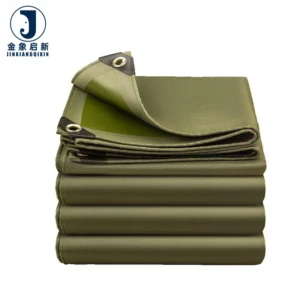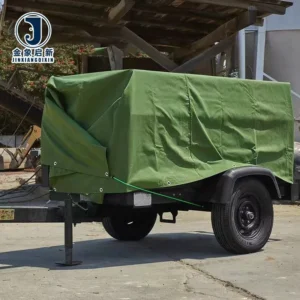

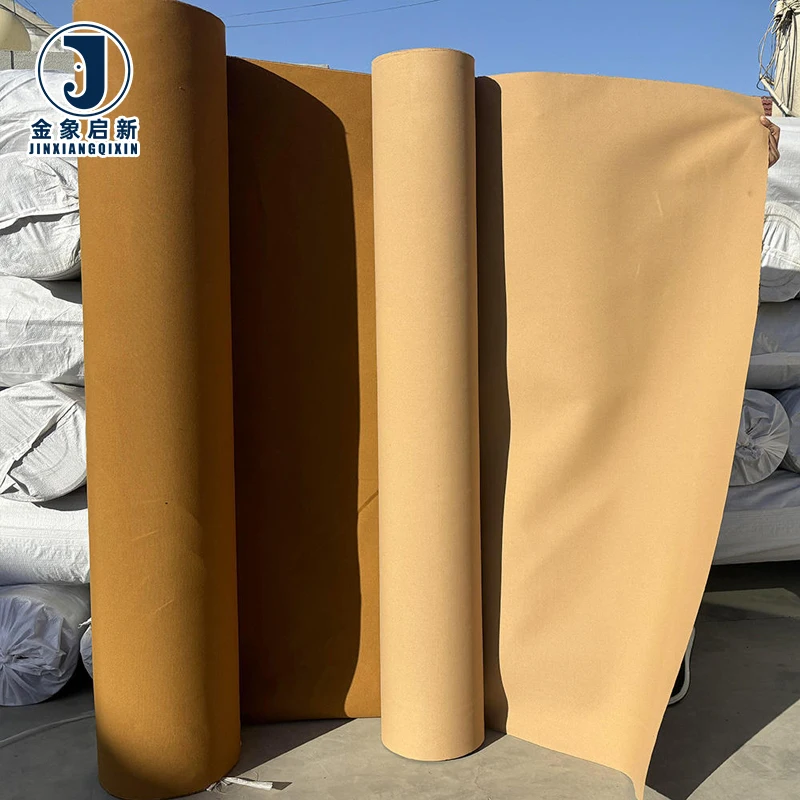
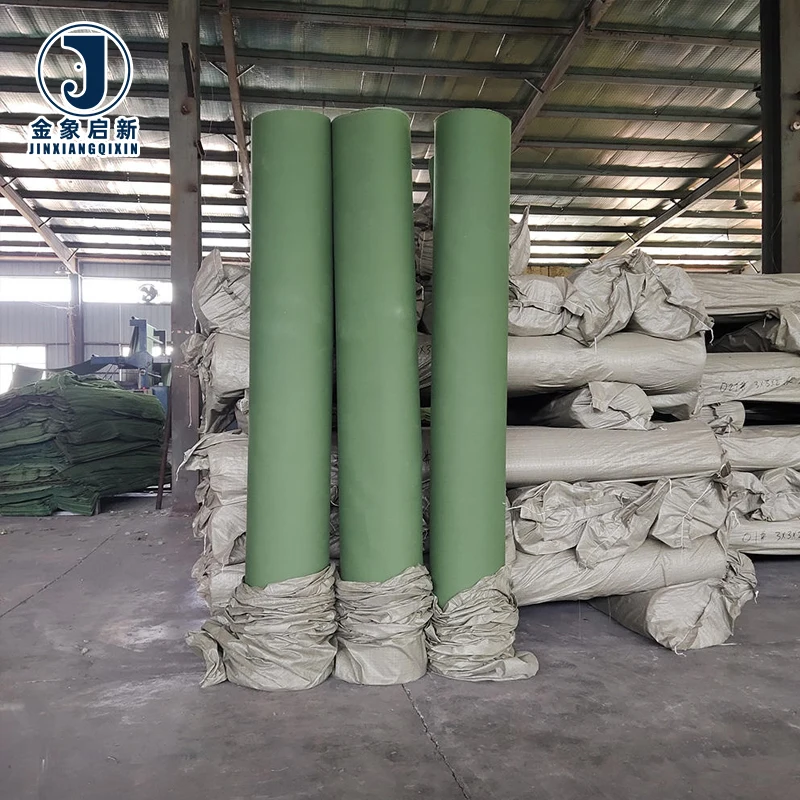
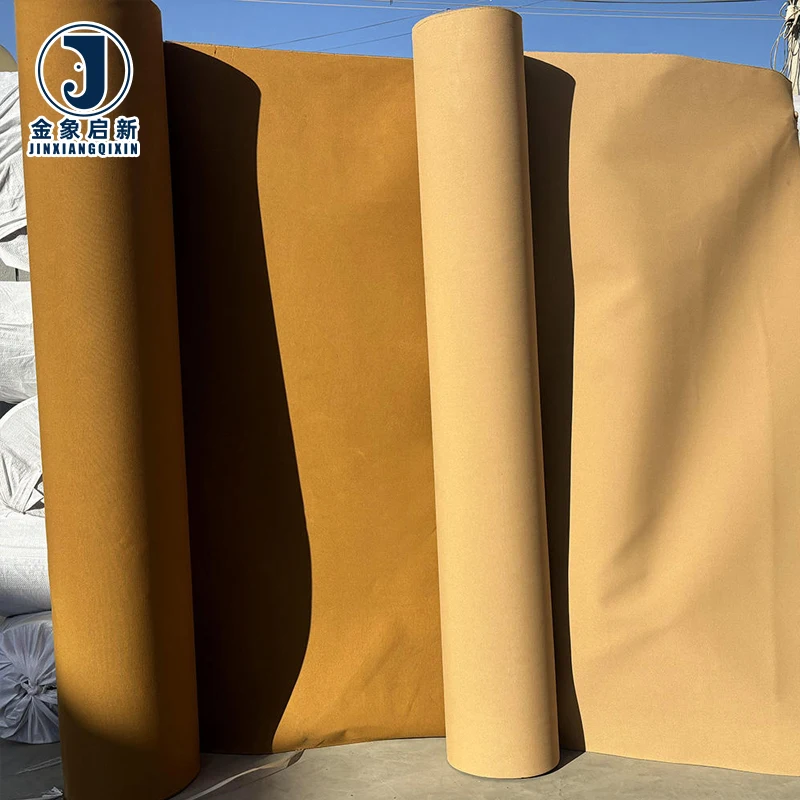

Ripstop Woven Construction — engineered for tear propagation resistance under flex and load, with PVC laminated coating providing waterproof and heat-resistant protection across industrial ventilation and specialist structure applications.
Technical Specifications
| Parameter | Value |
|---|---|
| Product Type | Canvas Tarps |
| Material | PVC laminated woven canvas |
| Base Fabric Construction | Ripstop-style weave |
| Waterproof | Fully waterproof laminated coating |
| Heat Resistant | Yes (grade available on request — confirm rating required for your application) |
| Flame Retardant | Available in flame retardant grades — confirm the grade required for your market |
| Anti-UV | Available with anti-UV treatment — test basis available on request |
| Breathability | High breathability fabric construction |
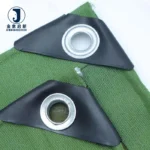
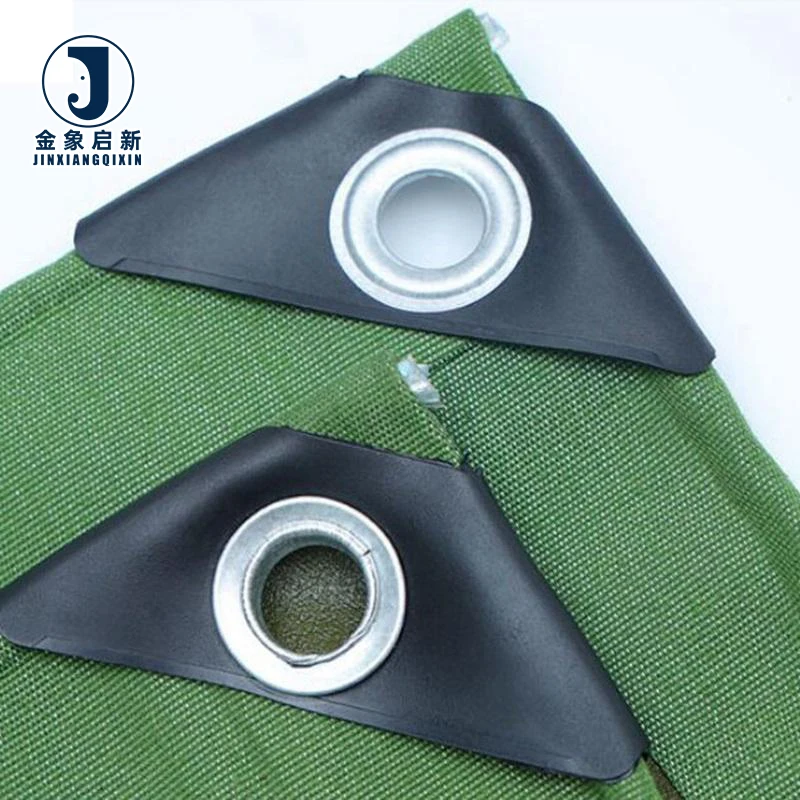
| Eyelet Options | Holes installed on all four sides for secure fixation |
| Certification | ISO 9001 / CE compliant production facility |
Application Suitability
| Application | Exposure & Requirement |
|---|---|
| Mining and tunnelling ventilation ducts | Heat exposure from airflow, fire-retardant compliance on site, anti-static requirement in explosive atmospheres |
| Aviation ground support equipment covers | Engine heat proximity, fuel spill resistance, secure tie-down under jet blast wind loads |
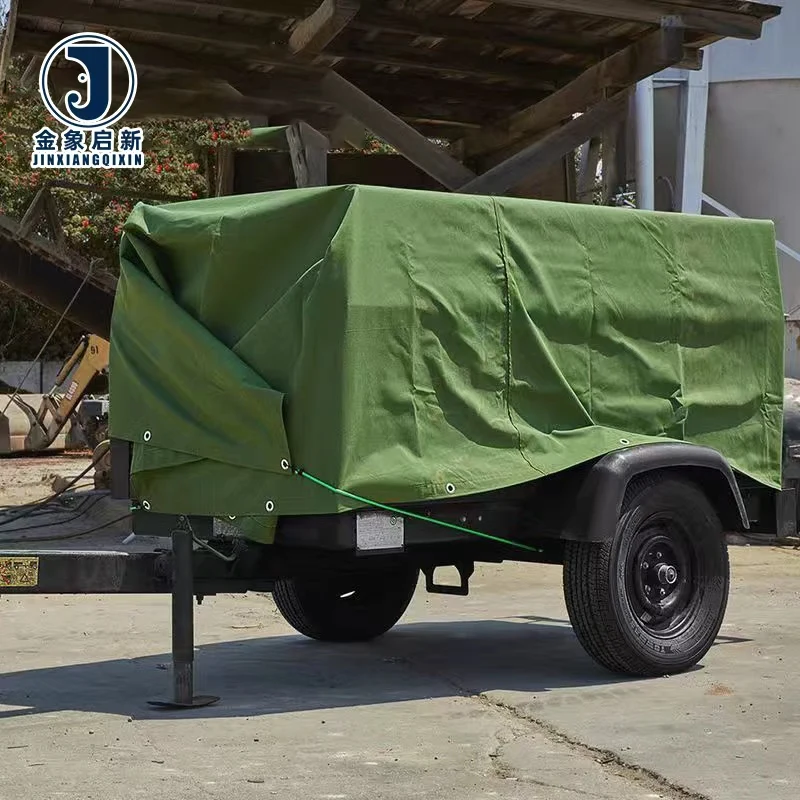
| Temporary shelters and membrane structures | Sustained solar exposure, high wind uplift, thermal expansion and contraction cycles |
| Engine hood covers | Direct heat transfer from engine block, oil and grease contact, repeated removal and refitting |
| Roof protection and weather barriers | Prolonged UV exposure, rain pooling, wind-driven debris impact |
Why Heat Resistance Claims Fail Without a Test Standard Behind Them
A heat-resistant PVC laminated canvas tarpaulin only protects your project if the temperature rating matches the actual thermal exposure on site.
Technical buyers specifying fabric for ventilation ducts or engine covers routinely receive material labelled "heat resistant" without a test report stating the temperature threshold or the standard used. When the duct runs hot air at elevated temperatures or the engine cover sits over a diesel block, the coating softens, delaminates, or cracks — and the failure shows up weeks after installation, not at the factory gate [NEED_CITE: DIN 4102 fire classification for building materials]. I have seen heavy-grade coated rolls fail at the weld line because the heat rating was assumed rather than verified against the operating environment. The gap between a marketing claim and a certified test result is where project compliance breaks down.
Coating Adhesion and Laminated Layer Integrity
The PVC laminated coating on this woven canvas base bonds to the ripstop-style fabric through controlled heat and pressure across three dedicated production lines. This lamination process creates a continuous waterproof barrier that resists delamination under flex stress — critical when the fabric is used for ventilation ducts that expand and contract with airflow pressure changes. The PVC laminated canvas tarpaulin maintains coating adhesion at the weld seams, which is where most coated fabric failures originate in duct and membrane applications.
Structural Behaviour Under Wind Load and Thermal Stress
The ripstop-style weave in the base fabric arrests tear propagation by reinforcing the grid at regular intervals, preventing a small puncture from running into a full-width split. When the PVC laminated canvas tarpaulin is tensioned across a temporary shelter or duct frame, this weave distributes point loads from tie-down straps and eyelet fixations across a wider fabric area. The four-side eyelet reinforcement ensures secure attachment even under storm wind loads, and the high breathability construction prevents pressure buildup beneath membrane structures [NEED_CITE: tensile and tear test methods for coated fabrics per ISO 1421].
Reading the Specification Sheet for Your Compliance Requirements
The base fabric construction — ripstop-style woven canvas — determines how the material responds to puncture and tear initiation, independent of the coating weight above it. The PVC lamination method, as opposed to knife-over-roll coating, produces a consistent film thickness on both fabric faces, which directly affects weld seam strength and thermal bonding behaviour during fabrication. Heat resistance in this PVC laminated canvas tarpaulin depends on the specific plasticiser system used in the compound, and the rating must be confirmed against your site’s maximum operating temperature before ordering. Flame retardant grades are available to match different market requirements — whether your project calls for M2, B1, NFPA 701, or DIN 4102 classification — and the applicable test report should be requested at the inquiry stage. High breathability is an inherent property of the base weave, allowing moisture vapour to pass through while the laminated coating blocks liquid water ingress, making the fabric suitable for applications where condensation buildup is a concern.
The Cost of Specifying Without Verification
When heat resistance is assumed from a product name rather than confirmed by a test report, the coating can soften and lose adhesion at temperatures below the actual operating range, leading to delamination and premature replacement. Flame retardant grades that do not match site compliance requirements result in failed inspections and project delays — the material passes the supplier’s internal check but fails the site safety officer’s audit. Anti-static treatment that is claimed without surface resistance measurement documentation creates liability in mining ventilation applications where explosive atmospheres demand certified performance [NEED_CITE: anti-static surface resistance testing standards for mining ventilation ducts]. Batch-to-batch variation in coating weight, if unchecked before shipment, means the roll that arrives on site performs differently from the sample that was approved weeks earlier.
Production Control and Documentation for Technical Buyers
Coating weight and lamination adhesion are controlled across three full production lines with 36 sets of professional equipment, ensuring consistent output for bulk orders. A 10-person R&D team handles material selection, custom sizing, and sample development — meaning heat resistance grades and flame retardant formulations can be matched to your project specification before production begins. Every roll undergoes dedicated QA/QC at each production stage, with 100% inspection before shipment, so the PVC laminated canvas tarpaulin that arrives matches the specification sheet you approved. Samples are developed within days for custom requirements, allowing you to verify coating adhesion, weld behaviour, and eyelet reinforcement before committing to a full production run.
Documentation & Verification
- Material specification sheet confirming base fabric construction, coating type, and GSM per roll
- Heat resistance test report stating temperature rating and applicable standard
- Flame retardant grade certificate aligned to your market’s fire safety classification
- Pre-shipment inspection record verifying coating weight and visual quality
- Anti-static surface resistance test data for mining or explosive atmosphere specifications
- ISO 9001 and CE certificates with roll-level traceability
Fabrication, Handling & Storage
- Heat-weld seams using temperature settings matched to PVC lamination thickness for full peel strength
- Reinforce eyelet zones with additional PVC patches on all four sides to distribute tie-down loads
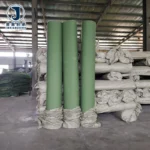
- Store rolls horizontally on pallets to prevent creasing in the ripstop woven base fabric
- Allow material to acclimatise before unrolling in cold conditions to avoid coating stiffness and cracking
- Use mild detergent for cleaning — avoid solvents that attack the PVC laminated surface coating
- Cut panels with allowance for thermal expansion in membrane structure and duct applications
What to Include in Your Technical Enquiry
Provide the maximum operating temperature and the specific flame retardant standard your site requires so we can match the PVC laminated canvas tarpaulin formulation to your compliance specification. If your application involves mining ventilation or explosive atmospheres, confirm whether anti-static certification is needed and which surface resistance threshold applies. Specify whether you need rolls in standard widths or custom-cut panels with eyelet reinforcement on all four sides, and indicate your annual volume to align production scheduling.
Frequently Asked Questions
Q: What heat resistance standard or temperature rating does this fabric carry?
A: Heat resistance grades are formulated to match specific operating temperature ranges. We provide a test report stating the temperature threshold and the standard used once you confirm the thermal exposure in your application. This ensures the PVC laminated canvas tarpaulin you receive is certified for your actual site conditions rather than a generic claim.
Q: How do I verify the flame retardant grade matches my site’s fire safety requirements?
A: Submit your project’s required fire classification — whether M2, B1, NFPA 701, or DIN 4102 — at the inquiry stage. We formulate the PVC compound to that grade and ship a test report with each batch, so your site safety officer can verify compliance without additional third-party testing.
Q: Is anti-static treatment available and certified for mining ventilation applications?
A: Anti-static treatment is available for this fabric with surface resistance measurement documentation. Specify the resistance threshold required by your mining or tunnelling project, and we will provide the corresponding test data with your shipment for site audit compliance.
Q: What base fabric denier and coating weight options are available for custom orders?
A: The ripstop-style woven canvas base is available in multiple denier options, and the PVC lamination weight is adjusted to your specification. Our R&D team develops a sample with your target GSM and construction for approval before full production begins.
Q: How are welded seams tested for integrity under heat and flex stress?
A: Weld seams are tested for peel strength and inspected during the 100% pre-shipment quality check. The lamination method produces consistent coating thickness at the weld zone, reducing the risk of seam failure under the thermal cycling and flex loads typical in duct and membrane applications.