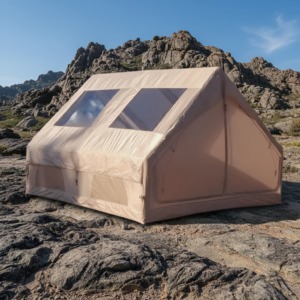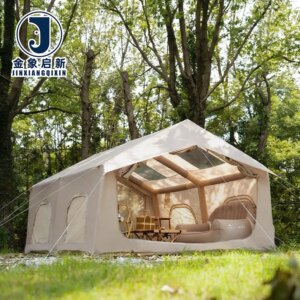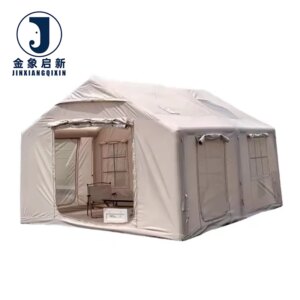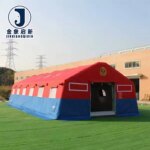


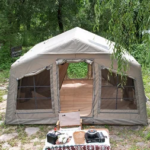
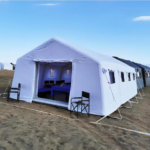

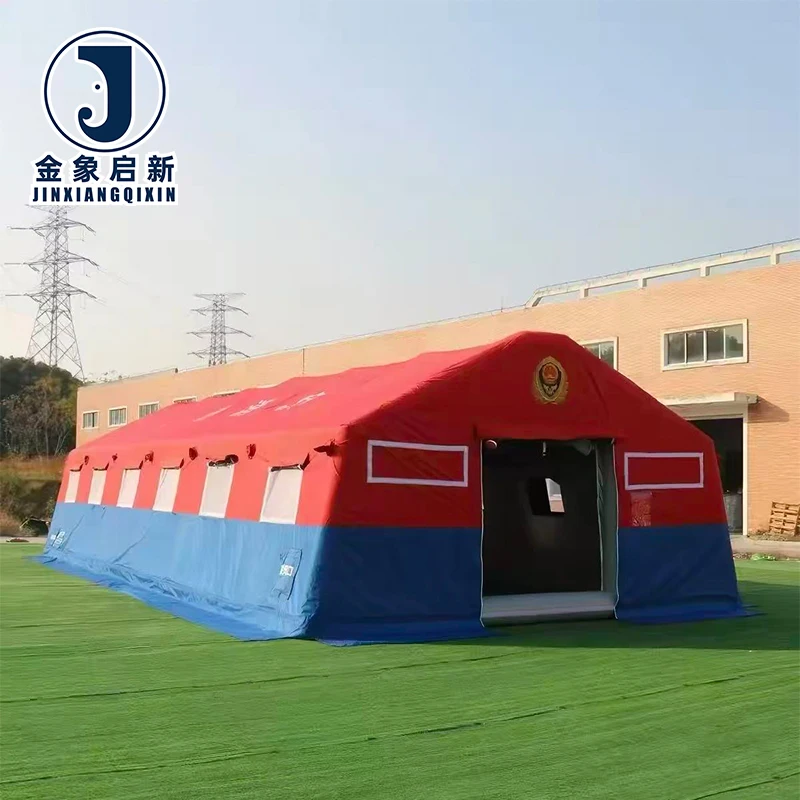
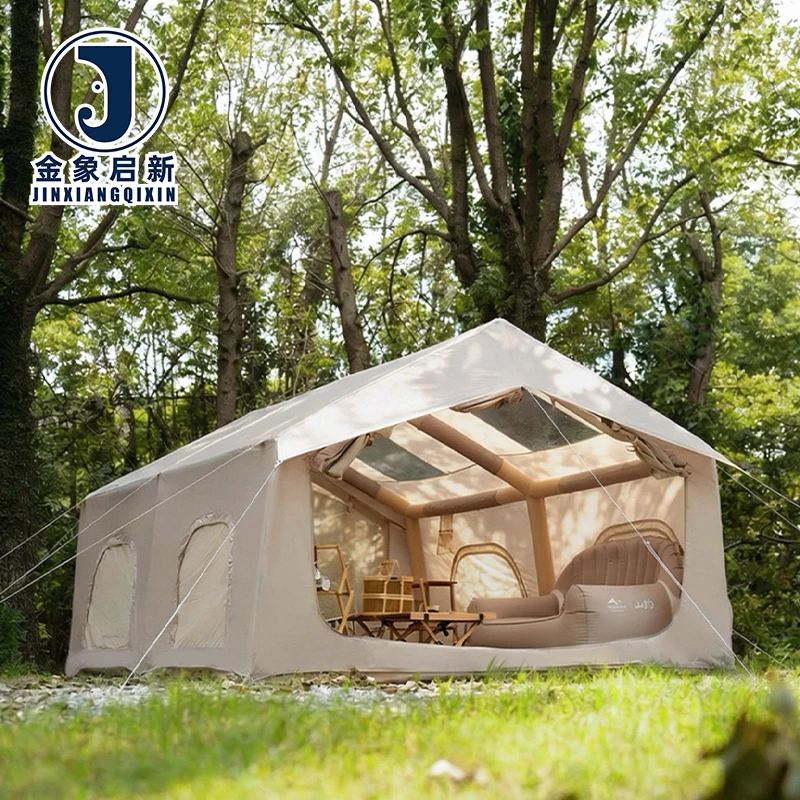


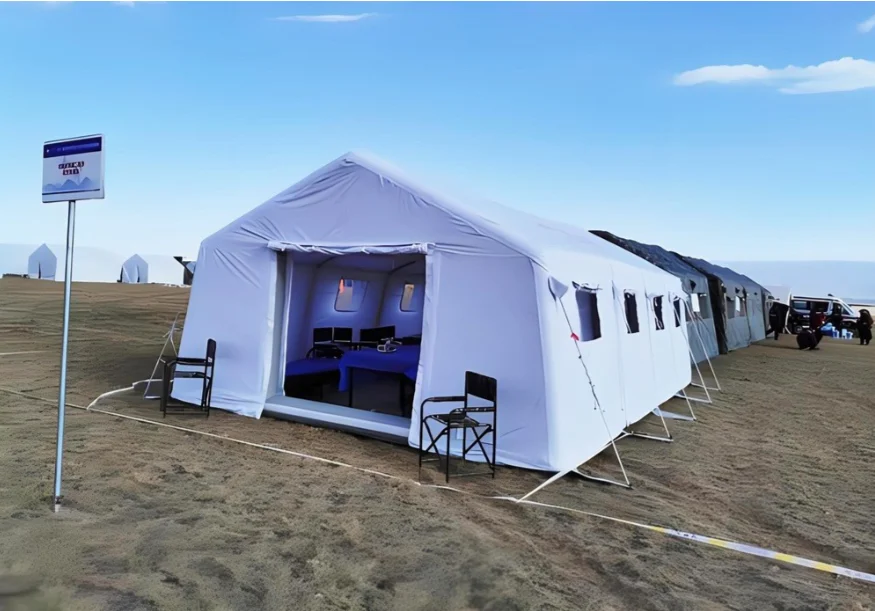

Certified Rapid-Deployment Shelter Fabric — Three full production lines with 36 sets of professional equipment maintain batch consistency for fire-retardant and anti-static PVC inflatable tent fabric orders requiring verified compliance documentation.
Technical Specifications
| Parameter | Value |
|---|---|
| Product Type | Inflatable Tent |
| Core Material | PVC tarpaulin |
| Product Form | Inflatable structure, single layer construction |
| Key Features | Waterproof, UV-resistant, tear-resistant, fire-retardant, anti-static |
| Fire Retardant | Available in fire-retardant grades — confirm the grade required for your market |
| Anti-Static | Available with anti-static treatment — surface resistance value to be verified per order |
| UV Resistance | UV-resistant formulation available — test basis to be confirmed per specification |
| Customization | OEM & ODM, sample customization, pattern printing |
| Certifications | ISO 9001, ISO 14001, ISO 45001, CE |
| Quality Control | Full-process inspection with dedicated QA & QC staff |
Application Suitability
| Application | Exposure & Requirement |
|---|---|
| Disaster relief rapid deployment shelters | Immediate weather protection, repeated inflation cycles, transport abrasion during emergency logistics |
| Emergency response command centers | Continuous occupation, electronic equipment proximity requiring anti-static fabric, fire safety compliance |
| Construction site temporary shelters | UV exposure, wind load on inflated structure, site dust and chemical contact |
| Mining and tunnelling field bases | Underground or remote deployment, fire-retardant compliance for confined environments, equipment storage |
| Mobile field operations bases | Frequent relocation, four-season temperature variation, airtight structural integrity under load |
Why Fire-Retardant Inflatable Tent Fabric Needs More Than a Label
A fire-retardant claim without a documented grade leaves your entire shelter deployment exposed to regulatory rejection on arrival.
When a site safety officer asks for the fire classification certificate and the supplier cannot produce one matched to the batch, the structure stays in the container. Procurement teams sourcing PVC inflatable tent fabric for mining or aviation environments regularly encounter this gap — the quotation says fire retardant, but the test report references a different product code or an expired certification cycle [NEED_CITE: fire classification standards for temporary industrial structures]. Anti-static requirements face the same documentation gap, where surface resistance values are claimed but never measured against a published standard. The consequence is not a delayed shipment; it is a compliance shutdown that halts the entire project mobilisation schedule.
Airtight Construction Meets Compliance Documentation
The single layer inflatable structure depends entirely on the base PVC tarpaulin maintaining airtight integrity at every welded seam and valve interface. When the fabric itself carries fire-retardant and anti-static treatments, those properties must survive the thermal welding process without degrading at the join line. Our R&D team evaluates seam performance alongside the base material specification, ensuring that the PVC inflatable tent fabric you approve in sample form is the same material that arrives with full compliance documentation on every roll and finished unit.
Rapid Inflation Cycles and Four-Season Structural Load
Emergency deployment scenarios demand that the inflatable tent fabric withstands repeated pressurisation without losing tensile stability or developing micro-fractures at stress concentration points. Single layer construction means the PVC tarpaulin carries both the structural load and the environmental barrier function simultaneously. Temperature swings from freezing night conditions to direct solar heating require the coating formulation to resist embrittlement at low temperatures and softening under peak heat, maintaining the rigidity the inflatable frame needs to hold shape under wind load [NEED_CITE: thermal performance range for PVC coated technical textiles].
How Base Fabric and Coating Weight Interact in Inflatable Structures
The waterproof and tear-resistant performance of PVC inflatable tent fabric does not come from coating thickness alone. The base fabric denier and weave density determine how the material resists puncture and tear propagation when the structure flexes under internal pressure. Coating weight contributes to airtightness and surface durability, but a heavy coating on a low-density base will crack at the fold lines during packing and deployment. The relationship between these two elements — base fabric construction and PVC coating application — defines whether the inflatable structure holds pressure reliably across hundreds of inflation cycles. Surface finish selection, whether glossy or matte, affects how easily the fabric cleans after site use and how well pattern printing adheres for branded emergency shelters.
What Happens When Inflatable Tent Fabric Fails at the Weld
The most common failure point on a PVC inflatable structure is not the fabric surface — it is the welded seam where two panels join under internal pressure. When the welding temperature does not match the specific coating formulation, the bond degrades before the fabric itself shows wear, creating air leaks that compromise structural stability mid-deployment. Batch inconsistency in coating weight makes this worse: the weld parameters that worked on the sample may not transfer to production rolls, leading to seam failures that only appear after the tent is inflated on site [NEED_CITE: heat welding parameters for PVC coated fabric seam integrity]. For emergency shelters deployed in disaster zones, a seam failure is not a warranty claim — it is a structure that collapses when it is needed most.
Production Control That Matches the Compliance Requirement
Our facility operates three full production lines with 36 sets of professional processing equipment, giving us the capacity to deliver PVC inflatable tent fabric in volume while maintaining roll-to-roll consistency. The 10-person R&D team handles material selection, sample development, and pattern printing specifications before production begins, so the fabric you approve is what gets manufactured. Dedicated QA and QC staff inspect every production stage, with 100% pre-shipment inspection covering material verification against the agreed specification. ISO 9001, ISO 14001, ISO 45001, and CE certifications are maintained and available for your procurement compliance submission. OEM and ODM capability means we work from your design or develop custom dimensions and printing to match your inflatable structure requirements.
Documentation & Verification
- Material specification sheet stating base fabric, PVC coating details, and treatment references for every batch
- Fire-retardant grade test report matched to the product code on your purchase order
- Anti-static surface resistance certificate documenting the measured value per production run
- Pre-shipment inspection record confirming 100% QA coverage before dispatch
- ISO 9001, ISO 14001, ISO 45001, and CE certificates for procurement compliance submission
Fabrication, Handling & Storage
- Heat welding parameters must match the specific PVC coating formulation to prevent seam delamination under inflation pressure
- Store PVC inflatable tent fabric rolls upright on padded racks to avoid permanent crease marks across the coating surface
- Allow cold-stored fabric to reach ambient temperature before unrolling to prevent coating micro-cracking at fold lines
- Use PVC-compatible cleaners only; solvent-based products will degrade the coating and compromise airtight integrity
- Plan panel cutting layout to minimise welded seams at high-stress inflation points on the structure
- Repair minor punctures with matching PVC patches using the same heat welding method as original fabrication
Specifying the Right Fabric for Your Inflatable Structure
To move forward with a material recommendation, we need to understand your deployment environment and the regulatory framework your site operates under. Share the fire-retardant grade or anti-static standard your market requires, the typical temperature range the structure will face, and whether you need finished panels or fabric by the roll. If pattern printing or custom colour matching is part of the specification, provide the reference files so we can develop a production sample for your approval before bulk commitment.
Frequently Asked Questions
Q: What fire-retardant grade is available and does it meet my market’s regulation?
A: We produce PVC inflatable tent fabric in fire-retardant grades suited to industrial and emergency applications. The specific grade must be confirmed against your local regulatory requirement — standards such as M2, B1 per DIN 4102, or NFPA 701 apply in different markets. Request a sample with the matching test report so your compliance team can verify before you commit to a production order.
Q: How is anti-static performance tested and what value is documented?
A: Anti-static treatment is applied based on the end-use environment where electronic equipment or flammable atmospheres are present. The surface resistance value is measured and documented per batch, with the test method and result included in the shipment paperwork. Specify the resistance range your site safety protocol requires so we match the formulation accordingly.
Q: Can you produce custom dimensions and pattern printing for inflatable tent structures?
A: Our 10-person R&D team handles full OEM and ODM development, including custom panel dimensions, pattern printing, and sample production before bulk manufacturing. Provide your structure drawings or design files, and we develop a sample for dimensional and visual approval. MOQ depends on the printing complexity and fabric specification you select.
Q: What compliance documentation accompanies each shipment?
A: Every dispatch includes a material specification sheet, fire-retardant and anti-static test reports matched to the batch, a pre-shipment inspection record, and our ISO 9001, ISO 14001, ISO 45001, and CE certificates. Certificate of origin and customs documentation are prepared per destination country requirements.
Q: How do you ensure batch-to-batch consistency across large-volume orders?
A: Three full production lines with dedicated QA and QC staff inspect material at every stage against the agreed specification. Pre-shipment inspection covers 100% of the order before dispatch. For repeat orders, we reference the original batch record to maintain coating weight, colour, and treatment consistency across production runs.