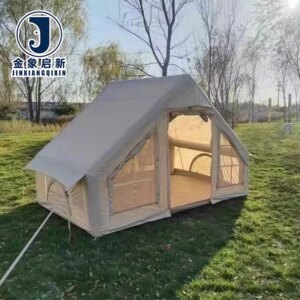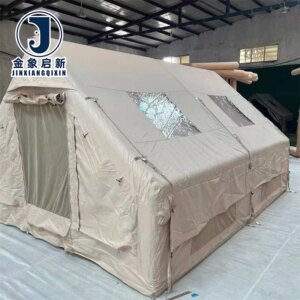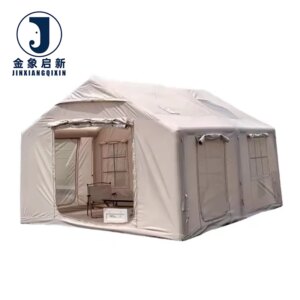
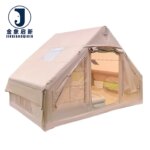
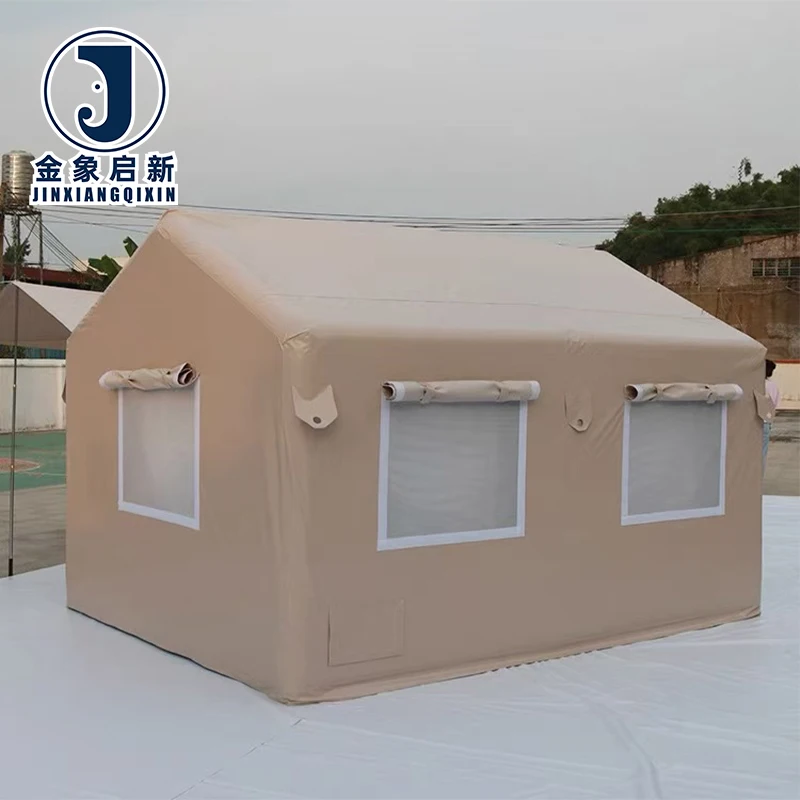
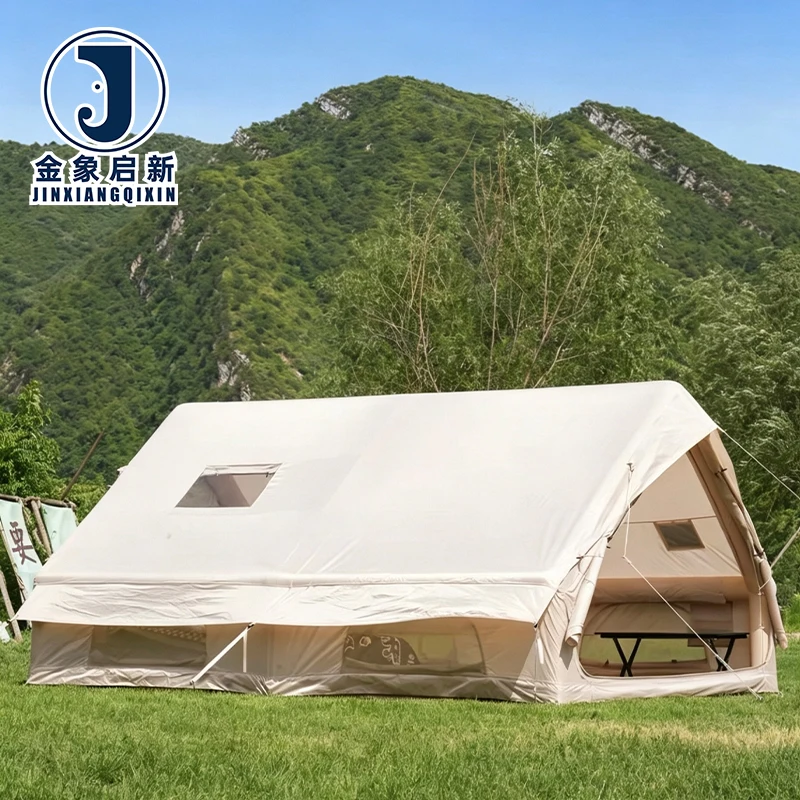
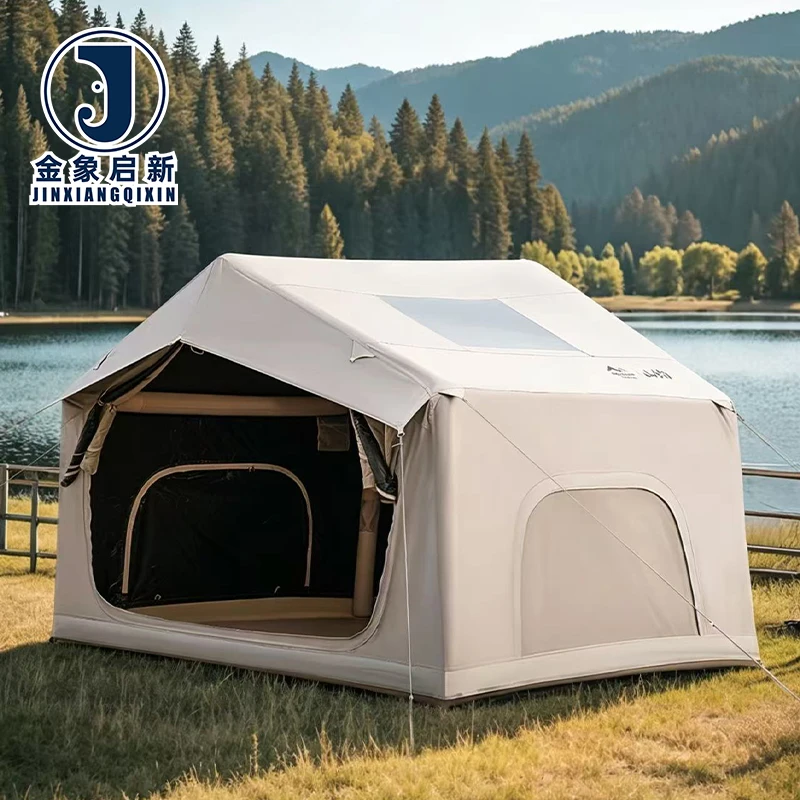
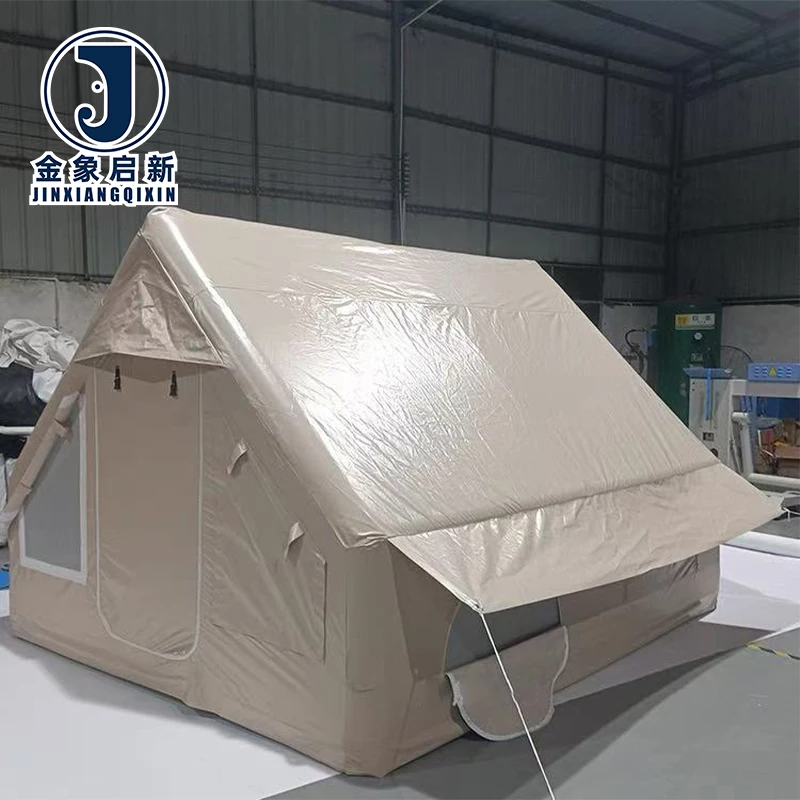
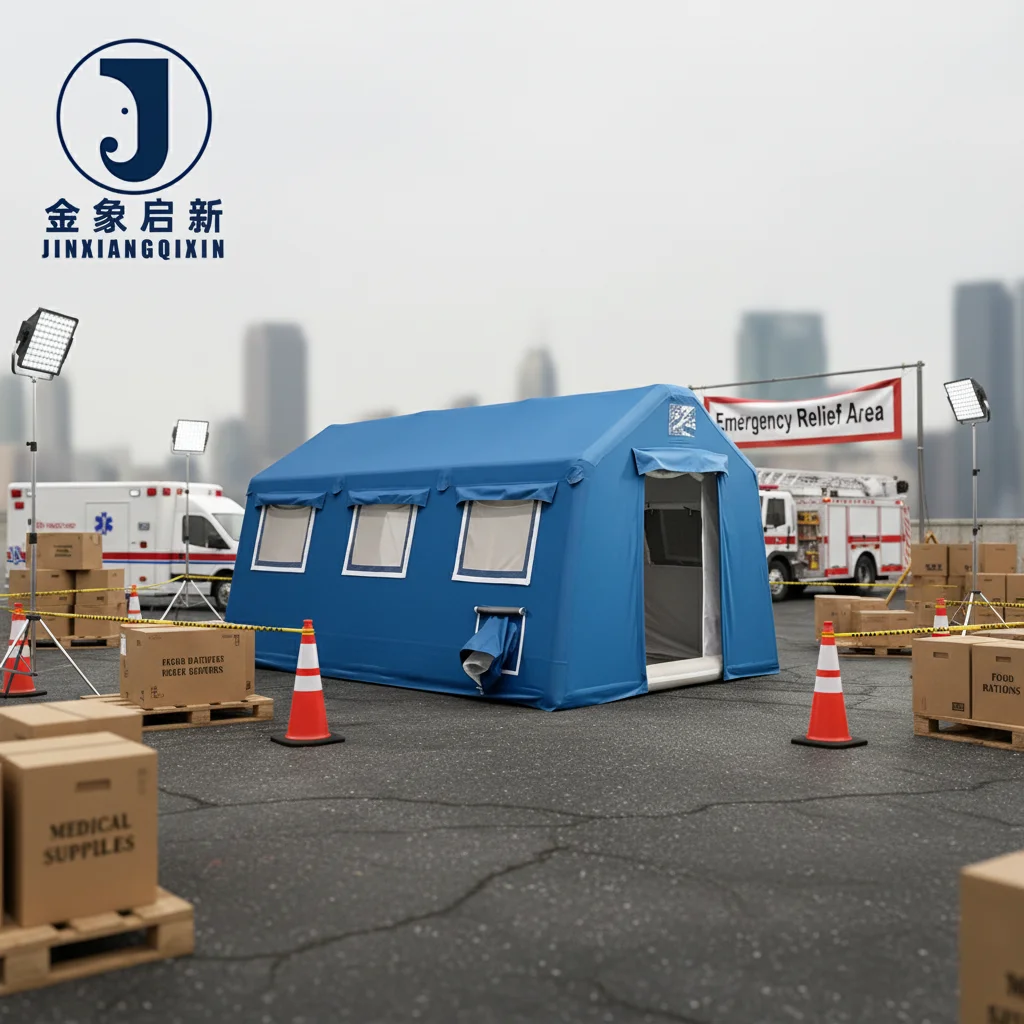
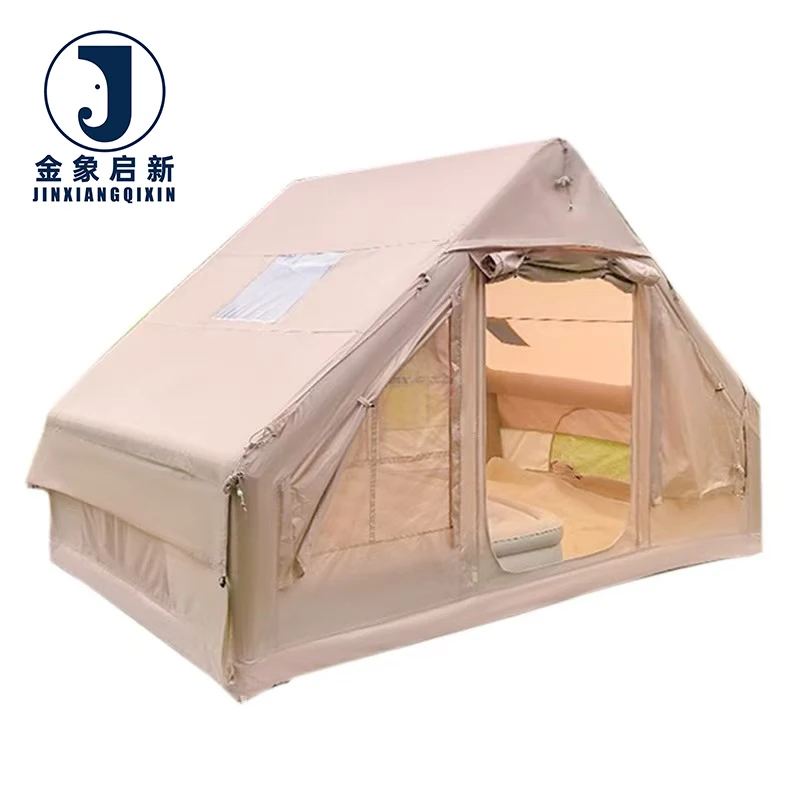
Compliance-Focused Technical Fabric — Every roll of our inflatable tent fabric ships with traceable test documentation, ensuring your aviation or mining structure passes the fire and static audits it faces on site.
Technical Specifications
| Parameter | Value |
|---|---|
| Product Type | Inflatable Tent Fabric |
| Core Material | PVC tarpaulin |
| Material Thickness | 0.4 mm – 1.2 mm |
| Waterproof Construction | Yes (test basis not stated in source) |
| UV-Resistant Treatment | Yes (test basis not stated in source) |
| Tear-Resistant | Yes (test basis not stated in source) |
| Flame Retardant | Available in flame retardant grades — confirm the grade required for your market |
| Anti-Static | Available in anti-static grades — confirm the surface resistance standard for your application |
| Customization Options | Size (2–8 persons), material thickness, color, printing patterns, reinforced stress points, extended awnings |
| Certifications | ISO 9001, ISO 14001, ISO 45001, CE |
| Sample Lead Time | 7–10 business days |
Application Suitability
| Application | Exposure & Requirement |
|---|---|
| Mining & tunnelling inflatable shelters | Confined underground environments requiring fire-retardant and anti-static compliance, repeated inflation cycles, abrasion from equipment contact |
| Aviation ground support structures | Tarmac UV exposure, fuel-adjacent static discharge risk, rapid deployment and teardown between operations |
| Disaster relief field hospitals | Continuous occupation, weather extremes, sanitation chemical exposure, urgent deployment timelines |
| Specialist membrane & inflatable structure contractors | Architectural inflation loads, weld integrity across complex geometries, certified material traceability |
Why Inflatable Tent Fabric Fire Retardant Anti-Static Certified Demands More Than a Label
A certificate on paper means nothing if the test standard it references does not match the regulation your site inspector enforces.
Inflatable structures deployed on mining sites or aviation aprons operate under compliance regimes that treat fire-retardant and anti-static performance as non-negotiable gate criteria. Yet procurement teams routinely receive Inflatable Tent Fabric fire retardant anti-static certified with documentation that references a test method from a different jurisdiction, a grade that has since been superseded, or a batch number that does not correspond to the roll delivered. When the site safety officer asks for the original test report, the chain breaks — and the structure cannot be commissioned [NEED_CITE: fire classification standards for temporary inflatable structures in mining environments].
Mapping the Standard to Your Site’s Enforcement Regime
Mining ventilation projects, aviation maintenance bays, and tunnelling access shelters each fall under different regulatory bodies, and each body references its own fire-retardant classification system. Inflatable Tent Fabric fire retardant anti-static certified must be tested and reported against the exact standard your project specifies — whether that is M2, B1, NFPA 701, or another regional equivalent. Our technical team works with you during the specification phase to confirm which standard applies, then sources or produces fabric tested under that precise protocol.
Surface Resistance Values That Satisfy the Inspector
Anti-static performance in inflatable tent fabric is not a binary claim — it is a measured surface resistance value that must fall within a defined range for the environment in question. Underground mining structures typically demand tighter static dissipation thresholds than above-ground temporary shelters. We supply the test report showing the measured surface resistance alongside the Inflatable Tent Fabric fire retardant anti-static certified shipment, so your documentation package is audit-ready from day one [NEED_CITE: surface resistance measurement methods for anti-static coated fabrics].
Reading Thickness Against Structural Load
Material thickness between 0.4 mm and 1.2 mm governs how the fabric behaves under inflation pressure and external wind load. Thinner gauges serve lighter, short-deployment emergency shelters where rapid inflation and compact packing matter more than long-term structural rigidity. Heavier gauges sustain higher internal pressures required by larger membrane structures and resist puncture from equipment contact in industrial staging areas. The correct thickness is determined by the inflation system’s operating pressure and the maximum span the structure must cover without intermediate framing.
The Specification Error That Surfaces at Commissioning
Selecting fabric without verified fire-retardant grade documentation leads to a specific and expensive failure mode: the structure is fully erected, inflated, and furnished — then fails the pre-commissioning safety audit. Removal, re-ordering, and re-deployment on a disaster relief or mining timeline compresses what should be a planned procurement into an emergency purchase. Batch-to-batch variation in coating chemistry can shift flame-spread performance between production runs, making pre-shipment verification against the stated standard essential before the fabric leaves the factory [NEED_CITE: batch consistency requirements for fire-retardant coated textiles].
Why Procurement Teams Source This Fabric Here
Our 10-person R&D team develops custom formulations and thickness specifications matched to your inflation system’s pressure profile, producing samples within 7–10 business days for your engineering sign-off before bulk production begins.
Three full production lines and 36 sets of professional processing equipment allow us to run your Inflatable Tent Fabric fire retardant anti-static certified order with consistent coating weight across every roll in the batch.
Dedicated QA/QC checkpoints at each production stage mean coating adhesion, thickness uniformity, and flame-retardant additive dispersion are verified in-process — not just sampled at the end.
ISO 9001, ISO 14001, ISO 45001, and CE certifications are maintained across our operations, providing the compliance framework your procurement documentation requires.
Every roll ships with a pre-shipment inspection record and batch traceability documentation, closing the gap between factory output and site-level audit requirements.
Documentation & Verification
- Material specification sheet confirming PVC coating composition, thickness, and base fabric construction for each roll
- Fire-retardant test report citing the specific grade and standard applicable to your project jurisdiction
- Anti-static surface resistance measurement report aligned with your site’s compliance threshold
- Pre-shipment inspection record with batch traceability linking every roll to its production run
- Certificate of origin and customs documentation prepared for international shipment of inflatable tent fabric orders
Fabrication, Handling & Storage
- Hot-air welding parameters must be calibrated to the selected 0.4 mm–1.2 mm thickness to achieve full seam adhesion without coating burn-through
- Reinforced stress points at inflation valve ports and anchor attachments should be heat-bonded rather than stitched to maintain air-holding integrity
- Store rolls upright on end-caps in a climate-controlled environment to prevent flat-spot deformation of the PVC coating layer
- Avoid folding fabricated panels at welded seams during transport — crease stress concentrates at the coating-to-base-fabric interface
- Use only PVC-compatible cleaning agents; solvent-based cleaners can degrade the flame-retardant additive dispersion in the coating matrix
Starting the Specification Conversation
Tell us the inflation pressure your structure operates at, the maximum span, and the deployment environment — underground, tarmac, or open-field. Share the fire-retardant standard and anti-static threshold your site inspector requires, along with the quantity and roll width you need for your fabrication layout. If your project demands a custom colour, printed identification, or reinforced panel geometry, include those details so we can build an accurate sample before production.
Frequently Asked Questions
Q: What fire-retardant grade do I need for an inflatable mining shelter?
A: The required grade depends on your jurisdiction’s mining safety regulation. Common references include M2, B1, or NFPA 701. Share your site’s compliance standard during the inquiry stage and we will produce or source Inflatable Tent Fabric fire retardant anti-static certified tested against that specific protocol, with the original report included in your shipment documentation.
Q: How is anti-static performance verified before shipment?
A: Each batch undergoes surface resistance testing measured against the standard your project specifies. The measured value is recorded on a test report that accompanies your documentation package. This ensures the anti-static property is not merely claimed but documented with a traceable result linked to your specific production run.
Q: Can I order custom thickness and colour for my inflatable structure project?
A: Yes. Material thickness from 0.4 mm to 1.2 mm is available, along with custom colour and printing patterns. Samples are developed within 7–10 business days for your engineering approval before bulk production begins, ensuring the final fabric matches your structural and visual requirements.
Q: What documentation ships with a certified fabric order?
A: Every shipment includes a material specification sheet, fire-retardant and anti-static test reports matched to your required standards, pre-shipment inspection records with batch traceability, certificate of origin, and customs support documentation. This package is structured to satisfy site-level compliance audits without additional follow-up requests.