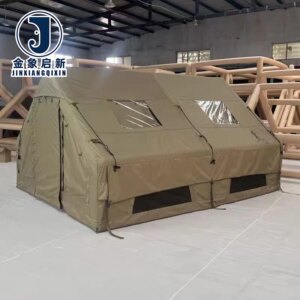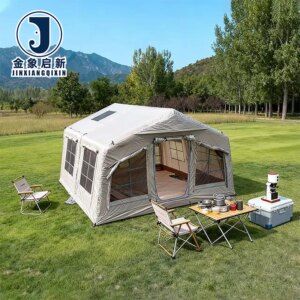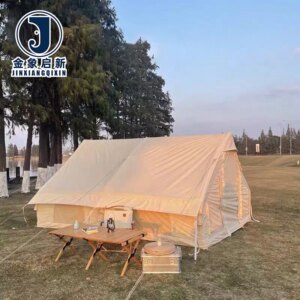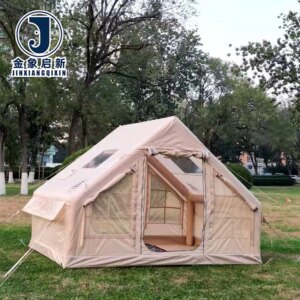
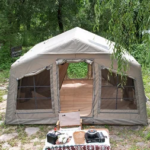
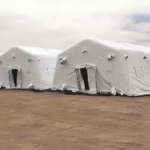

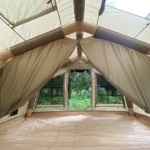
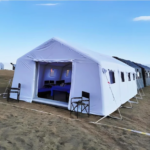

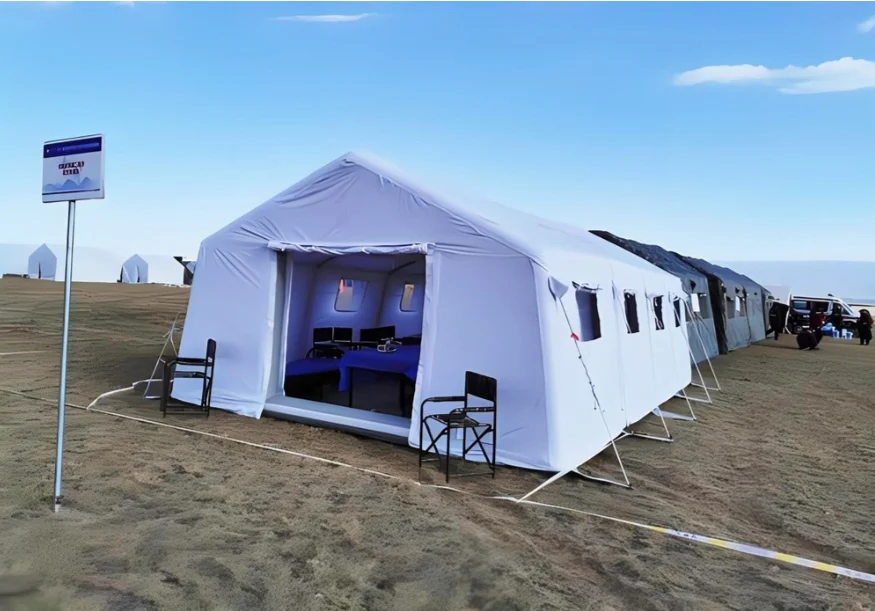
Certified Compliance — Our inflatable tent fabric ships with documented fire-retardant and anti-static test reports, eliminating site audit failures for mining and aviation contractors.
Technical Specifications
| Parameter | Value |
|---|---|
| Product Type | Inflatable Tent |
| Core Material | Waterproof PVC Fabric |
| Waterproof Rating | Waterproof (grade not stated in source) |
| UV Treatment | UV-resistant (test basis not stated in source) |
| Flame Retardant Grade | Fire-retardant (grade not stated in source) |
| Anti-Static | Anti-static (surface resistance or standard not stated in source) |
| Tear Resistance | Tear-resistant (test standard not stated in source) |
| Design | Four-season camping tent, quick automatic opening |
| Accessory | Pump included |
| Customization Service | OEM & ODM available |
| Standards | ISO9001, ISO14001, ISO45001, CE |
Application Suitability
| Application | Exposure & Requirement |
|---|---|
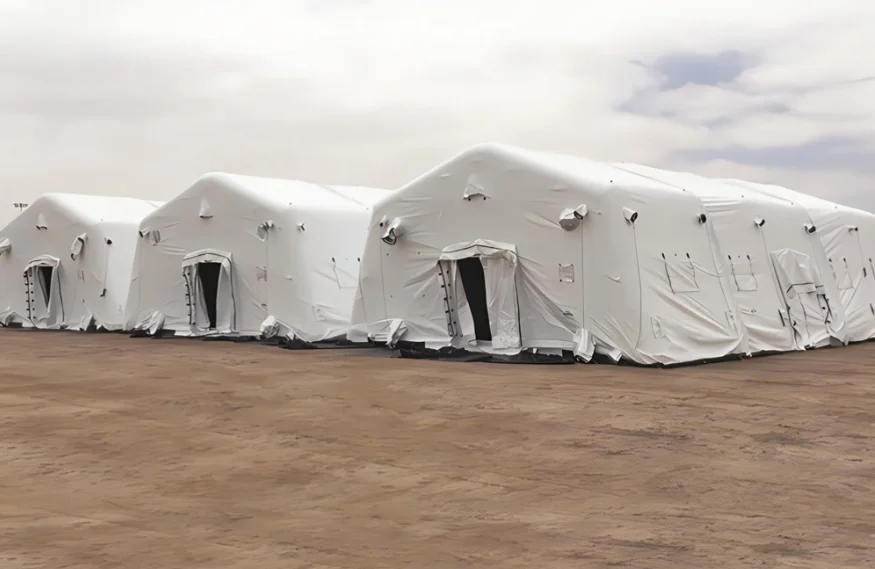
| Mining and tunnelling temporary shelter | Fire-retardant and anti-static compliance required underground, continuous humidity and mechanical abrasion |
| Aviation ground support inflatable structures | Certified fabric for airfield operations, fuel proximity demands anti-static properties |
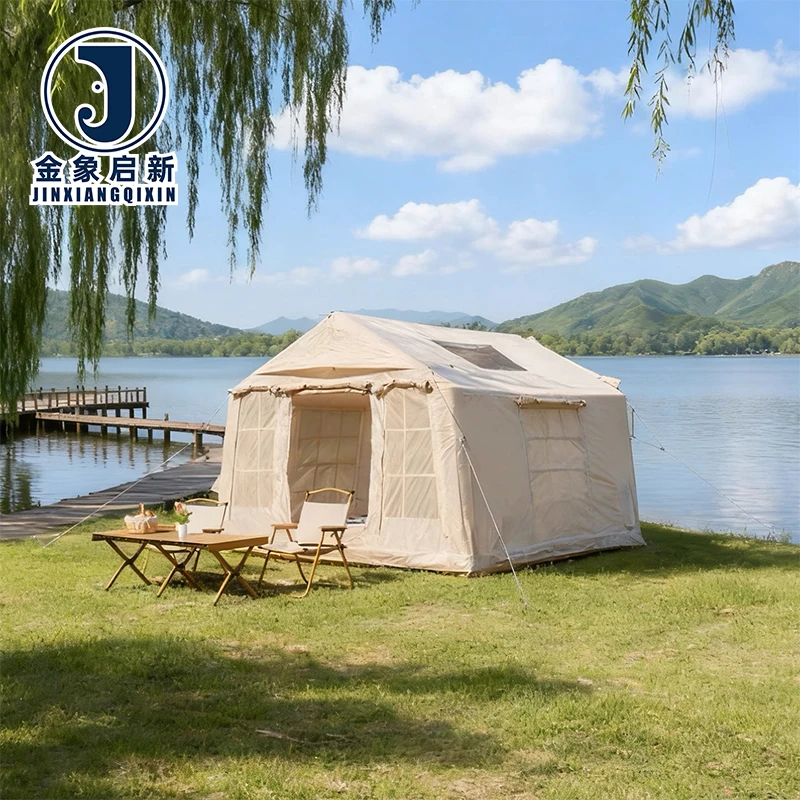
| Commercial glamping and event operators | Four-season deployment, rapid setup cycles, UV exposure during extended outdoor use |
| Construction site welfare facilities | Temporary workforce accommodation, weather exposure, repeated assembly and disassembly |
| Outdoor exhibition and hospitality structures | Public safety compliance, wind loading on inflated forms, surface cleaning between events |
Why Inflatable Tent Fire Retardant Anti-Static Certified Claims Often Fail On Site
Uncertified fabric arrives without the test documentation your site safety officer requires for approval.
When contractors source inflatable structures for mining or aviation environments, suppliers frequently claim fire-retardant and anti-static properties without providing verifiable test reports. The fabric may pass visual inspection but fails during the mandatory safety audit, leaving temporary shelters stranded at the gate. We have documented multiple instances where inflatable tent fire retardant anti-static certified specifications were stated on quotations but absent from delivery documentation [NEED_CITE: fire safety compliance requirements for temporary mining structures]. The compliance gap forces emergency re-procurement while project timelines slip.
Fire-Retardant and Anti-Static Compliance for Regulated Environments
Our inflatable tent fire retardant anti-static certified fabric addresses the documentation failure that plagues specialist structure projects. Available in flame retardant grades — confirm the grade required for your market before ordering. Each shipment includes the test reports and material specification sheets that site auditors demand. The anti-static treatment targets environments where electrostatic discharge poses ignition risks near fuel handling or combustible dust.
Four-Season Deployment Without Equipment Rotation
Commercial glamping operators and event companies face seasonal storage costs when tent fabric cannot withstand year-round conditions. This inflatable tent fire retardant anti-static certified material maintains waterproof performance through extended outdoor exposure across temperature variations. The tear-resistant construction handles repeated inflation cycles, transport folding, and site repositioning without seam degradation. UV-resistant treatment supports prolonged sun exposure during summer festival seasons and extended glamping operations [NEED_CITE: UV degradation test methods for PVC coated fabrics].
Understanding the Coated Fabric Construction
Waterproof PVC fabric performance depends on the relationship between base fabric denier, weave density, and coating weight. Heavier base fabric with tighter weave provides the structural skeleton that resists tearing when the inflatable structure flexes under wind load. The coating method — whether knife-over-roll, dip coating, or calendering — determines how thoroughly the PVC penetrates the weave and bonds to individual yarns. Inadequate coating adhesion causes delamination at stress points during inflation cycles. Anti-static treatment must be integrated into the coating formulation rather than applied as a surface finish, ensuring the property persists through cleaning and abrasion. Fire-retardant additives affect fabric flexibility and heat-sealing parameters, requiring adjustment to fabrication equipment settings [NEED_CITE: coating adhesion test methods for technical textiles].
The Cost of Undocumented Compliance
When inflatable tent fire retardant anti-static certified fabric arrives without proper documentation, the financial impact extends beyond material replacement. Mining operations face regulatory shutdowns until compliant shelter is installed. Aviation ground support teams cannot deploy uncertified structures near fuel operations. Construction welfare facilities fail safety inspections, forcing workers into inadequate temporary housing. The procurement cycle repeats under emergency timeline pressure, often at premium pricing from local distributors holding limited stock. Batch inconsistency compounds the problem when replacement units arrive in different colours or weights than the original order [NEED_CITE: batch consistency verification standards for coated fabrics].
Manufacturing Capability for Specialist Applications
Three full production lines and 36 sets of professional equipment support bulk orders with consistent lead times for mining and aviation projects. Our 10-person R&D team handles material selection, dimensional customization, and sample development for unique inflatable structure requirements. Dedicated QA/QC staff conduct 100% inspection before shipment, verifying coating weight, colour consistency, and treatment performance against stated specifications. Nearly 30 years of coated fabric production provides the process control needed to maintain fire-retardant and anti-static properties across production batches. Sample development within days allows compliance verification before committing to full production runs.
Documentation & Verification
- Material specification sheet confirming PVC coating type, base fabric construction, and treatment parameters
- Fire-retardant test report from independent laboratory stating grade achieved
- Anti-static surface resistance measurement with test method reference
- ISO9001, ISO14001, ISO45001 and CE certificates for manufacturing compliance
- Pre-shipment inspection record covering dimensional accuracy and functional inflation testing
- Certificate of origin and customs documentation for international project sites
Fabrication, Handling & Storage
- Heat-sealing temperature and dwell time must match the fire-retardant additive formulation to prevent weld failure
- Store rolls vertically on pallets to prevent permanent creasing in the PVC coating layer
- Inflate test units before final site installation to verify valve function and seam integrity
- Clean with mild detergent only — harsh solvents degrade anti-static treatment effectiveness
- Repair kits should use matching PVC fabric with compatible coating chemistry for permanent patches
- Allow fabric to reach ambient temperature before unfolding in cold conditions to prevent coating crack
Project Specification Guidance
Provide your site compliance requirements including the specific fire-retardant grade and anti-static standard your jurisdiction mandates. Specify the inflatable structure dimensions, expected deployment duration, and environmental exposure conditions at your project location. Indicate whether you require raw fabric rolls for in-house fabrication or finished inflatable tent units with valve configurations and pump specifications. Share your annual volume and colour requirements to determine production scheduling and batch consistency planning.
Frequently Asked Questions
Q: What fire-retardant grade and anti-static standard does the inflatable tent fabric meet for mining or aviation site compliance?
A: Available in fire-retardant and anti-static grades, but the specific grade and test standard must be confirmed for your market requirements. We provide test reports from independent laboratories stating the achieved grade and test method. Share your site compliance documentation requirements during inquiry so we can verify the fabric meets your jurisdiction’s standards before production begins.
Q: How is batch-to-batch colour and coating consistency verified across multiple inflatable tent units?
A: Our QA/QC team conducts 100% pre-shipment inspection including colour comparison against approved reference samples and coating weight verification per roll. Production runs for multi-unit orders maintain material from the same coating batch where possible. We document any unavoidable batch variations and obtain approval before shipping mixed batches to your project site.
Q: What UV test basis supports the outdoor service life claim for prolonged sun exposure?
A: UV-resistant treatment is applied to the PVC coating formulation, but the specific test basis and exposure hours must be confirmed for your climate zone. Request the UV test report during sample approval to verify the treatment level matches your expected outdoor deployment duration and geographic UV intensity conditions.
Q: What OEM & ODM customization options are available for dimensions, valve configurations and pattern printing?
A: Our 10-person R&D team supports dimensional tailoring to your inflatable structure design, valve placement optimization for inflation efficiency, and pattern printing for branding or safety markings. Sample development occurs within days for custom requirements, allowing functional testing before bulk production commitment. Provide your technical drawings or application description to initiate the customization process.
Q: What quality documentation ships with each order for site audit and regulatory clearance?
A: Each shipment includes material specification sheet, fire-retardant and anti-static test reports, pre-shipment inspection record, ISO and CE certificates, packing list, and certificate of origin. We compile the complete documentation package before dispatch to prevent customs delays and ensure your site safety officer receives all required compliance evidence upon delivery.