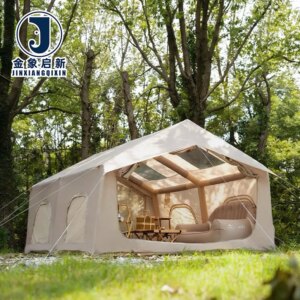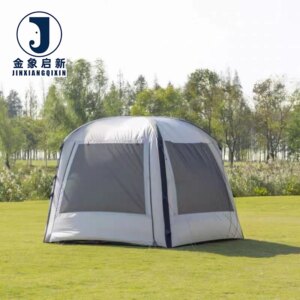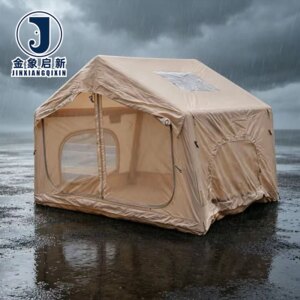
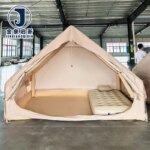
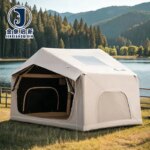
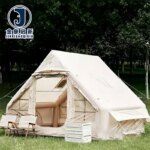
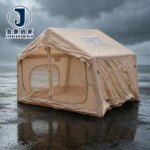
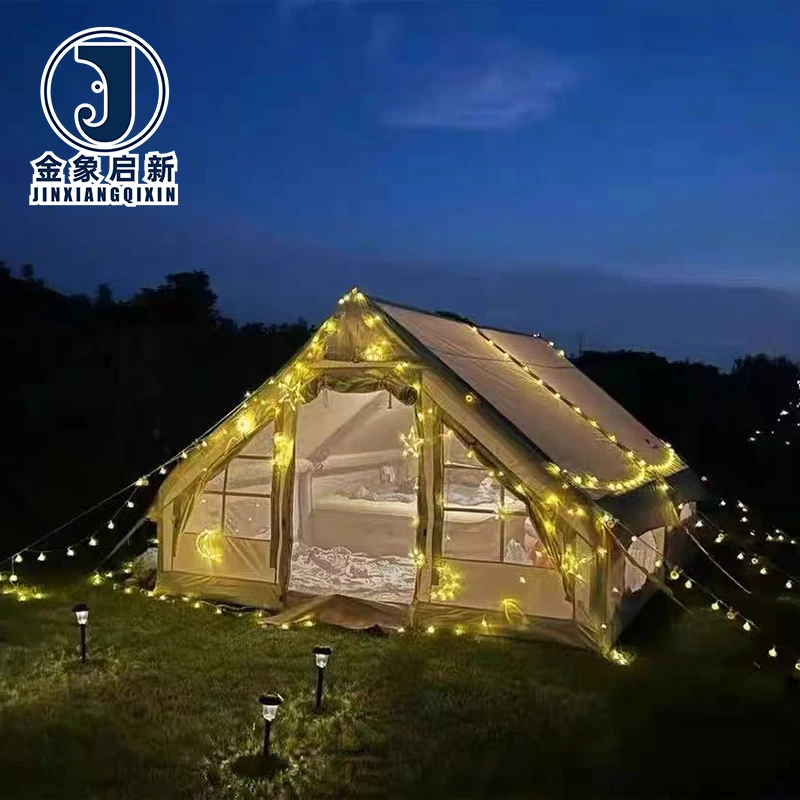
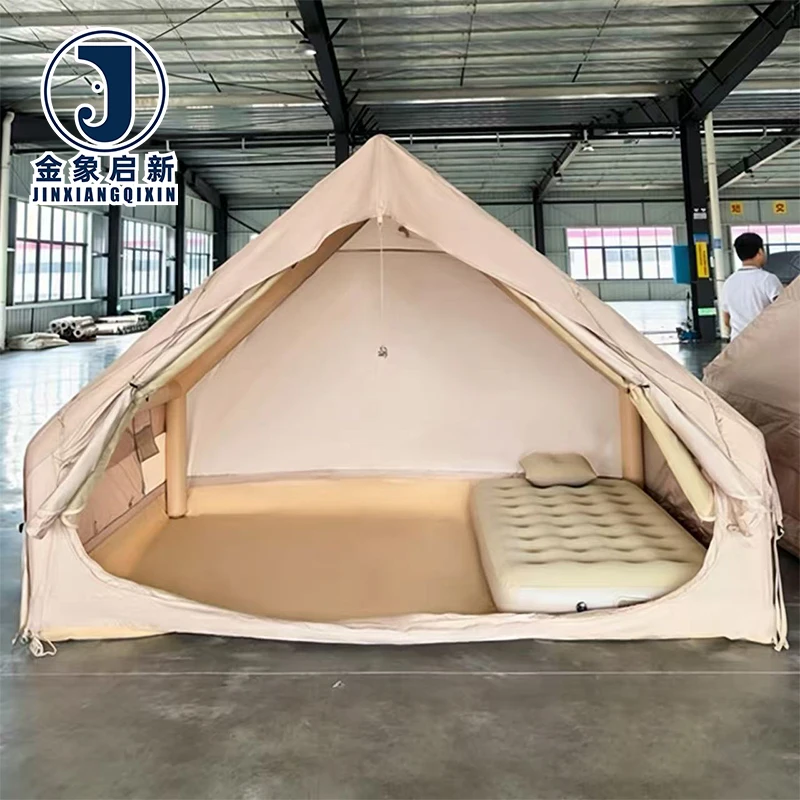
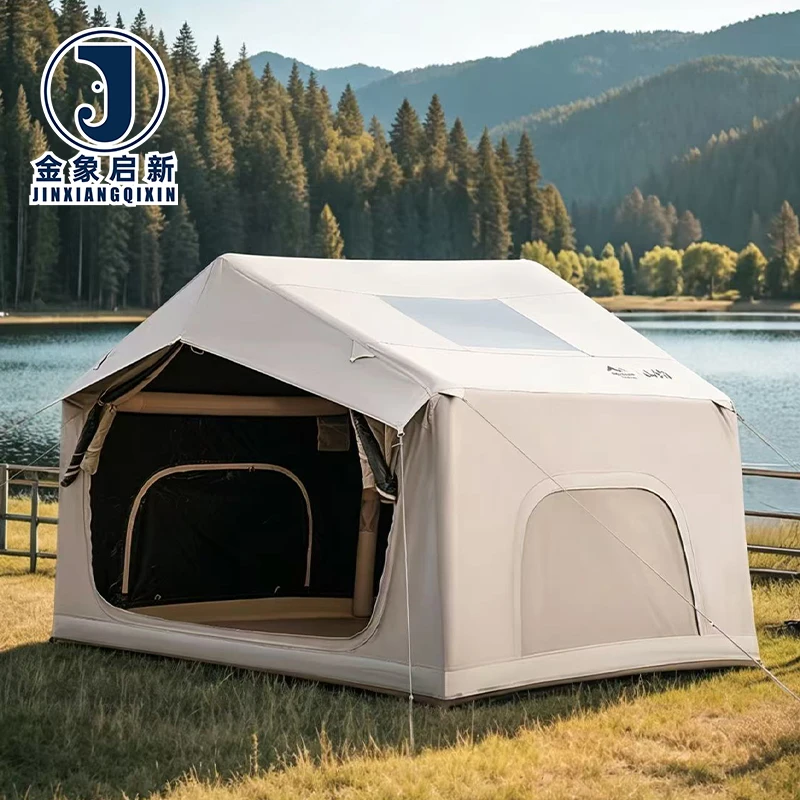
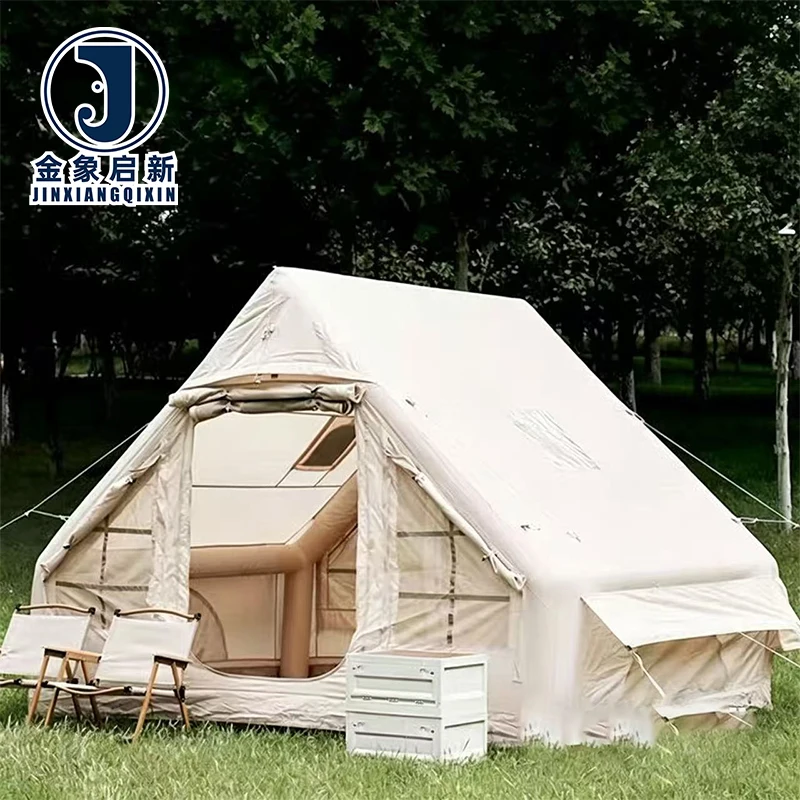
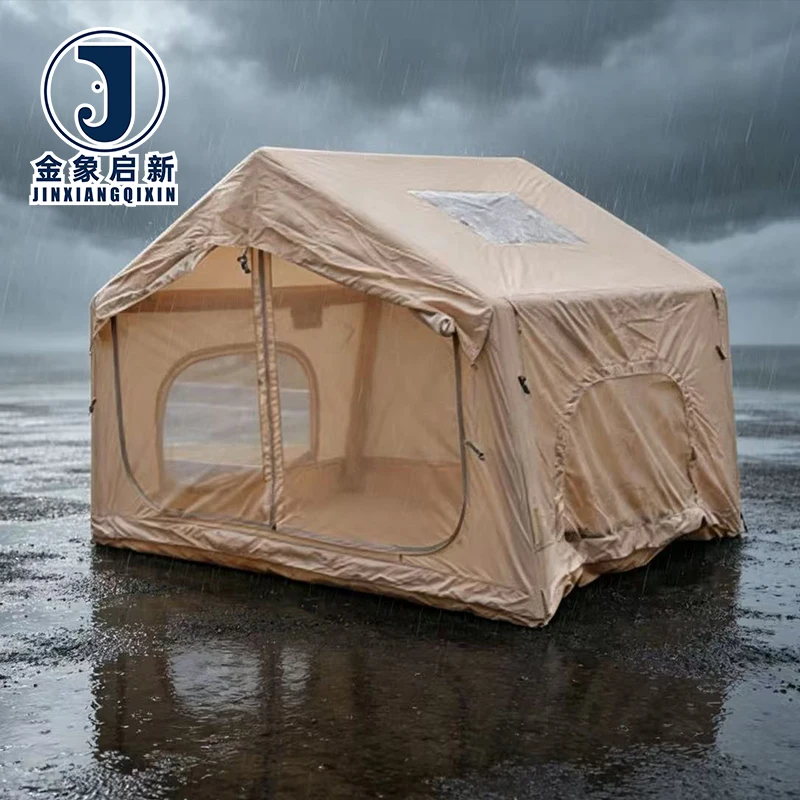
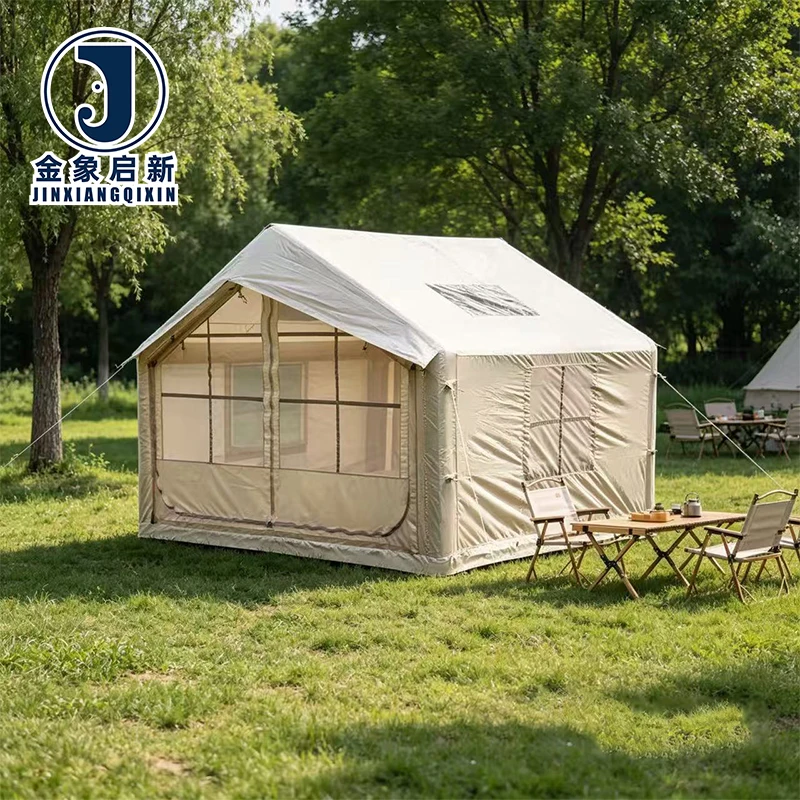
Proven Coated Fabric Expertise — Nearly three decades of PVC tarpaulin production with 3 full lines and 36 professional processing units supporting consistent inflatable tent fabric output.
Technical Specifications
| Parameter | Value |
|---|---|
| Product Type | Inflatable Tent |
| Core Material | PVC Tarpaulin |
| Key Performance | Waterproof, UV-resistant (test basis not stated in source), Tear-resistant |
| Fire-Retardant Treatment | Available in fire-retardant grades — confirm the grade required for your market |
| Anti-Static Treatment | Available upon specification |
| Customization Service | OEM & ODM (sample customization, pattern printing) |
| Production Facility | 9,180 m² with 3 full production lines |
| Processing Equipment | 36 sets of professional processing equipment |
| R&D Team | 10 technicians |
| Quality Control | Strict full-process quality inspection with dedicated QA & QC staff |
| Standards | ISO 9001, ISO 14001, ISO 45001, CE |
Application Suitability
| Application | Exposure & Requirement |
|---|---|
| Mining & tunnelling inflatable shelters | Confined spaces requiring certified fire-retardant fabric, potential contact with abrasive surfaces |
| Aviation maintenance inflatable enclosures | Controlled environment structures needing anti-static compliance and clean deployment |
| Construction site temporary workspaces | Outdoor weather exposure, wind loading on membrane surfaces, frequent setup and teardown |
| Disaster relief rapid-deployment structures | Quick automatic opening mechanism compatibility, transportability, resistance to varied ground conditions |
| Specialist membrane structure fabrication | Welded seam integrity under internal air pressure, long-term coating adhesion under inflation stress |
What "Certified" Means When Sourcing Inflatable Tent Fabric
Fire-retardant claims are only as reliable as the test report backing them.
When an inflatable structure fails a site inspection because the fabric lacks documented compliance, the cost goes far beyond material replacement — project timelines stall and contractor credibility erodes. Buyers routinely receive inflatable tent fabric described as "fire-retardant" without a single standard reference on the accompanying paperwork. In mining, aviation, and tunnelling environments, the gap between a verbal assurance and a verifiable test result is where compliance failures originate [NEED_CITE: fire classification standards for temporary structures in industrial sites]. Sourcing the correct inflatable tent fabric with full documentation prevents these downstream disruptions before they reach the site gate.
Compliance Documentation That Travels With Each Roll
The inflatable tent fabric supplied for specialist structures must arrive with a documentation package matching the compliance demands of the installation site. Every shipment includes material specification sheets detailing base fabric construction, coating weight, and applicable treatment grades. Fire-retardant and anti-static test reports are matched to the batch, so site inspectors can verify compliance against local regulatory frameworks without waiting for a secondary request to the supplier. This eliminates the common scenario where fabric arrives on site but the supporting paperwork lags weeks behind.
Coating Adhesion Under Inflation Pressure
Inflatable structures place a unique demand on PVC tarpaulin: the coating must maintain full adhesion to the base fabric while the membrane flexes continuously under internal air pressure. Micro-delamination at stress points — particularly around welded seams and valve openings — can propagate into visible failure once inflation cycles accumulate. Our 10-person R&D team evaluates coating-to-substrate bond strength during sample development, adjusting formulation parameters so the inflatable tent fabric holds together through repeated pressurisation and deflation without separation at the interface [NEED_CITE: tensile and tear test methods for coated fabrics per ISO 1421].
Reading Between the Specification Lines
GSM alone does not define how an inflatable membrane will perform under load. The base fabric denier and weave density work together with coating weight to determine tensile and tear behaviour — a lighter base fabric with a dense weave and well-formulated coating can outperform a heavier but loosely woven alternative. Coating method — whether knife-over-roll, lamination, or calendering — directly affects peel strength at welded seams, which is critical where inflatable panels join under pressure. Surface finish selection (glossy or matte) influences both cleanability in dusty industrial environments and the adhesion of printed graphics or branding applied post-production. Fire-retardant grades must be selected to match the specific compliance framework enforced at the installation site, as standards vary significantly between markets.
The Hidden Cost of Specifying Inflatable Fabric on Price Alone
When inflatable tent fabric is sourced primarily on cost per metre, the first failures appear at the welded seams — the exact location where internal pressure concentrates stress during inflation. Coating formulations optimised for low cost often sacrifice peel strength, meaning the seam splits before the fabric body shows any sign of wear. Batch-to-batch colour variation becomes visible once panels are joined side by side on a finished structure, forcing either acceptance of an uneven appearance or costly rework [NEED_CITE: common weld failure modes in PVC coated fabric structures]. Fire-retardant treatment applied without process verification may pass an initial spot test but fail across the full roll width, leaving sections of a deployed structure non-compliant.
Why Procurement Teams Specify Here
Our dedicated QA and QC staff inspect inflatable tent fabric at every production stage rather than relying on end-of-line sampling alone, catching coating inconsistencies before they reach the cutting table. The 10-person R&D team develops project-specific samples — adjusting material selection, colour matching, and printing specifications — within days of a confirmed enquiry. Three full production lines with 36 sets of professional equipment provide the capacity to fulfil bulk orders for large-scale membrane projects without compressing quality control windows. Nearly thirty years of focused coated fabric manufacturing means process parameters for PVC tarpaulin are deeply controlled, not approximated. Every roll ships with a complete documentation package aligned to the compliance requirements stated at the point of order.
Documentation & Verification
- Material specification sheet stating GSM, base fabric type, and coating details for each inflatable tent fabric roll
- Fire-retardant test report matched to batch number and aligned to the standard specified at order
- Anti-static certification included where applicable for mining and aviation inflatable structure projects
- ISO 9001, ISO 14001, ISO 45001, and CE certificates accompanying every shipment
- Pre-shipment inspection record documenting batch-level quality checks before dispatch
Fabrication, Handling & Storage
- Hot-air welding temperature must match the PVC tarpaulin coating formulation — request recommended parameters with your sample
- Reinforce valve and inflation port openings with additional PVC tarpaulin layers to distribute membrane stress
- Store rolls vertically on end-caps to prevent flat-spotting and permanent creasing in the coating
- Allow cold-stored inflatable tent fabric to reach ambient temperature before unrolling to avoid coating micro-cracking
- Use non-solvent cleaners on glossy or matte surfaces to preserve coating integrity and printed graphics
- Plan panel cutting layout to minimise welded seam count across high-stress inflation zones
Preparing Your Enquiry for Accurate Quotation
To receive a precise specification and lead time for your inflatable tent fabric order, share the intended application environment, the fire-retardant or anti-static standards enforced at your installation site, and the required roll width and quantity. If your project involves pattern printing or custom colour matching, provide reference samples or Pantone codes so our R&D team can develop a production sample for your approval before full-scale manufacturing begins.
Frequently Asked Questions
Q: What fire-retardant grades are available for inflatable tent fabric, and which standards do they meet?
A: Fire-retardant treatment is available across multiple grades to match regional compliance frameworks for temporary and permanent inflatable structures. The specific grade required depends on the regulatory standard enforced at your installation site — such as classifications for building materials or mining equipment. State your target standard at enquiry so we can supply fabric with the correct treatment and matching test documentation.
Q: Is anti-static treatment certified for use in mining or aviation inflatable structures?
A: Anti-static treatment is available for inflatable tent fabric destined for environments where static discharge poses a risk, including mining tunnels and aviation maintenance enclosures. Certification documentation accompanies each treated batch, specifying the test method and result. Confirm the anti-static standard your site requires so we can align the treatment and reporting accordingly.
Q: How do you ensure batch-to-batch consistency in inflatable fabric orders?
A: Every production run passes through dedicated QA and QC inspection at each stage, from base fabric receipt through coating and final winding. Rolls are checked for GSM, colour uniformity, and coating adhesion before packing. This staged inspection catches deviations early, so multi-roll shipments for large membrane projects maintain visual and performance consistency across the entire order.
Q: What customization options are available for membrane and inflatable structure projects?
A: Customisation covers material selection, roll width, colour matching, and pattern printing through our OEM and ODM service. The 10-person R&D team develops project-specific samples for your approval before bulk production begins. Custom sizing, branding, and surface finish options are confirmed during the sample stage to ensure the final inflatable tent fabric meets your fabrication requirements.
Q: What compliance documentation ships with each inflatable fabric delivery?
A: Each shipment includes a material specification sheet, fire-retardant and anti-static test reports where applicable, ISO and CE certificates, a pre-shipment inspection record, and a roll packing list. Certificate of origin and customs documentation are provided for export orders. All documents reference the batch number for full traceability from production to site delivery.