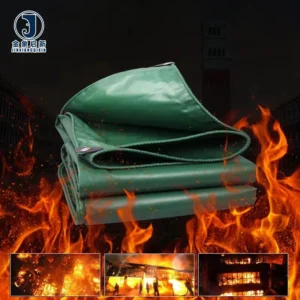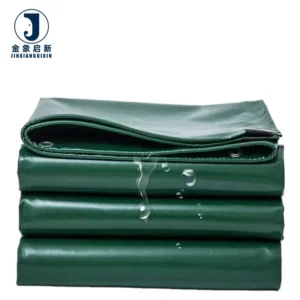
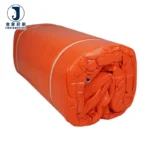
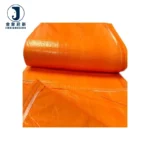
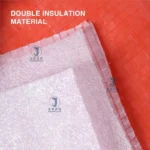

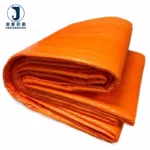
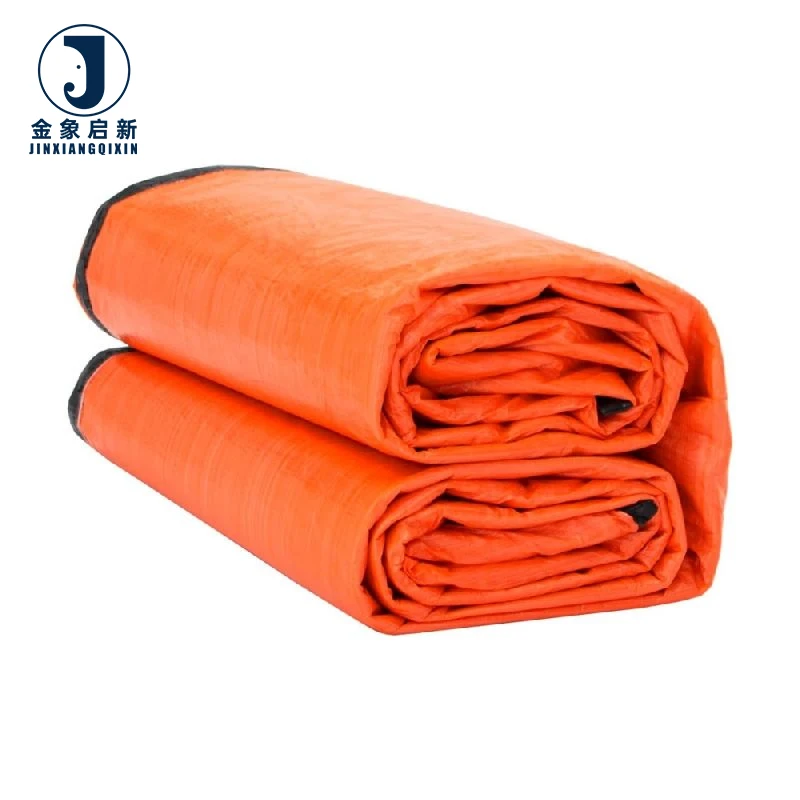
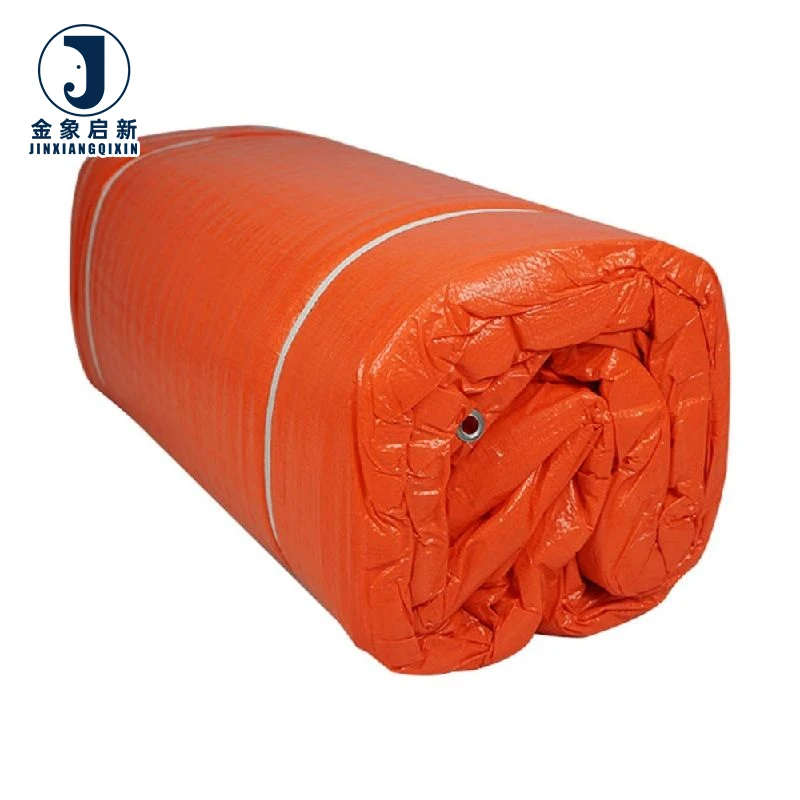
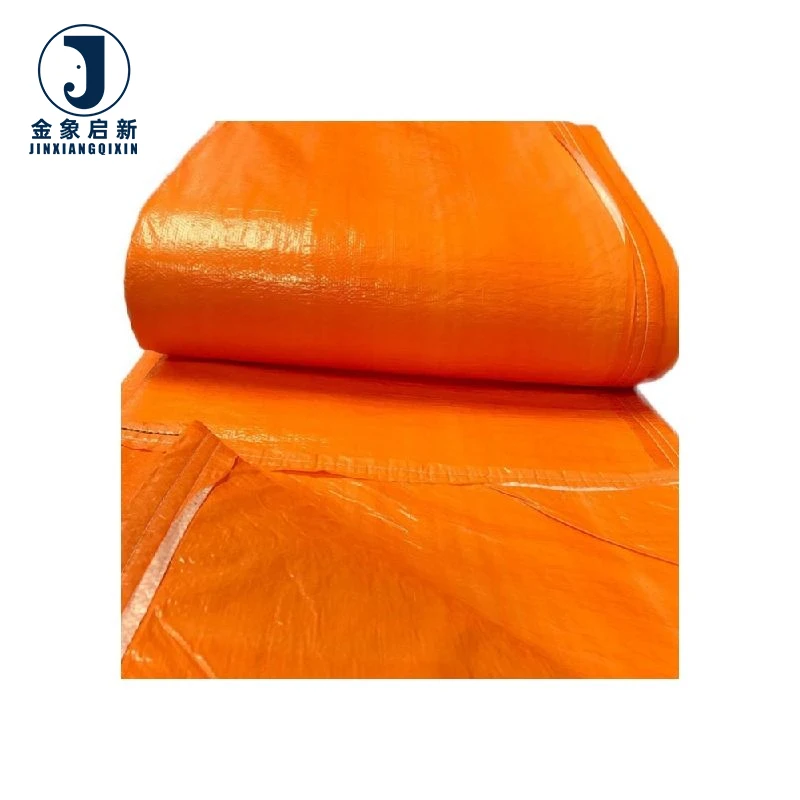
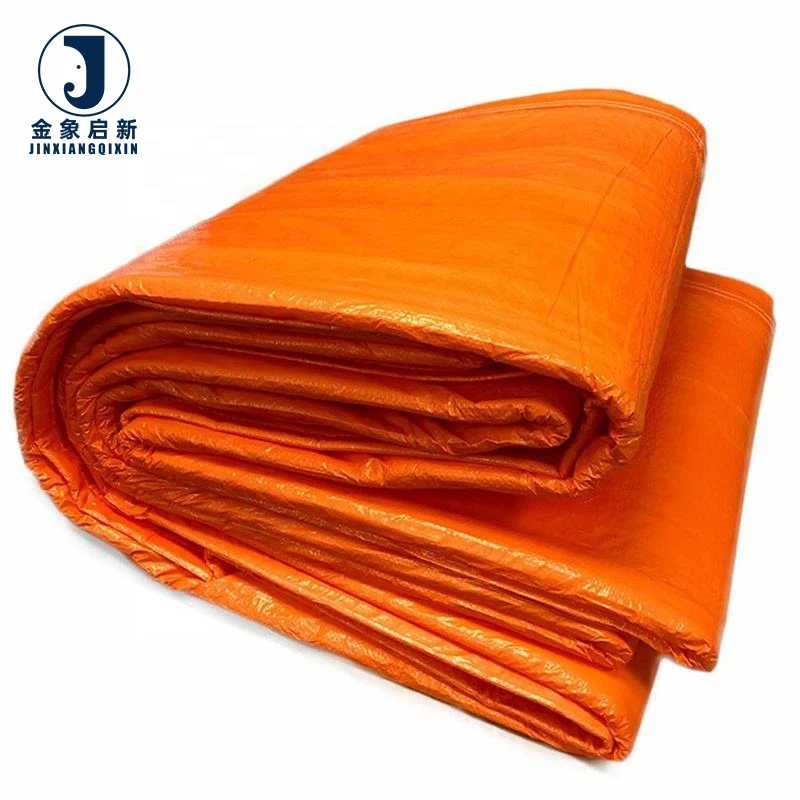
Multi-layer thermal retention — PE cloth and closed-cell foam core engineered to maintain internal temperatures during cold-weather concrete pours and temporary site enclosures, reducing heat loss where generic covers fail.
Technical Specifications
| Parameter | Value |
|---|---|
| Product Type | Insulated Tarpaulin / Concrete Curing Blanket |
| Dimensions | 6ftx24ft / 8ftx25ft / 12ftx20ft / 12ftx24ft |
| Thickness Options | 2x2mm / 3×1.5mm / 1x4mm / 5mm / 6mm / 8mm / 12mm |
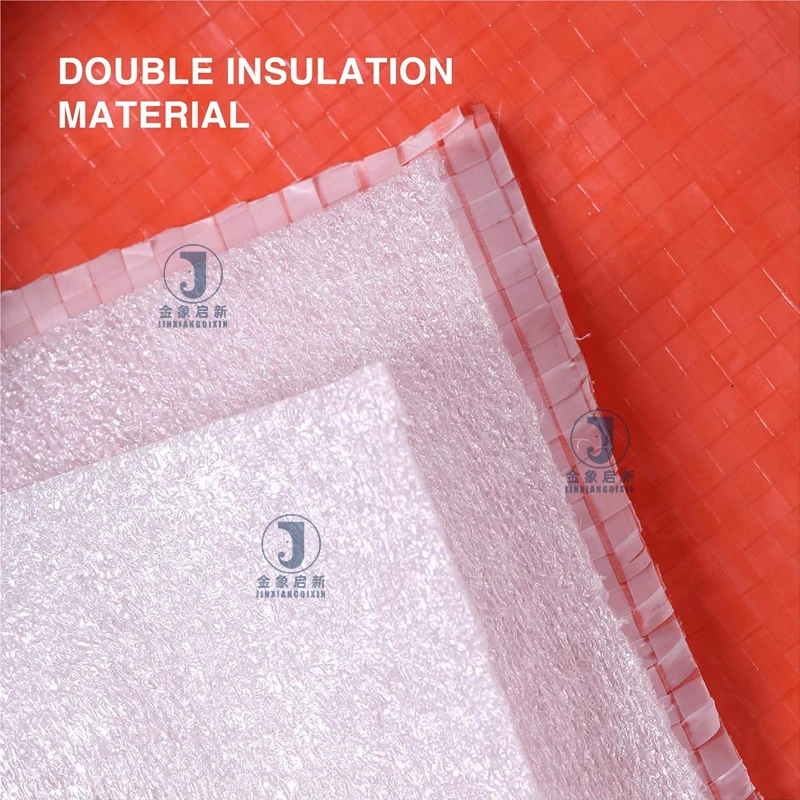
| Material Structure | PE cloth + closed cell PE foam core + PE cloth |
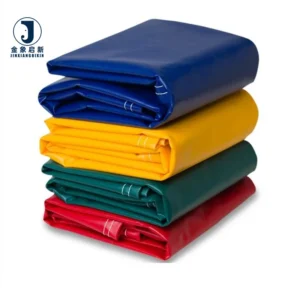
| Color Options | Orange / Black / White / Silver / Customized |
| Grommet Configuration | Aluminum grommets, 61cm and 91.5cm spacing |
| Edge Finish | Reinforced stitch, rust-proof brass grommets |
| Surface Treatment | UV resistant (test basis not stated), waterproof |
| Certifications | ISO / CE |
Application Suitability
| Application | Exposure & Requirement |
|---|---|
| Concrete curing in cold weather | Sustained low temperatures, moisture from curing slurry, wind chill on exposed slab edges |
| Temporary heated enclosures | Internal heater output retention, wind pressure on vertical panels, repeated installation and teardown |
| Wind break barriers on scaffolding | Lateral wind load, grommet pull-through stress, abrasion against scaffold tubes |
| Equipment and material protection in freezing conditions | Snow load, ice formation on surface, thermal shock during temperature swings |
Why Insulation Claims Without Thickness Data Leave Your Concrete Exposed
Closed-cell foam core thickness determines whether a curing blanket holds temperature or merely blocks wind.
When winter pours proceed under a tarp that has no stated insulation rating, the result is often surface crusting, delayed strength gain, or cold joints that require demolition. Site managers routinely discover that the material draped over fresh concrete provides wind shielding but negligible thermal resistance, because the specification sheet never distinguished between a single-layer PE sheet and a multi-layer insulated blanket. The gap between what was ordered and what arrived only becomes visible when temperature loggers record sub-zero readings beneath the cover. [NEED_CITE: ACI 306 cold-weather concrete curing temperature requirements]
Selecting an insulated PE tarpaulin with a verified foam core thickness gives the procurement team a measurable parameter to match against the project’s thermal loss calculation, rather than relying on a generic "winter tarp" description that carries no R-value or thermal resistance data.
How the Three-Layer PE Structure Manages Heat Flow
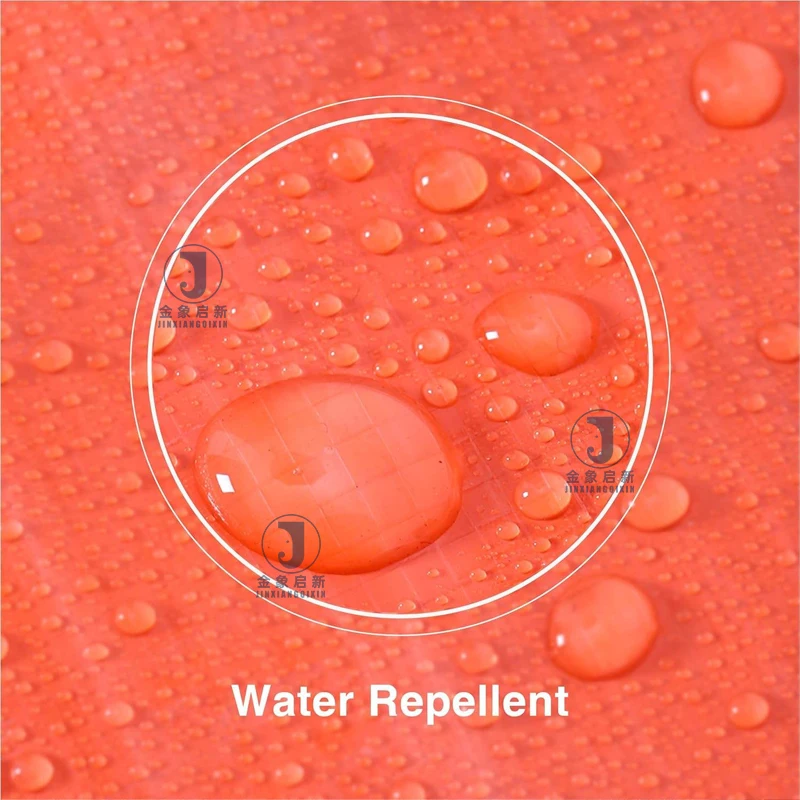
The outer PE cloth layers serve as waterproof barriers that prevent rain, snowmelt, and curing moisture from penetrating into the insulation core. Between them, the closed-cell PE foam core traps still air within its cellular matrix, which is the mechanism that resists conductive heat transfer. An insulated PE tarpaulin built this way maintains a thermal boundary that single-layer fabrics simply cannot provide, keeping the environment beneath the blanket closer to the target curing temperature. The closed-cell structure also means the core will not absorb water if the outer layer is punctured, preserving insulation performance even after minor site damage.
Grommet Spacing and Edge Reinforcement for Wind-Loaded Panels
Vertical enclosure panels face sustained lateral pressure that concentrates force at every fixing point. The aluminum grommets set at 61cm and 91.5cm intervals distribute that load across a wider section of the fabric edge, reducing the chance of tear-out at individual attachment points. Rust-proof brass grommets along the reinforced stitched perimeter add a second layer of security, particularly where the blanket is tensioned against scaffolding or frame members. This dual-metal grommet system addresses a common failure mode on site — corrosion-weakened eyelets that pull free after repeated wet-dry cycles, leaving the panel unsecured at the worst possible moment. [NEED_CITE: wind load calculation methods for temporary construction enclosures]
Reading the Thickness Options Against Your Climate Zone
The available thickness range — from 2x2mm through 12mm — covers scenarios from light frost protection to sustained sub-zero enclosure heating. Thinner constructions such as 1x4mm suit moderate climates where the primary need is wind blocking with supplementary insulation, while 8mm and 12mm grades target prolonged freezing exposure where heater runtime and fuel cost become significant project variables. The multi-layer configurations like 3×1.5mm combine a thicker outer fabric with a moderate foam core, balancing puncture resistance against thermal performance. Choosing the correct thickness depends on the lowest expected ambient temperature, the duration of the curing or enclosure period, and whether auxiliary heating is deployed beneath the blanket.
What Happens When Insulation Thickness Is Assumed Rather Than Verified
A blanket that arrives thinner than the project specification required does not fail dramatically — it fails gradually, through increased heater cycling, higher fuel consumption, and concrete strength curves that fall behind schedule. By the time temperature data confirms the deficiency, the pour is already in place and the only remedy is adding supplementary covers at unplanned cost. Batch-to-batch thickness variation compounds the problem when multiple blankets are joined across a large slab, creating cold spots at the overlaps where thinner material was substituted. [NEED_CITE: thermal performance verification methods for construction insulation blankets]
Why Sourcing Insulated Tarps Here Reduces Specification Risk
Deep process control over coating weight and lamination ensures the PE cloth bonds reliably to the foam core across every thickness grade, preventing delamination during repeated folding and deployment. Three full production lines and 36 sets of equipment support volume orders with consistent lead times, even when multiple thickness variants are required for a single project. A dedicated 10-person R&D team develops custom-sized samples within days, allowing buyers to verify grommet placement and edge finishing before committing to a production run. Every roll undergoes 100% pre-shipment inspection, with thickness and grommet spacing checked against the purchase specification rather than sampled statistically.
Documentation & Verification
- Material specification sheet confirming PE cloth density, foam core thickness, and total laminate weight per square meter
- Pre-shipment inspection record verifying grommet spacing at 61cm and 91.5cm intervals on every panel
- UV resistance and waterproof performance documentation with test basis stated
- ISO and CE certificates with certificate of origin for customs clearance
- Roll packing list with dimensional accuracy confirmation per panel
Fabrication, Handling & Storage
- Heat-weld seams at temperatures matched to PE cloth thickness to avoid melting through the foam core layer
- Fold blankets with foam core facing inward to prevent permanent crease damage to closed-cell structure
- Store rolls or folded panels flat on pallets, avoiding point loads that compress the foam core
- Clean surfaces with mild detergent only — solvents may degrade the PE outer cloth coating
- Repair minor punctures with PE-compatible adhesive patches applied to dry, clean surfaces
- Allow panels to acclimate to ambient temperature before unfolding in freezing conditions to prevent cracking
What We Need to Quote Your Insulated Tarpaulin Order
Provide the lowest expected ambient temperature and the duration your concrete or enclosure will require thermal protection, so we can recommend the appropriate foam core thickness. Confirm whether panels will be hung vertically as wind barriers or laid horizontally as curing blankets, because grommet configuration and edge reinforcement differ between the two applications. Let us know if your project specification mandates fire-retardant certification, as this affects material selection and lead time.
Frequently Asked Questions
Q: What thickness do I need for cold-weather concrete curing in my climate?
A: The correct thickness depends on your lowest expected temperature, curing duration, and whether supplementary heating is used. Thinner grades such as 2x2mm suit moderate frost protection, while 8mm or 12mm blankets are specified for sustained sub-zero conditions. Share your project’s thermal requirements and we will recommend the appropriate grade with supporting documentation.
Q: Can these insulated blankets be hung vertically as wind barriers on scaffolding?
A: Yes. The reinforced stitched edges and dual grommet system — aluminum at 61cm and 91.5cm spacing plus brass perimeter grommets — are designed to handle lateral wind load on vertical panels. Specify the panel dimensions and scaffold attachment method so we can confirm grommet placement matches your fixing hardware.
Q: How do I verify the insulation performance before the order ships?
A: We provide a material specification sheet confirming foam core thickness, layer structure, and total laminate weight. Pre-shipment inspection records document dimensional accuracy and grommet spacing for every panel. Request the thermal performance test basis applicable to your market’s compliance requirements during the inquiry stage.
Q: Do you supply test reports for UV and flame-retardant treatments?
A: UV resistance is claimed for the PE outer cloth; confirm the specific test standard required by your project specification so we can align documentation. Flame-retardant grades are available — state the classification your site mandates, such as NFPA 701 or local building code requirements, and we will confirm availability and lead time.
Q: What is the lead time for custom-sized insulated curing blankets?
A: Sample development for custom dimensions typically takes days, allowing you to verify fit, grommet placement, and edge finishing before full production. Bulk lead times depend on order volume and thickness grade selected. Provide your project timeline and panel quantities during inquiry for a confirmed dispatch schedule.