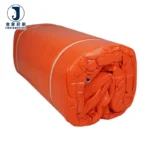
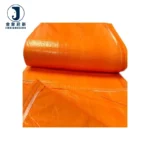
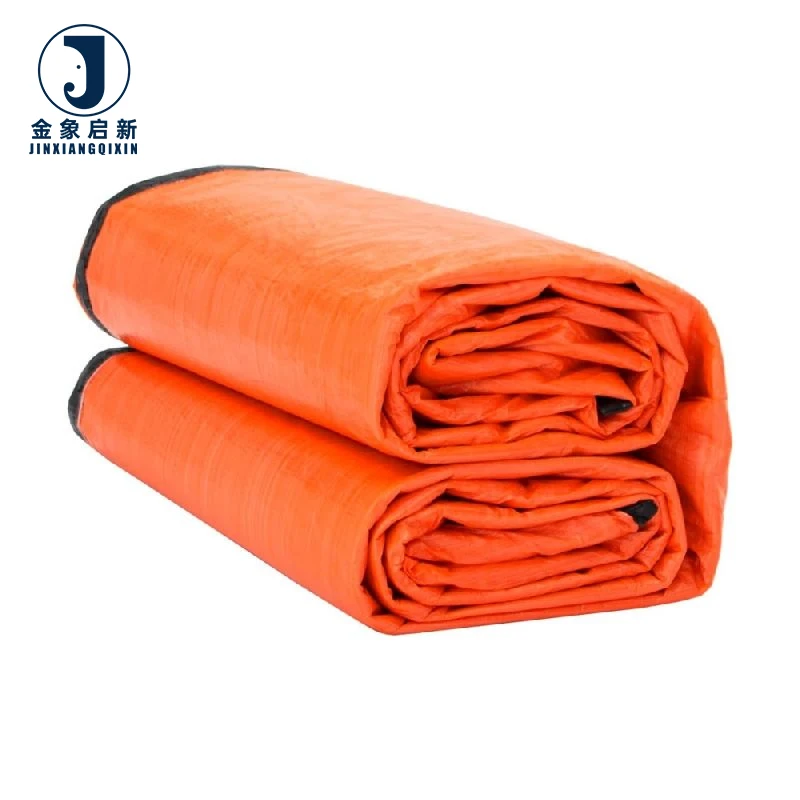
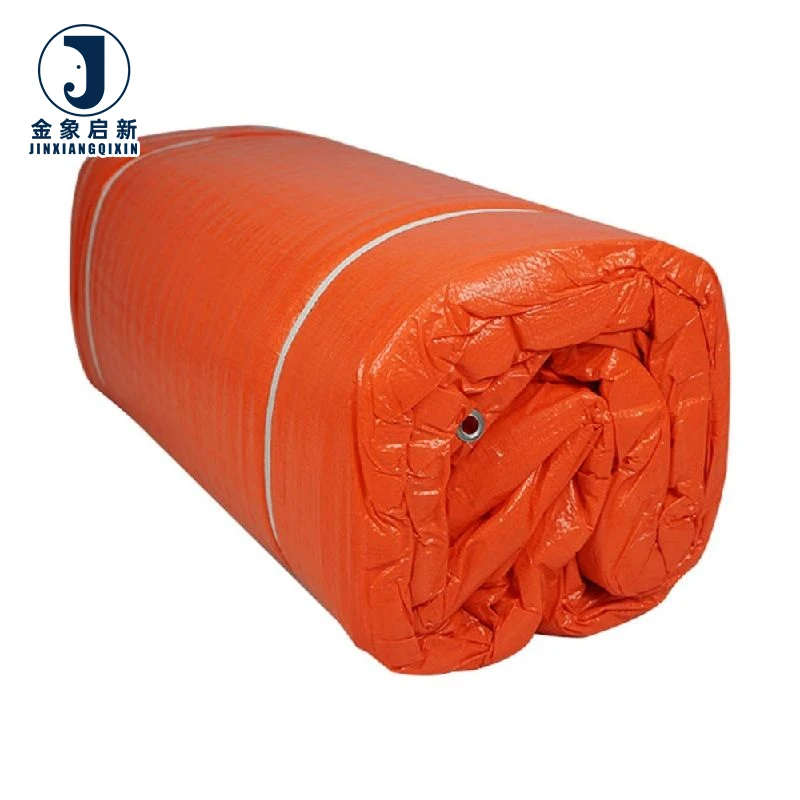
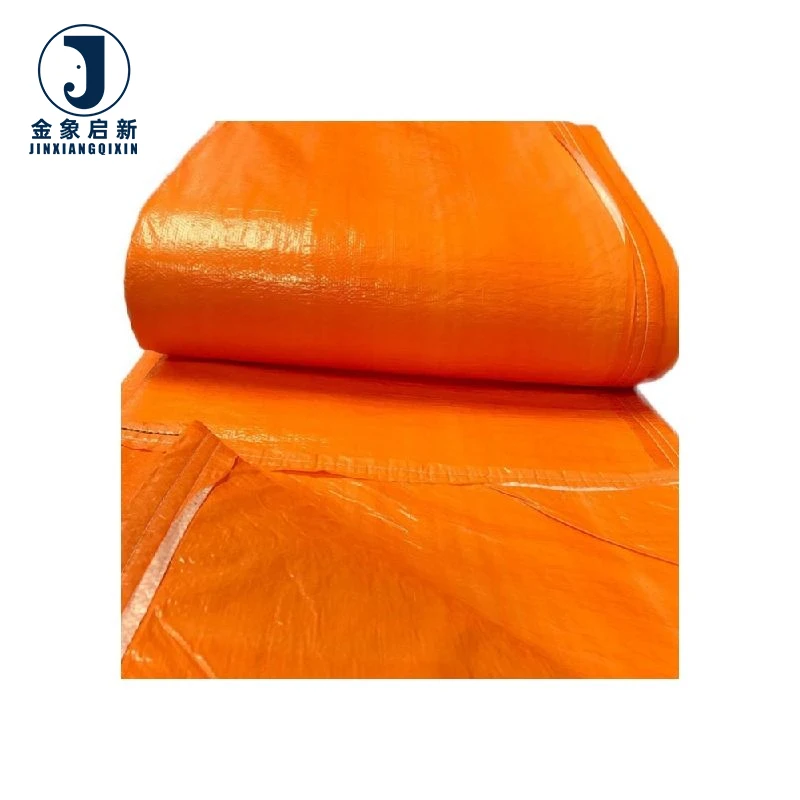
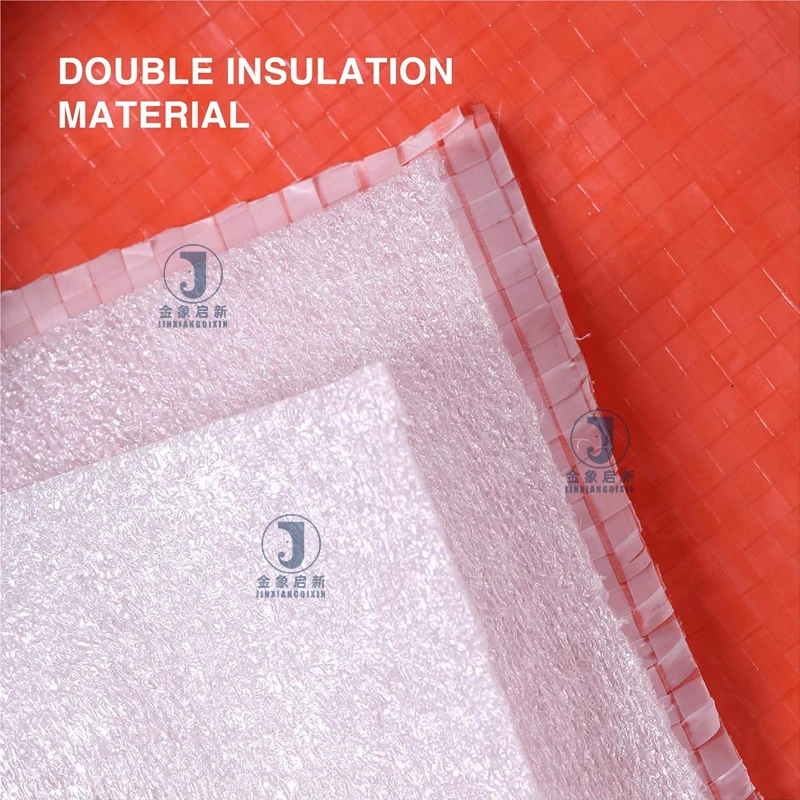
Closed-Cell Foam Core Engineering — Verified thickness grades from 2x2mm to 12mm with PE foam density matched to thermal retention requirements for cold-weather construction applications.
Technical Specifications
| Parameter | Value |
|---|---|
| Product Type | Insulated PE Tarpaulin |
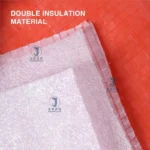
| Structure | PE cloth + closed cell PE foam core + PE cloth |
| Total Thickness Options | 2x2mm, 3×1.5mm, 1x4mm, 5mm, 6mm, 8mm, 12mm |
| Size Options | 6ftx24ft, 8ftx25ft, 12ftx20ft, 12ftx24ft |
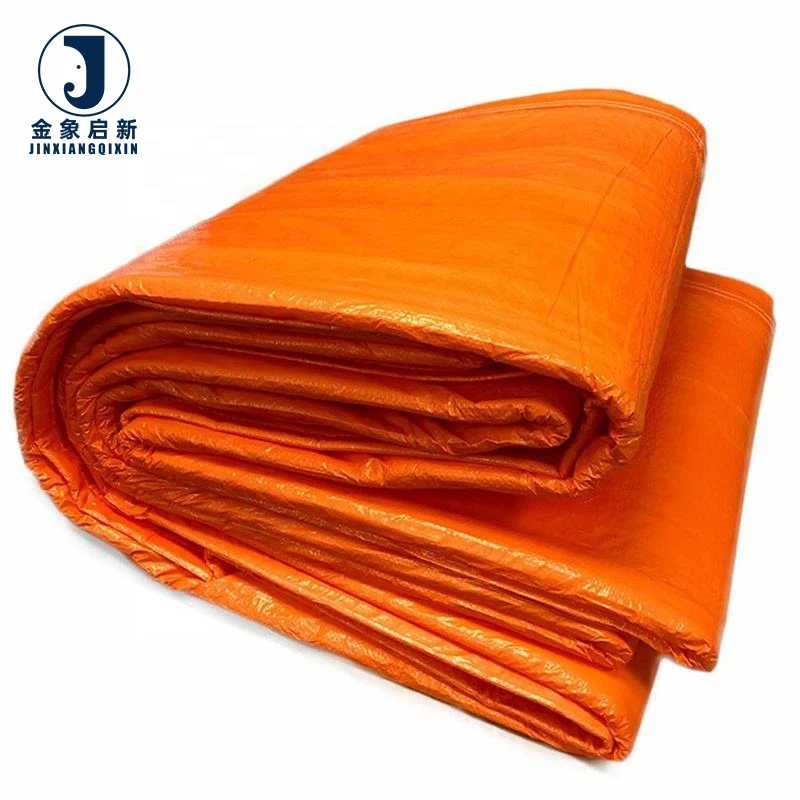
| Color Options | Orange, Black, White, Silver, Customized color |
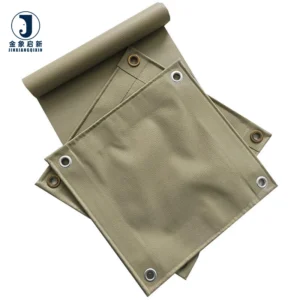
| Grommet Configuration | Aluminum grommets, hole distance 61cm and 91.5cm |
| Edge Finish | Reinforcement stitch, rust-proof brass grommets around all finished stitched edges |
| Surface Treatment | UV treatment built into base fabric (test basis not stated in source) |
| Flame Retardant | Grade not stated — confirm the grade required for your market |
| Coating Material | PE (Polyethylene) |
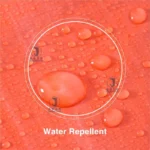
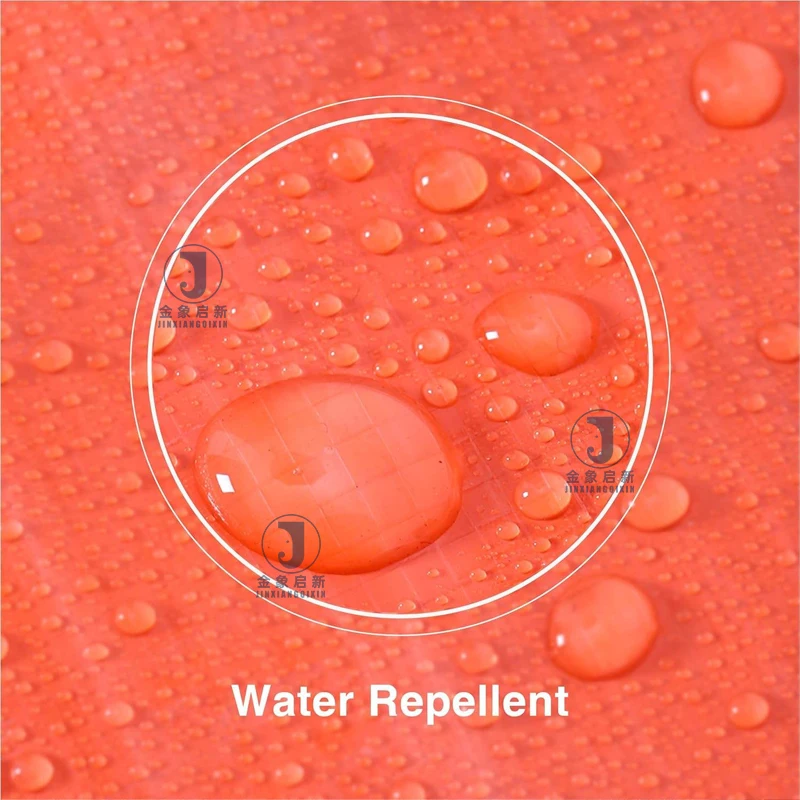
| Waterproof | Yes (surface fabric waterproof) |
Application Suitability
| Application | Exposure & Requirement |
|---|---|
| Concrete curing blanket | Ground contact, freeze-thaw cycles, heat retention for hydration, moisture trapping |
| Heated construction enclosure | Vertical hanging under wind load, thermal barrier between heated interior and ambient cold |
| Wind block on scaffolding | Constant wind pressure, abrasion against metal frames, tie-down stress at grommets |
| Road repair site cover | Traffic vibration, de-icing chemical exposure, repeated deployment and folding |
| Truck and trailer cover | Highway wind uplift, UV exposure during transit, abrasion at load contact points |
Why Thickness Alone Does Not Guarantee Insulation Performance
An insulated PE tarpaulin for construction and concrete curing must deliver measurable thermal separation — not just a foam layer that compresses under its own weight during vertical installation.
Foam density and closed-cell structure determine whether the insulation value survives handling and wind loading.
I have seen lightweight foam cores collapse after two weeks on a heated enclosure, leaving crews burning extra fuel to maintain pour temperatures while the concrete cure schedule slips behind. When the foam compresses, the thermal barrier thins at exactly the points where wind pressure concentrates — the panel edges and tie-down zones. The insulated PE tarpaulin for construction and concrete curing you specify on day one needs to perform the same way on day thirty, after repeated wind cycles and crew handling. [NEED_CITE: closed-cell foam compression set under sustained load for insulated tarpaulin panels]
Multi-Layer PE Construction and Thermal Separation
The three-layer structure — PE cloth, closed-cell PE foam core, and PE cloth — creates a composite panel where each layer serves a distinct function during cold-weather deployment. The outer PE layers handle abrasion from scaffolding frames and resist water penetration during rain or snow events. The closed-cell foam core traps air within its cell structure, providing the actual thermal separation between the heated work zone and ambient freezing conditions.
When specifying an insulated PE tarpaulin for construction and concrete curing, the total thickness number matters less than how that thickness is distributed across the layers. A 5mm panel with 1mm outer skins and 3mm foam will behave very differently under tie-down tension than a 5mm panel with thinner foam and heavier outer fabric. The grommet spacing at 61cm and 91.5cm distributes wind load across the panel, but the foam core must resist compression at each tie-down point to maintain insulation continuity. [NEED_CITE: tensile and tear test methods for coated fabrics per ISO 1421]
Grommet and Edge Reinforcement Under Wind Load
The rust-proof brass grommets and reinforcement stitch along all finished edges define how this insulated PE tarpaulin for construction and concrete curing survives its first winter storm. Grommets spaced at 61cm intervals handle standard enclosure tie-down patterns, while the 91.5cm option suits larger panels where tie-down hardware is positioned at wider intervals on the scaffolding frame. The stitched edge reinforcement prevents the PE outer layer from tearing away from the grommet under sustained wind uplift.
How Thickness Grades Map to Site Conditions
The available thickness range — from 2x2mm through 12mm — covers the spectrum from temporary overnight concrete curing wraps to semi-permanent heated enclosure walls. Thinner grades such as 2x2mm and 1x4mm serve short-duration curing blankets where the panel lays flat against the slab and compressive load is minimal. The 5mm and 6mm grades balance handling weight against insulation value for most heated tent applications. Panels at 8mm and 12mm suit vertical hanging on large enclosures where wind pressure demands a stiffer panel that resists billowing and maintains consistent air gap separation. The 3×1.5mm asymmetric construction places more material on the weather-exposed face, which matters when one side faces prevailing wind and the other faces the heated interior.
The Hidden Cost of Specifying Insulated Tarps on Thickness Alone
A panel that measures correctly on delivery but loses half its foam thickness after three weeks of wind cycling creates a false sense of security on site. Crews trust the enclosure is holding temperature while heat loss accelerates at compressed zones, forcing heaters to run longer and concrete strength gain to fall behind schedule. [NEED_CITE: thermal performance degradation in compressed foam insulation panels under cyclic wind loading] Batch-to-batch foam density variation across a multi-panel enclosure means some sections insulate properly while adjacent panels underperform — a problem that only surfaces when thermal imaging reveals cold spots after installation. Color inconsistency between production runs becomes visible when orange panels hang side by side on a building facade, forcing the contractor to either accept a patchwork appearance or replace entire sections.
Why Procurement Teams Source Insulated PE Fabric Here
Deep process control over PE coating weight and foam lamination adhesion ensures that the three-layer bond survives repeated folding and deployment without delamination at the foam-to-cloth interface. Three full production lines and 36 sets of professional equipment support bulk panel orders with consistent foam density roll-to-roll, which matters when a single heated enclosure requires dozens of matched panels.
The 10-person R&D team develops custom thickness and size combinations within days, providing sample panels for contractors to test on-site before committing to a full project order. Dedicated QA/QC inspection at every production stage — from foam extrusion through final grommet insertion — catches compression set issues and grommet pull-out weaknesses before panels ship. Nearly 30 years of coated fabric production experience means the team understands how PE foam behaves differently from PVC in cold-weather lamination, adjusting process parameters to match the material.
Documentation & Verification
- Material specification sheet stating foam core density, total thickness breakdown, and PE outer layer weight
- Pre-shipment inspection record documenting grommet pull-out strength and edge stitch integrity
- Thickness verification per panel against the stated grade before dispatch
- Color reference sample for batch consistency matching across multi-panel orders
- ISO and CE certificates confirming quality management system compliance
Fabrication, Handling & Storage
- Heat-weld seams at temperatures matched to PE melting point to avoid burning through the closed-cell foam core layer
- Store rolled panels foam-side-out to prevent permanent compression creases during extended warehouse holding
- Deploy panels above freezing to allow PE outer fabric to flex without cracking at fold lines
- Clean with mild detergent only — solvents can degrade the PE surface and compromise UV treatment built into the base fabric
- Repair minor punctures with PE-compatible adhesive patches that bond to both outer cloth and exposed foam
What to Include in Your Inquiry
Provide the application type — concrete curing, heated enclosure, or wind barrier — along with the panel dimensions and thickness grade your project requires. Specify whether panels will hang vertically or lay flat, as this determines which thickness grade maintains insulation performance under the expected load conditions. Include the target color and whether multiple panels must match visually when installed side by side. Confirm whether you need finished panels with grommets and stitched edges or roll stock for on-site fabrication. State your project timeline so the production schedule can align with your site readiness date.
Frequently Asked Questions
Q: How is the insulation performance of the closed-cell PE foam core verified?
A: Foam density and compression set are checked during production to confirm the core maintains its thickness under sustained load. We document thickness measurements per panel before shipment and can provide test data on thermal resistance values for the specified grade upon request.
Q: What thickness grade should I specify for concrete curing versus heated enclosures?
A: Flat-laid curing blankets typically use thinner grades such as 1x4mm or 5mm where compression load is minimal. Vertical enclosure panels exposed to wind require stiffer grades like 6mm, 8mm, or 12mm to resist billowing and maintain the air gap that provides insulation separation.
Q: Can custom colors be matched consistently across multiple production runs?
A: Yes. We develop a color reference sample for approval before production begins, then use that reference to control pigment formulation across subsequent orders. This ensures panels from different batches match when installed together on visible enclosure projects.
Q: How do grommets perform under sustained high-wind load on large enclosure panels?
A: Rust-proof brass grommets are set through reinforced stitched edges that distribute pull-out force across a wider fabric area. The 61cm and 91.5cm spacing options allow tie-down patterns matched to your scaffolding frame. Pre-shipment inspection includes grommet pull-out strength verification.
Q: What is the typical lead time for non-standard sizes and custom colors?
A: Custom size and color orders require sample development and approval before bulk production begins, adding time upfront. Once the sample is approved, production on standard lines proceeds within typical multi-week lead times depending on order volume and current line scheduling.