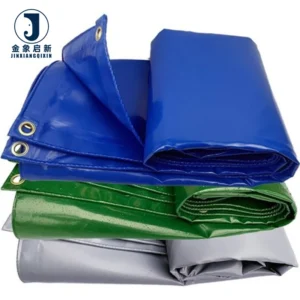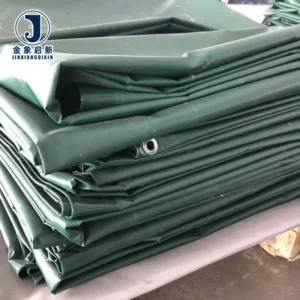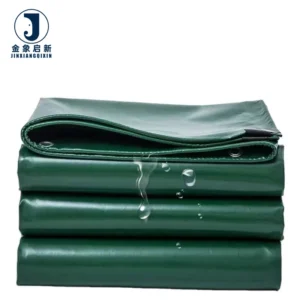


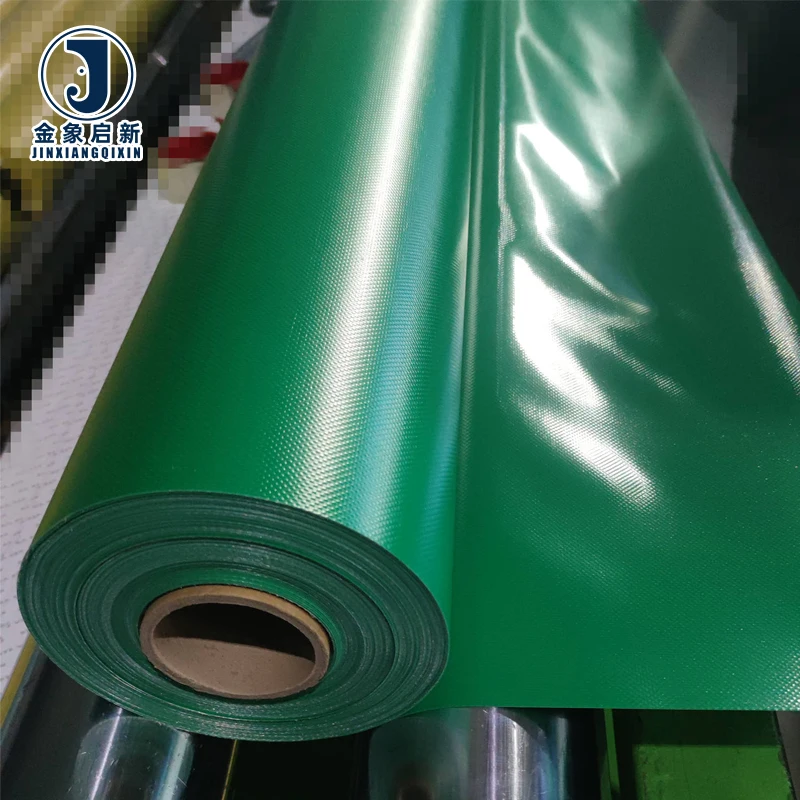
Specialist Grade Compliance — every roll of PVC coated fabric leaves the facility with fire-retardant and anti-static test reports matched to the purchase order, backed by three decades of coating process control.
Technical Specifications
| Parameter | Value |
|---|---|
| Product Type | PVC Coated Fabric |
| Base Material | 100% high tenacity polyester yarn |
| Yarn Denier | 500D (medium) / 1000D (heavy-duty) / 500D–2000D (super heavy) |
| Coating Material | PVC |
| Coating Method | Lamination technology and hot melt coating technology |
| Total Thickness | 0.35–0.45 mm (medium) / 0.70–1.0 mm (heavy-duty) / 1.2–1.5 mm (super heavy) |
| Weight (GSM) | 400–500 g/m² (medium) / 700–1000 g/m² (heavy-duty) / 1100–1500 g/m² (super heavy) |
| Tensile Strength (Warp/Weft) | 1500–2000 / 1200–1800 N/5cm (medium); 2000–2500 / 1800–2200 N/5cm (heavy-duty); 2500–3000 / 2200–2800 N/5cm (super heavy) |
| Flame Retardant | Flame retardant treatment available (grade not stated in source — confirm grade required for your market) |
| Anti-Static | Anti-static treatment available (standard not stated in source — request test report for surface resistance value) |
| UV Treatment | UV resistant treatment available (test basis not stated) |
| Cold Resistance | Cold resistant cracking formulation |
| Anti-Mildew | Mold proof treatment |
| Waterproof | Yes |
| Color Fastness | Best color fastness claimed |
| Weather Resistance | 3–5 years outdoor durability (source value — verify against manufacturer catalog) |
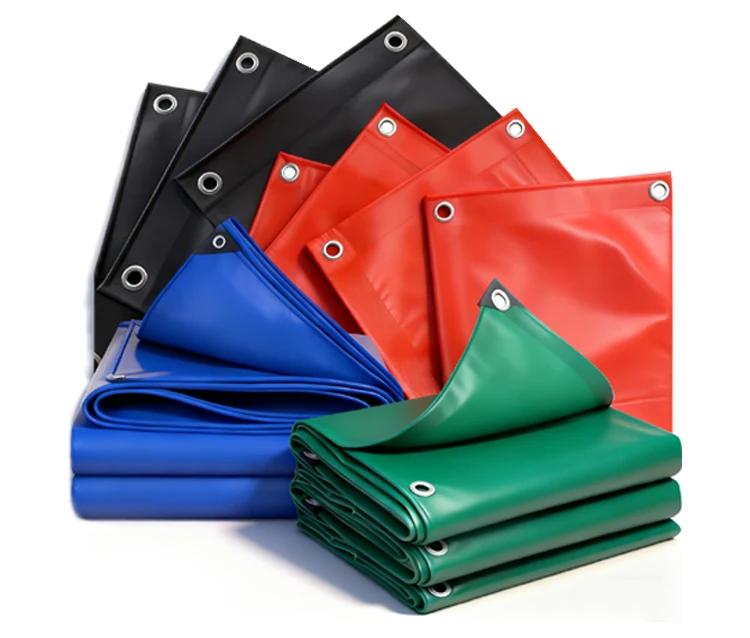
| Color | Customizable |
| Standards | ISO 9001, CE |
Application Suitability
| Application | Exposure & Requirement |
|---|---|
| Mining ventilation duct | Continuous airflow pressure, underground moisture, rock dust abrasion, fire and static discharge compliance |
| Tunnelling ventilation duct | High humidity, confined-space fire risk, mechanical snagging from equipment movement |
| Aviation facility ventilation | Regulatory fire-retardant compliance, large-span duct suspension loads |
| Inflatable structure fabric | Constant internal air pressure, UV and weather exposure, repeated inflation cycles |
| Membrane structure fabric | Wind uplift tension, long-term solar exposure, structural weld seam integrity |
| Industrial pipe canopy | Chemical-laden atmosphere, thermal cycling, mechanical impact risk |
Why "Flame Retardant" Means Nothing Without a Grade Behind It
A flame-retardant claim without a cited standard is a compliance risk your site safety officer will catch before installation.
Purchasing teams routinely receive PVC coated fabric labeled as flame retardant, only to discover the shipment carries no test report tying the claim to a recognised classification. For mining and tunnelling ventilation ducts, where underground fire codes demand documented compliance, the absence of a grade-specific certificate means the duct cannot be commissioned [NEED_CITE: fire classification standards for underground ventilation duct materials]. The PVC coated fabric ventilation duct fire retardant anti-static certified specification you specify on the purchase order must match the documentation in the shipping box.
Every roll of this PVC coated fabric is available in flame retardant grades — confirm the grade required for your market and request the corresponding test report before production begins. Anti-static treatment is similarly available for environments where static discharge poses an ignition risk, with surface resistance values supplied on the accompanying test documentation [NEED_CITE: anti-static surface resistance testing methods for industrial textiles].
Coating Adhesion and Duct Flex Performance
Ventilation duct fabric endures repeated flexing at junction points and where the duct changes direction. The lamination technology and hot melt coating technology used on this PVC coated fabric creates a bond between the PVC layer and the polyester base fabric designed to resist delamination under cyclic flex stress. When the coating separates from the base yarn, the exposed yarn absorbs moisture and degrades, shortening duct service life in humid underground or construction environments.
Weld Seam Integrity at Stress Points
Duct fabrication relies on welded seams to join panels and form transitions. The hot melt coating composition is formulated to achieve consistent thermal response during hot air or wedge welding, supporting uniform seam strength along the full weld line. Inconsistent coating formulation causes welds that either burn through or fail to fuse, producing seams that peel apart under duct operating pressure [NEED_CITE: thermal welding parameters for PVC coated polyester fabric]. Specifying the correct PVC coated fabric grade for your duct construction method prevents seam failure at the flex points where the load concentrates most.
Reading the Specification Sheet Beyond GSM
GSM alone describes weight per square metre but reveals nothing about how that weight is distributed between base fabric and coating. A heavy GSM achieved through excess coating on a light base fabric will show adequate tensile figures but poor tear propagation resistance — critical for duct panels that experience snag or puncture. The denier of the base yarn (500D through 2000D options available) determines the mechanical skeleton, while the coating method governs adhesion, weld behaviour, and surface performance. For tensioned membrane structures, the warp and weft tensile balance must match the biaxial stress pattern of the installed form, making the tensile ratio as important as the absolute value. Thickness readings across the 0.35 mm to 1.5 mm range reflect the combined contribution of yarn and coating; verifying both independently ensures the material matches the engineering specification rather than only the weight target.
The Hidden Cost of Specifying the Wrong Grade
Selecting a medium-weight grade for a duct application that demands super-heavy tensile performance leads to panel distortion under operating pressure, pulling weld seams open and forcing unplanned replacement shutdowns. Ordering fabric without anti-static treatment for a mine site where the safety plan mandates it results in the compliance officer rejecting the duct at installation, delaying the project while replacement material is sourced [NEED_CITE: mining ventilation duct compliance rejection case studies]. Colour inconsistency between rolls in the same order becomes visible once adjacent duct sections are installed side by side, forcing cosmetic rework on high-profile architectural membrane projects where appearance matters.
Why Procurement Teams Specify This Material
The 10-person R&D team develops sample swatches within days when your duct or membrane application demands a specific denier, treatment combination, or custom width, letting you verify weld parameters before committing to full production. Three full production lines and 36 sets of professional equipment provide the capacity to fulfil bulk roll orders on schedule while maintaining in-process quality checks at every coating stage.
Dedicated QA/QC inspection covers each roll before dispatch, confirming coating weight, adhesion, and treatment presence against the purchase order specification rather than relying on batch-average sampling. The material specification sheet supplied with every shipment states the exact base fabric denier, coating weight, and GSM verified during production, giving your receiving team a measurable benchmark to check on arrival. ISO 9001 and CE certification underpin the quality management system governing every production run.
Documentation & Verification
- Material specification sheet listing base yarn denier, coating method, and verified GSM per roll
- Flame retardant test report citing the specific grade classification achieved by the batch
- Anti-static surface resistance test report included where treatment is specified
- Pre-shipment inspection record with roll-by-roll coating weight and adhesion verification
- ISO 9001 and CE certificates included in the customs documentation package
- Certificate of origin and roll packing list for customs clearance
Fabrication, Handling & Storage
- Hot air welding temperature must match the hot melt coating formulation to avoid burn-through on medium-weight grades
- Weld seam overlap width should account for the total thickness of the selected grade tier
- Store rolls horizontally on padded supports to prevent permanent creasing in super-heavy grades above 1100 GSM
- Allow cold-resistant rolls to acclimatise before unrolling in low-temperature installation environments
- Use PVC-compatible cleaning agents to protect the surface coating and color fastness treatment
- Custom width rolls reduce off-cuts and waste when panel dimensions are established before ordering
What to Include in Your Enquiry
Provide the ventilation or membrane application type and the operating environment, including any fire-retardant or anti-static standards your site safety plan mandates. Specify the roll width and length your duct fabrication line requires, along with the target GSM range and denier preference. Confirm whether you need raw roll stock or pre-cut panels, and whether sample development is required before the production order is placed.
Frequently Asked Questions
Q: What fire-retardant grade does the fabric carry, and does it meet mining or aviation ventilation standards?
A: Flame retardant treatment is available in multiple grades. The specific classification achieved depends on the formulation selected for your order. Provide your market’s required standard — such as the relevant national mining ventilation code or aviation facility fire classification — and the matching test report will be supplied with the shipment documentation.
Q: What is the anti-static surface resistance value, and can you supply the test report?
A: Anti-static treatment is applied during the coating process for orders that specify it. The surface resistance value is measured per batch, and the corresponding test report ships with the documentation package. Request the report format required by your compliance officer when placing the order.
Q: How is GSM and coating weight verified before the rolls leave the factory?
A: Every roll undergoes pre-shipment inspection where coating weight and total GSM are measured and recorded. The results appear on the inspection record included in the shipment, allowing your receiving team to verify the figures against the purchase order specification immediately on arrival.
Q: Can you supply custom roll width and length for our duct manufacturing line?
A: Custom widths and roll lengths are available to match your fabrication equipment. The R&D team develops a sample roll for approval before full production begins, confirming coating consistency, weld behaviour, and treatment performance across the specified dimensions.
Q: What weld temperature and seam construction are recommended for duct fabrication?
A: Recommended hot air welding parameters vary with the coating formulation and thickness grade selected. Sample material is provided for your fabrication team to establish optimal temperature, speed, and overlap settings before production rolls are dispatched, ensuring consistent seam strength in your finished ducts.