
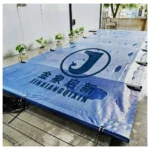

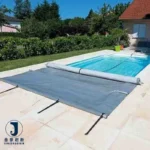
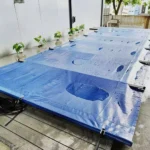
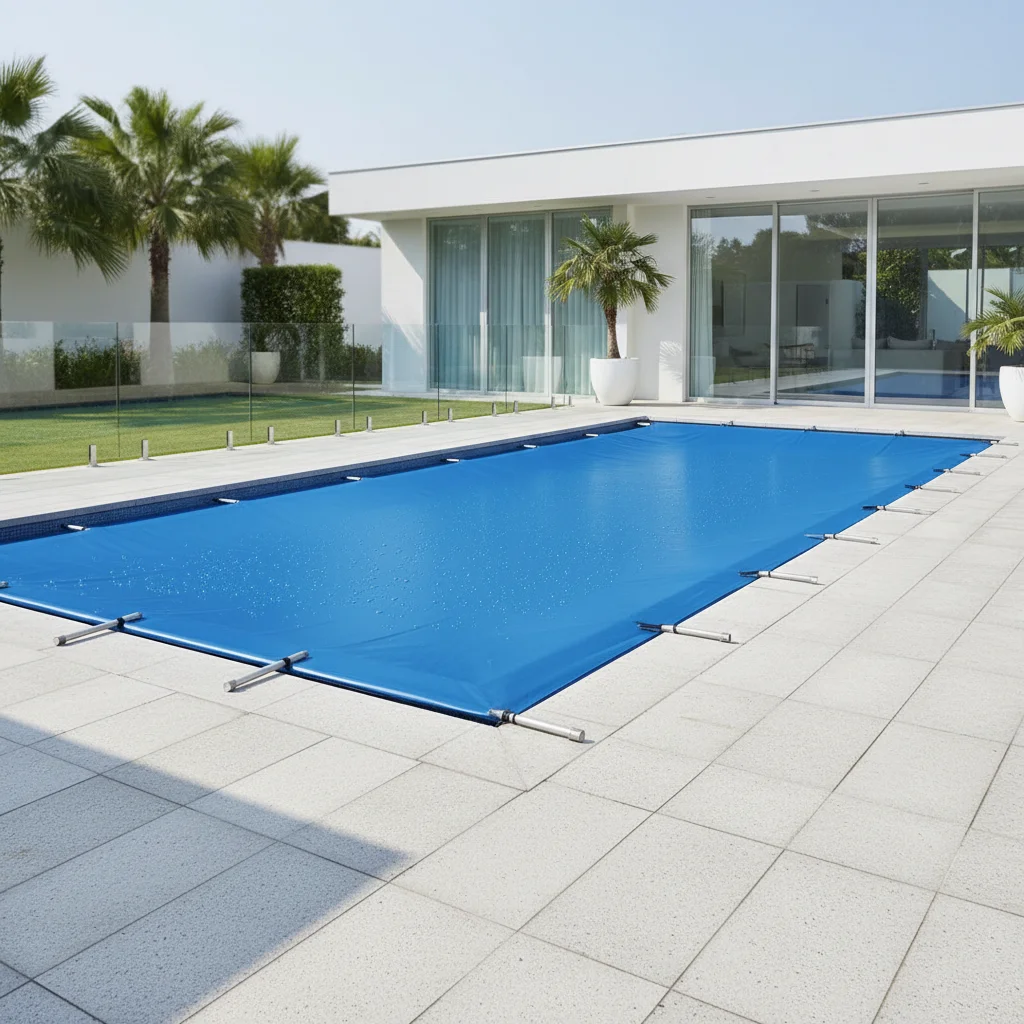
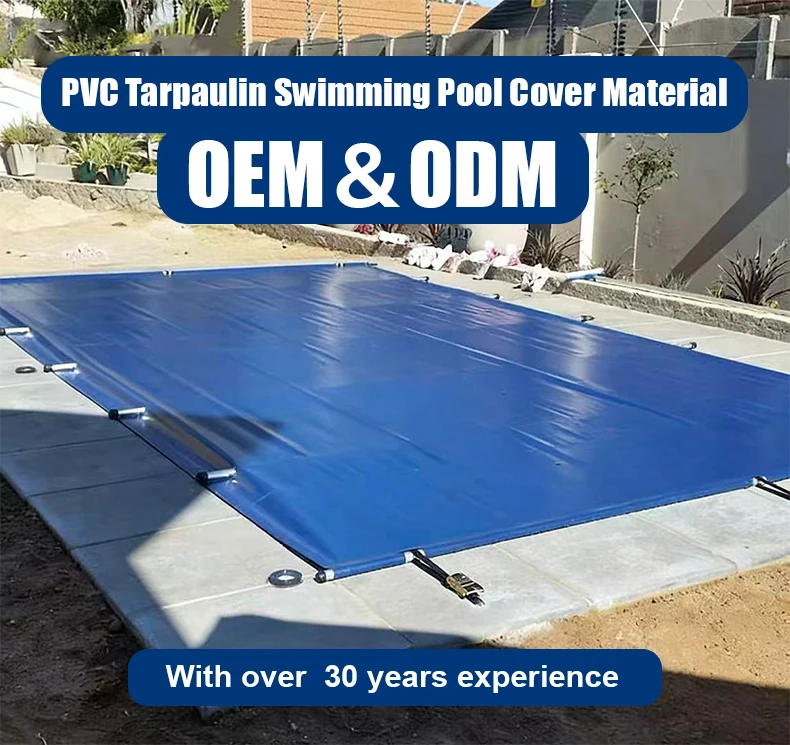
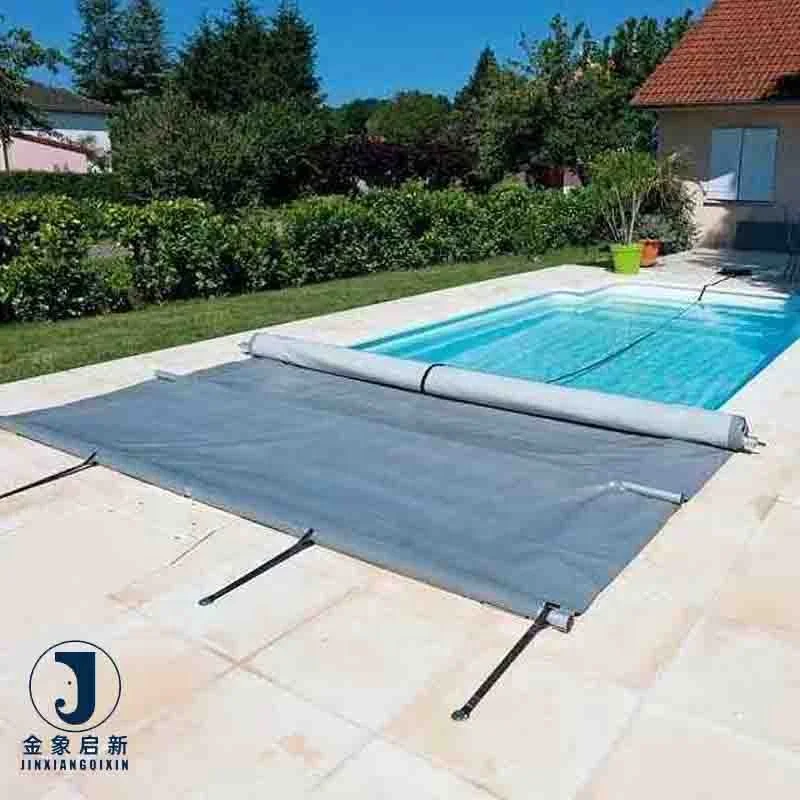
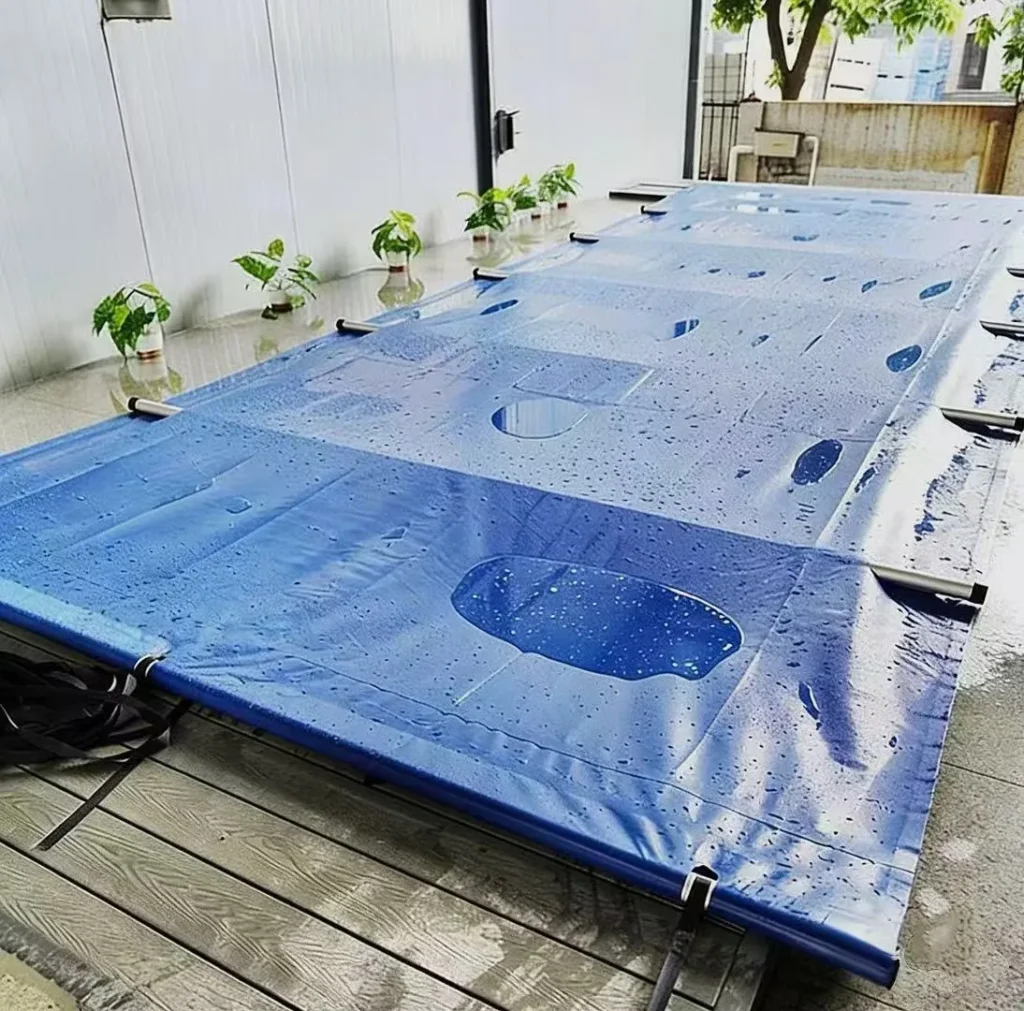
Proven Coating Expertise — three decades of PVC lamination process control ensures hot-melt adhesion reliability across every roll, verified at every production stage before dispatch.
Technical Specifications
| Parameter | Value |
|---|---|
| Product Type | PVC Laminated Tarpaulin |
| Material | PVC + high-strength polyester mesh fabric |
| Coating Method | Laminated technology & hot-melt coating technology |
| Weight (GSM) | 350gsm / 420gsm / 500gsm / 550gsm / 600gsm / 750gsm (confirm grade per project) |
| Total Thickness | 0.32mm / 0.35mm / 0.4mm / 0.45mm / 0.5mm / 0.65mm |
| Roll Size | 2m × 75m / 2.1m × 50m |
| Finish Product Size | Custom cut to project dimensions or sold as roll stock |
| Color Options | Blue / Red / Yellow / Light Blue / Grey (custom colors available) |
| Key Features | Cold crack resistance, anti-mildew, waterproof, anti-static treatment (grade not stated in source), flame retardant (grade not stated in source) |
| Service Life | 3–7 years under normal conditions (source value — verify against project specification) |
| Standards | ISO, CE (company-level certification) |
Application Suitability
| Application | Exposure & Requirement |
|---|---|
| Mining ventilation duct | Confined-space airflow, mandatory fire-retardant and anti-static compliance, abrasion from rock dust |
| Tunnelling exhaust ducting | High humidity, chemical exposure from blasting residue, continuous flex under negative pressure |
| Aviation ground support duct | Jet fuel proximity, strict flame-retardant certification, repeated deployment and stowage cycles |
| Membrane structure fabric | Permanent UV exposure, wind-driven tension cycling, architectural fire code compliance |
| Inflatable structure envelope | Internal air pressure load, rapid inflation stress, external weather and puncture exposure |
Why Ventilation Fabric Fails When Certification Does Not Match the Site
A fire-retardant claim without a cited test standard leaves your entire duct installation exposed to compliance rejection.
Procurement teams sourcing fabric for underground mining or aviation ducting regularly receive material described as "flame retardant" with no reference to the classification system their site safety plan demands. The inspector asks for B1 per DIN 4102 or M2 certification, and the roll label says nothing. Ducts already hung must come down, the contractor absorbs re-installation cost, and the project timeline slips. PVC Laminated Tarpaulin fire retardant and anti-static grades must be matched to the specific standard before production begins — confirm the grade required for your market so the test report ships with the roll, not weeks after. [NEED_CITE: DIN 4102 fire classification for building materials]
Matching Fire Classification to Your Compliance Framework
Every jurisdiction enforces its own flame-retardant classification for technical fabric used in occupied or confined spaces. A mining ventilation duct in Australia follows a different standard than a temporary membrane structure in the EU, and a single PVC Laminated Tarpaulin fire retardant grade does not satisfy all of them. Specify the exact classification your site safety plan requires — M2, B1, NFPA 701, or DIN 4102 — and request the corresponding test report before committing to production volume.
Anti-Static Performance Where Ignition Risk Is Non-Negotiable
Underground environments generate combustible dust and methane accumulation, making static discharge from duct fabric a documented ignition source. Anti-static treatment must deliver measurable surface resistivity within the range your safety officer requires, not simply carry the label. Request a surface resistance measurement certificate matched to the applicable mining or aviation standard before the fabric leaves the production floor. [NEED_CITE: anti-static surface resistance requirements for underground ventilation fabric]
How GSM and Coating Technology Shape Duct Behaviour Under Pressure
Weight and thickness together determine how the fabric responds to the positive or negative pressure inside a ventilation duct. A 350gsm grade at 0.32mm suits low-pressure extraction runs where flexibility aids routing around obstacles, while 750gsm at 0.65mm handles high-velocity mainline duct that must resist collapse under negative pressure without intermediate support rings. The hot-melt coating and laminated technology used here creates a bond between the PVC film and the polyester mesh that directly influences peel strength at welded seams — the point where most duct failures originate under sustained airflow vibration. Base fabric denier and weave density work with the coating weight to control tear propagation: a higher-denier yarn in a tighter weave limits tear spread if the duct wall is punctured by falling debris or sharp rock edges. Thickness alone does not predict performance; a thicker coating on a loosely woven base may crack at the fold line in cold conditions, while a balanced construction with cold crack resistance maintains flexibility during low-temperature deployment. Width selection — 2m or 2.1m rolls — influences the number of longitudinal welds needed for a given duct diameter, affecting both fabrication time and potential leak paths. [NEED_CITE: tensile and tear test methods for coated fabrics per ISO 1421]
The Hidden Cost of Specifying Ventilation Fabric Without Full Documentation
When fire-retardant or anti-static treatment is claimed on a quotation but no test report accompanies delivery, the contractor bears the entire compliance risk. Site inspectors reject the duct, the fabric must be replaced, and the project absorbs material write-off plus re-installation labour. Colour inconsistency between rolls may seem cosmetic, but on a large membrane structure installed panel by panel, visible shade variation forces selective replacement and delays handover. Welded seams that fail before the fabric body indicate a coating formulation mismatch rather than a fabric weight problem — the material itself may be adequate, but the coating composition does not bond reliably under the heat and pressure of hot-air welding. [NEED_CITE: common failure modes in welded PVC coated fabric seams]
Why Technical Buyers Source This Fabric Here
Three full production lines and 36 sets of professional equipment support consistent output volume across the full GSM range, from 350gsm lightweight duct wraps to 750gsm heavy-duty membrane panels. A dedicated 10-person R&D team develops custom material formulations and sample swatches within days, allowing you to verify fire-retardant grade and colour match before authorising full production. Quality control runs at every coating and lamination stage, with 100% pre-shipment inspection catching GSM deviation, coating adhesion faults, and surface defects before the roll is packed. Hot-melt coating parameters are controlled per batch, ensuring peel strength and weld compatibility remain consistent from first roll to last across your order. Samples are produced and dispatched quickly so that fabricators can run their own hot-air weld trials and confirm seam integrity on their own equipment before committing to bulk.
Documentation & Verification
- Material specification sheet stating base fabric denier, coating weight, and confirmed GSM for each roll
- Fire-retardant test report citing the specific standard — M2, B1, NFPA 701, or DIN 4102 — matched to your project
- Anti-static surface resistance measurement or certification for mining and aviation compliance audits
- Pre-shipment inspection record with full QA coverage across every roll in the order
- Roll packing list with individual roll weight, dimensions, and colour batch reference
- Certificate of origin and customs documentation for cross-border shipment
Fabrication, Handling & Storage
- Hot-air welding temperature must match the hot-melt coating formulation — run test welds on sample swatches first
- Cold crack resistant grades remain flexible during low-temperature deployment but still require gradual unrolling to avoid crease marks
- Store 2m or 2.1m rolls upright on end caps in a shaded, ventilated area to prevent flat-spot deformation on the coating surface
- Cut patterns with the polyester mesh grain direction to maximise tear resistance along duct seam lines
- Clean laminated PVC surfaces with mild, non-solvent detergents to avoid degrading the anti-static treatment layer
- Allow welded seams to cool under light pressure before moving the duct section to preserve peel strength
Preparing Your Enquiry for Accurate Quotation
To receive a specification-matched quote, provide the end-use application — ventilation duct, membrane structure, or inflatable — along with the fire-retardant classification and any anti-static requirement your site enforces. Include preferred roll width, annual volume estimate, and whether you need raw roll stock or finished cut-and-welded panels. If colour matching to an existing structure or branding palette is required, send a physical sample or RAL reference for confirmation before production.
Frequently Asked Questions
Q: Which fire-retardant standard does the fabric meet — M2, B1, NFPA 701 or DIN 4102?
A: The fabric is available in flame retardant grades — confirm the grade required for your market. Once you specify the standard your site safety plan or building code demands, production is matched to that classification and the corresponding test report ships with the documentation package for each roll.
Q: How is anti-static performance measured and certified for mining ventilation use?
A: Anti-static treatment is applied during coating and must be verified with a surface resistance measurement. Provide your site’s required resistivity range, and the production team will confirm whether the treatment level meets that threshold before bulk runs. A measurement certificate is included in the shipment documentation.
Q: What GSM and thickness should I specify for a ventilation duct versus a membrane structure?
A: Ventilation ducts subject to negative pressure typically need higher GSM and thickness to resist collapse, while membrane structures prioritise tensile load and UV exposure. Share your duct diameter, operating pressure, and span dimensions so the correct grade from the 350gsm to 750gsm range is recommended.
Q: Can the fabric be welded and what seam strength can be expected?
A: The hot-melt laminated coating is designed for hot-air and wedge welding. Seam strength depends on welder temperature, speed, and pressure settings matched to the specific coating formulation. Request sample swatches to run weld trials on your own equipment before ordering full production volume.
Q: What documentation ships with each roll for site compliance audits?
A: Each shipment includes a material specification sheet, fire-retardant test report matching the cited standard, pre-shipment inspection record, roll packing list, and certificate of origin. Additional compliance documents can be prepared if your project specification requires them.