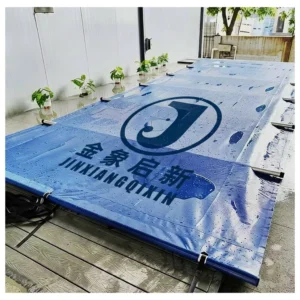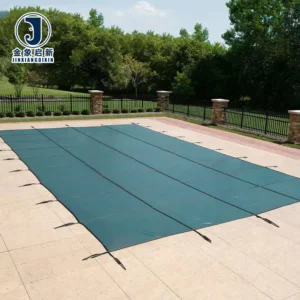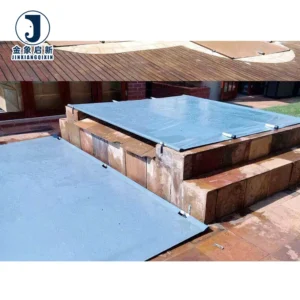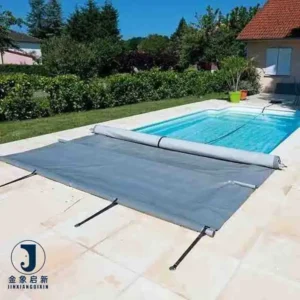
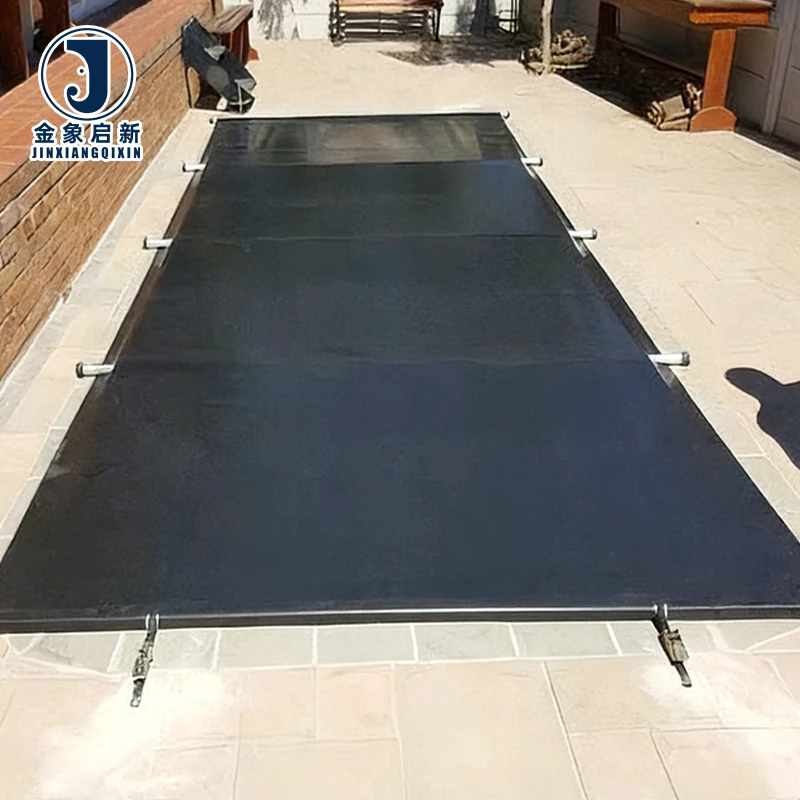
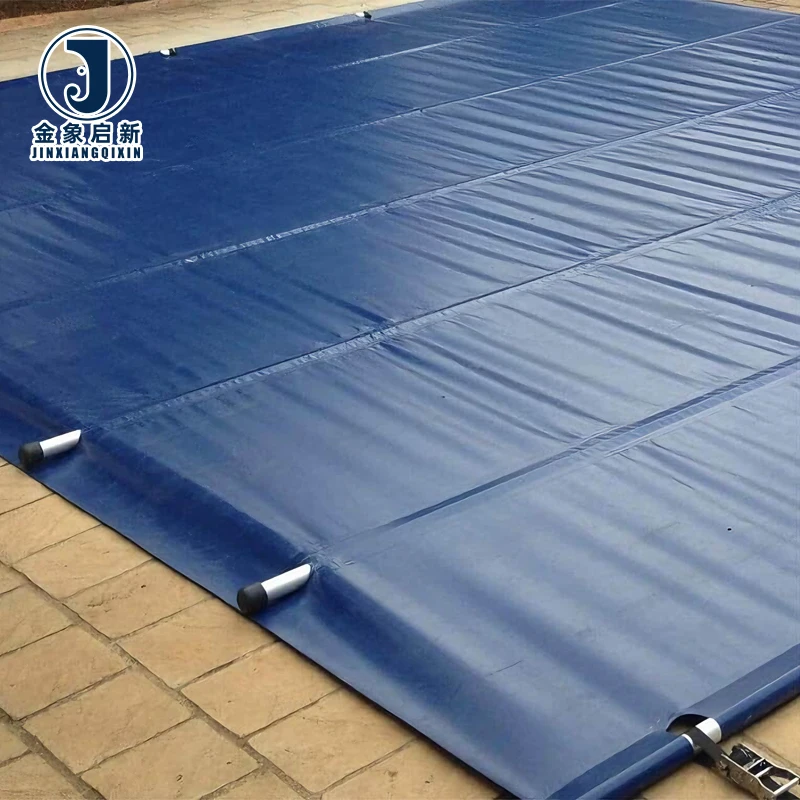
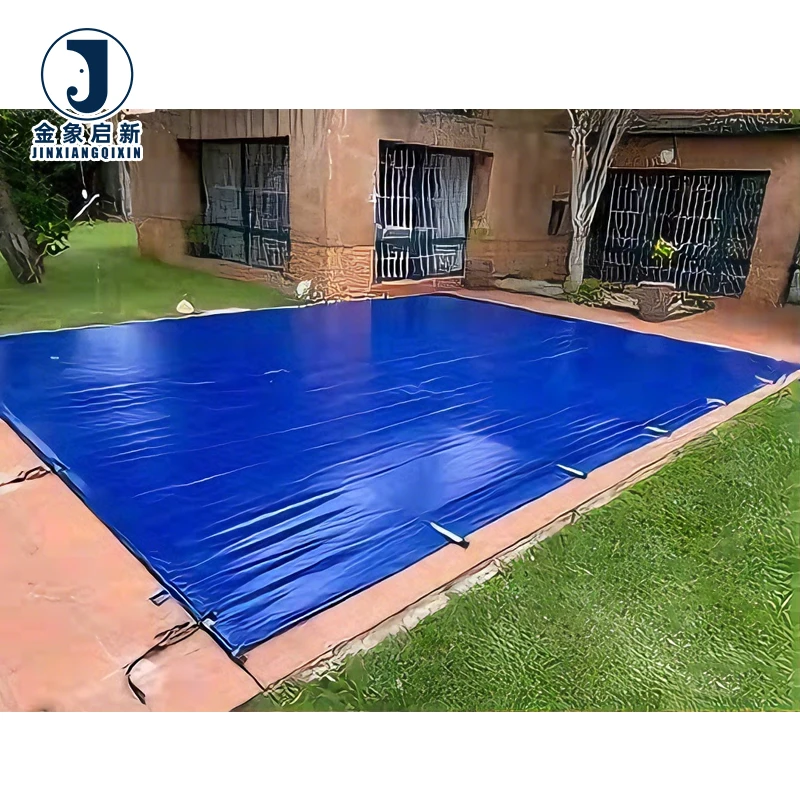
Specification Integrity — every roll of PVC laminated pool cover fabric ships with documented GSM verification and treatment-grade confirmation before leaving the production floor.
Technical Specifications
| Parameter | Value |
|---|---|
| Product Type | PVC Laminated Waterproof Breathable Anti-UV Swimming Pool Covers Tarpaulin Coated |
| Base Fabric | High-strength polyester mesh fabric |
| Coating Technology | Laminated technology & Hot-melt coating technology |
| Weight (GSM) | 350gsm / 420gsm / 500gsm / 550gsm / 600gsm / 750gsm (available in multiple grades — confirm grade for your application) |
| Total Thickness | 0.32mm / 0.35mm / 0.4mm / 0.45mm / 0.5mm / 0.65mm (corresponding to GSM selection) |
| Roll Width | 2m / 2.1m |
| Roll Length | 75m / 50m |
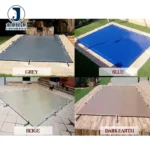
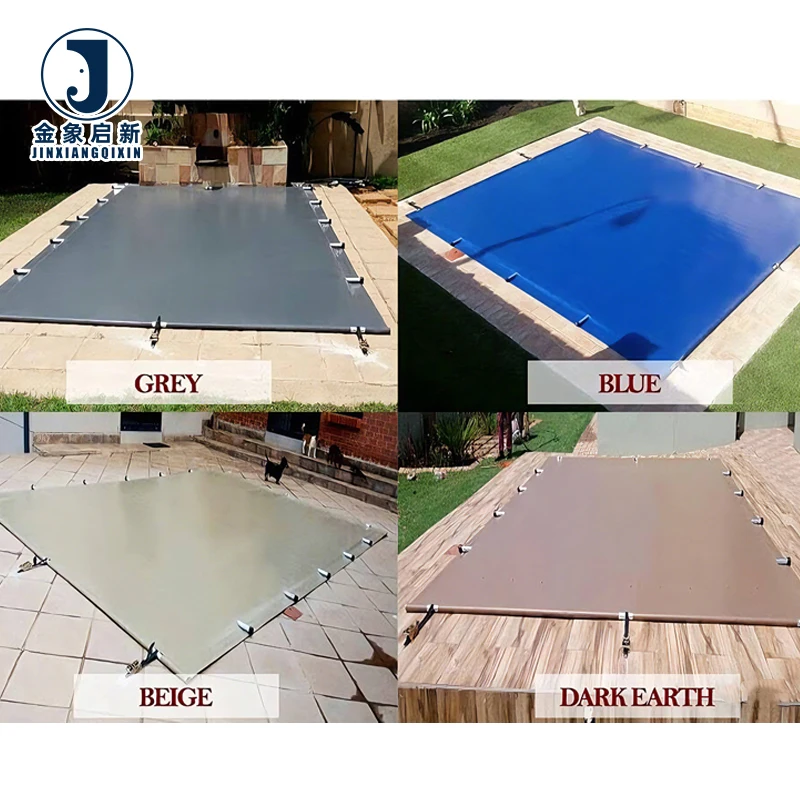
| Colour Options | Blue / Red / Yellow / Light blue / Grey (customised colours available) |
| Waterproof | Yes |
| Anti-UV Treatment | Yes (test basis not stated — request report per grade) |
| Anti-Mildew Treatment | Yes |
| Anti-Static Treatment | Available (surface resistance value or test standard not stated — confirm requirement) |
| Cold Crack Resistance | Yes |
| Flame Retardant Treatment | Available (grade not stated — confirm standard required for your market) |
| Key Features | Good adhesion strength, outstanding tearing strength for welding, good colour fastness, cold crack resistant, anti-mildew |
| Certifications | ISO, CE |
Application Suitability
| Application | Exposure & Requirement |
|---|---|
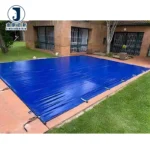
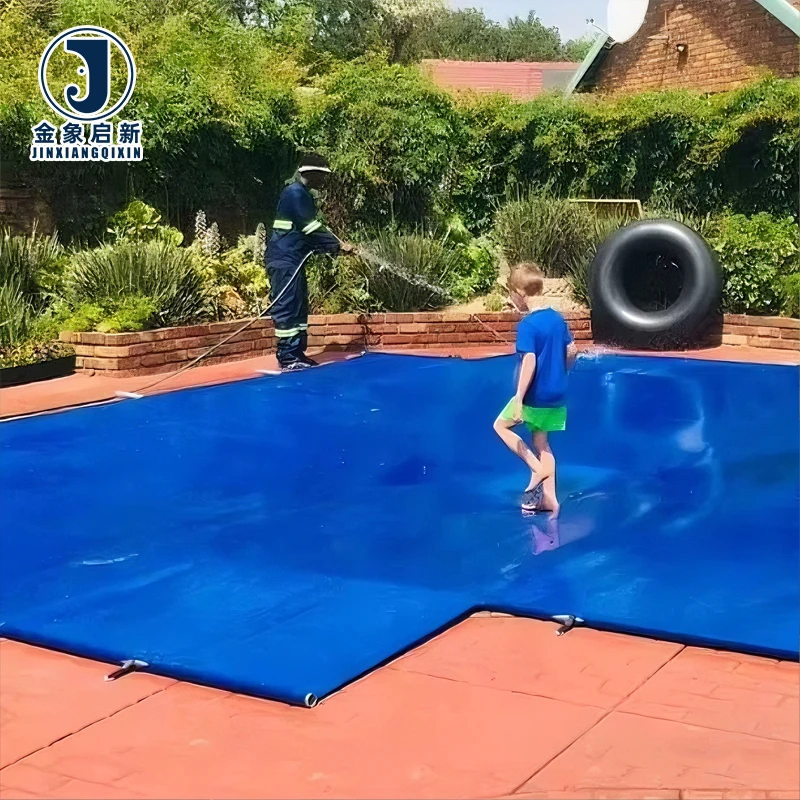
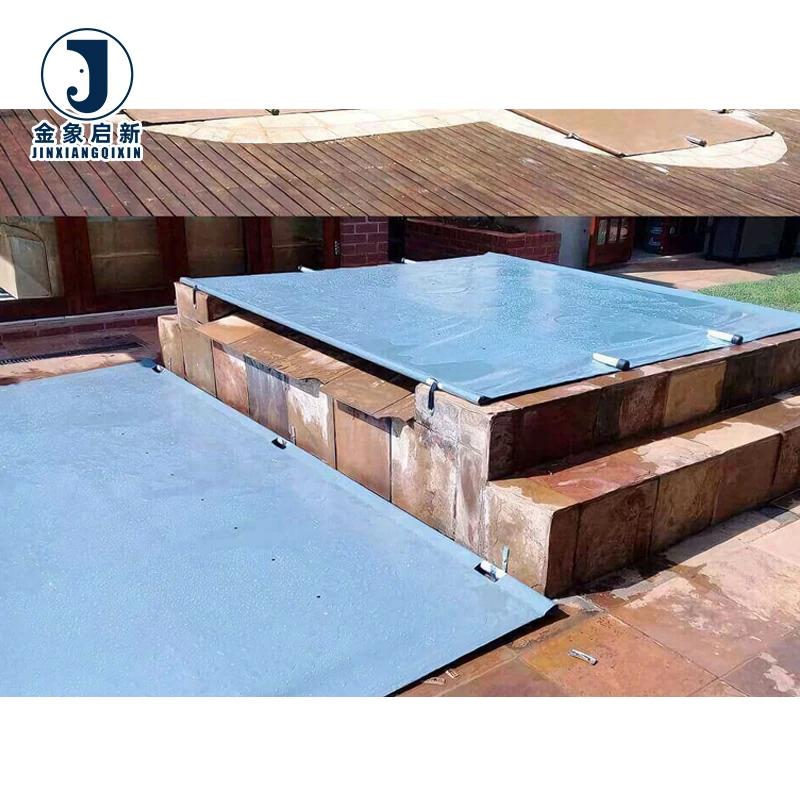
| Swimming pool covers | Continuous UV exposure, chlorine contact, water load, wind-driven flex at anchor points |
| Fish tank and pool lining | Permanent water immersion, puncture risk from substrate, anti-mildew demand in humid environments |
| Specialist membrane structures | Fire-retardant compliance at building code level, wind uplift, thermal expansion cycles |
| Inflatable structure covers | Internal air pressure stress, repeated inflation-deflation flex, surface abrasion at fold lines |
| Tent and awning fabric | Weather cycling, UV degradation, tension at guy-rope attachment, pack-and-deploy abrasion |
What "Flame Retardant" Means When the Grade Is Missing From Your Quote
A flame-retardant claim without a named standard is a liability, not a specification.
When specialist contractors receive PVC pool cover tarpaulin on site, the first document the safety officer asks for is the fire classification certificate. If the supplier quoted "flame retardant" but the test report references a different material or omits the standard altogether, the installation halts. This is not a paperwork delay — it is a compliance failure that can trigger re-inspection costs and project timeline penalties. [NEED_CITE: DIN 4102 fire classification for building materials]
PVC laminated pool cover fabric treated for flame retardancy must be matched to the local building code or site safety plan before production begins. M2, B1, NFPA 701 and DIN 4102 each define different test methods, specimen sizes and pass criteria. Ordering without specifying which one your project requires leaves the material choice to chance. The responsible approach is to confirm the exact standard at the inquiry stage so the treatment chemistry and test report align with your compliance obligation.
Coating Chemistry and the Fire-Retardant Threshold
The base PVC laminated pool cover tarpaulin achieves inherent resistance to ignition through chlorine content in the polymer chain, but this alone does not satisfy regulated environments. Specialist sites — aviation hangars, mining ventilation enclosures, public-access pool halls — demand classified grades backed by independent laboratory reports. When anti-static treatment is also required, the formulation must balance both additive systems without compromising the adhesion between the coating and the polyester mesh substrate. Confirming the fire classification standard at specification stage ensures the correct additive package is selected before the production run starts.
Anti-Static Performance in Controlled Environments
Static charge accumulation on PVC-coated surfaces becomes a hazard in environments where flammable vapours or combustible dust are present. Anti-static treatment for this PVC pool cover fabric modifies surface resistivity, but the acceptable threshold varies by site. Some facilities mandate a surface resistance reading below a defined limit, tested under controlled humidity. [NEED_CITE: EN 14135 surface resistivity test method for flexible sheet materials] Without a stated test method in the product specification, the procurement team should request the test report format and confirm it matches the audit requirements of the receiving site before committing to volume production.
How GSM, Coating Method and Base Fabric Interact
GSM alone tells only part of the story. A 500gsm fabric with a lighter base fabric and heavier coating will behave differently under welding and tensile load than a 500gsm fabric with a denser mesh and thinner coating layers. The laminated technology used here bonds the PVC film to the polyester mesh under heat and pressure, creating a mechanical interlock that supports tear propagation resistance at the weld line. Hot-melt coating technology applies the polymer in a molten state, penetrating the mesh interstices for stronger adhesion. The choice between these methods affects how the material performs when heat-welded on site — a critical consideration when pool cover panels are joined to span large spans. Thickness values from 0.32mm to 0.65mm correspond to the selected GSM grade, and both should be cross-checked on the material specification sheet rather than assumed from one another.
The Hidden Cost of Specifying on Price Per Kilogram Alone
When buyers select PVC laminated pool cover tarpaulin based on the lowest per-kilogram price, the delivered GSM frequently lands below the quoted figure. The shortfall may not be visible on a casual unroll, but it shows up as reduced tear resistance at welded seams, premature cracking at fold lines in cold weather, and faster plasticiser migration under UV load. [NEED_CITE: tensile and tear test methods for coated fabrics per ISO 1421] For regulated installations, a GSM deficit also means the fire-retardant additive concentration may fall below the threshold required to pass classification testing. Requesting a weight verification record per roll before shipment eliminates this gap between quotation and delivery.
Why Technical Buyers Source This Fabric Through Jinan Jinxiang
The R&D team develops custom samples within days when a project specifies a non-standard treatment combination, such as flame retardant with anti-static in a single PVC pool cover tarpaulin grade. Three full production lines and 36 sets of professional equipment support consistent output across the GSM range, with dedicated QA/QC checkpoints at every stage. The 10-person technical team handles material selection and test-report alignment so the documentation package matches the compliance standard named in your project specification. Pre-shipment inspection covers every roll individually — not a statistical sample — and the documentation package travels with the shipment.
Documentation & Verification
- Material specification sheet stating GSM, base fabric denier, coating method and colour reference per roll
- Test report for flame-retardant and anti-static grades matching the standard named in your project specification
- Pre-shipment inspection record with weight verification per roll against the stated GSM
- ISO and CE certificates included in the shipment documentation package
- Certificate of origin and customs support documents for cross-border delivery
Fabrication, Handling & Storage
- Heat-weld parameters must be adjusted for the selected GSM grade, as laminated coating layers respond differently than cast PVC
- Anti-mildew treatment maintains effectiveness when rolls are stored in ventilated, dry conditions away from direct ground contact
- Cold crack resistance allows deployment in lower temperatures, but rolls should be unrolled and allowed to relax before cutting
- Custom widths up to 2.1m reduce the number of weld seams needed for large pool cover panels
- Anti-static treatment can be affected by surface cleaning agents — confirm chemical compatibility before specifying maintenance protocols
What to Include in Your Technical Enquiry
To match this PVC laminated pool cover fabric to your project, provide the application environment, any fire classification or anti-static standard your site mandates, the required GSM grade and thickness, roll width preference, and whether you need custom colour matching. If the installation is subject to third-party inspection, name the auditing body so the test report format can be aligned before production. Samples can be developed for your approval prior to committing to full volume.
Frequently Asked Questions
Q: What fire-retardant grade can be provided, and does it meet my local compliance standard?
A: Flame-retardant treatment is available across the product family, but the specific grade must be matched to your market requirement. Standards such as M2, B1, NFPA 701 and DIN 4102 each use different test methods. State the standard your project demands at inquiry stage so the correct formulation and supporting test report are prepared before production begins.
Q: Is anti-static treatment supported by a surface resistance test report?
A: Anti-static treatment can be applied to the PVC laminated coating, and a test report can accompany the shipment. The test method and acceptance threshold vary by site. Provide your site audit requirements at the specification stage so the report format and measured values align with your compliance documentation.
Q: How is GSM verified on arrival and what documentation accompanies the shipment?
A: Every roll undergoes individual weight inspection before dispatch, and a verification record is included in the documentation package. The material specification sheet states the GSM grade, base fabric details and coating method. Pre-shipment inspection records travel with the shipment alongside ISO and CE certificates.
Q: What is the difference between laminated and hot-melt coating for weld seam performance?
A: Laminated technology bonds a PVC film to the polyester mesh under heat and pressure, creating a strong mechanical interlock that supports tear resistance at heat-welded joints. Hot-melt coating penetrates the mesh interstices in molten form for deep adhesion. Both methods deliver reliable weld performance, and the choice depends on the specific grade and application requirement.
Q: Can custom treatment combinations be specified for specialist projects, and what is the process?
A: Custom combinations such as flame retardant with anti-static or anti-mildew can be formulated for specialist structure applications. The R&D team develops samples within days for your approval. Provide your compliance standards and performance requirements at inquiry stage so the treatment package and test documentation are aligned before the production run is scheduled.