Proven Coating Process Control — Nearly 30 years focused on coated fabric manufacturing delivers the batch-to-batch consistency that specialist industrial duct and membrane projects demand from every roll.
Technical Specifications
| Parameter | Value |
|---|---|
| Product Type | PE Tarpaulin |
| Base Material | HDPE weaving with LDPE lamination on both sides |
| Weight (GSM) | 50gr/m² ~ 220gr/m² available (confirm the grade for your application) |
| Total Thickness | 0.2–0.4 mm / 8–16 mil / Custom |
| Mesh Count Options | 6×6, 6×7, 7×7, 7×8, 8×8, 9×9, 8×10, 10×10, 12×12, 14×14, 14×16 |
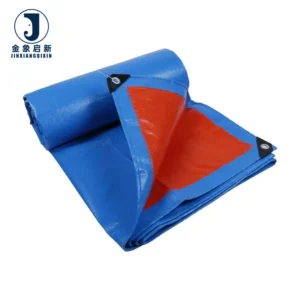
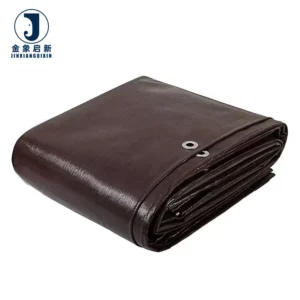
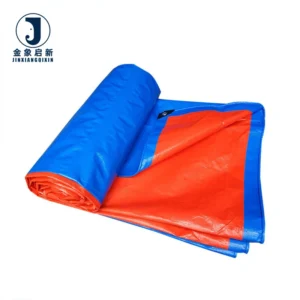
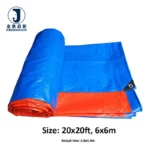
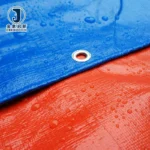
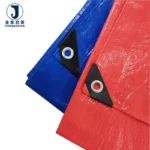
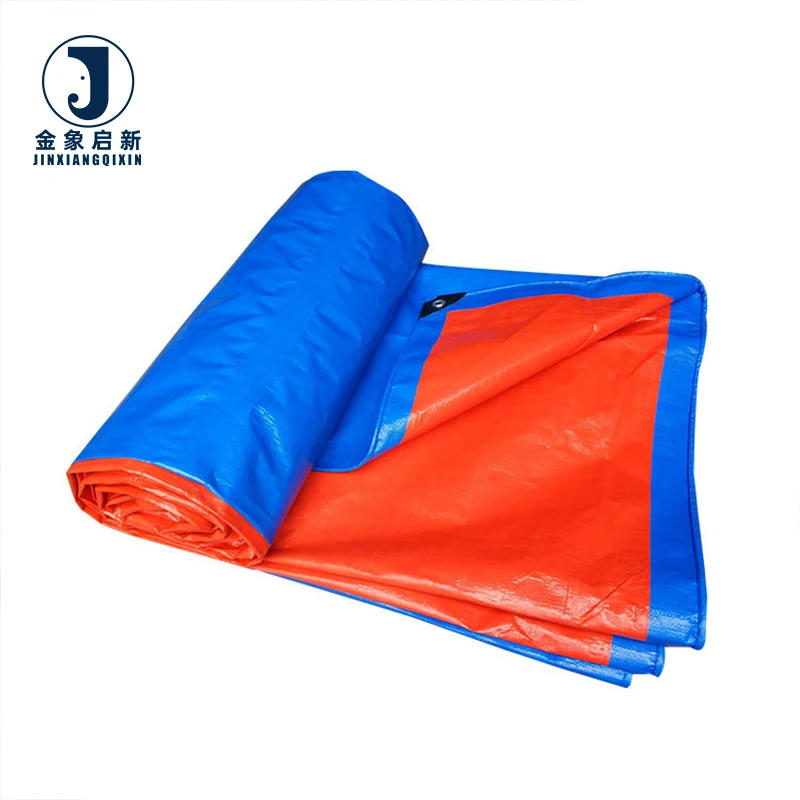
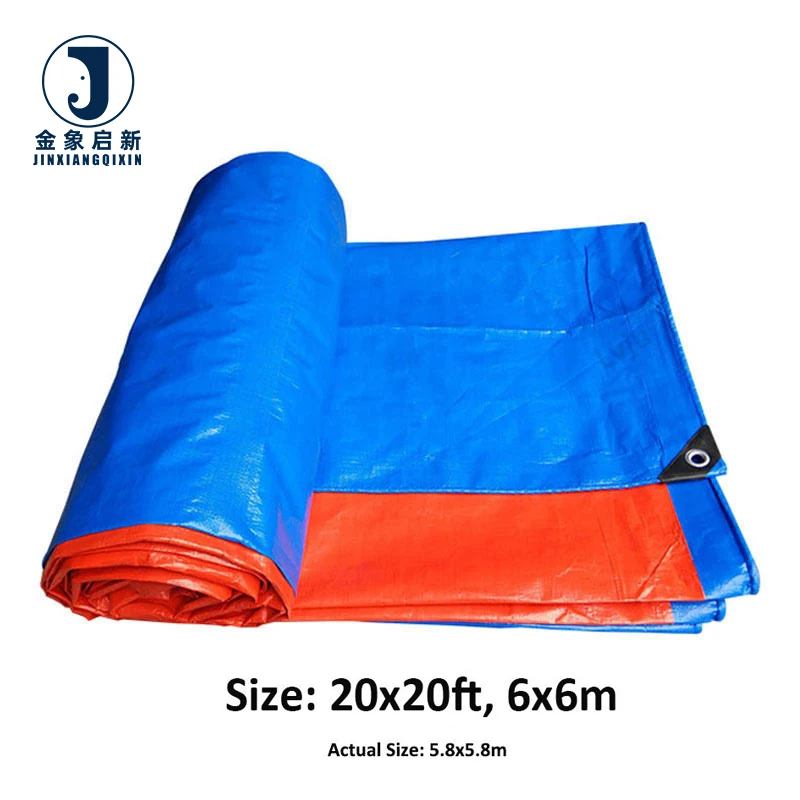
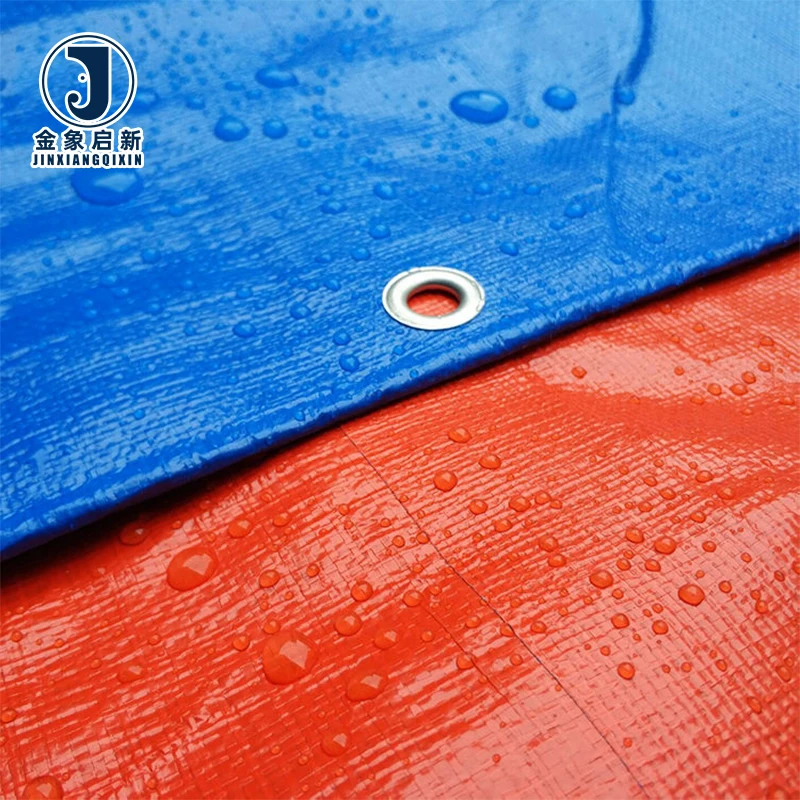
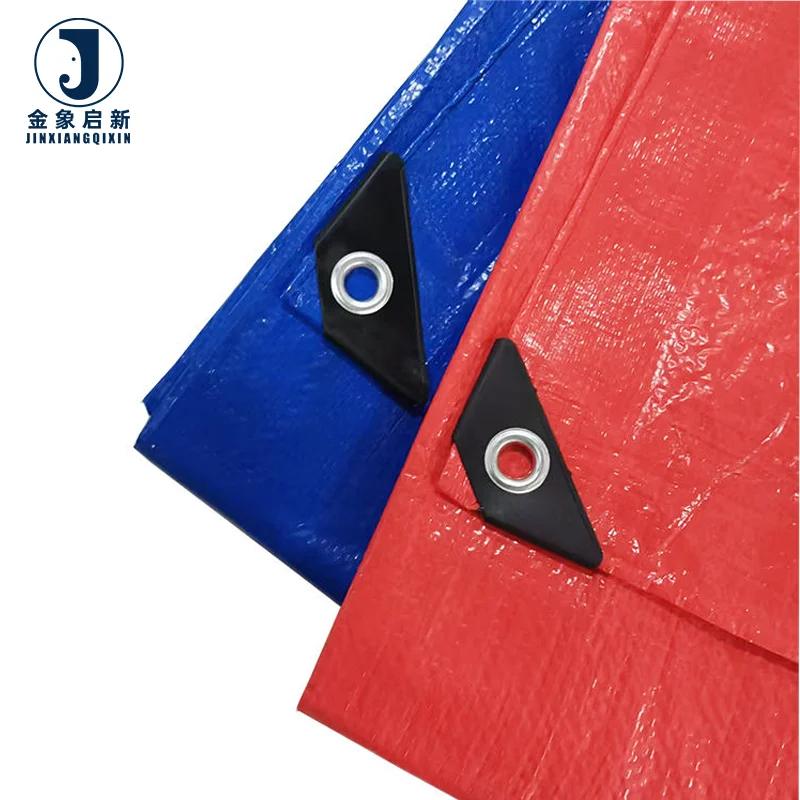
| Color Options | Blue, Blue/Orange, Green, Grey, Black, Clear, Grey/Green, Orange, or custom |
| Roll Width | 6 ft, 8 ft, 10 ft, 12 ft / 2 m, 4 m, 6 m |
| Roll Length | 100 yards, 100 meters, or custom |
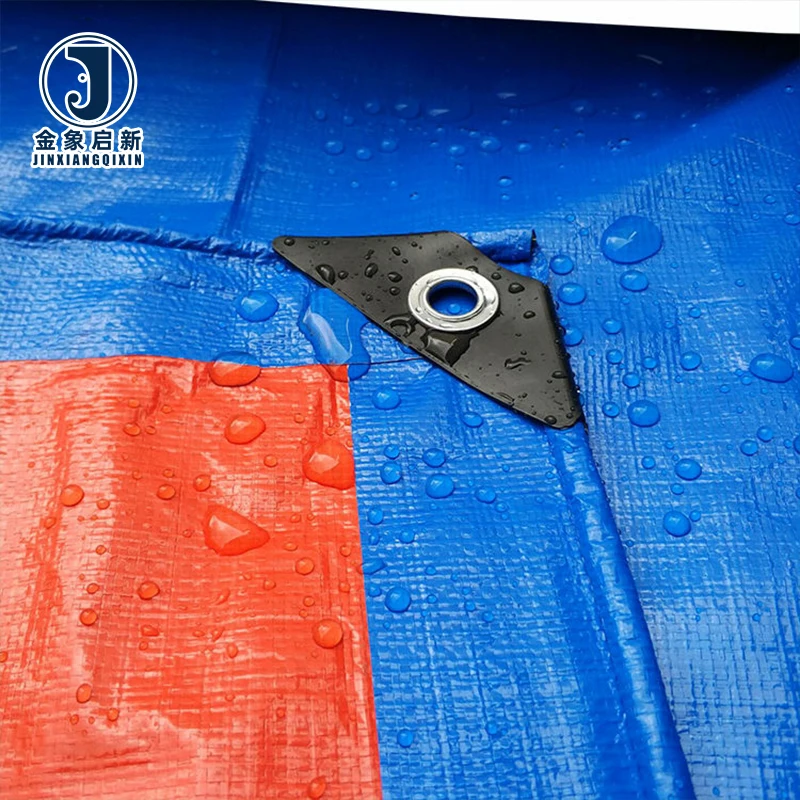
| Finished Edge | All four edges reinforced with PP rope in hem |
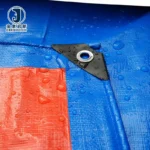
| Eyelet Option | Galvanized eyelets every 3 ft or 1 m interval |
| Corner Reinforcement | Reinforced plastic corners |
| Waterproof | Yes |
| UV Treatment | Available (test basis not stated in source — confirm the standard required) |
| Anti-Mildew | Yes |
| Flame Retardant Grade | Grade not stated — confirm the grade required for your market |
| Anti-Static | Available — confirm surface resistance specification for your installation |
| Certifications | ISO, CE (company-level) |
Application Suitability
| Application | Exposure & Requirement |
|---|---|
| Underground mining ventilation duct | Continuous forced airflow, suspended load, fire-retardant and anti-static compliance mandatory |
| Tunnel construction ducting | High humidity, mechanical impact from equipment, regulatory flame-retardant inspection |
| Inflatable and membrane structure fabric | Biaxial tension, wind uplift, UV exposure, seam integrity under cyclic loading |
| Aviation hangar temporary enclosure | Large-span coverage, wind load, fire-retardant compliance for enclosed aircraft maintenance zones |
| Specialist industrial containment cover | Chemical splash resistance, anti-static requirement in explosive-atmosphere zones |
Why a Missing Test Report Halts Your Entire Duct Installation
Compliance documentation must arrive with the fabric, not weeks after.
Ventilation duct fabric that reaches a mining or tunnel site without the fire-retardant or anti-static certification the inspector requires is not a material — it is a project delay. Procurement teams routinely discover that the fire retardant PE tarpaulin specified on the quotation does not carry a test report aligned to the local regulatory standard, forcing re-procurement and idle crews underground. [NEED_CITE: fire classification standards for ventilation duct materials in mining and tunnel environments] The anti-static PE tarpaulin needed for explosive-atmosphere duct runs may be described generically, but the site safety officer needs a measured surface resistance value, not a claim.
How Mesh Density and Coating Weight Define Duct Performance
Selecting the correct mesh count is the first decision for any certified PE ventilation duct fabric project. A 14×14 weave provides the dimensional stability needed for large-diameter ducts suspended over long spans, while a lighter 8×8 weave suits temporary, short-run ventilation in less demanding environments. The HDPE woven base with LDPE lamination on both sides locks the mesh geometry in place, preventing the fabric from distorting under the constant positive or negative pressure of forced-air systems.
Why Roll Width Matters for Membrane and Duct Fabrication
Membrane structures and large-diameter ventilation ducts both benefit from wider roll stock. A 6 m roll width reduces the number of welded seams in a single duct section, and every eliminated seam is a potential failure point removed from the assembly. For inflatable structures, fewer seams also mean smoother internal airflow and less turbulence at junctions. [NEED_CITE: relationship between seam count and structural failure in tensioned membrane assemblies] When specifying fire retardant PE tarpaulin for these applications, buyers should confirm the roll width that matches their pattern layout to minimize off-cut waste.
Reading the Specification Sheet Beyond the GSM Number
GSM alone does not tell a technical buyer how a PE tarpaulin will behave under biaxial load in a membrane structure or under sustained internal pressure in a ventilation duct. The mesh count — whether 10×10 or 14×16 — determines how the tensile load distributes across warp and weft yarns, and it is the combination of yarn denier, mesh density, and LDPE coating weight that produces the final tear and tensile performance. A 12×12 mesh at 120–150 gsm may outperform a 6×6 mesh at the same gsm in tear resistance because the tighter weave limits tear propagation. Coating adhesion between the LDPE layers and the HDPE base also governs how well the fabric withstands heat-welding during duct fabrication, since poor adhesion leads to delamination at the seam before the base fabric reaches its tensile limit.
What Happens When the Wrong Grade Reaches the Job Site
A duct fabricated from fabric that lacks the correct anti-static treatment becomes a compliance liability the moment the ventilation system is energized in an explosive-atmosphere zone. Similarly, membrane structure panels that arrive with inconsistent colour across rolls force the contractor to either accept a visible mismatch or reject the entire shipment. [NEED_CITE: batch colour consistency standards for architectural membrane installations] When the fire retardant PE tarpaulin specified at quotation stage does not match the delivered test report, the contractor faces a choice between installing non-compliant material or waiting for replacement stock while the project schedule slips.
Why Specialist Buyers Source This Fabric Here
Three full production lines and 36 sets of professional equipment give the manufacturing operation the capacity to deliver container-volume orders of certified PE ventilation duct fabric on schedule. A 10-person R&D team handles material selection, custom width development, and sample production within days rather than weeks, which matters when a mining project needs a specific anti-static PE tarpaulin grade confirmed before committing to full production. Dedicated QA/QC runs at every stage — from base fabric weaving through coating and final slitting — with 100 percent inspection before dispatch, so each roll that ships matches the GSM and mesh count stated on the material specification sheet. Nearly 30 years of coated fabric process control means coating weight and adhesion parameters are managed through experience, not trial and error. [NEED_CITE: tensile and tear test methods for coated fabrics per ISO 1421]
Documentation & Verification
- Material specification sheet stating GSM, HDPE base weave, LDPE coating type, and colour reference per roll
- Test reports for UV resistance and flame-retardant grades issued against named standards where applicable
- ISO and CE certificates available as company-level compliance documentation
- Pre-shipment inspection record confirming weight and mesh count against the purchase specification
- Roll-level packing list and certificate of origin supporting customs clearance
Fabrication, Handling & Storage
- Heat-weld temperature and dwell time must be matched to the LDPE lamination thickness to avoid delamination at duct seams
- Galvanized eyelets at 1 m intervals distribute tie-down loads evenly across the PP rope-reinforced hem
- Store rolls horizontally on a flat surface to prevent permanent creasing in the HDPE woven base
- Unroll anti-static PE tarpaulin at ambient temperature above 5 °C to avoid coating crack in cold conditions
- Clean with mild detergent only — solvents may degrade the LDPE coating surface and compromise anti-static treatment
- Cut panels from 6 m wide rolls with a layout plan that minimizes cross-grain seams in high-stress duct zones
What to Include in Your Enquiry
Specify the ventilation duct diameter, span length, or membrane structure geometry so the correct mesh count and GSM can be recommended. State the fire-retardant or anti-static standard your local regulator requires, along with the target roll width and estimated annual volume. If custom colour or printed branding is needed, provide the Pantone reference and confirm whether you need finished cut-to-size panels or roll stock only. Requesting a sample roll at this stage allows your fabrication team to validate heat-weld parameters before the production order is placed.
Frequently Asked Questions
Q: Which fire-retardant grades are available for mining and tunnel ventilation duct compliance?
A: Fire-retardant treatment options are available, and the specific grade — such as M2, B1 per DIN 4102, or NFPA 701 — must be confirmed against your local regulatory requirement. State the standard your site inspector requires at the enquiry stage so the correct treatment is applied and the matching test report is included with your shipment documentation.
Q: How is anti-static surface resistance measured and verified before dispatch?
A: Anti-static treatment can be applied to the LDPE coating surface, and the surface resistance value is measured using standard test methodology. Specify the resistance range your explosive-atmosphere installation requires, and the test result will be documented in the pre-shipment inspection record accompanying your certified PE ventilation duct fabric order.
Q: How does the fabric perform under biaxial tension in membrane and inflatable structures?
A: The HDPE woven base provides dimensional stability, and the LDPE lamination on both sides locks the mesh geometry under load. Selecting a tighter mesh count such as 12×12 or 14×14 improves tear propagation resistance. Heat-weld behaviour depends on coating adhesion, which is verified during the sample development phase before full production.
Q: What are the lead times and minimum quantities for custom width, colour, or GSM?
A: Custom widths up to 6 m, Pantone-matched colours, and specific GSM grades are produced on dedicated lines. The 10-person R&D team develops samples within days for approval. Minimum order quantities and lead times depend on the specification complexity and are confirmed at the quotation stage after your requirements are reviewed.
Q: How do you ensure batch-to-batch colour and weight consistency across multiple rolls?
A: Every production run follows controlled coating parameters, and 100 percent pre-shipment inspection verifies GSM and colour against the approved sample. The roll-level packing list and inspection record document the results, so buyers procuring fire retardant PE tarpaulin across multiple containers can expect consistent material from the first roll to the last.