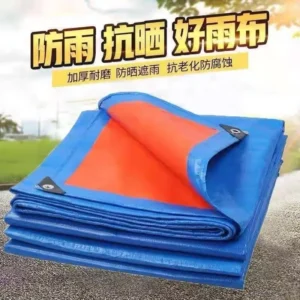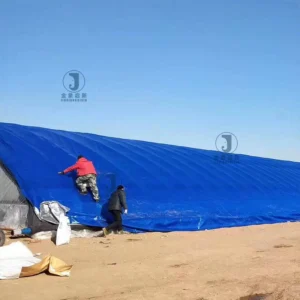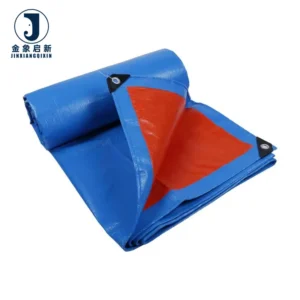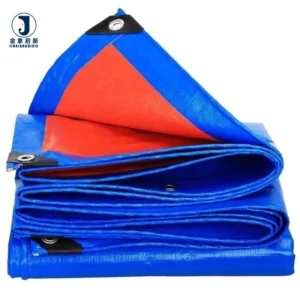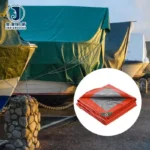
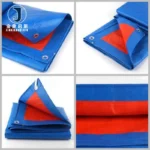

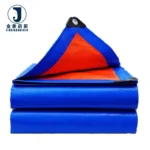
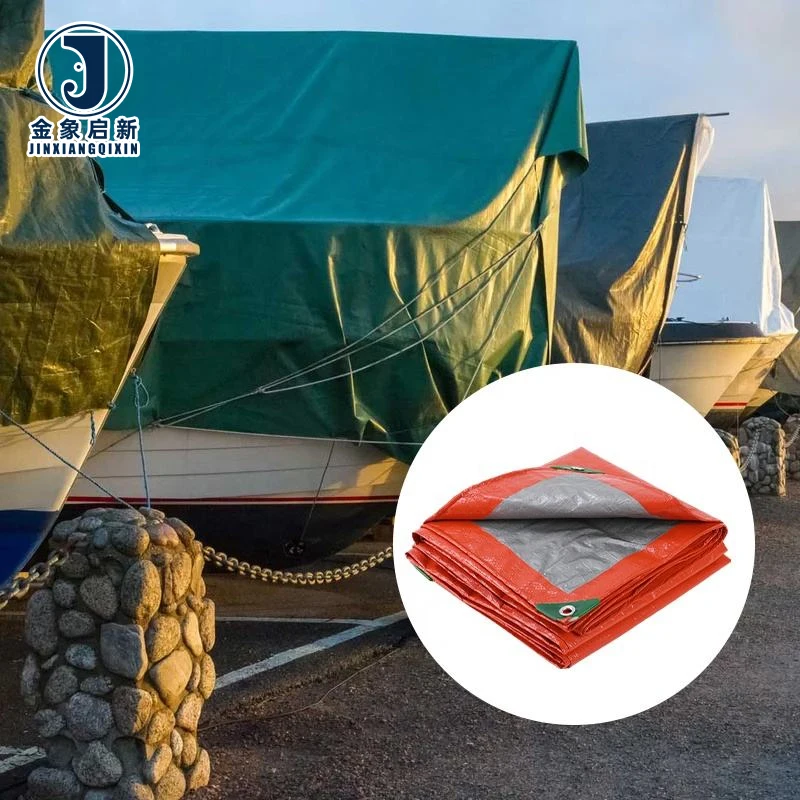
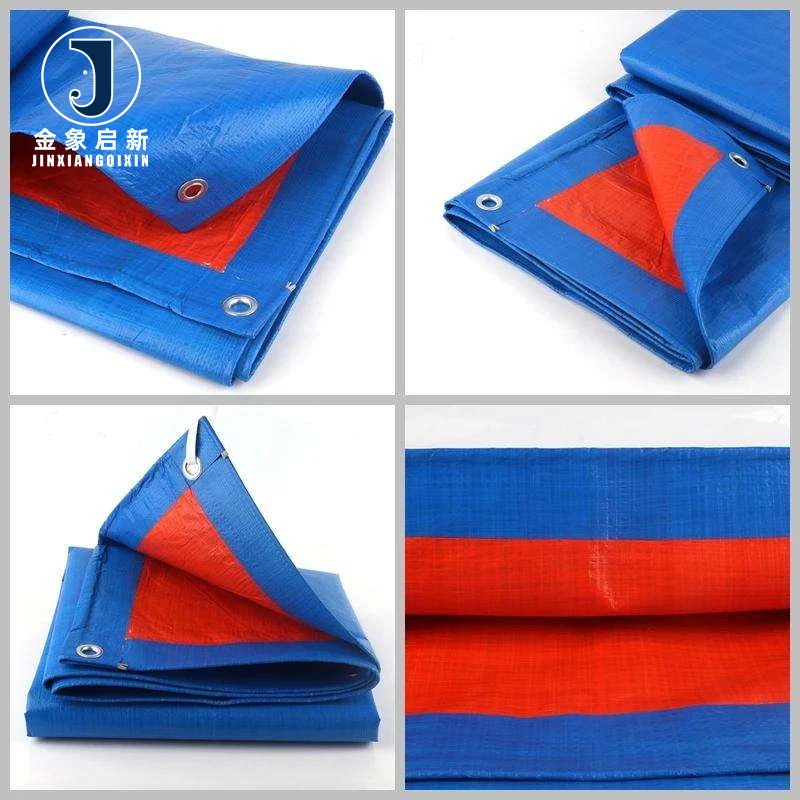
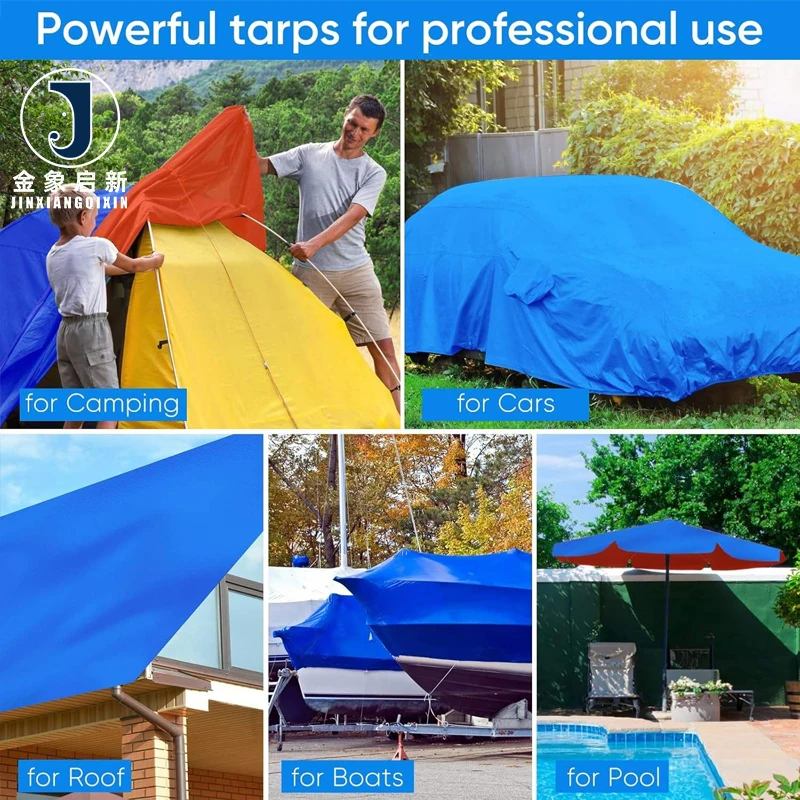
Proven Coating Control — Every roll of PE tarpaulin undergoes stage-by-stage QA with verified GSM, mesh count, and lamination adhesion checked before dispatch.
Technical Specifications
| Parameter | Value |
|---|---|
| Product Type | PE Tarpaulin |
| Material | HDPE fabric cross weaving with LDPE lamination |
| Construction | 3-layer (1 fabric + 2 coating) or 5-layer (2 fabric + 3 coating) |
| Thickness | 0.18–0.35 mm depending on grade |
| Weight Range | 40–500 g/m² (confirm specific grade required) |
| Knitting Density | 8×8, 10×10, or 12×12 |
| Mesh Count Range | 5×5 to 20×20 |
| Tensile Strength (Meridian) | 300–1,200 N/5cm depending on grade |
| Tensile Strength (Latitude) | 250–1,000 N/5cm depending on grade |
| Grommet Spacing | 39.4 inches center to center |
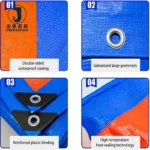
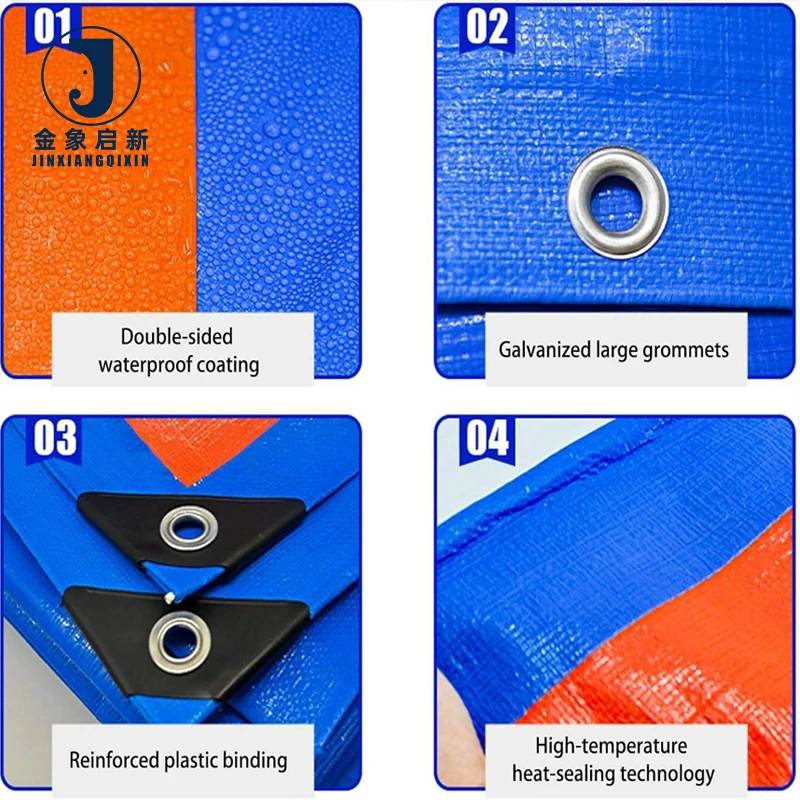
| Water Resistance | Double waterproof surfaces with reinforced corners |
| UV Treatment | Available (test basis not stated — confirm grade required for your market) |
| Mildew and Anti-Aging | Yes |
Application Suitability
| Application | Exposure & Requirement |
|---|---|
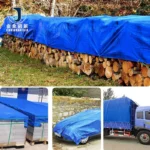
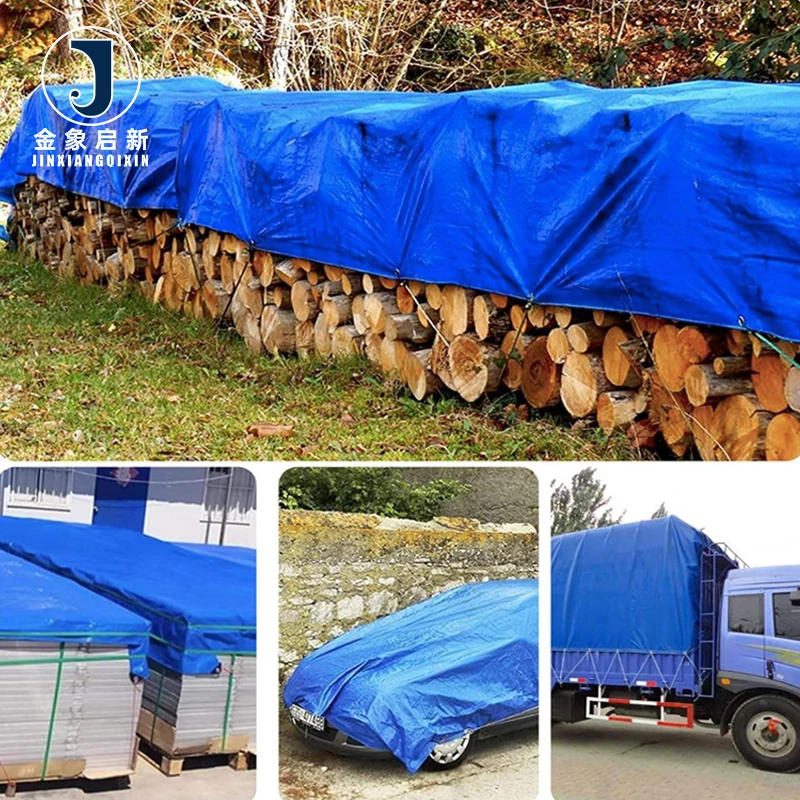
| Agricultural stock covers | Prolonged sun exposure, wind loading, repeated handling and folding |
| Pond and reservoir liners | Permanent water contact, soil chemistry, puncture and tear risk |
| Warehouse and equipment covers | Dust ingress prevention, weather protection, frequent repositioning |
| Truck and pallet tarpaulins | Road vibration, abrasion at tie-down points, rain and UV during transit |
| Temporary tents and canopies | Structural wind load, crumble-proof and humidity-proof performance, public safety |
Why PE Tarpaulin Weight Claims Alone Cannot Predict Field Performance
A quoted GSM figure means little without verified coating adhesion and base fabric density backing it up.
Buyers reviewing PE Tarpaulin for specialist application frequently discover that the material arriving on site is lighter than stated on the quotation, and the shortfall hides inside the lamination layer where it is hardest to detect. A roll stamped at one weight may contain less LDPE coating than specified, leaving the HDPE weave exposed to moisture penetration and accelerated UV degradation. The gap between quoted and actual specification only becomes visible when seams begin to delaminate or when the fabric becomes brittle after a single season [NEED_CITE: tensile and tear test methods for coated fabrics per ISO 1421]. This is why documentation that traces coating weight, mesh count, and lamination integrity matters more than the number printed on the label.
Ventilation Duct and Technical Fabric Demands Drive Construction Choices
The choice between 3-layer and 5-layer PE construction directly determines how the material behaves under sustained mechanical and environmental stress. For ventilation duct and technical fabric applications where the material must maintain dimensional stability under air pressure and flexing, the additional fabric and coating layers in the 5-layer build distribute load across a wider weave area. This matters when duct runs span long distances and the fabric must resist ballooning and collapse cycles without coating separation.
Matching Mesh Count to the Actual Load Path
Selecting the correct knitting density is not about choosing the highest number available. An 8×8 mesh suits lightweight agricultural covers where the primary requirement is water shedding and basic wind resistance, while 12×12 construction provides the tighter weave needed where tie-down straps concentrate force at grommet points [NEED_CITE: DIN 4102 fire classification for building materials]. The HDPE cross-weave pattern determines how stress propagates through the fabric when a loaded cover flexes, and mismatching mesh count to the actual mechanical load is a common source of early tear propagation.
How Lamination Method Affects Weld and Seam Behaviour
LDPE lamination on both sides of the HDPE base fabric creates the waterproof barrier, but it also determines how well the material responds to heat welding during fabrication. The lamination temperature window must match the welding equipment settings, otherwise the bond between layers weakens at exactly the points where the assembled cover flexes most. Five-layer construction offers a wider processing margin because the additional LDPE interlayer absorbs more thermal variation before the base fabric is exposed. This is critical for custom-fabricated covers where multiple panels are joined on site or in the workshop.
The Hidden Cost of Skipping Specification Verification
Accepting a PE tarpaulin shipment without independent GSM and coating verification creates downstream liability that surfaces weeks or months after installation. Covers specified for heavy-duty industrial use but delivered at a lighter grade begin to show pinhole failures at fold lines and grommet pull-through under wind load. Batch-to-batch colour variation becomes visible only after installation when adjacent panels are viewed side by side in direct sunlight [NEED_CITE: ISO 1421 tensile testing for coated fabrics]. Fire-retardant or UV-treated material that arrives without a supporting test report exposes the buyer to compliance rejection at the point of site inspection, with replacement lead times that disrupt project schedules.
Why Sourcing PE Tarpaulin Here Reduces Specification Risk
Three full production lines and 36 sets of professional equipment support bulk roll output with consistent lamination quality across the entire production run. The 10-person R&D team handles material selection and sample development so that custom width, colour, and mesh count requirements are confirmed on physical samples before full production begins. Dedicated QA/QC at every stage means GSM, coating adhesion, and colour consistency are checked roll by roll, not sampled from a single piece at the end of the line. Pre-shipment inspection covers 100 percent of the order, and documentation travels with the shipment so verification can be repeated on arrival.
Documentation & Verification
- Material specification sheet confirming GSM, base fabric weave, and coating weight per roll
- UV and anti-aging test reports supplied where applicable to the specified grade
- Pre-shipment inspection record covering grommet quality and reinforced corners
- Colour reference verified across all rolls in the order before dispatch
- Certificate of origin and customs documentation for international PE tarpaulin shipments
Fabrication, Handling & Storage
- Heat welding temperature must match the LDPE lamination grade to prevent delamination at seam lines
- Grommet installation at 39.4-inch spacing requires reinforced corner patches on heavy-duty grades above 160 g/m²
- Store rolls horizontally on pallets to prevent permanent creasing of the LDPE coating surface
- Allow material to acclimatise before unfolding in cold conditions to avoid lamination cracking
- Clean with mild detergent only to preserve the UV treatment layer on double waterproof surfaces
What to Include in Your PE Tarpaulin Enquiry
Provide the specific application, exposure conditions, and any compliance requirements your market demands so the correct construction grade and treatment package can be recommended. Specify whether you need roll stock in standard widths or finished cut sizes with grommets and reinforced hems already installed. If colour consistency across multiple rolls or custom printing is required, state the reference colour and annual volume to confirm production feasibility and lead time.
Frequently Asked Questions
Q: How can I verify the actual GSM of PE tarpaulin when it arrives?
A: Request a material specification sheet that states the coating weight and base fabric denier separately, not just the combined GSM. On arrival, cut a measured sample from the roll and weigh it to confirm against the stated value. The pre-shipment inspection record should document the same measurement taken at the factory before dispatch.
Q: What is the difference between 3-layer and 5-layer PE construction?
A: Three-layer construction sandwiches one HDPE woven fabric between two LDPE coating layers. Five-layer adds a second fabric layer and an additional LDPE interlayer, increasing tensile strength and providing a wider heat-welding margin. The choice depends on the mechanical load and whether panels will be welded during fabrication.
Q: Can you supply a test report for UV treatment?
A: UV treatment is available across the PE tarpaulin range, and test documentation can be provided for grades where it has been applied. Specify your expected outdoor exposure duration and the market standard required so the correct treatment level and supporting report are included with the shipment.
Q: What documentation ships with an international order?
A: Each container load includes a material specification sheet, roll packing list, certificate of origin, ISO and CE certificates, and pre-shipment inspection records. UV or flame-retardant test reports are included where applicable to the specified grade, along with customs support documentation for the destination country.