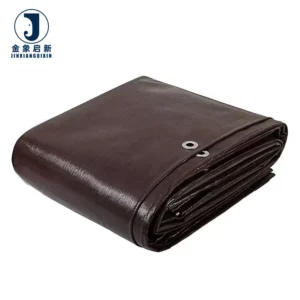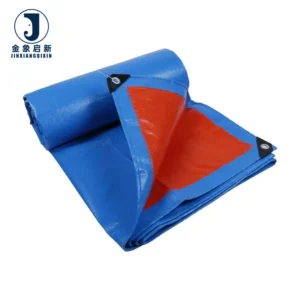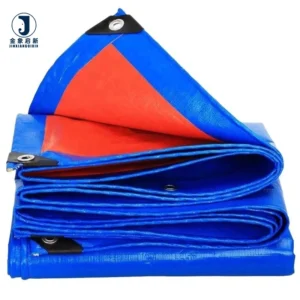
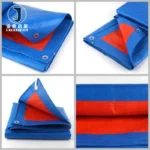

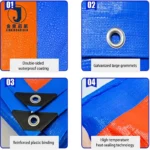
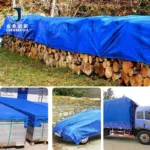
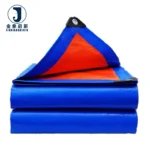
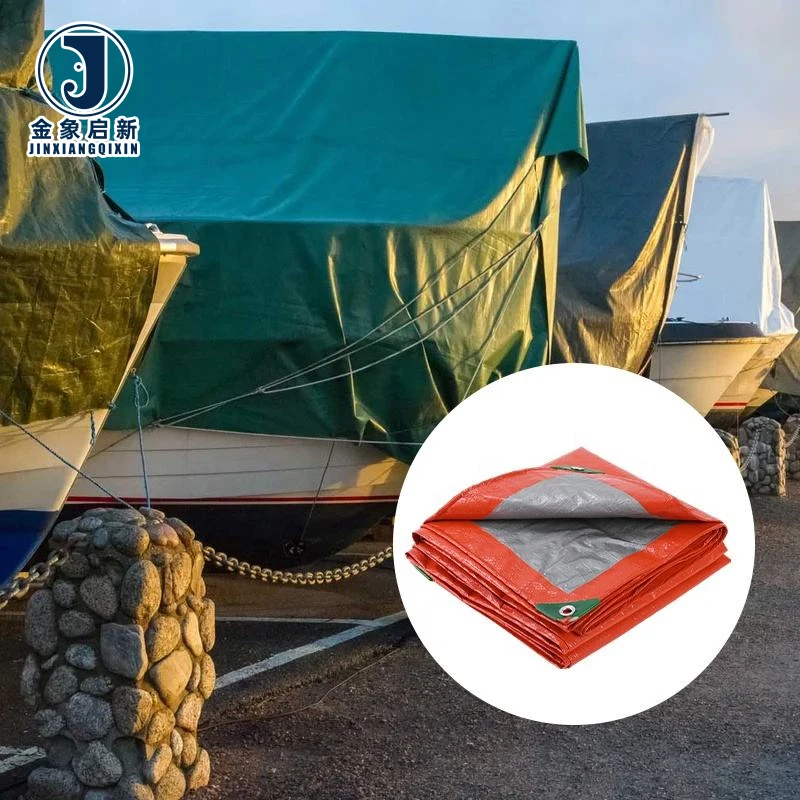
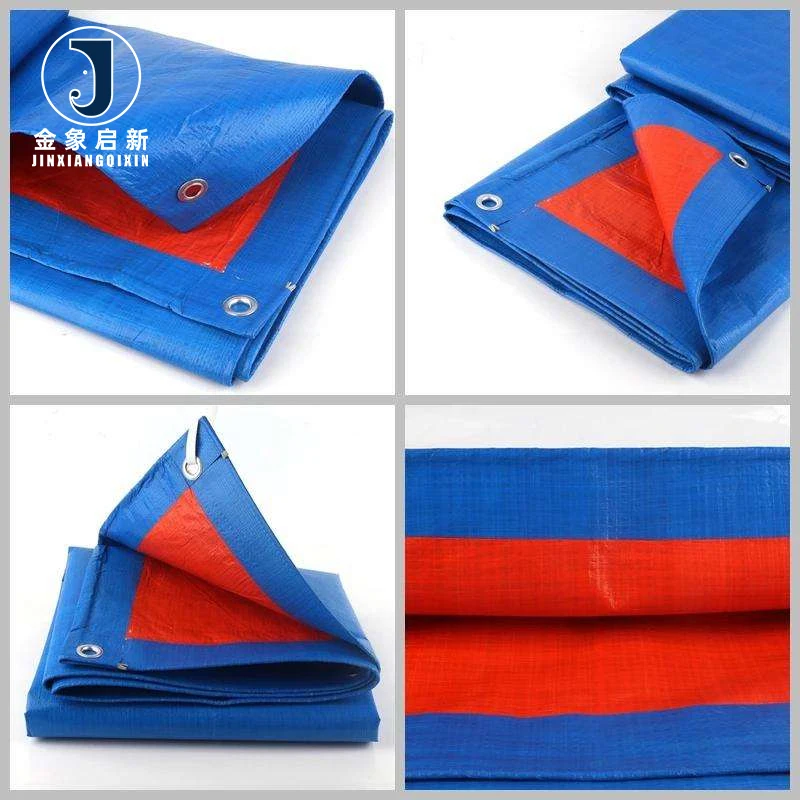
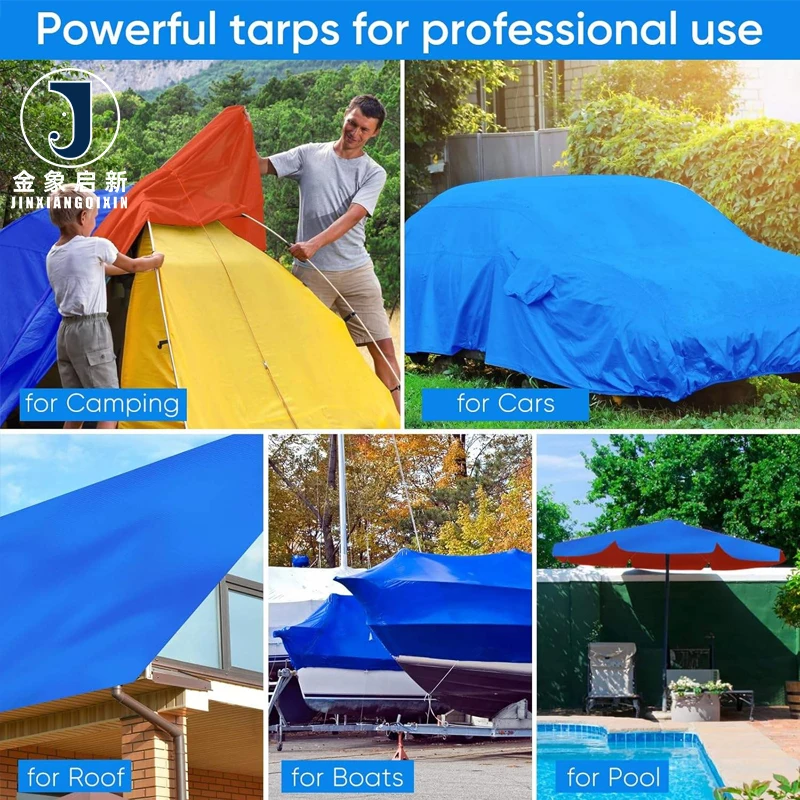
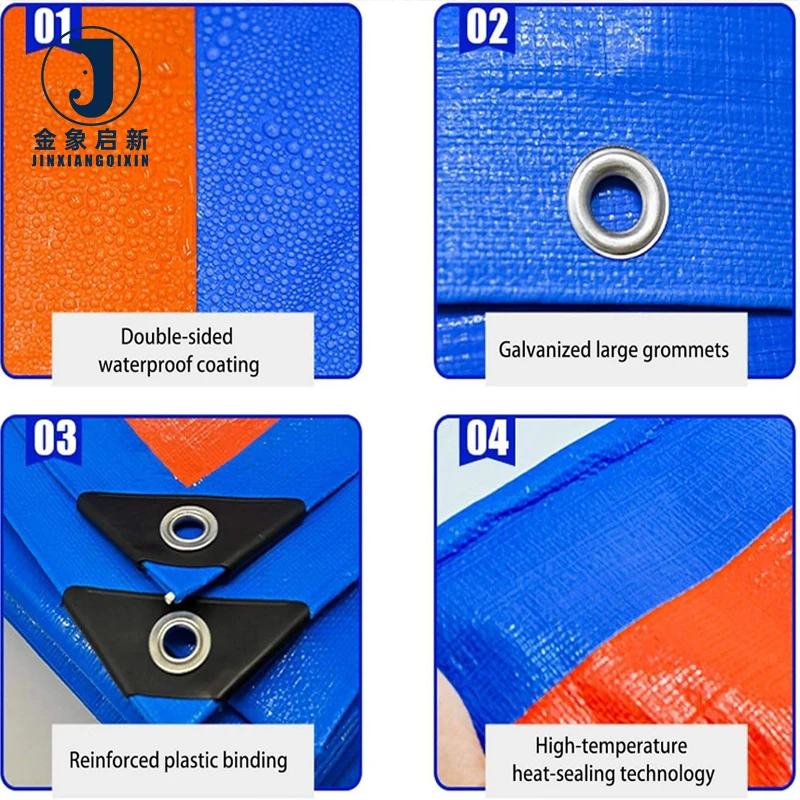
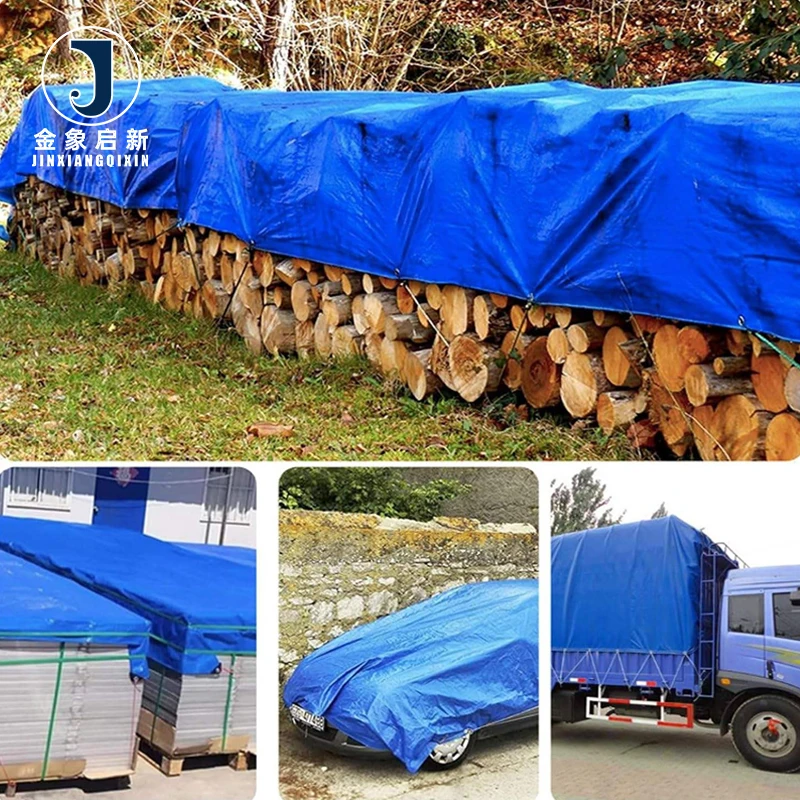
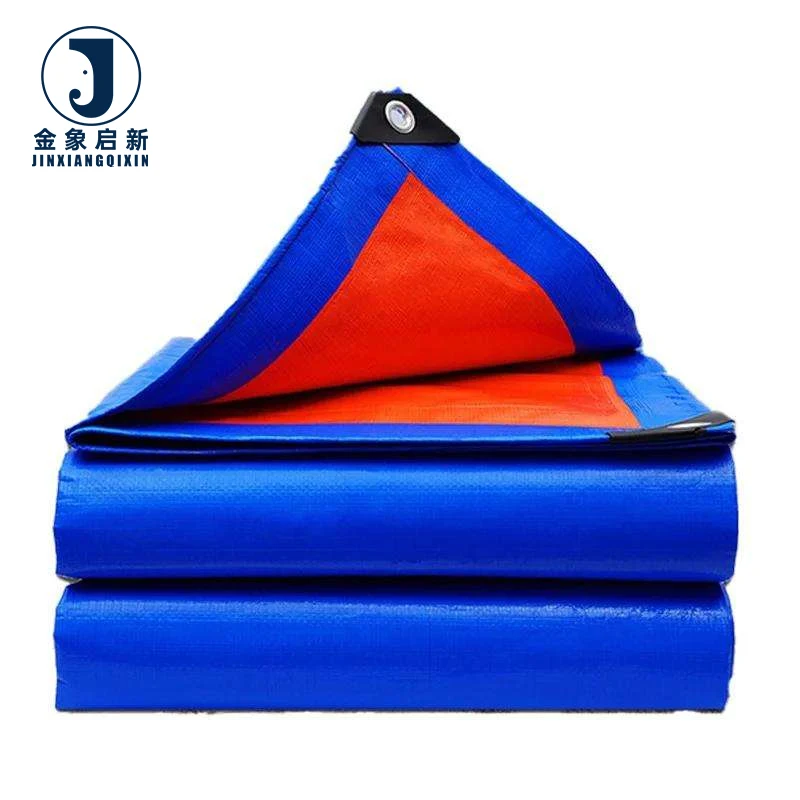
Proven Coating Adhesion — Our three full production lines control lamination temperature and pressure precisely, ensuring the LDPE coating bonds securely to the HDPE base fabric across every roll of PE tarpaulin we ship.
Technical Specifications
| Parameter | Value |
|---|---|
| Product Type | PE Tarpaulin |
| Base Fabric | HDPE cross-woven fabric |
| Coating Material | LDPE laminated both sides |
| Construction Option | 3 layers (1 fabric + 2 coating) / 5 layers (2 fabric + 3 coating) |
| Weight Range | 40–500 g/m² (confirm grade for specific application) |
| Total Thickness | 0.18–0.35 mm (varies by grade) |
| Mesh Count | 8×8 / 10×10 / 12×12 (varies by grade) |
| Tensile Strength | Meridian 300–1200 N/5cm / Latitude 250–1000 N/5cm (varies by grade) |
| Eyelet Spacing | 39.4 inches center to center |
| Surface Treatment | UV resistant, mildew proof, anti-aging (test basis available on request) |
| Waterproof Performance | Double waterproof surfaces |
| Edge & Corner Finish | Reinforced corners, rustproof grommets |
| Color | Custom color |
| Size | Custom size |
| Certification | ISO, CE |
Application Suitability
| Application | Exposure & Requirement |
|---|---|
| Ventilation duct outer wrapping | Dust and moisture exposure, requires fire-retardant or anti-static compliance depending on site regulations |
| Temporary industrial enclosures | Wind load, UV exposure, frequent installation and removal cycles |
| Mining site equipment covers | Abrasive dust, chemical splash risk, heavy-duty puncture resistance |
| Agricultural stock and pond covering | Permanent water contact, soil chemistry, UV degradation over seasons |
| Construction site barrier fabric | Mechanical impact, weather cycling, visibility and signage requirements |
| Specialist membrane structure | Tension loading, long-term weathering, compliance with local building codes |
What Certification Gaps Cost You on a Regulated Site
PE tarpaulin fire retardant / anti-static / certified claims only hold weight when backed by a verifiable test report matched to your site’s regulatory framework.
Ventilation duct and specialist structure contractors regularly face inspections where the documentation package is reviewed before the fabric itself. When the PE tarpaulin arrives with a fire-retardant claim but no grade behind it, the site safety officer has no basis for approval. We see projects stall because the fabric spec sheet lists "flame retardant treated" without naming the standard — leaving the buyer to source an alternative at short notice, often at a premium [NEED_CITE: fire classification standards for temporary industrial structures].
The same applies to anti-static requirements in environments handling combustible dust or volatile gases. A PE tarpaulin fire retardant / anti-static / certified designation must correspond to the specific test method your market requires. Without that alignment, the material may perform adequately in the field but still fail the paperwork check.
Compliance Documentation That Matches the Fabric You Receive
Every roll of PE tarpaulin leaving our facility ships with documentation tied to the actual batch produced. This means the GSM stated on the certificate corresponds to the roll in the container, not a generic product family range. For specialist applications where fire-retardant or anti-static treatment is specified, the test report references the exact coating formulation and weight used in your order. Our 10-person R&D team prepares this documentation package as part of the production workflow, not as an afterthought.
Matching the PE Tarpaulin Grade to Your Installation Method
The choice between 3-layer and 5-layer laminated construction affects more than weight and tensile strength. A 5-layer PE tarpaulin provides two HDPE fabric plies separated by an intermediate LDPE bonding layer, distributing tension across a thicker composite cross-section. This matters when the fabric is tensioned across a frame or used as a duct outer wrap where point loads concentrate at fastener points. For applications where the PE tarpaulin is simply draped or tied over equipment, a 3-layer construction delivers adequate protection at a lighter weight, reducing handling effort on site [NEED_CITE: tensile test methods for laminated coated fabrics per ISO 1421].
Reading Between the Mesh Count and GSM Figures
Mesh count describes how many HDPE tapes cross per inch in each direction — an 8×8 weave produces a lighter, more flexible sheet while a 12×12 weave creates a denser base fabric that resists tear propagation. However, mesh count alone does not determine the finished PE tarpaulin’s strength. The denier of each HDPE tape and the weight of LDPE lamination applied to both faces fill the gaps between tapes and lock the weave in place. A 10×10 mesh with heavy LDPE coating can outperform a 12×12 mesh with thin lamination in puncture resistance. This is why our specification sheets list GSM, mesh count, and tensile strength together — all three are needed to predict real-world behaviour.
The Real Cost of Specifying Without Test Evidence
When a PE tarpaulin is specified for a regulated environment — a mine ventilation tunnel, an aviation maintenance bay, a temporary structure requiring building code compliance — the gap between a treatment claim and a verified grade becomes a project risk. Fabric that arrives without the required fire-retardant certification cannot be installed regardless of its physical quality. Similarly, PE tarpaulin used in dust-prone environments without confirmed anti-static properties may pass visual inspection but create an ignition hazard the safety audit will flag [NEED_CITE: anti-static requirements for industrial fabric in explosive atmospheres]. The cost is not limited to replacing the material; it includes downtime, re-inspection fees, and the compressed timeline to source a compliant alternative.
Why Specialist Contractors Source This PE Tarpaulin Here
Our facility runs three full production lines with 36 sets of professional equipment, allowing us to hold both capacity and consistency for bulk PE tarpaulin orders. The 10-person R&D team develops custom sizing, colour, and treatment specifications with samples turned around within days rather than weeks. QA checkpoints at every production stage — from HDPE weaving through LDPE lamination to final grommet installation — catch deviations before they reach the packing line. Every shipment undergoes 100% pre-shipment inspection, so the documentation package you receive reflects what is actually in the container. Our ISO and CE certification framework supports the compliance documentation that regulated sites demand.
Documentation & Verification
- Material specification sheet stating confirmed GSM, HDPE base fabric denier, and LDPE coating weight per roll
- UV and flame-retardant test reports naming the specific grade and test standard applicable to your market
- Pre-shipment inspection record verifying weight, colour, and dimensions against the purchase order
- ISO and CE certificates included in the shipping documentation package
- Certificate of origin and customs support documents for cross-border industrial fabric shipments
Fabrication, Handling & Storage
- Heat-seal the LDPE laminated surfaces using temperature settings matched to the confirmed coating thickness grade
- Reinforce grommet points at the 39.4-inch spacing intervals with additional HDPE patches for high-tension installations
- Store rolls flat or upright on cores to prevent permanent creasing through the 3-layer or 5-layer laminate
- Allow cold-stored PE tarpaulin to reach ambient temperature before unfolding to avoid cracking the LDPE coating
- Clean double waterproof surfaces with mild detergent only; solvents degrade the LDPE lamination bond
- Cut panels using the confirmed mesh count orientation to maximise tensile strength along the primary load direction
Before You Enquire — What We Need to Specify Correctly
To recommend the right PE tarpaulin grade for your project, tell us the installation environment and any fire-retardant, anti-static, or UV compliance standards your site requires. Confirm whether you need rolls at a specific width or finished panels cut to dimension with grommets and reinforced hems. If colour consistency across multiple rolls matters for your application, note the total roll count so we can plan a single production batch.
Frequently Asked Questions
Q: What fire-retardant grades are available for PE tarpaulin used in regulated industrial sites?
A: PE tarpaulin can be produced with flame-retardant treatment, but the specific grade must match your local regulatory requirement — standards vary between markets. Confirm the standard your site safety officer requires, and we will supply the corresponding test report with your shipment documentation package.
Q: How do you confirm GSM on arrival matches what was quoted?
A: We conduct weight verification at every production stage and perform 100% pre-shipment inspection before dispatch. The inspection record shipped with your order lists the measured GSM for each roll, so you can verify on arrival that the PE tarpaulin weight corresponds to the quotation without relying on product family ranges.
Q: Is anti-static treatment available for PE tarpaulin used in dust-prone environments?
A: Anti-static treatment can be applied during the LDPE lamination stage, but the required grade depends on your site’s explosive atmosphere classification. Confirm the standard your project specifies, and our R&D team will develop a sample with the appropriate treatment and supporting test documentation.
Q: What is the minimum order for custom colour and sizing on PE tarpaulin?
A: Custom colour and size orders are planned by production batch to ensure consistency across all rolls in your shipment. The minimum depends on the width, length, and colour specified. Contact us with your project dimensions and roll count for a confirmed lead time and batch minimum.
Q: How do you ensure colour consistency when multiple rolls are installed side by side?
A: We schedule custom colour PE tarpaulin orders as a single production run across our three full production lines, with in-process QA checks comparing each roll against the approved colour standard. This prevents the visible variation that occurs when rolls from separate batches are installed adjacent to each other.