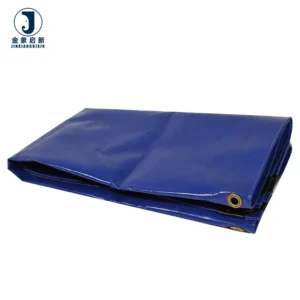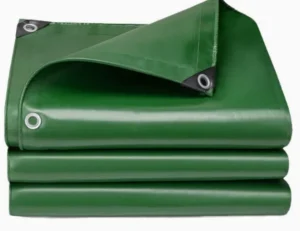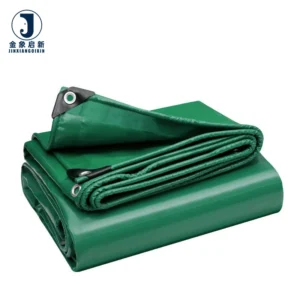
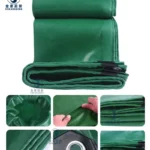
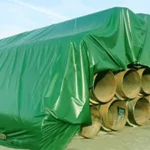
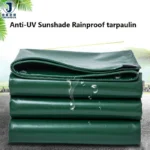
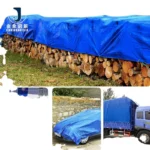

Coated Fabric Process Control — Deep expertise in knife coating weight and adhesion ensures reliable performance for ventilation and technical fabric applications requiring certified fire-retardant and anti-static compliance.
Technical Specifications
| Parameter | Value |
|---|---|
| Product Type | PVC Coated Fabric |
| Material | PVC Vinyl |
| Weight | At least 450 g/m² |
| Fabric Construction | Woven |
| Coating Method | Knife Coated |
| Waterproof | Yes |
| Tear-Resistant | Yes |
| Anti-UV | Available (test basis to be confirmed per grade) |
| Oilproof | Available |
| Surface Finish | Banner coated, black back options |
| Base Fabric Reference | 1000×1000 |
| Custom Size | Available |
| Certification | ISO, CE |
Application Suitability
| Application | Exposure & Requirement |
|---|---|
| Mining ventilation ducts | Continuous airflow, underground humidity, fire-retardant and anti-static compliance mandatory |
| Tunnelling exhaust systems | Abrasive particulate contact, confined space fire codes, duct flex under pressure cycles |
| Aviation ground ventilation | Fuel-rich environment, strict anti-static surface resistance, frequent deployment and stowage |
| Membrane structures | Long-term UV and weather exposure, structural tension loads, weld integrity at seams |
| Inflatable industrial covers | Repeated inflation cycles, puncture risk from handling, airtight seam requirement |
Why "Fire Retardant" Means Nothing Without a Grade
Certified fabric must carry documentation that maps the material to the exact fire code enforced at your site.
Procurement specifications often request fire-retardant PVC coated fabric without naming the classification standard. A mining operation in Australia requires a different test outcome than a construction site in France, and a supplier stating "flame retardant" without naming the grade leaves the buyer exposed at inspection. I have reviewed duct installations where the material passed one regional test but failed the local authority’s requirement because the grade was never aligned before production started [NEED_CITE: regional fire classification frameworks for industrial ventilation textiles].
Compliance Documentation Before Production Starts
Fire-retardant and anti-static PVC coated fabric must be matched to the compliance target of the project jurisdiction. Jinxiang supplies test reports tied to specific grades, allowing technical buyers to confirm alignment with site requirements before committing to a production run. Requesting the test standard at inquiry stage prevents costly replacement after failed inspections.
Airflow Construction and Duct Behaviour
Ventilation ducts built from knife-coated woven fabric must maintain dimensional stability under positive and negative pressure cycles. The 1000×1000 base fabric construction provides a stable substrate that resists stretching when the duct is pressurised, while the knife coating method delivers consistent adhesion between the PVC layers and the woven core [NEED_CITE: tensile behaviour of coated fabrics under cyclic pressure loading]. This combination matters in mining and tunnelling where duct failure halts ventilation and stops production.
Fire and Static Testing Alignment
Flame retardant grades are available across the product range — confirm the grade required for your market before ordering. Anti-static treatment is specified by surface resistivity, and the acceptable threshold differs between aviation fuel-handling areas and general mining intake airways. Providing the target standard at inquiry ensures the correct additive package is compounded into the PVC coating.
Knife Coating and Substrate Interaction
The knife coating process forces PVC paste into the woven base fabric under controlled blade pressure and gap settings. This method produces a mechanical bond between coating and substrate that differs fundamentally from laminated or calendared alternatives. For ventilation ducts that undergo repeated folding and deployment, the peel strength of the coating-to-fabric interface determines whether delamination appears at the fold lines before the fabric itself reaches end of service.
Specifying the Wrong Grade — Field Consequences
A ventilation duct installed underground without the correct fire classification can shut down an entire mining section pending replacement. Anti-static surface resistance that drifts above the site threshold turns the duct into an ignition risk in gassy atmospheres. Coating adhesion failures at heat-welded seams appear first at the points where the duct flexes most under pressure cycling, and these failures are not repairable in situ without removing the affected section [NEED_CITE: weld integrity standards for flexible industrial ducting]. Matching the PVC coated fabric specification to the actual compliance and mechanical environment avoids these operational disruptions.
Why Source Ventilation Fabric Through Jinxiang
Three full production lines and 36 sets of professional equipment support bulk duct fabric orders with reliable scheduling. A dedicated 10-person R&D team handles material selection, sample development and test coordination for fire-retardant and anti-static grades. Every roll undergoes dedicated quality inspection at each production stage with full pre-shipment verification. Nearly 30 years of focused coated fabric production informs process decisions on coating weight, cure parameters and adhesion control. Custom widths and specialist additive packages are developed in-house rather than outsourced.
Documentation & Verification
- Material specification sheet stating GSM, base fabric construction and coating method for every roll
- Fire-retardant test report matched to the grade and standard specified at order
- Anti-static surface resistivity test data provided for mining and aviation duct grades
- ISO and CE certificates included with full shipment documentation package
- Pre-shipment inspection record confirming weight, dimensions and visual quality per roll
- Certificate of origin and customs documentation for international consignments
Fabrication, Handling & Storage
- Heat welding parameters must account for the knife coated PVC layer thickness to achieve full seam fusion
- Sewn seams on 1000×1000 base fabric require heavy-duty thread rated for coated technical textiles
- Store rolls vertically on end caps to prevent flat-spot deformation of the woven core
- Unroll at ambient temperature; cold-stiffened PVC coating may crack if forced open below rated minimum
- Clean surfaces with mild detergent only — solvent-based cleaners can degrade the PVC coating finish
- Cut patterns should account for weld seam allowance when fabricating duct sections from roll stock
Requesting a Specification Match
Provide the ventilation application, the fire-retardant classification standard enforced at your site, and the anti-static surface resistivity threshold required. Specify the roll width, annual volume and whether you need fabric only or fabricated duct sections. Confirm the target market and any colour or identification marking requirements so the correct grade and additive package can be proposed.
Frequently Asked Questions
Q: How do you align flame retardant grades with different regional fire codes?
A: We request the specific classification standard required at your project site during the inquiry stage. Our R&D team then selects the appropriate additive formulation and arranges third-party testing to that standard. Test reports are included with shipment documentation so your site compliance team has the evidence needed for inspection approval.
Q: What anti-static surface resistivity levels are available for mining duct fabric?
A: Anti-static treatment is compounded into the PVC coating to achieve surface resistivity levels matched to mining regulations in your jurisdiction. The target value must be specified at inquiry so the correct formulation is applied. We provide measured resistivity data on the test report accompanying each production batch.
Q: How is fabric weight verified before dispatch?
A: Each roll is weighed and measured during the pre-shipment inspection to confirm the actual GSM matches the specification stated on your order. The inspection record is included with your shipment documentation. This process prevents the common problem of quoted weight not matching the material that arrives on site.
Q: What welding parameters should we use for duct fabrication?
A: Welding temperature, pressure and dwell time depend on the total coating thickness and the specific PVC formulation used. We provide recommended heat welding parameters with every fabric delivery based on the grade supplied. Running a test weld on a sample piece before full production is always recommended.
Q: Can you develop a sample before we commit to a bulk order?
A: Yes. Our R&D team develops samples within days once the application requirements, grade and sizing are confirmed. The sample allows you to verify coating feel, base fabric hand, weld behaviour and colour before authorising full production. Sample approval is a standard step in our sales process.