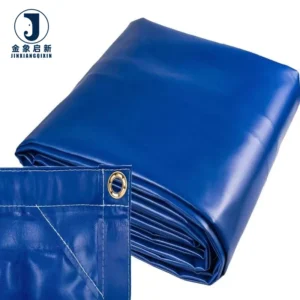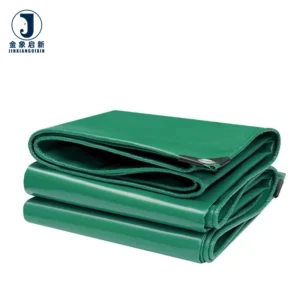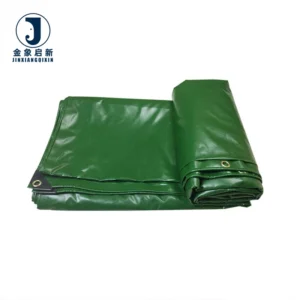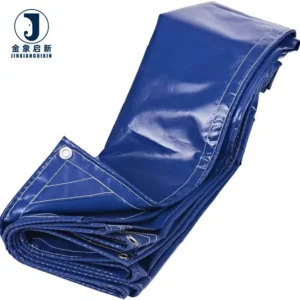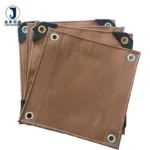
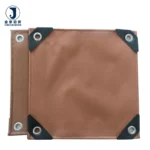

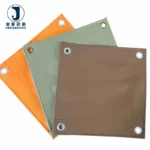
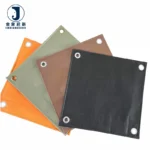
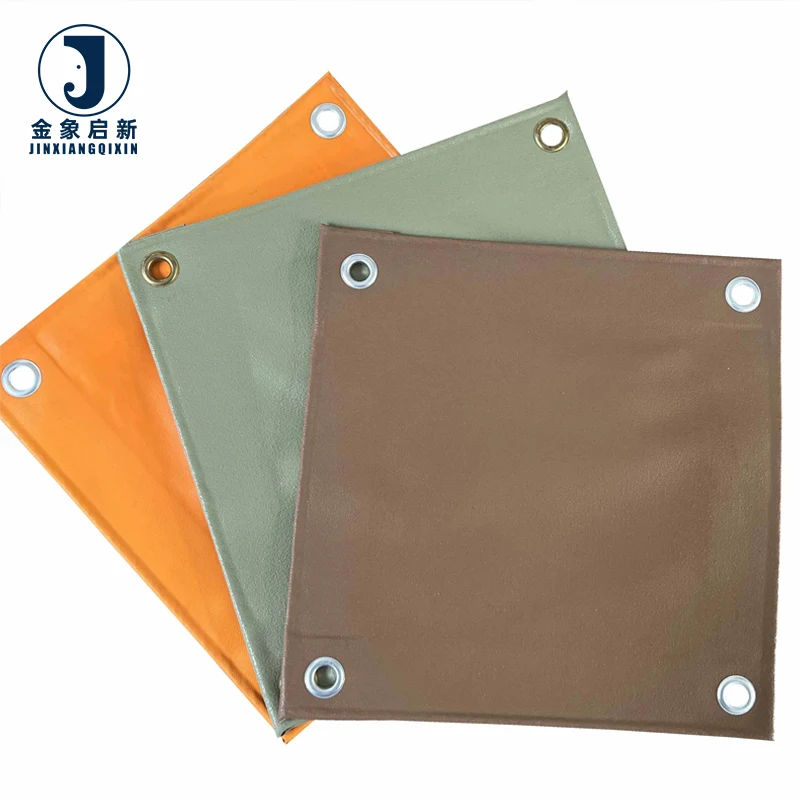
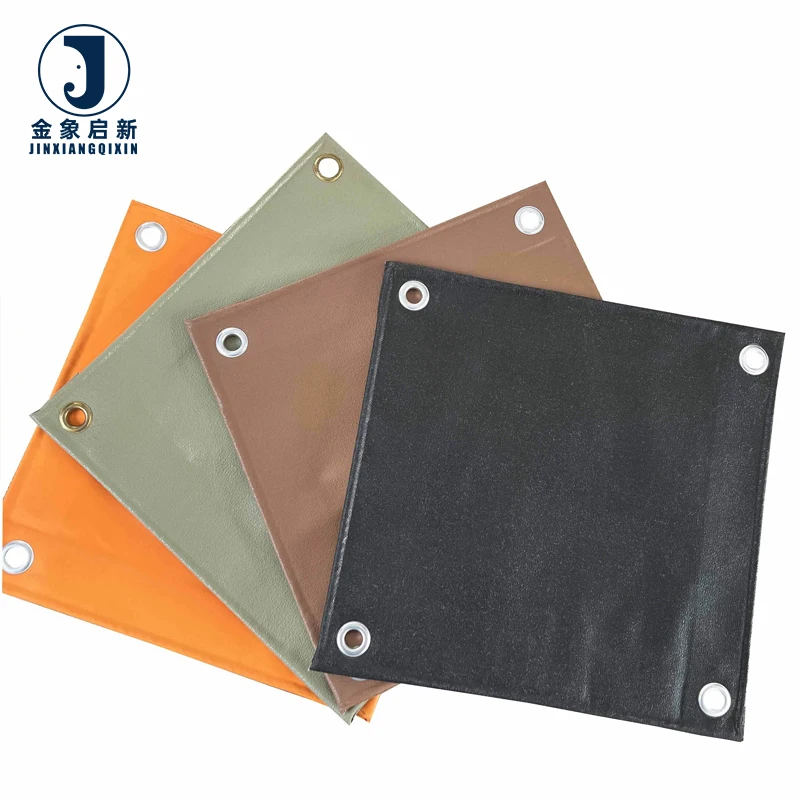
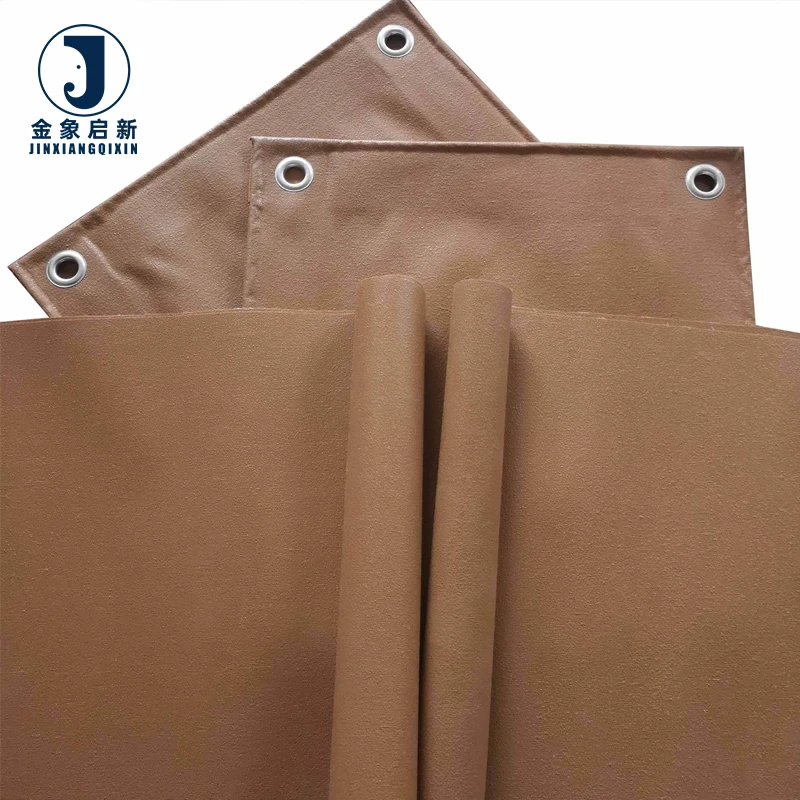
Proven Coating Expertise — Nearly 30 years focused on PVC coated fabric, with deep process control over coating weight and adhesion for technical ventilation duct applications.
Technical Specifications
| Parameter | Value |
|---|---|
| Product Type | PVC Coated Tarpaulin |
| Weight | 500gsm, 600gsm |
| Coating Material | PVC |
| Flame Retardant | Fireproof (grade not stated in source) |
| Special Treatments | Flame Retardant; Anti-Static; Anti-cold; Anti-mildew |
| Weather Resistance | Good weather resistance (test basis not stated) |
| Waterproof | Yes (rating not stated) |
| Base Fabric Denier | Not stated in source |
| Mesh Count | Not stated in source |
| Coating Method | Not stated in source |
| Total Thickness | Not stated in source |
| Width | Not stated in source |
| Roll Length | Not stated in source |
| Tensile Strength | Not stated in source |
| Tear Strength | Not stated in source |
| Adhesion Strength | Not stated in source |
| Temperature Range | Not stated in source |
| UV Treatment | Not stated in source |
| Certification | Not stated in source |
Application Suitability
| Application | Exposure & Requirement |
|---|---|
| Mine and tunnelling ventilation duct | Underground dust, explosive atmosphere, constant air pressure cycles, fire-retardant and anti-static compliance |
| Aviation ground support flexible duct | Jet blast proximity, fuel vapour exposure, fire safety standards, rapid deployment |
| Membrane and inflatable structure fabric | Wind load, weather exposure, long-term UV resistance, structural tension integrity |
| Humid underground ventilation | High humidity, biological growth risk, anti-mildew treatment required to prevent fabric degradation |
| Sub-zero tunnel operations | Arctic or high-altitude mining, low temperature brittleness risk, anti-cold treatment required |
Why Fire-Retardant and Anti-Static PVC Coated Tarpaulin Demands Verifiable Certification
A ventilation duct that fails a fire or static test on site halts the entire project.
Specifying PVC coated tarpaulin fire retardant anti-static material for underground or confined-space ventilation is not simply a matter of checking a box on a quotation. Mining and tunnelling contractors regularly face the consequence of duct fabric that claims fire-retardant or anti-static properties but arrives without the test documentation the site safety officer requires. When the inspector asks for the flame-retardant grade certificate and the anti-static surface resistance report, a verbal assurance from the supplier is not sufficient [NEED_CITE: mine ventilation duct fire safety compliance standards]. The fabric must carry documentation traceable to the production batch.
Fire-Retardant Grades and Mining Compliance
Fire-retardant PVC coated tarpaulin for ventilation duct fabrication is available in multiple grades, each aligned with different regulatory frameworks. The grade required depends entirely on the jurisdiction and the specific site safety plan. Some markets mandate classification per DIN 4102, others require NFPA 701 or the French M2 standard. Confirm the grade required for your market before placing a production order. We supply the test report matched to the specific batch, not a generic document from a previous run.
Anti-Static Treatment for Explosive Environments
In coal mines, grain handling facilities, and tunnelling operations where combustible dust is present, anti-static treatment on the duct fabric surface is a non-negotiable requirement. The surface resistance value must fall within the range specified by the site safety plan [NEED_CITE: anti-static surface resistance standards for mining ventilation]. Anti-static PVC coated tarpaulin is available as an option — confirm the surface resistance standard and value required for your project at the inquiry stage.
Ventilation Duct Fabrication Requirements
Ventilation duct construction demands fabric that can be heat-welded into long continuous runs without delamination at the seam. The coating formulation and weight directly influence weld temperature settings and dwell time. A 500gsm grade and a 600gsm grade will respond differently under the same welding head, requiring the fabricator to establish separate parameter profiles for each. PVC coated tarpaulin fire retardant anti-static material must maintain coating adhesion through repeated flex cycles as the duct pressurises and depressurises during fan start-up and shut-down sequences.
Specialist Structure and Membrane Applications
Beyond ventilation, this PVC coated fabric serves membrane and inflatable structure applications where fire-retardant classification is required for temporary shelters, emergency warehouses, and event enclosures. The coating must resist cracking under sustained tension and maintain its fire-retardant properties through prolonged weather exposure. Anti-mildew treatment becomes critical when the structure operates in tropical or high-humidity environments where biological growth on the fabric surface can degrade the coating over time [NEED_CITE: biological degradation of PVC coated fabric in humid conditions].
Understanding the Specification Parameters
The stated 500gsm and 600gsm grades represent the total coated weight per square metre, combining base fabric and PVC coating layers. GSM alone does not determine tensile or tear strength — the base fabric denier, yarn count, and weave pattern contribute equally to mechanical performance. A 600gsm fabric woven from high-denier yarns in a tight weave will outperform a 600gsm fabric built on a lighter base cloth with heavier coating. Request the material specification sheet that breaks down base fabric denier, mesh count, and coating weight separately to evaluate the construction properly.
The Cost of Specification Errors in Ventilation Projects
Ordering duct fabric with an incorrect fire-retardant grade results in rejection at the site inspection, forcing a full replacement order and project delay. Colour variation between rolls in the same batch becomes visible when duct sections are installed side by side in a well-lit tunnel portal, triggering aesthetic complaints even where performance is unaffected. Welded seams failing before the fabric body indicates a mismatch between welding parameters and the specific coating formulation supplied — a failure mode that appears under load rather than on the fabrication table [NEED_CITE: coated fabric weld seam failure under flex load]. Anti-static treatment that is not documented with a surface resistance test report creates compliance risk the moment the safety auditor requests evidence.
Why Source This PVC Coated Tarpaulin Here
Three full production lines and 36 sets of professional equipment support bulk ventilation duct fabric orders with consistent coating weight across the entire run. A dedicated 10-person R&D team handles material selection and sample development, producing samples within days when a mining contractor needs to validate fire-retardant or anti-static performance before committing to a container order. Quality inspection covers every production stage with 100% pre-shipment inspection — rolls are checked for GSM, coating adhesion, and colour consistency before packing. ISO and CE certified production processes provide the documentation foundation that mining and tunnelling projects require for compliance files.
Documentation & Verification
- Material specification sheet stating GSM, base fabric denier, coating method and weight per roll
- Fire-retardant test report matched to the specific production batch and grade
- Anti-static surface resistance test report for mining and tunnelling compliance
- ISO and CE certificates covering the production facility
- Pre-shipment inspection record confirming roll-to-roll consistency
- Certificate of origin and customs documentation for export
Fabrication, Handling & Storage
- Set welding temperature profiles separately for 500gsm and 600gsm grades to avoid delamination
- Store rolls upright on end cores to prevent permanent coating creases across the fabric width
- Allow cold-weather rolls to acclimatise before unrolling to prevent coating micro-cracking
- Use compatible PVC adhesive for field repairs on anti-cold treated grades
- Plan duct section lengths to minimise transverse welds and reduce seam failure points
- Clean with pH-neutral detergent to preserve anti-static surface treatment integrity
Requesting a Technical Quotation
To specify the correct PVC coated tarpaulin for your ventilation or structure project, provide the fire-retardant grade your site requires, the duct diameter or structure dimensions, and the total linear metres needed. Include the operating temperature range and whether anti-static, anti-cold, or anti-mildew treatment is mandated by your safety plan. Specify whether you require rolls for in-house fabrication or finished duct sections.
Frequently Asked Questions
Q: What fire-retardant grade does the fabric carry and which test standard applies?
A: Fire-retardant treatment is available in multiple grades. The applicable standard — whether DIN 4102, NFPA 701, M2, or another classification — depends on your project jurisdiction and site safety requirements. Confirm the specific grade at the inquiry stage so the correct test report can be prepared and matched to your production batch.
Q: What is the anti-static surface resistance value for mining compliance?
A: Anti-static treatment is available as an option for explosive or dust-laden environments. The surface resistance value and the test standard applied must align with your mine safety plan. Provide your required specification at inquiry so the fabric can be treated and tested to the correct standard before shipment.
Q: How is GSM verified on arrival and what documentation supports it?
A: Every roll undergoes 100% pre-shipment inspection with GSM verification against the stated 500gsm or 600gsm grade. A weight verification record is included in the dispatch documentation. If your receiving team requires additional verification, independent laboratory testing of a sample cut from the delivered roll provides confirmation.
Q: Can the fabric be supplied with anti-cold treatment for sub-zero tunnel operations?
A: Anti-cold treatment is available for ventilation duct deployment in high-altitude or arctic mining conditions where standard PVC becomes brittle. Specify the minimum operating temperature your project encounters so the formulation can be matched to the thermal conditions the duct will experience in service.
Q: How is batch colour consistency controlled across multiple rolls?
A: Colour matching is controlled through dedicated QA/QC at every production stage with 100% pre-shipment inspection. Rolls within the same order are produced from the same coating batch to minimise visible variation when duct sections are installed adjacent to each other in the field.