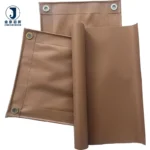
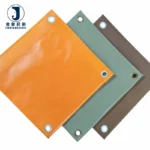
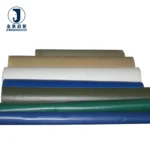
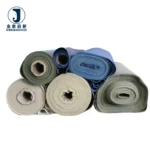
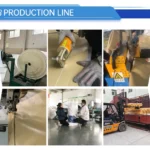
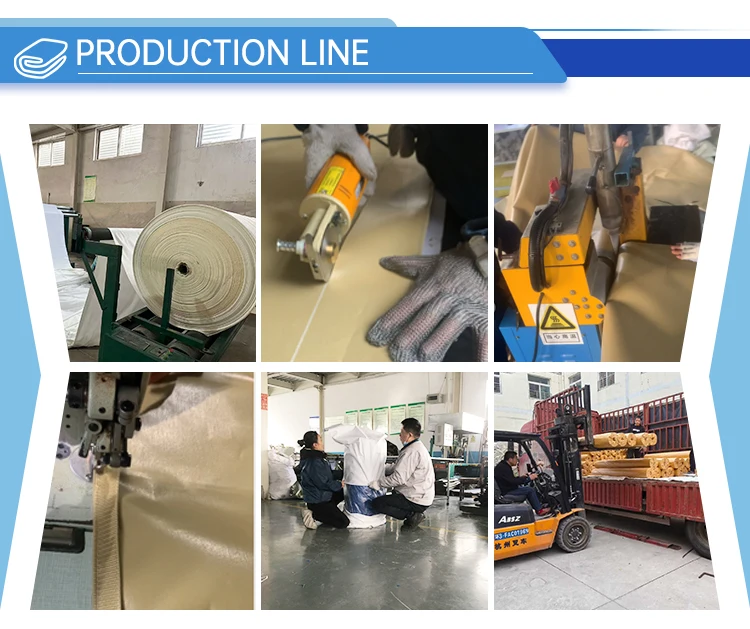
Coating Process Control — Our hot melt and lamination lines maintain consistent adhesive strength across every roll, ensuring welded seams hold at the flex points where industrial duct systems experience the most movement.
Technical Specifications
| Parameter | Value |
|---|---|
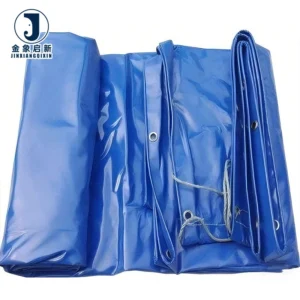
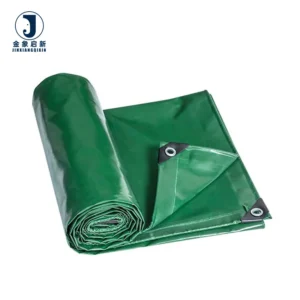
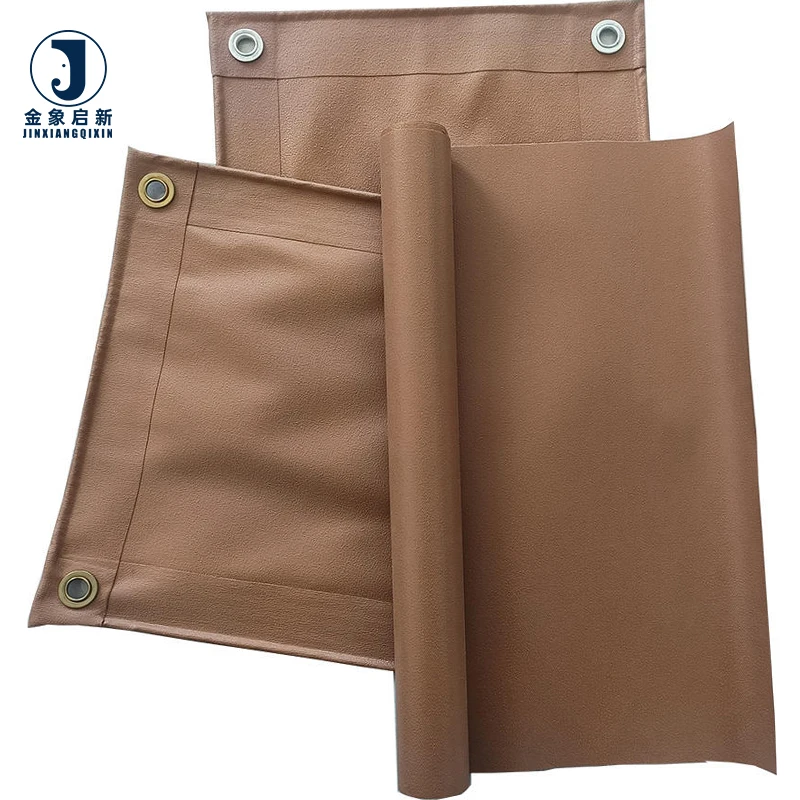
| Product Type | PVC Coated Tarpaulin |
| Base Fabric | 100% high toughness polyester yarn |
| Base Fabric Denier | 500D to 2000D |
| Weight Range | 400–1500 g/m² |
| Total Thickness | 0.35–1.5 mm |
| Coating Material | PVC |
| Coating Technology | Lamination technology and hot melt coating technology |
| Tensile Strength | Warp 1500–3000 N/5cm / Weft 1200–2800 N/5cm |
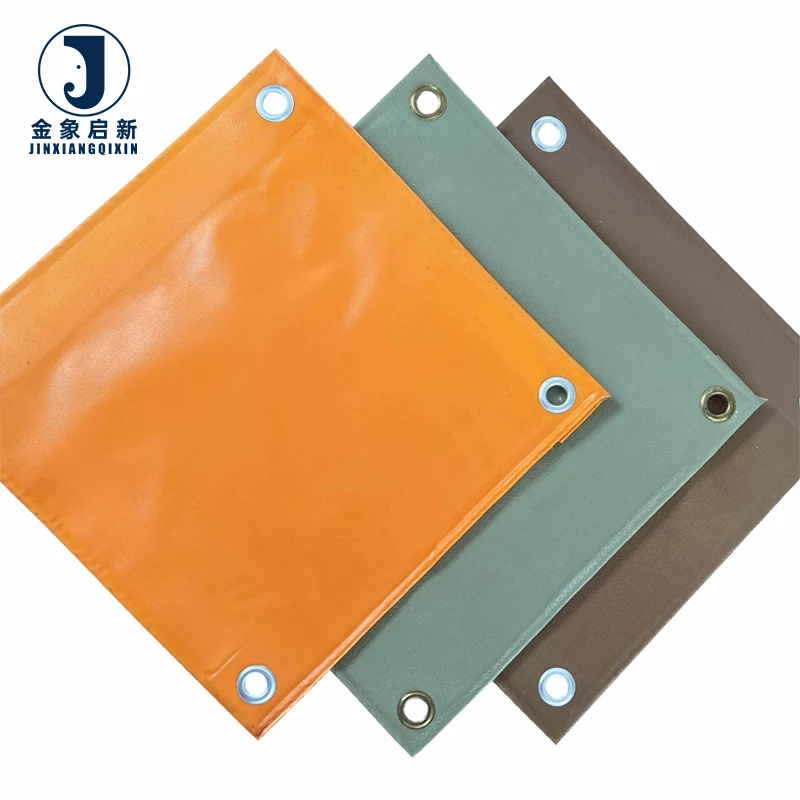
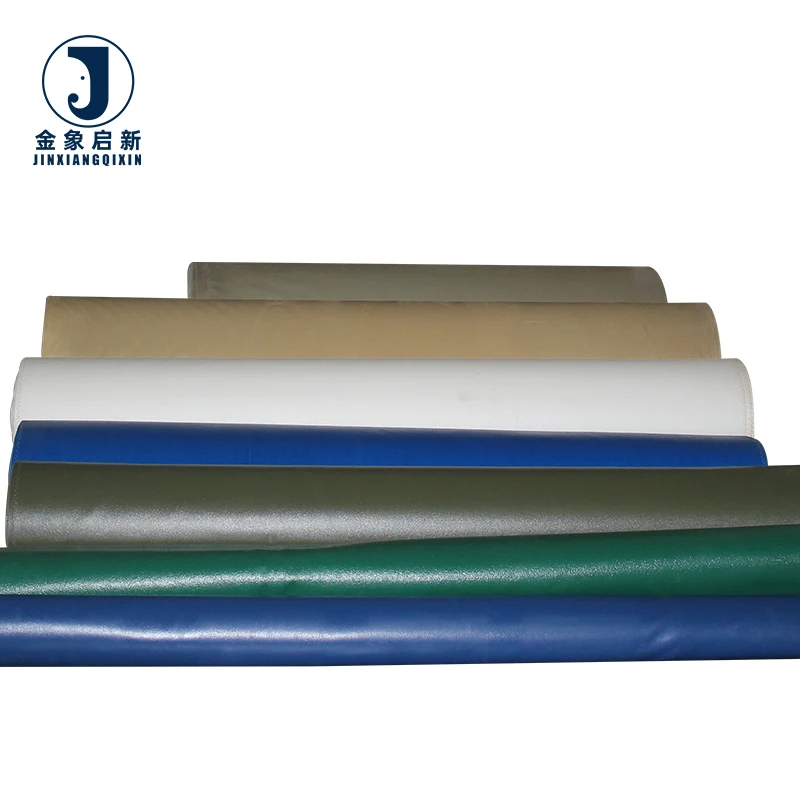
| Color | Customizable |
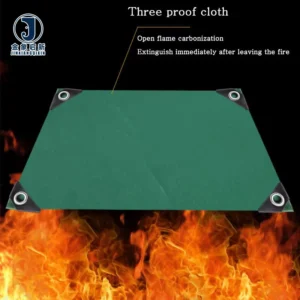
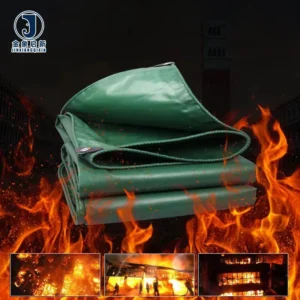
| Surface Treatments | UV resistant, flame retardant (grade to be confirmed per project), anti-static (standard to be confirmed), cold resistant, mold proof, waterproof |
| Welding Tear Strength | Excellent (test standard to be confirmed) |
| Certifications | ISO, CE |
Application Suitability
| Application | Exposure & Requirement |
|---|---|
| Mining ventilation duct | Underground particulate, continuous airflow flex, mandatory fire-retardant and anti-static compliance |
| Tunnelling ventilation system | High humidity, confined space fire codes, abrasion from duct sag and movement |
| Aviation facility duct | Hangar chemical exposure, strict flame-retardant certification, large diameter inflation loads |
| Membrane and inflatable structure | Constant tension, wind uplift, UV and weather exposure on permanent installations |
| Industrial pipe canopy cover | Chemical splash, outdoor weathering, thermal expansion and contraction cycling |
Why "Fire Retardant" on a Quotation Means Nothing Without a Grade
When sourcing PVC coated tarpaulin for ventilation ducts or tensioned structures, a generic flame-retardant claim does not satisfy site inspectors or regulatory audits. Compliance is only as valid as the test report that backs it.
Buyers routinely receive fabric quoted as "flame retardant" with no DIN, NFPA, or national standard reference attached. On arrival, the site safety officer rejects the batch because the grade does not match the local mining or building code. Rework delays the project, and the contractor absorbs the cost of replacement material and downtime [NEED_CITE: DIN 4102 fire classification for building materials]. We treat every PVC coated tarpaulin order as a compliance delivery — the grade is confirmed before production begins, and the matching test report ships with the documentation package.
Matching Treatment to Your Site’s Regulatory Environment
Different jurisdictions enforce different fire classification systems. A mining operation may require anti-static surface resistance verified to a specific standard, while a civil tunnelling project references a national flame-retardant building code. We confirm the required grade during the specification stage, then produce and test to that benchmark so the PVC coated tarpaulin arrives with documentation your site authority will accept.
Coating Integrity Under Continuous Flex
Ventilation ducts inflate, deflate, sag, and vibrate throughout their service life. The coating must stay bonded to the base fabric through every cycle. Our lamination and hot melt coating process delivers consistent adhesive strength so the PVC layer does not delaminate at fold lines or welded seams — the exact locations where duct fatigue concentrates [NEED_CITE: tensile and tear test methods for coated fabrics per ISO 1421].
Reading Beyond the Weight Figure
Weight alone does not define how a PVC coated tarpaulin will perform in a duct or structure application. A heavy GSM with a low denier base fabric can deliver poor tear propagation resistance, while a medium-weight fabric woven from 2000D yarn may outperform it under tension. Our specification sheets list GSM alongside base fabric denier, knitting density, and coating weight so you can evaluate the full construction rather than relying on a single number.
The Cost of Specifying on Weight Alone
Selecting duct or structure fabric based only on a quoted GSM is one of the most common procurement errors we see. The roll arrives lighter than stated, or the coating adhesion fails at the weld line before the base fabric reaches its rated tensile load. Either outcome means the contractor is replacing material on site, paying for expedited freight, and absorbing project delay costs — all preventable if the full specification had been verified before production [NEED_CITE: coating weight and adhesion verification in coated fabrics].
Why Procurement Teams Choose This Supply Source
Our R&D team of engineers handles material selection and sample development, producing custom-width and custom-treatment samples within days so you can validate before committing to bulk. Three full production lines with dedicated professional equipment support consistent coating weight and roll-to-roll colour matching across large orders. Every roll passes through staged QA checks, with a full pre-shipment inspection before dispatch. We supply material specification sheets, test reports, and compliance certificates matched to your purchase order — not generic documents. Decades of focus on coated fabric production means our process control is built on accumulated production data, not guesswork.
Documentation & Verification
- Material specification sheet stating GSM, base fabric denier, coating weight, and treatment grade for every roll
- Flame-retardant and anti-static test reports matched to the standard cited on your purchase order
- ISO and CE certificates included with dispatch documentation and certificate of origin
- Pre-shipment inspection record covering weight, colour, and coating consistency per roll
- Roll packing list with net and gross weight for customs clearance support
Fabrication, Handling & Storage
- Hot melt coated fabric welds at temperatures determined by coating thickness — request our recommended parameters for your heat-sealer
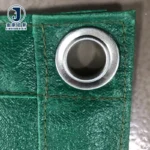
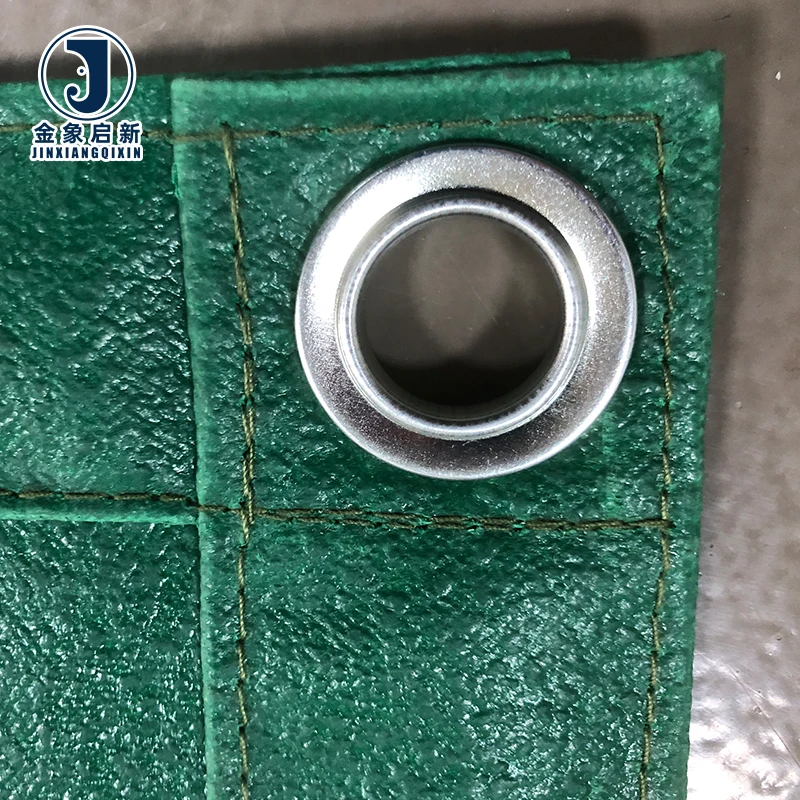
- High-denier base fabric requires reinforced eyelet plates at tie-down points to prevent tear-out under duct tension
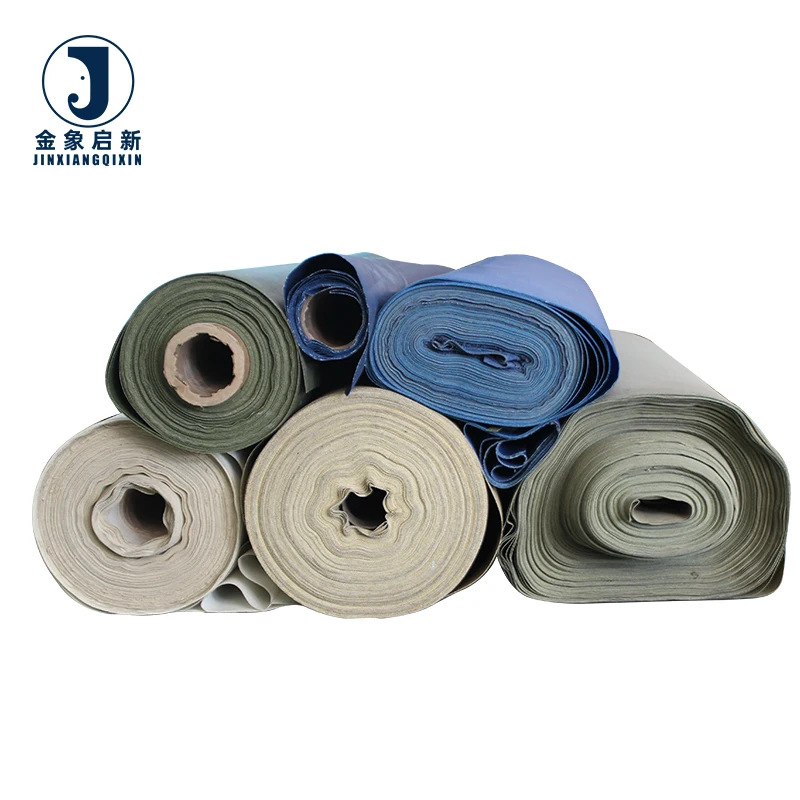
- Store rolls upright on pallets in shaded, ventilated areas to prevent permanent flat-spot creases in the PVC layer
- Cold-resistant formulation reduces brittleness during low-temperature transport, but allow rolls to acclimatise before unrolling
- Clean membrane structures with neutral pH detergent only; avoid solvents that attack the PVC coating surface
How to Build a Complete Inquiry
Provide your application — whether ventilation duct, inflatable structure, or tensioned membrane — along with the fire-retardant or anti-static standard your site enforces. Specify the required width, roll length or cut dimensions, colour, and any printing or branding needs. Confirm whether you need raw roll stock or finished fabricated panels with welded seams and hardware.
Frequently Asked Questions
Q: What fire-retardant grade should I specify for my mining or tunnelling ventilation duct?
A: The required grade depends on your jurisdiction’s mining or construction safety code. Some sites enforce DIN 4102 classifications, others reference local standards. Share your site’s regulatory requirement with us at inquiry stage so we produce the PVC coated tarpaulin to the correct benchmark and ship the matching test report with your order.
Q: How is anti-static surface resistance verified for underground duct compliance?
A: Anti-static treatment is applied during coating and verified through surface resistance testing against the standard your site requires. We provide the test report with shipment so your safety officer can confirm compliance. Specify the exact standard at inquiry so the treatment formulation is matched before production begins.
Q: How do you ensure GSM accuracy from quotation through to arrival?
A: Every roll undergoes weight verification during our staged QA process, with a pre-shipment inspection confirming the actual GSM matches the specification sheet. The inspection record ships with your documentation package, and rolls can be re-weighed on arrival against the stated value for independent confirmation.
Q: What information do I need to provide for a custom-width or custom-treatment order?
A: Share your required width, roll length, colour reference, treatment standard, and annual volume. Our R&D team develops a sample within days for your approval. Once you confirm the sample, production begins with in-process QA at every stage and a full inspection before dispatch.