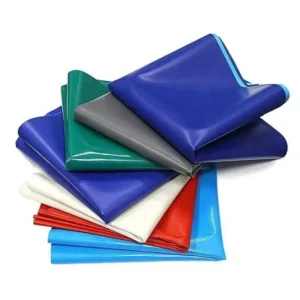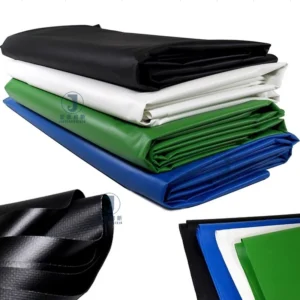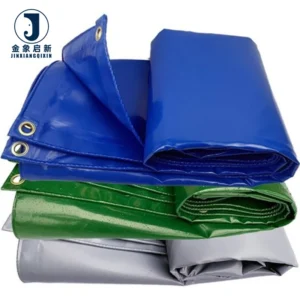
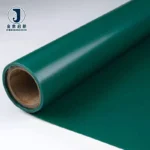
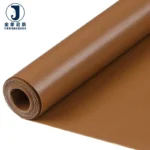
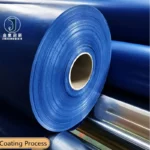

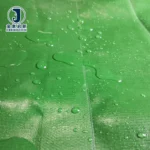
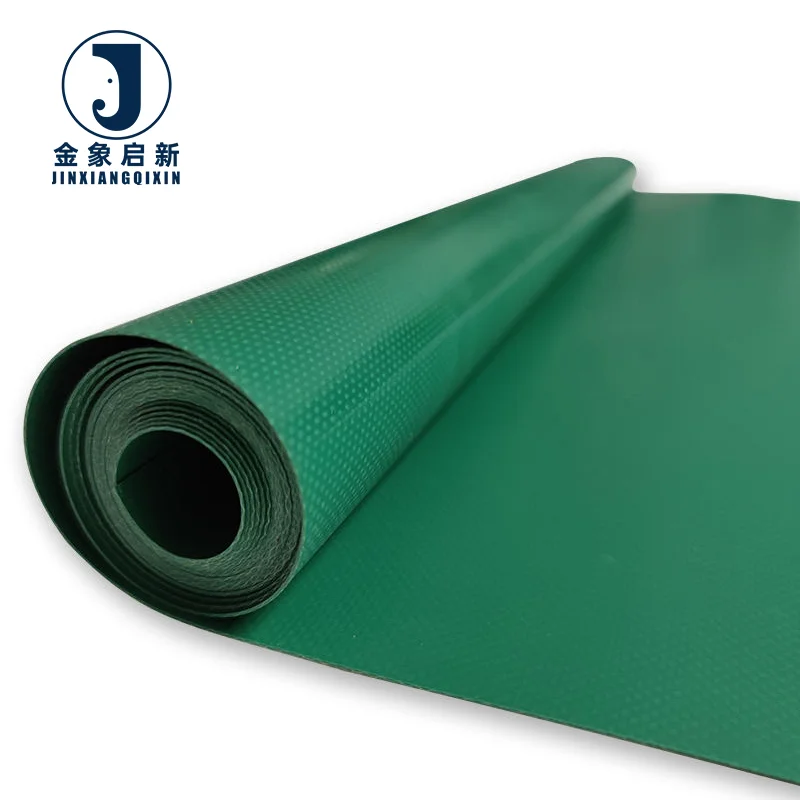
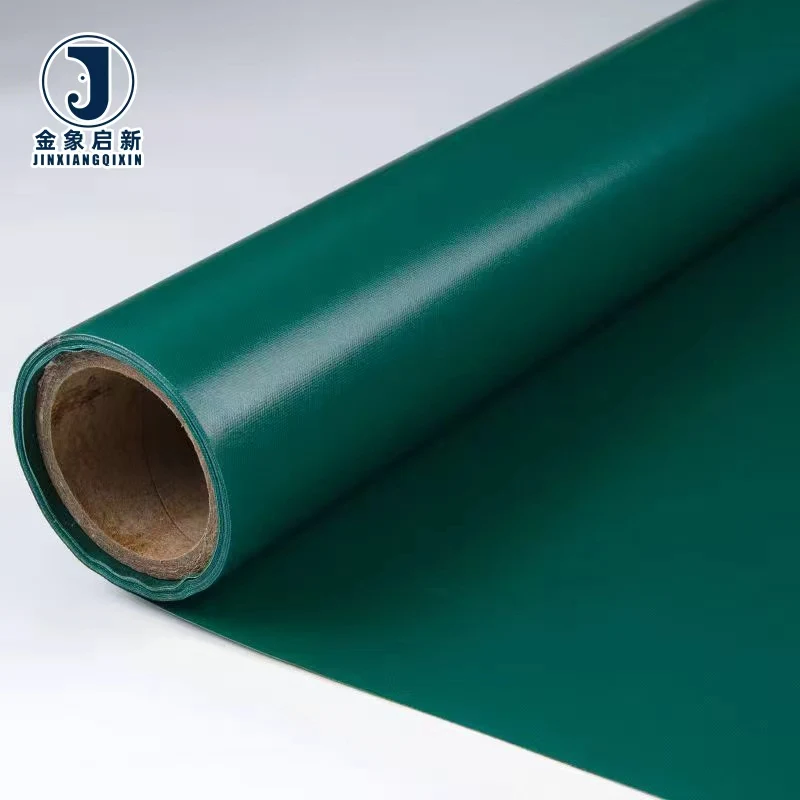
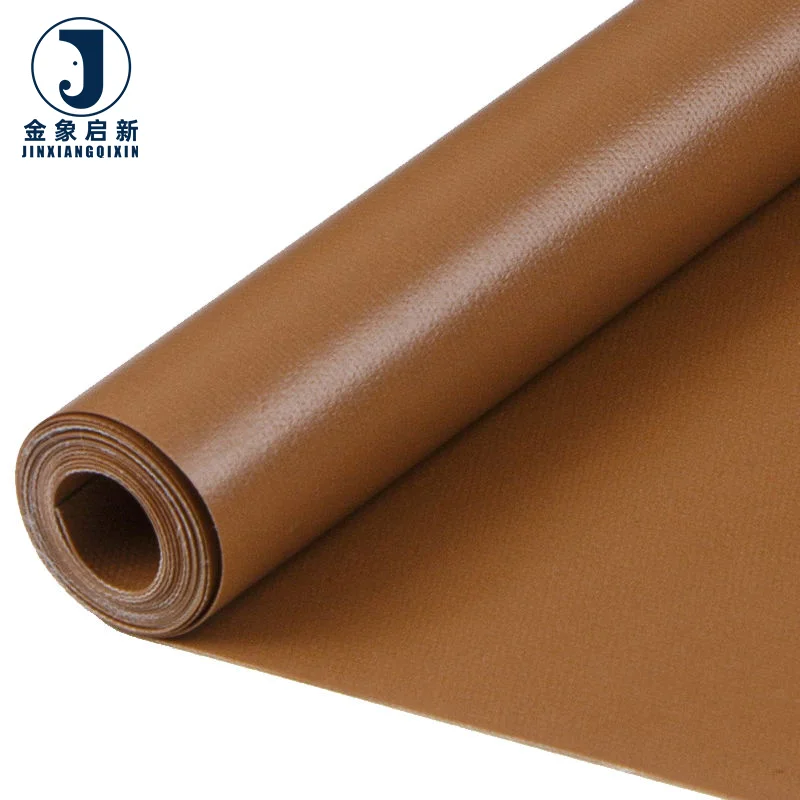
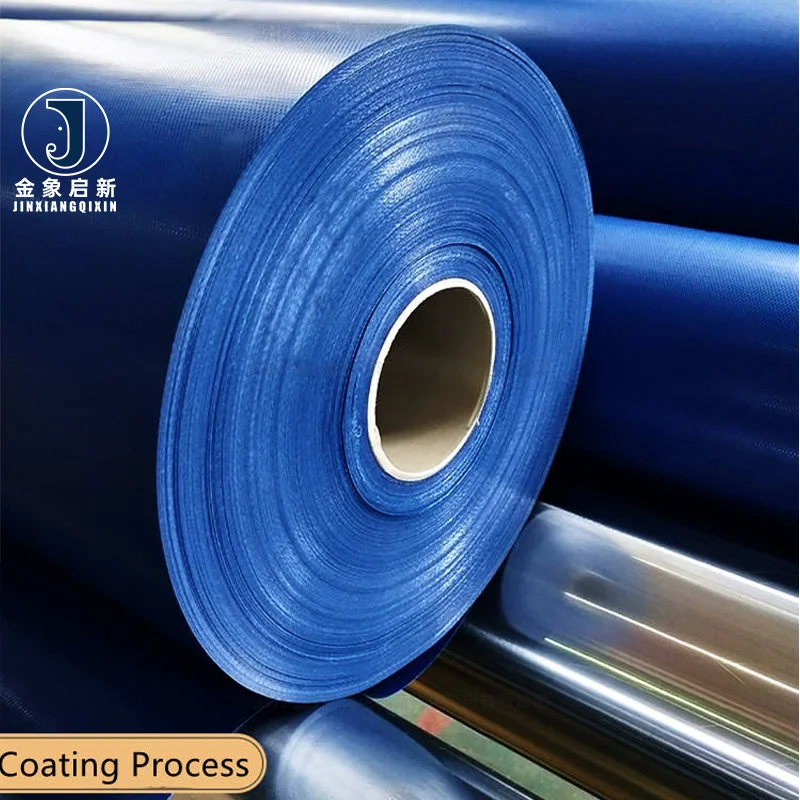
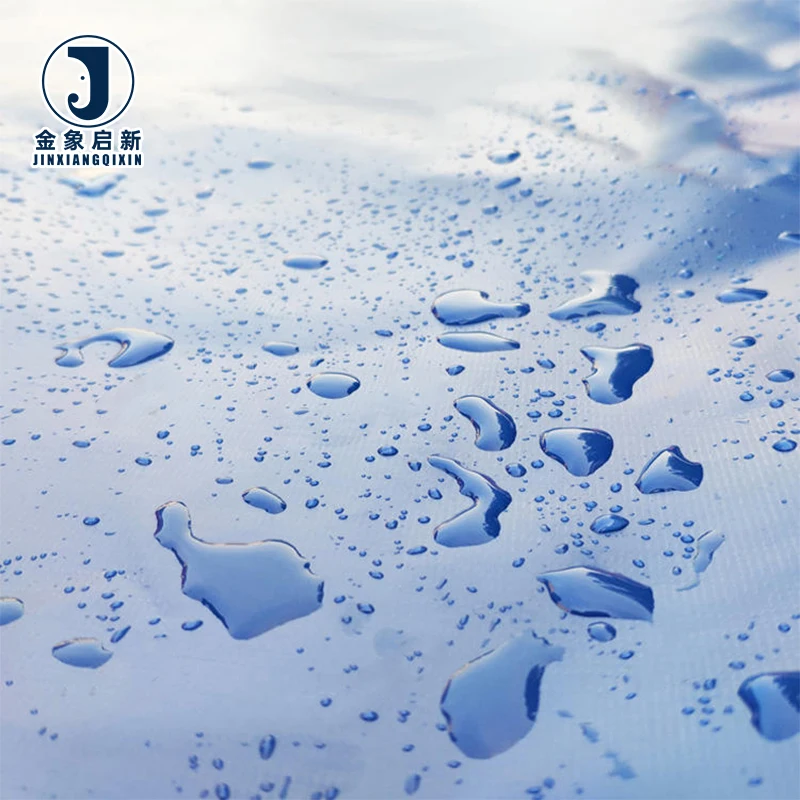
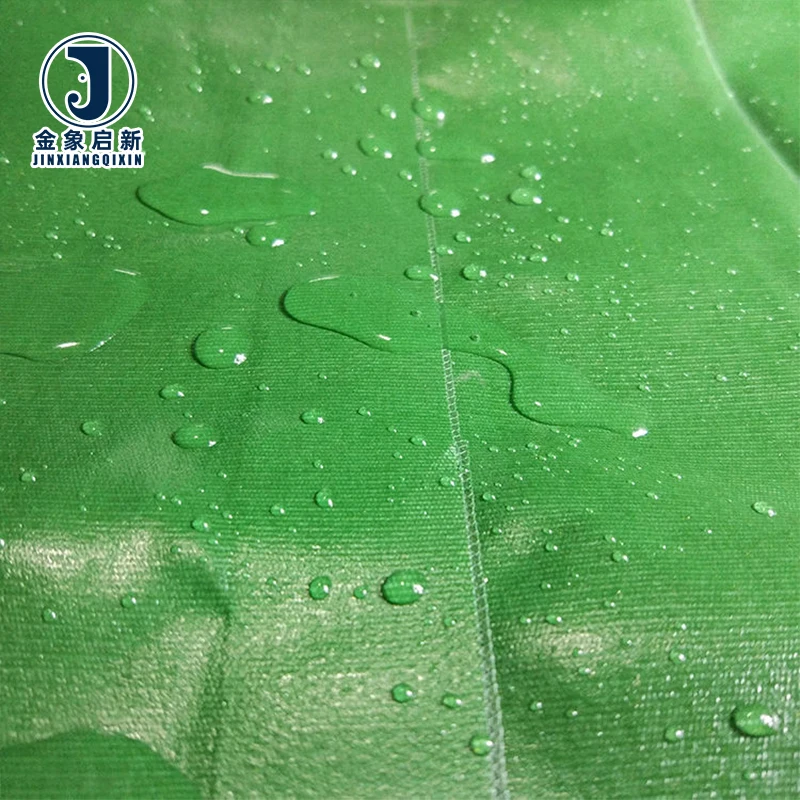
Process Control Over Coating — PVC coating weight and adhesion verified at every production stage with dedicated QA/QC inspection before each roll ships, ensuring batch-to-batch consistency for industrial shelter fabricators and contractors specifying ventilation structures.
Technical Specifications
| Parameter | Value |
|---|---|
| Product Type | PVC Coated Tarpaulin Roll |
| Coating Material | PVC (double-sided coating on polyester base fabric) |
| Base Fabric Denier Options | 500D×840D / 500D×1000D / 1000D×1000D / 1000D×1300D / 1300D×1300D / 1000D×2000D |
| Mesh Count Options | 30×19 / 20×20 / 30×15 |
| Thickness Range | 0.29 mm to 0.65 mm |
| Tensile Strength (Warp) | 1650 N to 3900 N (test basis not stated) |
| Tensile Strength (Weft) | 1600 N to 3500 N (test basis not stated) |
| Flame Retardant | Available — grade to be confirmed per project requirement |
| UV Treatment | Available — grade to be confirmed per project requirement |
| Waterproof | Yes |
| Brittle Temperature | ≤ -50 °C to -60 °C |
| Softening Temperature | ≥ 80 °C |
| Melting Point | 212 °C |
| Edge Construction | High temperature heat sealed seamless edge wrapping |
| Eyelet Options | 3 cm enlarged aluminum alloy buttonhole |
| Corner Reinforcement | Reinforced corners on all sides |
| Rope | 5 mm thick rope without splicing |
| Certifications | ISO, CE |
Application Suitability
| Application | Exposure & Requirement |
|---|---|
| Mining and tunnelling temporary shelters | Constant moisture, confined ventilation zones, fire-retardant compliance required for underground use |
| Aviation maintenance hangars and shelters | Fuel vapour exposure, anti-static and flame-retardant specifications mandatory on site |
| Construction site industrial enclosures | Wind load, UV exposure, mechanical abrasion from equipment and debris |
| Membrane and inflatable structures | Tensile load across large spans, air-holding seam integrity, weld seam strength |
| Temporary warehouse and logistics shelters | Rain and dust ingress, repeated assembly and disassembly, tie-down flex points |
Why Fire-Retardant Certification Matters for Industrial Shelter Fabric
Without a test report matching your site specification, a shelter cover is a liability, not an asset.
Many industrial shelter projects stall at the inspection stage because the fabric supplied carries a flame-retardant claim but no documentation the site safety officer will accept. A mining contractor once received an entire container of shelter rolls labelled "FR treated" only to discover the grade did not align with the local underground ventilation standard [NEED_CITE: fire classification standards for underground mining ventilation structures]. The rolls sat in storage for weeks while replacement material was sourced, pushing the project timeline back and inflating holding costs. For PVC coated tarpaulin for industrial shelter ventilation applications, the grade must be specified before production begins and confirmed with a test report that the receiving authority recognises. This is the difference between a cover that passes first inspection and one that forces a costly re-order.
Selecting Denier and Mesh Count for Structural Load
The base fabric denier and mesh count determine how the PVC coated tarpaulin for industrial shelter ventilation performs under sustained tensile and wind load. A 1000D×1000D fabric with a 20×20 mesh provides a balanced weave suited to mid-span shelters where the membrane must resist deformation without excessive weight. Higher denier options such as 1300D×1300D or 1000D×2000D are selected for large-span structures where the fabric carries greater dead load and must resist tear propagation at attachment points. Choosing the correct denier is not about picking the heaviest option available; it is about matching the base fabric construction to the actual mechanical forces the shelter will experience in service.
Fire-Retardant and Anti-Static Compliance on Site
Industrial shelter and ventilation structures in mining, aviation and tunnelling environments frequently require documented fire-retardant and anti-static performance before installation is approved. The PVC coated tarpaulin for industrial shelter ventilation range is available in flame-retardant and anti-static treated grades — confirm the specific grade required for your market and project specification before placing the order [NEED_CITE: anti-static surface resistance requirements for mining ventilation ductwork]. Test reports and certificates are issued per batch, so the documentation trail matches the rolls delivered. Supplying fabric without the correct certification is a common cause of project delays, and the cost of re-ordering always exceeds the time invested in confirming compliance at the inquiry stage.
How Denier, Mesh Count and Coating Weight Interact
Understanding how base fabric and coating interact helps fabricators and contractors specify accurately. The denier of the polyester yarn and the mesh count together govern tensile strength and tear resistance; a tighter mesh with higher denier yarn resists tear propagation at stress points where the shelter fabric is clamped or welded. The double-sided PVC coating adds waterproofing, surface durability and the base for heat-sealed seam construction. However, coating weight alone does not determine overall strength — a lighter coating on a heavy denier base can outperform a heavier coating on a lighter base in tensile tests. Thickness values from 0.29 mm to 0.65 mm across the range reflect different combinations of base fabric and coating, each suited to different span and exposure conditions. The brittle temperature of ≤ -50 °C to -60 °C and softening point of ≥ 80 °C define the operational temperature envelope within which the material retains its mechanical properties. Selecting the right combination means reviewing denier, mesh count and thickness together rather than treating any single value as the deciding factor.
The Hidden Cost of Specifying on Price Per Kilogram Alone
Purchasing PVC coated tarpaulin for industrial shelter ventilation on price per kilogram without verifying the base fabric denier and coating adhesion is a common error that surfaces only after installation. Rolls that meet the quoted weight but use a lighter denier base fabric will show reduced tear resistance at flex points and welded seams [NEED_CITE: relationship between base fabric denier and seam peel strength in coated fabrics]. Similarly, insufficient coating adhesion leads to delamination when the shelter membrane flexes under wind load, even if the GSM reading on arrival matches the quotation. Batch-to-batch colour variation is another consequence of loose process control — when shelter panels are installed side by side, the difference becomes immediately visible and may require full replacement to maintain a professional appearance on a client-facing site.
Why Fabricators Source Industrial Shelter Rolls Here
Three full production lines and 36 sets of professional equipment support bulk roll output with reliable delivery schedules for large-volume shelter projects. A 10-person R&D team handles material selection, custom width specification and sample development, returning samples within days rather than weeks for PVC coated tarpaulin for industrial shelter ventilation orders. Dedicated QA/QC inspection at every production stage catches GSM deviation, colour shift and coating adhesion issues before the roll reaches the packing stage. The heat-sealed seamless edge wrapping and reinforced corner construction are verified during pre-shipment inspection, so the rolls arriving on site perform as the specification sheet states. Custom width and length options are available for projects that require non-standard panel sizes, reducing on-site cutting waste and weld seam count.
Documentation & Verification
- Material specification sheet stating base fabric denier, coating weight and colour reference for each roll
- Test report for fire-retardant or anti-static grades where applicable to the project compliance requirement
- ISO and CE certificates included with shipment documentation package
- Pre-shipment inspection record with roll-by-roll weight and visual verification
- Certificate of origin and customs support documents for international shipment clearance
Fabrication, Handling & Storage
- Set hot air welder temperature based on the 0.29 mm to 0.65 mm thickness range to avoid under- or over-welding at seam lines
- Position 3 cm aluminum alloy eyelets with reinforced corners at tie-down points to distribute load across the polyester base fabric
- Store rolls horizontally on pallets to prevent permanent creasing through the double-sided PVC coating
- Allow rolls to acclimatise before unrolling in cold conditions, respecting the ≤ -50 °C to -60 °C brittle temperature limit
- Use mild detergent and soft cloth for cleaning; avoid solvents that attack the PVC coating surface
- Plan panel cutting layout to minimise offcuts and reduce the number of heat-sealed weld seams in the final shelter structure
Request a Specification Match for Your Project
Provide your shelter span dimensions, expected wind and snow load conditions, and the fire-retardant or anti-static grade your site authority requires. Confirm the roll width and length you need, along with the total linear metres or container volume for pricing. If colour matching or custom printing is part of the project brief, include a Pantone reference or physical sample so the development team can prepare a production-matched swatch before bulk commitment.
Frequently Asked Questions
Q: What fire-retardant grades are available and how do I match them to my market?
A: The PVC coated tarpaulin for industrial shelter ventilation range is available in multiple flame-retardant treatment options. The correct grade depends on your local building code or mining safety regulation — common references include M2, B1 per DIN 4102, and NFPA 701. State your target standard at inquiry so the matching test report is issued with your shipment.
Q: What anti-static specification can be provided for mining or aviation use?
A: Anti-static treated grades are available for applications where surface resistivity must meet site safety thresholds. Provide the surface resistance value or the standard your project references, and the R&D team will confirm whether the available treatment meets that requirement before production begins.
Q: How do I choose the right denier and mesh count for my shelter span?
A: Larger spans and higher wind exposure require heavier denier base fabrics such as 1300D×1300D or 1000D×2000D to resist tear propagation at clamping points. Mid-range shelters suit 1000D×1000D with a 20×20 mesh. Share your span dimensions and load data so the appropriate construction is recommended.
Q: What roll widths and lengths are available for large shelter panels?
A: Custom widths and lengths are available to suit your fabrication layout and reduce on-site weld seams. Confirm the panel size you need to produce, and the team will calculate the optimal roll width and length to minimise cutting waste across your order volume.
Q: What guidance is provided for hot air welding on site?
A: Welding temperature and speed settings depend on the specific thickness and coating weight of the rolls supplied. General parameters are shared with the shipment, and the R&D team can provide detailed hot air welding guidance matched to the material grade once your order is confirmed.