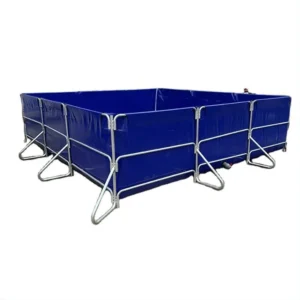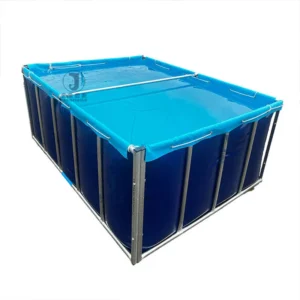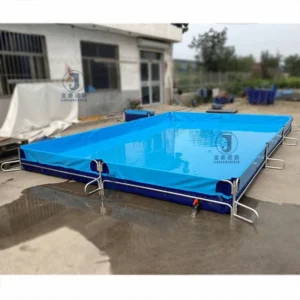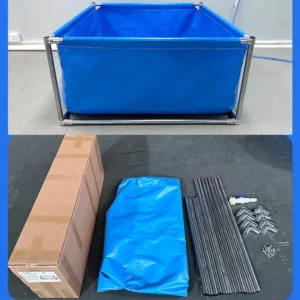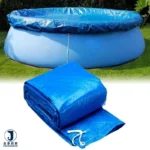
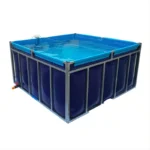
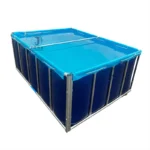
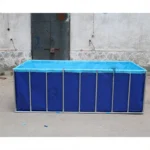

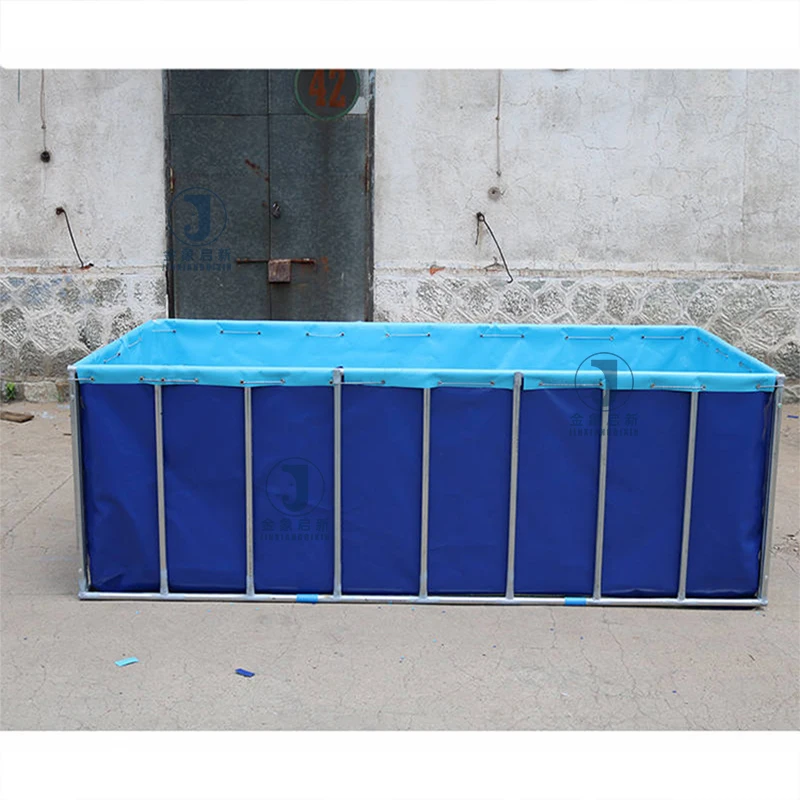
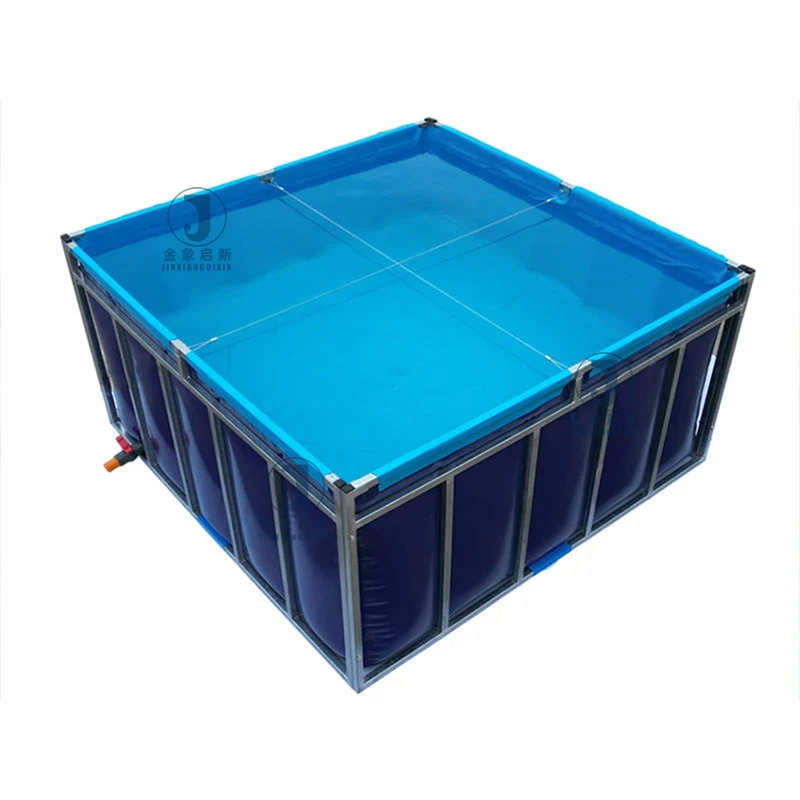
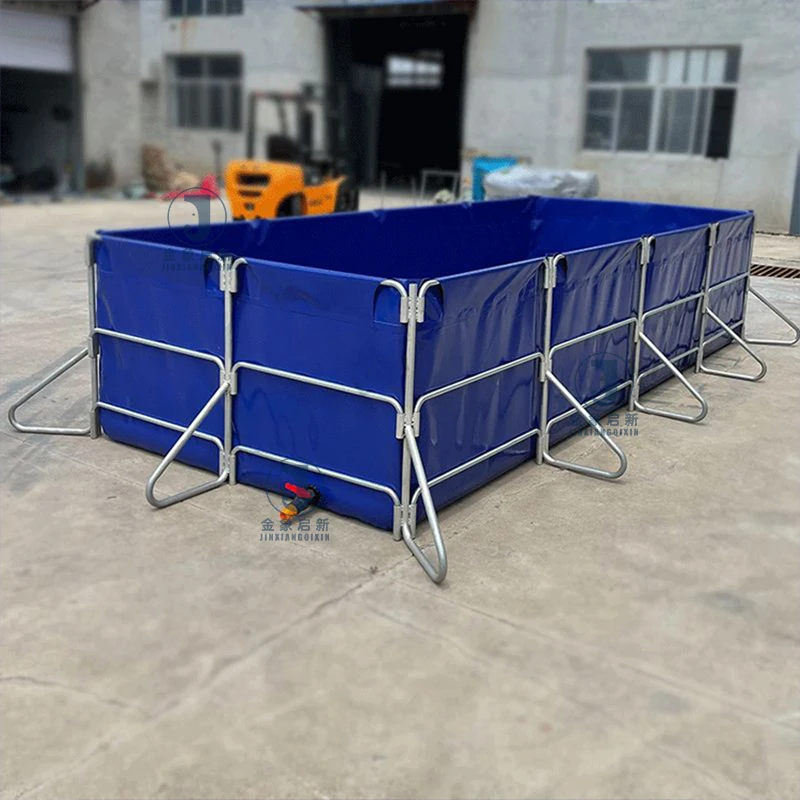
Coating Weight Control — PVC coating adhesion and GSM consistency verified at every production stage, supported by hot-melt and laminated technology for reliable pond liner performance.
Technical Specifications
| Parameter | Value |
|---|---|
| Product Type | Pond Liner |
| Material | PVC + High-strength polyester mesh fabric |
| Weight (GSM) | 350gsm / 420gsm / 500gsm / 550gsm / 600gsm / 750gsm (select grade based on pond depth and load) |
| Total Thickness | 0.32mm / 0.35mm / 0.4mm / 0.45mm / 0.5mm / 0.65mm |
| Coating Method | Laminated technology & Hot-melt Coating technology |
| Roll Width | 2m / 2.1m |
| Roll Length | 75m (for 2m width) / 50m (for 2.1m width) |
| Color | Blue / Red / Yellow / Light blue / Grey (Customized) |
| Key Features | Cold Crack Resistance, Anti-Mildew, Anti-Static treatment¹, Waterproof, Sunproof² |
| Standards | ISO / CE |
¹ Anti-static treatment available — confirm test basis required for your application.
² Sunproof treatment available — confirm UV test standard and grade for your exposure conditions.
Application Suitability
| Application | Exposure & Requirement |
|---|---|
| Aquaculture fish pond lining | Permanent water immersion, biological fouling, pond floor abrasion, UV exposure on uncovered sections |
| Agricultural water reservoir | Continuous water containment, soil chemistry contact, seasonal temperature fluctuation, wind-driven debris |
| Landscape and ornamental ponds | UV exposure, root penetration risk, aesthetic colour consistency, long-term waterproofing |
| Fish tank and hatchery lining | Constant water contact, cleaning chemical exposure, anti-mildew requirement in humid environments |
What Separates a Reliable Pond Liner from a Quoted Specification Sheet
A liner that meets its GSM on the roll but fails at the welded seam is no better than an underweight fabric. PVC fish pond liner aftermarket supplier orders often arrive with weight verified at the edge but adhesion failures hidden in the coating-to-base-fabric bond [NEED_CITE: tensile and tear test methods for coated fabrics per ISO 1421]. The real risk is not the material specification on paper — it is whether the laminated or hot-melt coating process has produced consistent peel strength across the full roll width, particularly where heat welding concentrates stress during on-site fabrication.
Coating Adhesion and Weld Integrity in Pond Construction
Pond liner performance depends on how well the PVC coating bonds to the high-strength polyester mesh base fabric. The laminated and hot-melt coating technology used here targets consistent adhesion across the full 2m or 2.1m roll width. When a liner is heat-welded on-site to join panels, the weld zone experiences concentrated thermal and mechanical stress. If coating adhesion is uneven, the PVC layer can delaminate from the polyester base precisely where the weld is strongest — meaning the seam holds but the fabric splits adjacent to it.
GSM Selection and Pond Depth Considerations
Choosing between 350gsm and 750gsm is not simply about thickness. Deeper ponds exert greater hydrostatic pressure on the liner, particularly at the floor-to-wall transition where water load concentrates. A PVC fish pond liner aftermarket supplier should guide grade selection based on pond geometry, not just a price-per-metre comparison [NEED_CITE: coated fabric puncture resistance under hydrostatic load]. Heavier grades provide greater tear resistance and puncture protection against subsoil irregularities, while lighter grades may suffice for shallow ornamental installations with prepared substrates.
How Base Fabric Construction Affects Liner Longevity
The high-strength polyester mesh provides the structural skeleton of the liner. Warp and weft yarn density determines how a puncture or tear propagates once initiated — a tightly woven base fabric arrests tear spread, while a loosely woven one allows a small cut to extend under tension. The PVC coating protects the yarns from water and biological degradation, but it is the mesh that carries mechanical load. Total thickness (0.32mm to 0.65mm across the available grades) reflects both coating mass and base fabric contribution, so two liners at the same GSM can perform differently if their base fabric construction differs.
The Cost of Colour Inconsistency Across Rolls
When multiple rolls are used to line a single large pond or reservoir, visible colour variation between panels becomes apparent after installation. This is not a cosmetic issue alone — it signals potential batch-level inconsistency in coating formulation that may extend to adhesion and treatment levels [NEED_CITE: batch colour consistency in PVC coated fabric production]. A liner order where rolls vary from light blue to grey-blue suggests coating pigment dispersion differences that could correlate with UV treatment concentration across the same batch.
Why Verification at Dispatch Matters for Pond Projects
Pre-shipment inspection should confirm GSM against the specification sheet roll by roll, not just from a sample taken from the first roll in the batch. Anti-mildew and cold crack resistance treatments are formulated into the PVC coating during production — their presence or absence cannot be determined visually on-site. Documentation accompanying each shipment should match the treatment claims made at quotation stage, so that the pond liner installed in the field corresponds to the product that was specified.
Why Source This Liner Through Jinxiang
Three full production lines and 36 sets of professional equipment support volume pond liner orders without the extended delays common when capacity is constrained. The 10-person R&D team handles grade selection, custom width requests, and sample development for project-specific requirements — samples can be developed within days rather than weeks. Dedicated QA/QC runs at every production stage, with 100% inspection before shipment meaning each roll is checked against the stated specification before it leaves the facility.
Documentation & Verification
- Material specification sheet stating GSM, base fabric type, coating method and colour reference per roll
- Test report confirming anti-mildew treatment for the supplied batch
- Pre-shipment inspection record with roll-by-roll weight verification against quoted GSM
- Cold crack resistance documentation aligned to the destination climate zone
- Certificate of origin and customs documentation for cross-border shipment
- ISO and CE certification documents covering the production facility
Fabrication, Handling & Storage
- Heat-weld overlapping panels at temperatures suited to the selected GSM grade to ensure coating fusion without base fabric damage
- Store rolls upright on pallets to prevent flat-spot deformation that complicates unrolling on-site
- Avoid dragging liner panels across unprepared subsoil to protect the PVC coating surface from abrasion
- Unroll in moderate temperatures to take advantage of the cold crack resistance feature in cooler conditions
- Use compatible PVC adhesive for field repairs, matching the laminated or hot-melt coating chemistry
- Plan panel layout to minimise transverse welds on wider ponds using the 2m or 2.1m roll width efficiently
Project Specification Guidance
Provide the pond dimensions, maximum water depth, and subsoil condition to allow accurate GSM and thickness recommendation. Specify whether the liner will be supplied as roll stock for on-site welding or as pre-fabricated panels cut to pond geometry. Confirm the colour requirement and whether multiple rolls must be batch-matched for visual consistency across the installation.
Frequently Asked Questions
Q: How do I choose the right GSM and thickness for my pond depth?
A: Deeper ponds with greater hydrostatic pressure require heavier grades to resist puncture and tearing at floor-to-wall transitions. Shallow ornamental ponds on prepared substrates can use lighter grades. Provide your pond depth and subsoil details so we can recommend from the 350gsm to 750gsm range and match the appropriate thickness for your containment requirements.
Q: Can the liner be custom cut to my pond dimensions?
A: Yes. Liner can be supplied as full roll stock for on-site fabrication or cut to project-specific dimensions at the factory. Custom sizing reduces on-site welding and material waste. Provide your pond geometry including any irregular shapes or multiple connected basins so we can plan panel layout against the 2m or 2.1m available roll widths.
Q: What certifications support the waterproofing and treatment claims?
A: Each shipment includes documentation matching the specification quoted — material data sheet confirming PVC coating and polyester base fabric, ISO and CE certificates for the production facility, and treatment verification where applicable. Request specific test reports for anti-mildew or cold crack resistance to match your project compliance requirements before placing the order.
Q: How are seams and joints welded on-site?
A: Overlapping PVC-coated panels are heat-welded using hot air or wedge welding equipment. The laminated and hot-melt coating technology provides strong coating-to-fabric adhesion, so the weld fuses coating layers without delaminating from the polyester mesh. Welding temperature and speed should be matched to the selected GSM grade, and test welds on offcuts are recommended before joining main panels.
Q: What is the expected service life under continuous water immersion?
A: Service life depends on installation conditions including UV exposure, water chemistry, subsoil preparation, and mechanical load. The polyester mesh base provides structural stability while the PVC coating resists water penetration and biological growth through anti-mildew treatment. Share your project environment details so we can advise on grade selection and whether additional protective measures are recommended for your specific conditions.