




Proven Coating Control — hot-melt coated PVC fabric with verified GSM and adhesion integrity across every production run for duct and membrane applications.
Technical Specifications
| Parameter | Value |
|---|---|
| Product Type | PVC Coated Tarpaulin |
| Base Fabric | High-strength polyester mesh |
| Coating Technology | Hot-melt coating / Laminated |
| Available Weight Options | 350gsm, 420gsm, 500gsm, 550gsm, 600gsm, 750gsm |
| Available Thickness Options | 0.32mm, 0.35mm, 0.4mm, 0.45mm, 0.5mm, 0.65mm |
| Roll Width | 2m, 2.1m |
| Roll Length | 75m (at 2m width), 50m (at 2.1m width) |
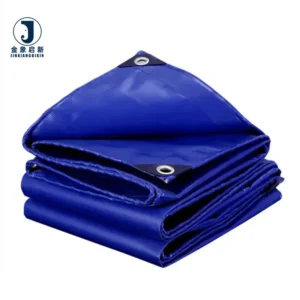
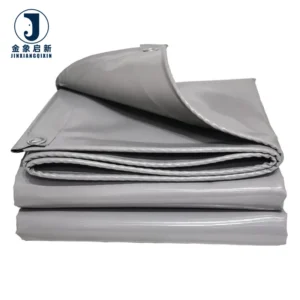
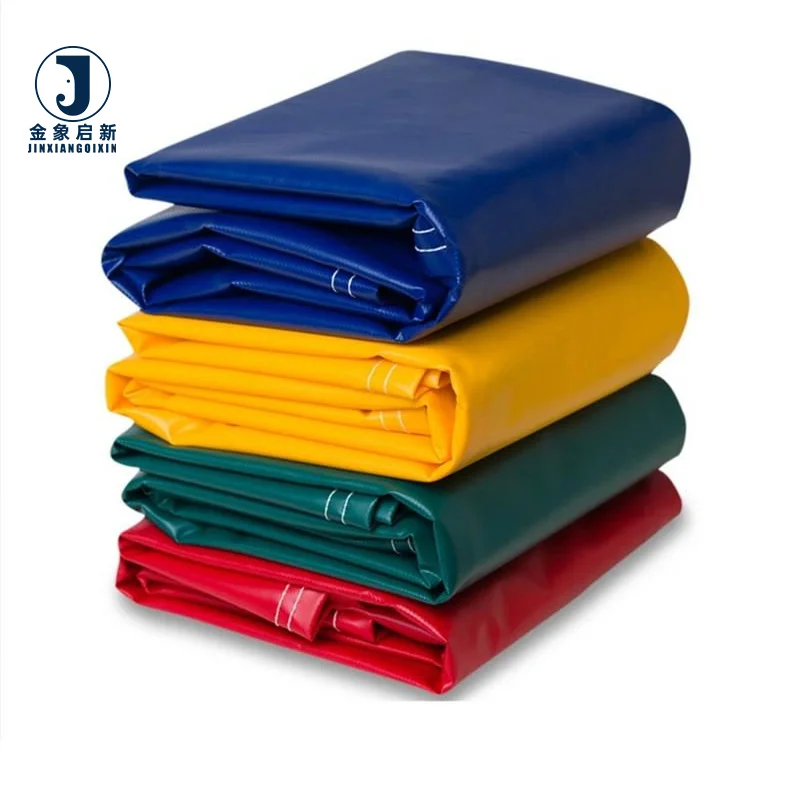
| Colour Options | Blue, Red, Yellow, Light Blue, Grey, Custom |
| Fire Retardant | Available in fire-retardant grades — confirm the grade required for your market (grade not stated) |
| Anti-Static | Anti-static treatment available — surface resistance standard to be confirmed per order |
| Cold Crack Resistance | Yes |
| Anti-Mildew | Yes |
| Waterproof | Yes |
| Certifications | ISO, CE |
Application Suitability
| Application | Exposure & Requirement |
|---|---|
| Mine and tunnel ventilation ducts | Continuous airflow, high humidity, rock dust abrasion, fire and static safety compliance mandatory on site |
| Inflatable and membrane structures | Biaxial tension, UV exposure, welded seam integrity under dynamic load |
| Aviation ground-support ducting | Fuel vapour environment requiring anti-static surface, frequent handling and flexing |
| Temporary enclosure for construction sites | Wind load, rain exposure, repeated installation and dismantling |
Why Fire-Retardant Claims Fail at the Site Gate Without a Test Certificate
A PVC coated tarpaulin marketed as fire retardant is only as valid as the test report that travels with the roll.
Ventilation duct fabricators and mining contractors regularly face the situation where material arrives on site labelled flame retardant but without documentation citing a recognised standard. The site safety officer rejects the delivery, the duct installation stalls, and the contractor must source replacement fabric under compressed timelines. The problem is not the coating chemistry — it is the gap between a supplier claim and a verifiable test result tied to a specific grade such as M2, B1, or NFPA 701 [NEED_CITE: DIN 4102 fire classification for building materials]. When procurement specifies the grade up front and requires the test report in pre-shipment documentation, that gap closes before the container leaves the factory.
Hot-Melt Coating and Weld Integrity in Duct Construction
The adhesion between the PVC layer and the polyester base fabric determines how a welded seam behaves under the flexing and vibration that ventilation ducts experience in service. Hot-melt coating technology used in this PVC coated tarpaulin achieves strong interlayer bonding, which directly supports tear resistance at the heat-welded joints where duct sections connect. Laminated alternatives can delaminate at the weld line when the duct pressurises and the fabric stretches.
Cold Crack Resistance for Underground and Low-Temperature Sites
Mining ventilation ducts operate in environments where ambient temperatures drop below the glass transition point of standard plasticised PVC. This fabric is formulated with cold crack resistance, meaning the material retains flexibility and does not become brittle at reduced temperatures. For tunnelling projects at altitude or in northern-latitude winters, this property prevents cracking at fold lines and at the points where the duct is clamped to the fan housing.
Understanding the Specification Variables That Determine Duct Performance
GSM alone does not define how a coated fabric performs in a ventilation duct. The base fabric denier and weave density set the tensile and tear baseline, while the PVC coating weight adds waterproofing, chemical resistance, and the surface properties needed for welding. A 500gsm fabric with a tightly woven high-tenacity polyester base can outperform a 600gsm fabric built on a loosely woven scrim, because the weave structure governs how a tear propagates once initiated [NEED_CITE: tensile and tear test methods for coated fabrics per ISO 1421]. Coating method matters equally: hot-melt coating penetrates the mesh interstices more thoroughly than simple lamination, improving peel strength and reducing the risk that the coating separates from the base during high-frequency welding. Roll width selection — 2m or 2.1m — affects the number of longitudinal welds needed to fabricate a duct of a given diameter, and fewer welds mean fewer potential failure points under positive pressure.
What Happens When the Wrong Grade Reaches the Jobsite
Specifying the incorrect fire-retardant grade or accepting material without anti-static documentation triggers a chain of costly consequences. The site safety auditor halts installation pending proof of compliance. The duct fabricator must either re-test at a local laboratory — adding weeks of delay — or replace the entire roll stock. In underground mining, anti-static surface resistance is not optional; accumulated static charge on non-treated duct surfaces can ignite methane or coal dust. Beyond safety, a batch colour mismatch between rolls fabricated into the same membrane structure becomes visible once the panels are installed side by side, forcing the contractor to reorder and delay project handover [NEED_CITE: anti-static surface resistance testing standards for ventilation ductwork].
Why Technical Buyers Source This Fabric Here
Three full production lines and 36 sets of professional equipment support consistent output volume, which matters when a mining project requires multiple containers of duct fabric on a fixed construction timeline. The 10-person R&D team handles material selection and sample development, producing trial rolls within days so that fabricators can validate weld parameters and colour matches before committing to bulk. Dedicated QA/QC runs at every production stage, with 100 percent pre-shipment inspection covering coating adhesion, GSM verification, and surface finish consistency — catching variances before they leave the factory. ISO and CE certification underpins the documentation package that accompanies each shipment, and the pre-shipment inspection record gives the buyer an independent checkpoint against the purchase specification.
Documentation & Verification
- Material specification sheet listing GSM, base fabric construction, and coating method for each roll
- Fire-retardant test report citing the specific grade matched to your site compliance standard
- Anti-static surface resistance value referenced in the pre-shipment inspection record
- 100 percent inspection record covering coating adhesion and weld-seam integrity checks
- Roll packing list and certificate of origin for customs clearance and site audit trail
Fabrication, Handling & Storage
- Hot-air welding at temperature and speed settings matched to the hot-melt coating layer for full seam fusion
- Roll stock stored horizontally on pallets to prevent creasing across the 2m or 2.1m width
- Allow cold-stored rolls to reach ambient temperature before unrolling to avoid coating micro-cracking
- Cut patterns laid to minimise transverse welds on long duct runs, reducing pressure-loss points
- Anti-mildew treatment maintained by avoiding prolonged contact with standing water during storage
What to Include in Your Enquiry
Provide the ventilation duct diameter and total run length so that roll width and linear metre requirements can be calculated against the available 2m and 2.1m options. Specify the fire-retardant grade and anti-static standard mandated by your site safety regulations, along with the applicable national or international test method. Indicate whether you require rolls only or finished cut-to-size panels, and confirm colour requirements including any need for batch colour consistency across the full order quantity.
Frequently Asked Questions
Q: Which fire-retardant grades do you test to, and can you match our site specification?
A: Fire-retardant treatment is available across this PVC coated tarpaulin range. Provide your required grade — such as M2, B1, or NFPA 701 — and the applicable test standard at enquiry stage. The matching test report is included in pre-shipment documentation so your site safety team can verify compliance on receipt.
Q: How is anti-static performance measured and documented?
A: Anti-static treatment is applied during production, and the surface resistance value is recorded during the pre-shipment inspection. The measured value is included in the documentation package with the test method referenced, allowing your compliance team to cross-check against your site specification before installation begins.
Q: What roll widths and lengths are available for duct fabrication?
A: Rolls are produced at 2m width by 75m length or 2.1m width by 50m length. Select the width that minimises longitudinal welds for your duct diameter. Custom finish product sizes are available if your fabrication process requires pre-cut panels rather than full roll stock.
Q: How do you verify GSM and coating weight before shipment?
A: Every roll undergoes 100 percent pre-shipment inspection, which includes weight verification against the stated GSM on your specification sheet. The inspection record accompanies the shipment documentation, providing you with a traceable checkpoint confirming that the material received matches the material quoted.
Q: What welding and seam methods are recommended for this fabric?
A: Hot-air welding and high-frequency welding both suit the hot-melt coated construction. Weld temperature and speed should be calibrated to the specific GSM and coating thickness. Request sample material to validate your machine settings before bulk fabrication, ensuring consistent seam strength across production runs.