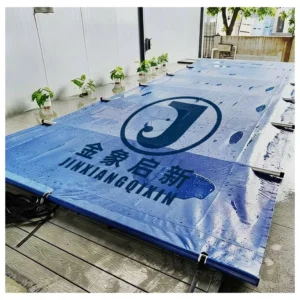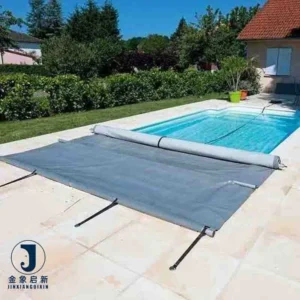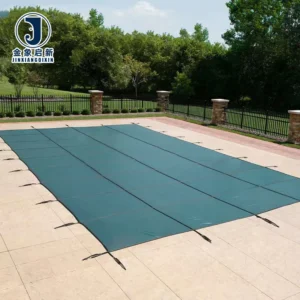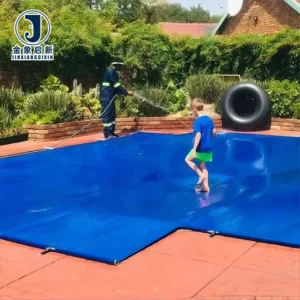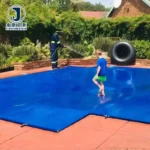
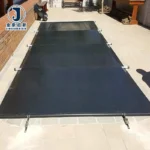
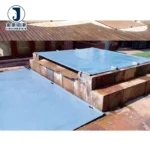
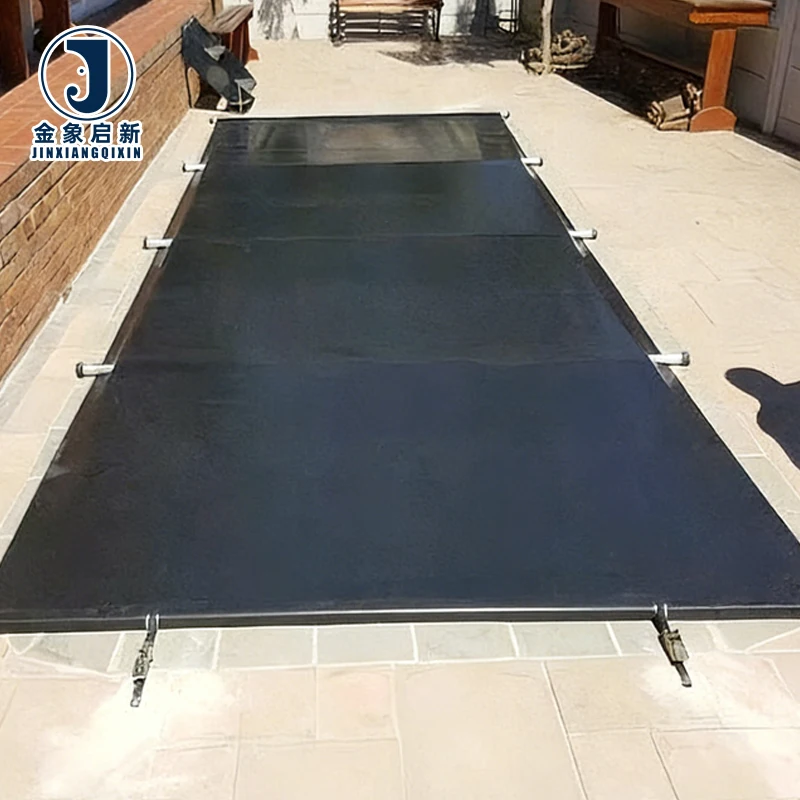
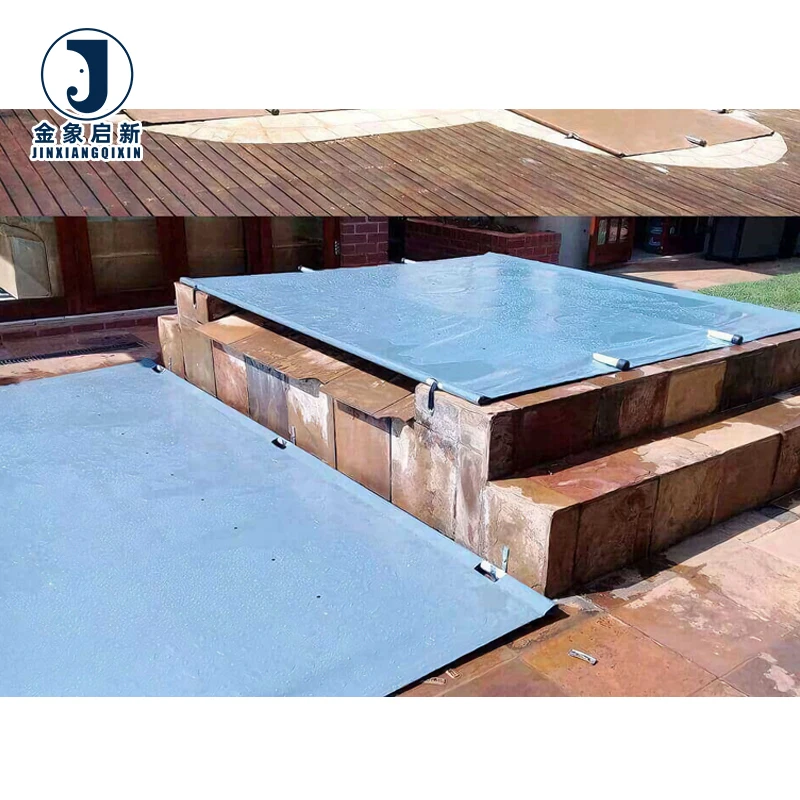
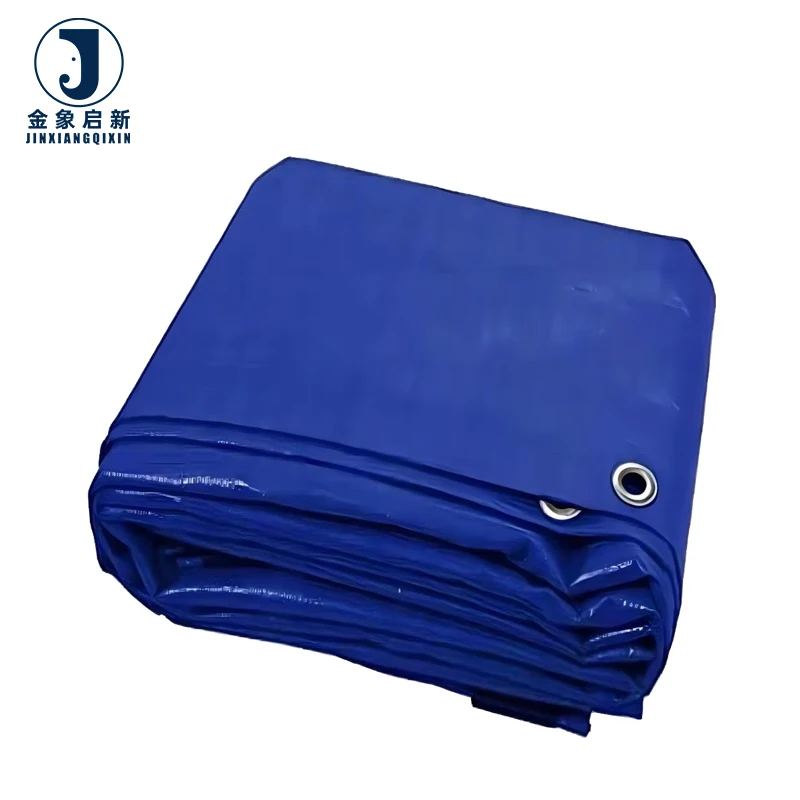
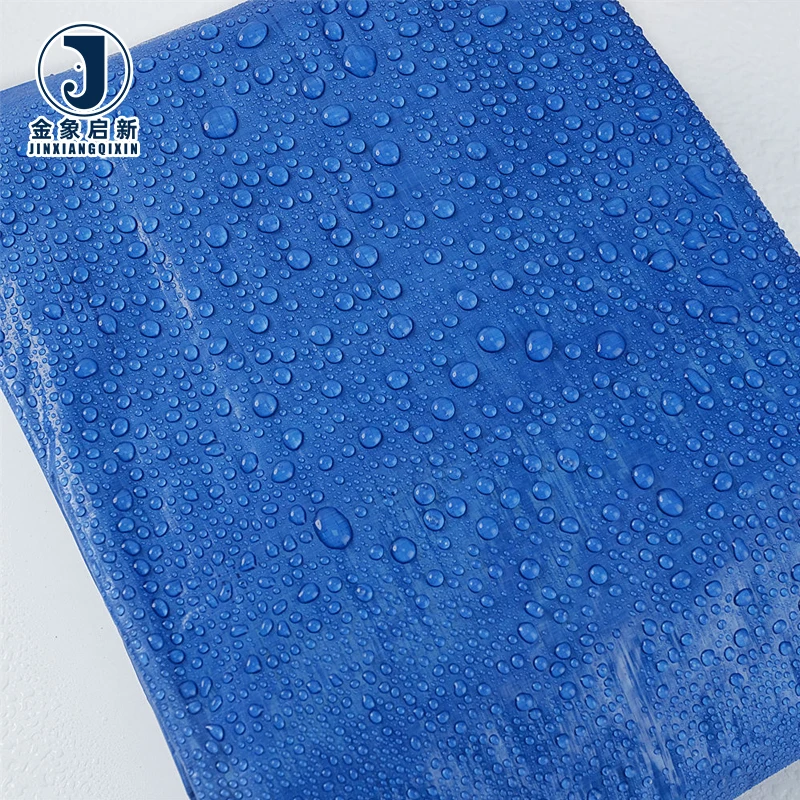
Deep Process Control — Thirty years of coated fabric production with laminated and hot-melt coating lines delivering consistent PVC-to-polyester adhesion for pool cover and containment applications.
Technical Specifications
| Parameter | Value |
|---|---|
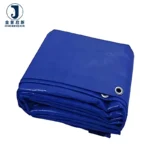
| Product Type | PVC Tarpaulin Pool Cover |
| Material | PVC + High-strength polyester mesh fabric |
| Coating Technology | Laminated & Hot-melt Coating |
| Weight (GSM) | 350gsm / 420gsm / 500gsm / 550gsm / 600gsm / 750gsm (options) |
| Thickness | 0.32mm / 0.35mm / 0.4mm / 0.45mm / 0.5mm / 0.65mm (options) |
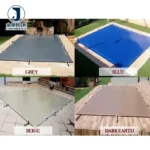
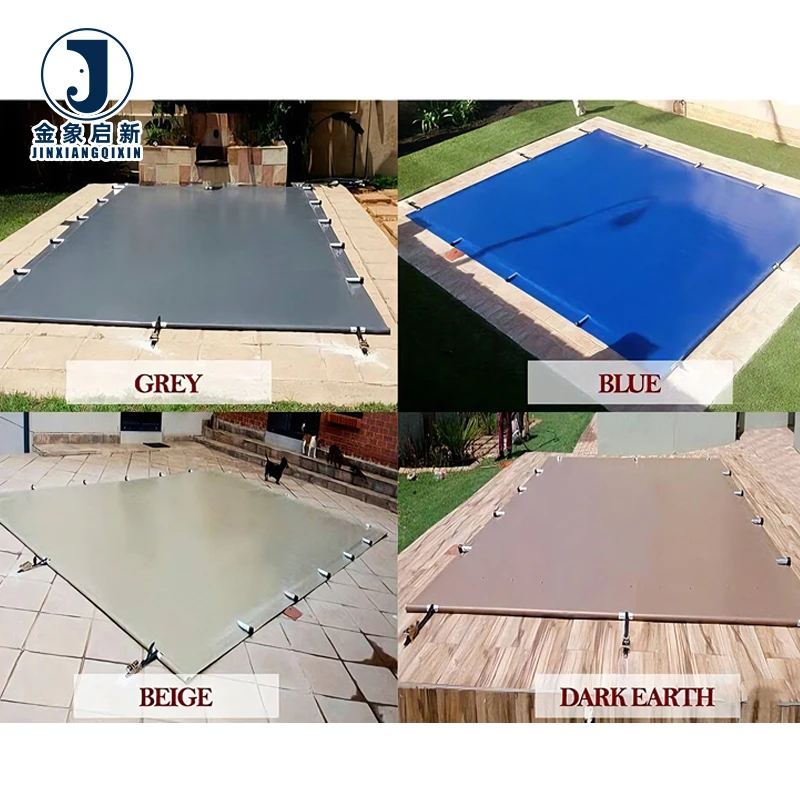
| Color | Blue / Red / Yellow / Light blue / Grey (Customizable) |
| Roll Size | 2m width × 75m length / 2.1m width × 50m length |
| Finish Product Size | Custom dimensions per project requirements |
| UV Treatment | Anti-UV available (confirm test basis for your exposure requirement) |
| Flame Retardant | Flame retardant grades available (confirm the grade required for your market) |
| Anti-Static | Anti-static treatment available (surface resistance standard to be confirmed) |
| Additional Treatment | Anti-mildew, Cold crack resistance |
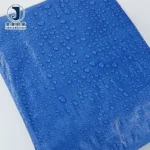
| Waterproof | Yes |
| Key Features | Good flexibility and adhesion strength, outstanding tearing strength for welding, best color fastness |
| Standards | ISO, CE |
Application Suitability
| Application | Exposure & Requirement |
|---|---|
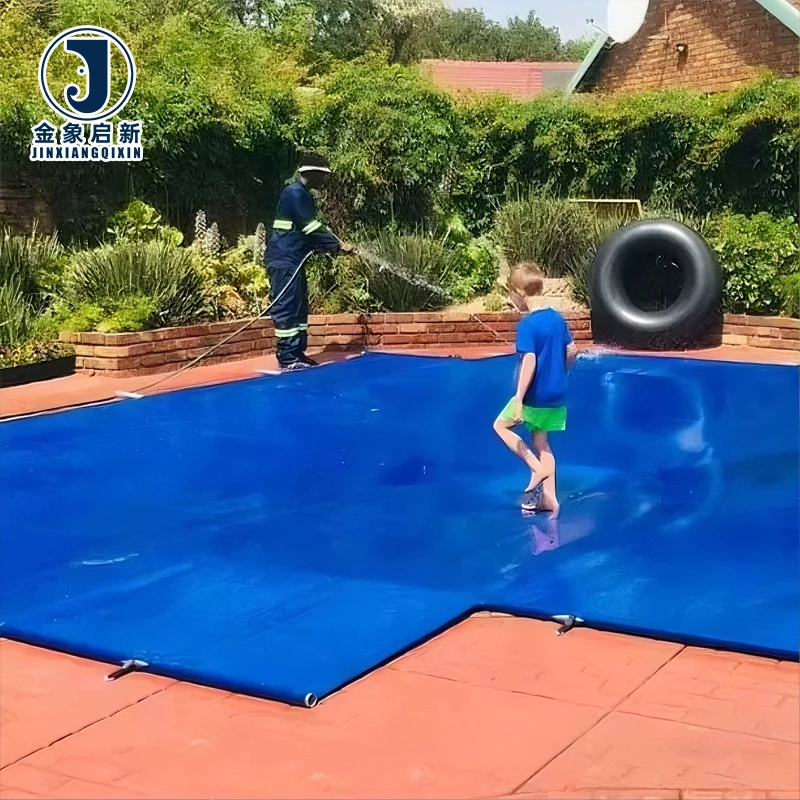
| Swimming pool winter covers | Continuous UV and moisture exposure, debris load, wind uplift tension, seasonal temperature cycling |
| Aquaculture pond and reservoir liners | Permanent water contact, biological growth pressure, soil chemistry interaction, puncture risk from substrate |
| Commercial pool safety covers | High tensioning loads from ratchet and bar systems, frequent deployment and retraction, foot traffic abrasion |
| Fish tank and hatchery covers | Constant humidity, chemical treatment exposure from water additives, thermal retention requirement |
| Tent and temporary structure covers | Wind-driven rain, UV degradation, flexing at frame contact points, rapid deployment needs |
What "Certified" Means When a Pool Cover Fails at the Weld Line
The coating method and adhesion strength determine whether a seam outlasts the fabric itself.
A PVC pool cover that tears along the weld before the body fabric fails is not a material failure — it is a coating specification failure. Laminated and hot-melt coated fabrics behave differently under heat welding because the bond between PVC and polyester mesh governs how thermal energy transfers through the seam zone [NEED_CITE: tensile and tear test methods for coated fabrics per ISO 1421]. When the adhesion is weak, the weld creates a stress concentration point that propagates under tension from water pooling or wind uplift. Buyers who select on GSM alone miss this entirely, because two fabrics at the same weight can have radically different weld performance depending on whether the coating was laminated or knife-applied. Specifying the PVC coated swimming pool cover fire retardant and anti-static compliance upfront, with documentation, prevents site rejection after installation.
Coating Adhesion and Weld Performance in Containment Fabrics
Hot-melt coating technology forces PVC into the polyester mesh under heat and pressure, creating a mechanical and chemical bond that resists delamination during high-frequency or hot-air welding. This matters for pool covers because the perimeter hem and any internal panel joins carry the highest tension loads when the cover is anchored with aluminium bars or ratchet systems. Laminated construction adds a secondary bonding layer that improves peel strength at the seam, which is why fabricated covers built from laminated PVC tarpaulin consistently show stronger weld results in pre-production sample testing. Requesting a weld sample before committing to a full production run eliminates the risk of discovering adhesion failure after the cover is installed over a pool or reservoir.
Treatment Verification for Outdoor Water Containment
Anti-UV, anti-mildew and cold crack resistance treatments each address a specific degradation pathway that pool and pond covers face in service. UV exposure breaks down plasticizers in the PVC coating over time, leading to embrittlement and surface cracking — the treatment slows this process but must be verified against the expected solar exposure at the installation site [NEED_CITE: UV degradation testing standards for PVC coated textiles]. Anti-mildew treatment prevents biological growth on the underside of covers where moisture is trapped against the water surface. Cold crack resistance determines whether the fabric remains flexible when deployed or retracted in low temperatures, which is critical for seasonal pool covers in continental climates. Each treatment should be backed by a test report that matches your project specification.
Reading GSM and Thickness Against the Base Fabric
GSM tells you the total weight of PVC coating plus polyester base fabric per square metre, but it does not tell you the ratio between them. A 550gsm fabric could be a light base fabric with heavy coating, or a dense mesh with moderate coating — and these two constructions behave completely differently under tension and puncture load. Thickness readings from 0.32mm to 0.65mm correlate with coating depth, which influences weld penetration and seam integrity more than body strength. The polyester mesh denier and weave density govern tear propagation resistance, which is why a pool cover subjected to point loads from debris or ice benefits from a higher-denier base even at the same GSM. Selecting the right grade means matching both the coating weight and the base fabric construction to the mechanical demands of your specific pool or containment structure.
The Hidden Cost of Specifying Pool Covers on Weight Alone
A buyer who orders 500gsm PVC tarpaulin for a commercial pool cover without verifying the base fabric density may receive a product that welds cleanly but tears at the grommet line under ratchet tension. Conversely, a heavy-base, light-coat fabric at the same GSM might resist tearing but fail at the weld because insufficient coating thickness prevents proper heat transfer through the seam [NEED_CITE: coating adhesion failure modes in laminated PVC fabrics]. Colour inconsistency across rolls in a large multi-roll order creates visible banding once the cover panels are welded side by side — a defect that only appears after fabrication is complete. Cold crack failures emerge weeks or months into service when the cover is retracted in cold weather and the coating fractures along fold lines that were not visible during summer installation.
Why Fabrication Houses Source This PVC Tarpaulin Pool Cover Here
Three full production lines with 36 sets of professional equipment support simultaneous roll production across multiple GSM grades without cross-contamination of colour or coating formulation. The 10-person R&D team develops custom colour matches and treatment packages against specific project requirements, with samples produced within days rather than weeks. Dedicated QA/QC runs at every production stage — base fabric inspection, coating weight verification, adhesion testing and final roll grading — with 100% inspection before any shipment leaves the facility. Custom width and cut-to-size orders are handled on the same lines as bulk roll stock, meaning small-run pool cover fabricators receive the same process-controlled material as large-volume distributors. The laminated and hot-melt coating capability on the same site gives buyers flexibility to select the bonding method that suits their welding equipment and seam design.
Documentation & Verification
- Material specification sheet stating GSM, base fabric denier, coating weight and colour reference for each roll
- Test report for UV and flame-retardant grades where applicable, matched to your market compliance requirement
- Pre-shipment inspection record confirming coating adhesion, colour consistency and roll dimensions before dispatch
- ISO and CE certificates with roll packing list and certificate of origin for export customs clearance
Fabrication, Handling & Storage
- Hot-air welding temperature must be adjusted to coating thickness — 0.65mm grades need higher heat input than 0.32mm to achieve full seam penetration
- Laminated PVC construction allows high-frequency welding; verify die frequency and pressure settings against coating adhesion before production runs
- Store rolls vertically on pallets in shaded, ventilated areas to prevent flat-spot deformation that transfers into the fabricated cover surface
- Cold crack resistant grades remain flexible for winter deployment, but avoid sharp folds during storage to prevent coating micro-fractures
- Clean with mild detergent and soft brush; avoid solvent-based cleaners that can degrade anti-UV and anti-mildew surface treatments
- Cut panels with allowance for weld overlap; hot-melt coated edges seal cleanly when trimmed with rotary or hot-knife cutters
Before You Request a Quotation
Provide the pool or containment structure dimensions, the tensioning system you plan to use, and the climatic exposure conditions at the installation site. Specify whether you need roll stock for your own fabrication line or finished cut-to-size covers with hem and eyelet reinforcement. Confirm any fire-retardant or anti-static compliance requirements that apply to your market or project specification, along with the target colour and whether you require a pre-production sample for weld testing.
Frequently Asked Questions
Q: What GSM grade should I specify for a commercial pool cover versus a residential one?
A: Commercial pools with ratchet and aluminium bar tensioning systems typically require higher GSM grades to withstand repeated deployment loads and foot traffic abrasion at access points. Residential seasonal covers often perform well at lighter grades where wind uplift and debris load are the primary forces. Confirm the tensioning hardware and expected deployment frequency to select the right weight from the available range.
Q: Can you supply cut-to-finished-size pool covers with reinforced hems and eyelets?
A: Yes, finished covers are produced to custom dimensions with hem reinforcement and eyelet placement matched to your tensioning system. The hot-melt and laminated coating construction supports welded hem joints that resist pull-through under load. Provide your pool contour drawing and anchor point layout for accurate fabrication.
Q: Do you provide UV and anti-mildew test reports with each shipment?
A: Test reports for UV resistance and anti-mildew treatment are available upon request and matched to the applicable standard for your market. The test basis varies by treatment package, so specify your compliance requirement at the inquiry stage to ensure the correct report is prepared before dispatch.
Q: How do you ensure colour consistency across multiple rolls in a single order?
A: All rolls in a single production batch are coated from the same PVC compound mix, and colour is verified against the reference standard at the coating stage. Pre-shipment inspection includes side-by-side roll comparison under controlled lighting to identify any variation before packing.
Q: What tensioning systems work best with this PVC pool cover fabric?
A: Aluminium bar and ratchet tensioner systems are standard for rectangular commercial pools, distributing load across the welded hem. Hook and bungee systems suit smaller residential covers where lower tension is adequate. The hot-melt coating adhesion supports the concentrated loads at eyelet and bar contact points without delamination.