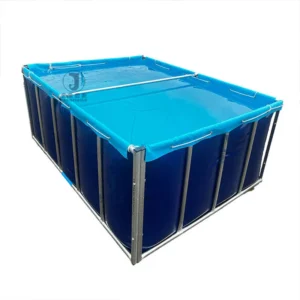
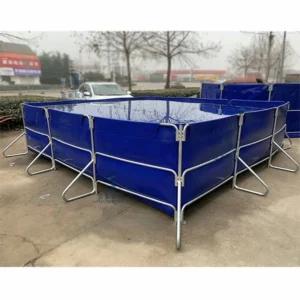
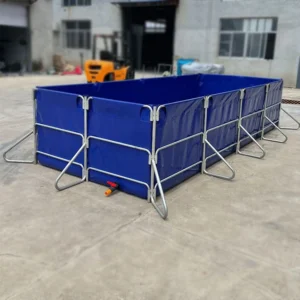
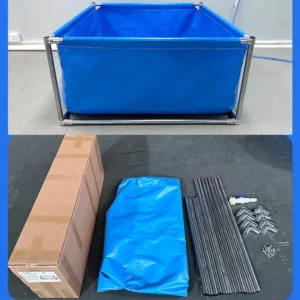
Process Control — Every roll of PVC coated tarpaulin produced on our lines undergoes in-process coating weight checks, ensuring the GSM stated on your specification sheet is the GSM that ships.
Technical Specifications
| Parameter | Value |
|---|---|
| Product Type | PVC Coated Tarpaulin |
| Base Fabric Yarn Options | 500D840D / 500D1000D / 1000D1000D / 1000D1300D / 1300D1300D / 1000D2000D |
| Available GSM Range | 350 / 400 / 420 / 500 / 600 / 650 / 750 / 900 g/m² |
| Available Thickness Range | 0.29mm – 0.65mm |
| Density Options (warp×weft/inch) | 30×19 / 20×20 / 30×15 |
| Tensile Strength (Warp) | 1650 N – 3900 N |
| Tensile Strength (Weft) | 1600 N – 3500 N |
| Coating Material | PVC on Polyester Base Fabric (double-sided) |
| Surface Finish | Smooth, leather-like texture |
| Key Features | Water resistant, waterproof; flame retardant and anti-UV grades available — confirm the grade required for your market |
| Customization Options | Colour, printing, width, length, surface treatment |
| Packaging | Roll packing, bale packing, carton |
Application Suitability
| Application | Exposure & Requirement |
|---|---|
| Aquaculture fish pond liner | Permanent submersion, hydrostatic pressure, biological contact, puncture risk from substrate |
| Agricultural water reservoir | Year-round UV exposure, thermal cycling, sediment abrasion, seasonal water level fluctuation |
| Industrial tank and pool liner | Chemical contact with stored liquids, mechanical stress at corners, continuous water containment |
| Temporary water containment | Rapid deployment, fold-out handling, ground abrasion, short- to medium-term weather exposure |
Why a Pond Liner Fails Before the Fabric Does
The liner does not fail in the middle of the panel — it fails where two panels meet, where the material folds over a corner, or where the substrate pushes through. When sourcing PVC coated tarpaulin fabric technical specifications for water containment, buyers often focus on total thickness and GSM, but the weld seam, the corner reinforcement zone, and the puncture resistance at the base are where containment actually breaks down [NEED_CITE: tensile and tear test methods for coated fabrics per ISO 1421]. A pond that drains overnight does not cost the price of replacement fabric. It costs the lost stock, the downtime, and the labour to strip and reline. The specification must account for the full system: base fabric strength, coating adhesion at the weld, and substrate compatibility — not just the number printed on the quotation.
Coating Adhesion and Weld Integrity for Water Containment
Pond liners and aquaculture tanks place continuous stress on every welded seam. The double-sided PVC coating on the polyester base fabric is engineered so that hot-air welding fuses the coating layers across two panels, creating a joint whose strength approaches the parent material. For PVC coated tarpaulin used in reservoirs and fish tanks, this seam integrity is the single most important factor after puncture resistance. A coating that delaminates under hydrostatic load will separate at the weld before the base fabric reaches its tensile limit.
Matching Material Weight to Pond Depth and Substrate
Selecting the correct GSM and thickness depends on three variables: maximum water depth (which defines hydrostatic pressure), substrate type (smooth sand versus rocky or uneven ground), and expected handling during installation. Heavier grades in the available range carry a denser base fabric with higher tensile strength, distributing point loads from substrate irregularities across a wider area. Lighter grades suit lined excavations with prepared bases and moderate depth, where the primary requirement is water retention rather than structural puncture resistance.
Reading the Specification Sheet Beyond Thickness
Thickness alone — for example 0.65mm — tells you the total distance from one coated surface to the other, but it does not tell you how that thickness is distributed between coating and base fabric. A high-denier base yarn such as 1000D*2000D at 30×15 density contributes directly to warp tensile strength of up to 3900 N and weft strength of up to 3500 N. The mesh count determines how tightly the yarns interlock, which governs tear propagation resistance. Two fabrics can share the same total thickness yet differ substantially in tear behaviour because one uses a looser weave with thicker coating to make up the difference [NEED_CITE: relationship between mesh density and tear propagation in coated polyester fabrics]. The coating method — whether knife-over-roll, laminating, or calendering — also determines peel strength between the PVC layer and the polyester scrim, which directly affects how well a hot-air weld holds under load.
The Hidden Cost of Specifying Liner Material on GSM Alone
When PVC coated tarpaulin is specified by GSM without requiring a pre-shipment weight verification, the roll that arrives may fall below the agreed weight. In pond liner applications, even a small reduction in coating weight reduces puncture resistance at the base, where substrate contact is constant. Colour inconsistency across rolls in the same order becomes visible once panels are welded side by side in an exposed reservoir. Flame retardant grades claimed without a supporting test report create compliance risk on projects where fire certification is inspected. These are not cosmetic issues — they are failures that surface after installation, when remediation means draining and relining [NEED_CITE: pre-shipment inspection standards for coated fabric roll consistency].
Why Buyers Source Containment Fabric Here
Our three full production lines and 36 sets of professional equipment handle the volume and width requirements of large-scale pond and reservoir projects with consistent output. A 10-person R&D team develops samples within days when custom colour, width, or treatment is specified, so you can validate the material before committing to bulk rolls. Dedicated QA and QC at every production stage, with 100% inspection before shipment, ensures the GSM and colour on the roll match what was agreed. Full documentation — including material specification sheets and test reports for UV and flame retardant grades where applicable — accompanies every dispatch. Nearly 30 years of focused coated fabric production provides the process control needed for water containment applications where seam failure is not acceptable.
Documentation & Verification
- Material specification sheet listing confirmed GSM, base fabric denier, density, and coating weight for each roll batch
- Test report for UV resistance and flame retardant grades — request the specific grade required for your project jurisdiction
- Pre-shipment inspection record confirming weight per square metre against the purchase order before container loading
- Roll packing list with individual roll identification for batch traceability on multi-roll pond projects
- Certificate of origin and customs documentation for cross-border shipment
Fabrication, Handling & Storage
- Hot-air welding temperature and speed should be set to match the specific PVC coating thickness — test a sample weld before full production
- Store rolls upright on pallets in a covered area to prevent flat-spot deformation of the PVC coating surface
- Unroll and allow the material to relax before welding, particularly in cool conditions, to avoid trapped tension at seams
- When cutting panels for pond shapes, plan the layout to minimise cross-seams in zones of highest hydrostatic pressure
- Clean the welding zone with a compatible PVC solvent before hot-air joining to ensure full coating fusion
- Field repairs on installed liners can be made with a hot-air gun and matching PVC patch material from the same batch
Before You Request a Quote
To match the right PVC coated tarpaulin grade to your water containment project, we need the pond or tank dimensions, maximum water depth, and substrate description. Let us know your target market so we can confirm the applicable fire safety or environmental compliance grade. Specify whether you need full rolls for on-site fabrication or pre-cut panels with welded seams. If colour matching to existing infrastructure or branding is required, provide the reference so we can develop a sample before production.
Frequently Asked Questions
Q: How do I choose the right GSM and thickness for my pond depth and climate?
A: Deeper ponds and rocky substrates require heavier grades with higher base fabric denier for puncture resistance. Shallow reservoirs on prepared sand bases can use lighter grades. Climate affects UV treatment selection — confirm the exposure level and request the matching test report for your region before placing the order.
Q: Is the anti-UV or flame retardant treatment backed by a test report?
A: UV and flame retardant treatments are available across the PVC coated tarpaulin range. The specific grade and corresponding test standard vary by product code. Request the test documentation during the sample stage so you can verify compliance with your project specification before bulk production begins.
Q: Can you supply custom widths and lengths to reduce on-site welding?
A: Custom widths are available to suit large pond and reservoir dimensions, reducing the number of field welds required during installation. Provide the panel layout and maximum transport dimensions so we can optimise roll width and cut length for your site conditions and minimise material waste.
Q: What is the expected service life and how do I repair damage in the field?
A: Service life depends on UV exposure intensity, water chemistry, substrate conditions, and installation quality. Field repairs are carried out by hot-air welding a PVC patch from the same material batch over the damaged area. We supply offcut material with each order for this purpose.
Q: Do you provide samples before I commit to a bulk roll order?
A: Samples are developed within days for custom colour, treatment, or width requirements. We recommend testing weld parameters, puncture resistance, and colour match on the sample before approving the bulk production run, particularly for large aquaculture and reservoir projects.